
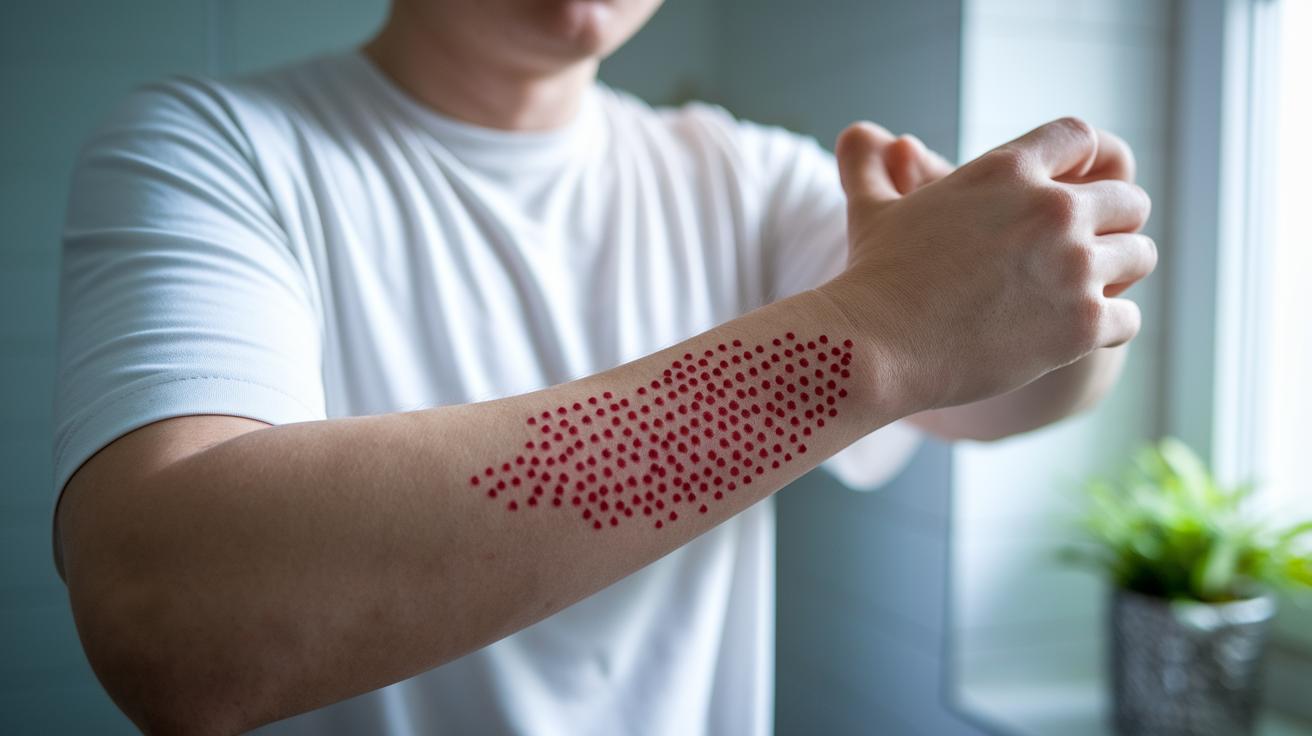

Quick take: Red, itchy bumps can be signs of common skin issues.
If you have any of these emergency signs, severe pain, rapid swelling, trouble breathing, or the bumps spreading quickly, call emergency services now.
These red, raised spots might be more than just random irritations. They could be signs of acne, keratosis pilaris (a condition that makes your skin feel rough), or an allergic reaction. This guide will show you how to tell which one it might be and how to soothe the irritation fast.
Understanding the root of your skin discomfort is the first step toward easing the itch and feeling better. Take charge of your skin’s health today by paying close attention to any changes and acting on them.
Identifying the Causes of Raised Red Itchy Bumps on Skin
Red bumps can pop up fast or slowly on your face, arms, or other areas. They often itch and feel uncomfortable. There are many reasons for these little bumps.
Acne happens when oil, dead skin, and bacteria clog your hair pores. Keratosis pilaris (often called chicken skin) gives you small bumps on your arms or thighs. Rosacea leads to long-lasting redness and small, tender bumps, and triggers like sun or stress can make it worse. Folliculitis means your hair pores are inflamed, which can cause itchy bumps that sometimes even form pus.
Sometimes, an allergic reaction brings on itchy red bumps, as seen with hives, contact dermatitis, or eczema. These bumps usually vanish on their own. Infections such as chickenpox, impetigo, or scabies can also cause bumps that might sting. Heat can block your sweat ducts and lead to small bumps, too.
If your bumps stick around, start to hurt, or change in any way, please talk to your doctor for the right treatment.
Common Skin Conditions Causing Itchy Raised Red Bumps
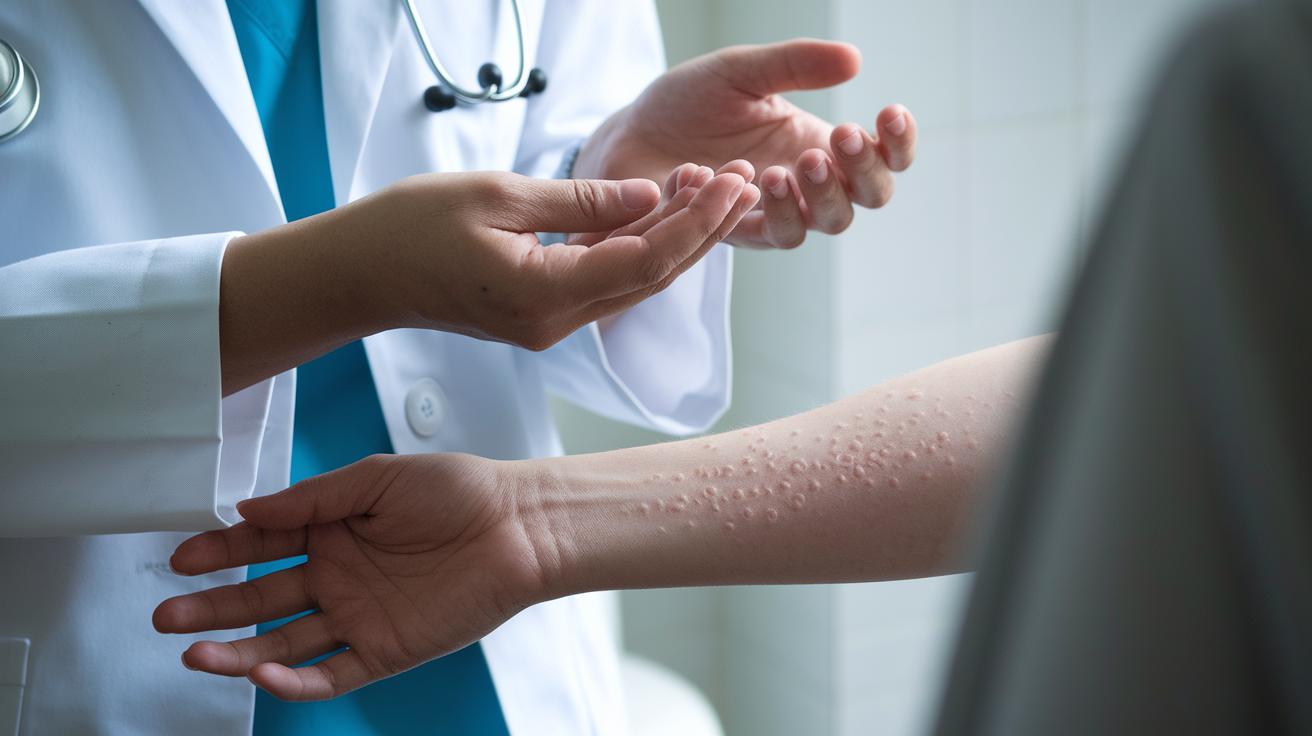
If you have itchy, raised red bumps, they could be from skin conditions affecting the hair follicles and the surface of your skin. Each condition has its own signs and may need different care.
• Acne: These red bumps come from blocked hair follicles. A sudden breakout after a long day may mean your skin needs a break.
• Keratosis pilaris: This produces small, rough bumps from a buildup of keratin (a protein in your skin). They usually appear on the arms, thighs, or cheeks.
• Rosacea: You may see persistent redness with tender bumps. This condition can flare up with sun exposure, spicy foods, or stress.
• Folliculitis: This is an infection or inflammation of the hair follicles that causes itchy bumps and sometimes pus. It is common on the legs or near the bikini line.
• Perioral dermatitis: Small clusters of red bumps can appear around your mouth, nose, or eyes. This is often linked to overusing topical steroids.
• Mild heat rash: Tiny, itchy bumps may form when sweat ducts become blocked in hot, humid weather.
Watch for where the bumps appear and any triggers you notice. This helps you decide if simple home care will work or if you need to see a clinician.
Allergic and Infectious Origins of Itchy Red Papules
Quick take: These red, itchy bumps may come from an allergy or an infection. Check for warning signs and act as needed.
Triage Box:
• Call emergency services now if you have trouble breathing or notice swelling in your face or tongue.
• Seek urgent care today if you have a high fever or feel very unwell.
• If the bumps are mild and appear after contact with a known allergen, try cool baths or calamine lotion and keep an eye on your symptoms.
Allergic Reactions
Hives (raised, red welts) occur when your body releases histamine (a chemical that causes swelling and redness) in response to triggers like certain foods, pollen, or stress. You might see the center of a hives lesion turn white when you press it, which can help you tell it apart from other causes.
Contact dermatitis happens when your skin meets something it doesn’t like such as latex, certain metals, or chemicals. This reaction shows up as red, inflamed bumps that itch and may improve with a cool bath or a dab of calamine lotion.
Eczema (a condition where skin becomes red, dry, and thick over time) can also lead to itchy, bump-like spots. Using moisturizers and avoiding known triggers usually helps calm the flare-ups.
Infectious Causes
Chickenpox starts with clusters of itchy, fluid-filled blisters that later form a crust. Impetigo shows up as spots covered with a honey-colored crust. Scabies is caused by a tiny mite; after 4–6 weeks of itching, you may see a rash that needs a medicated lotion like permethrin or ivermectin. Molluscum contagiosum is marked by small, dome-shaped bumps that are unique in appearance. Insect bites from mosquitoes, bedbugs, or fleas also can leave similar raised bumps, often with a tiny central puncture.
Comparing the Causes
Allergic reactions tend to start suddenly with red, spread-out bumps that may fade when pressed. Infections usually cause groups of bumps that appear over a few days with a more specific pattern. Noticing how the bumps appear, when they started, and any recent exposures can help you decide whether to manage them at home or seek care from a doctor.
Risk Factors and Warning Signs for Raised Red Itchy Bumps
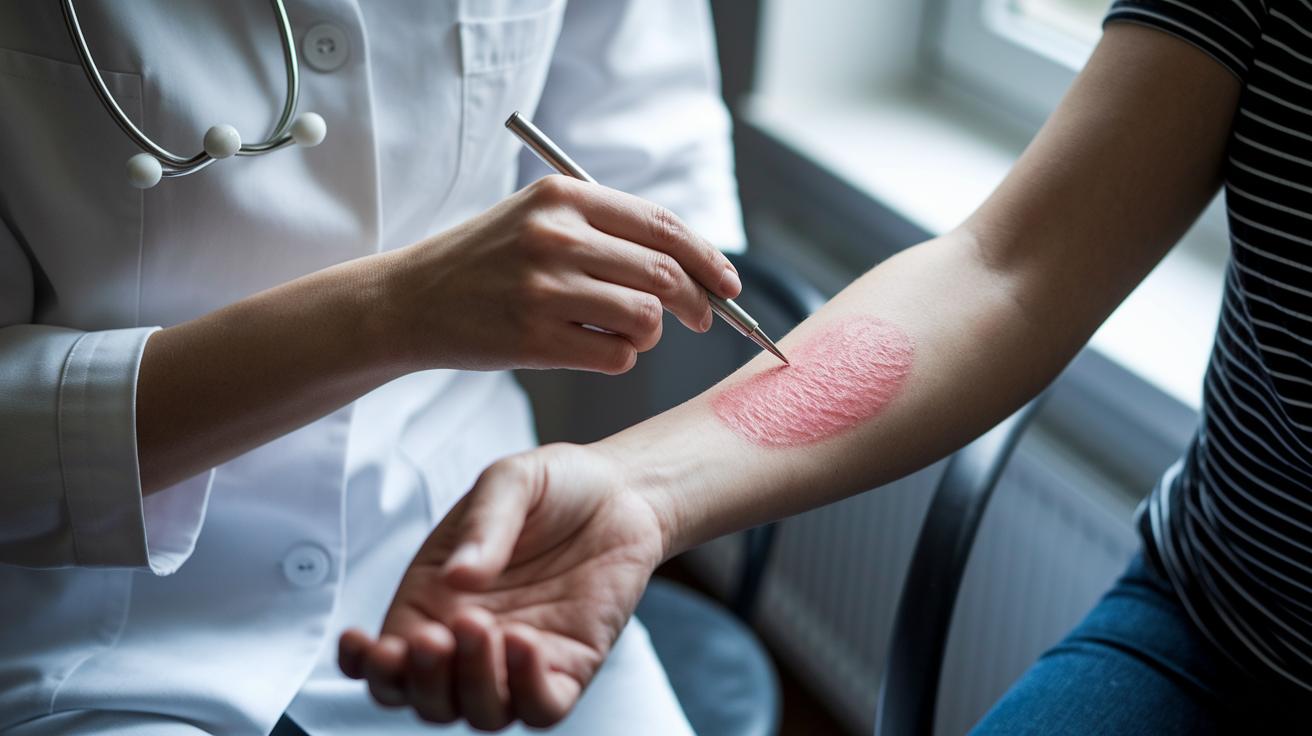
Quick take: Red, itchy bumps that change quickly or hurt could be serious.
Triage:
- If a bump starts to bleed, ooze, or cause sharp pain, call your doctor now.
- If a bump grows fast or changes shape and color, seek urgent medical care.
- Watch for fever, spreading redness, warmth around the bump, or swollen glands; these may signal an infection.
Common signs to watch for:
- Redness and swelling that do not get better with home care.
- Bumps that enlarge quickly and then bleed or ooze.
- Small, shiny, raised bumps that look like scars. These can be a sign of basal cell carcinoma (a common type of skin cancer).
- Rough, scaly patches under 2 cm. These may point to actinic keratosis (sun-related skin damage).
- Firm lumps in areas hit by the sun, which can be an early sign of squamous cell carcinoma.
- Moles or spots with uneven borders, mismatched colors, or irregular shapes. These features may suggest melanoma.
Keep track of these changes and talk with your doctor if you notice any of these signs. Early detection leads to faster treatment and a better chance for a good outcome.
Home Remedies and OTC Options for Itchy Red Skin Bumps
Quick take: Simple self-care steps and OTC fixes can ease your itchy red bumps, but seek help if symptoms worsen quickly.
If you see any of these signs, call emergency services now:
- Blistering or severe pain
- Rapid swelling or trouble breathing
- Signs that the rash is spreading quickly
You can often calm itchy red bumps with easy home remedies and common medicines. Many methods work by reducing swelling, numbing the itch, and soothing irritation.
• Cool compress: Wet a clean cloth with cold water and gently press it on the bump for 10–15 minutes. This cooling step helps lower swelling and calm the itch.
• Oral antihistamines: Drugs like diphenhydramine or cetirizine block the body’s reaction to allergens (triggers that may cause rashes).
• Topical calamine lotion or aloe vera gel: These products create a cooling layer on your skin that soothes irritation and helps cut down redness and itching.
• Emollient creams: Look for creams with ceramides or oat extract. They hydrate your skin (keeping it moist) and help strengthen its barrier to prevent future flare-ups.
• OTC desensitizing gels and herbal ointments: Products with calendula or chamomile offer natural anti-inflammatory benefits to ease discomfort.
Apply your chosen remedy as soon as you notice irritation and follow the directions on the package. It helps to keep a daily log noting the date, time, and any changes in your skin. If the bumps last more than a few days, grow worse, or you start to feel severe pain, consult your doctor for a full checkup.
Prevention Strategies for Future Raised Itchy Red Bumps
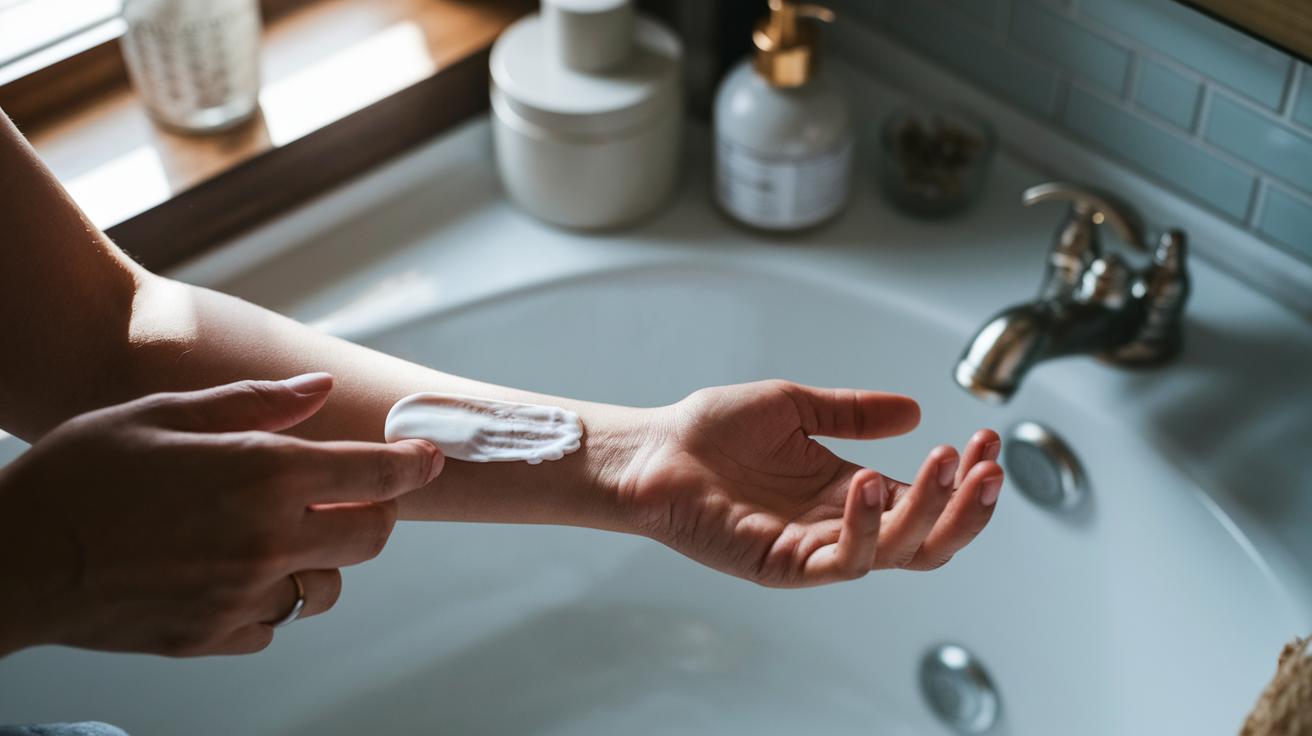
Quick take: Daily gentle care and smart habits can keep your skin strong and help prevent future outbreaks.
Triage Box:
• If you experience a sudden increase in pain, swelling, or signs of infection, seek urgent care right away.
• If your symptoms worsen or do not improve in a few days, contact your clinician.
Your skin barrier works best when you care for it gently every day. Cleanse with a mild, pH-balanced wash and use a non-comedogenic moisturizer (one that won’t clog pores). Avoid irritants like rough fabrics, certain metals, and strong fragrances.
Protect your skin from the sun by applying a broad-spectrum SPF 30+ sunscreen and seeking shade outdoors. Sun damage can worsen issues like rosacea and heat rash.
Stress can also trigger itchy bumps. Take time for deep breathing, meditation, or other calming activities to help lower stress and reduce skin inflammation.
Follow these simple steps:
• Cleanse gently with pH-balanced products each day.
• Avoid known allergens and irritants.
• Use SPF 30+ sunscreen when you’re outside.
• Practice regular stress relief techniques.
Using these habits every day may keep your skin calm and resilient. Stay consistent, and if you’re unsure or your symptoms worsen, reach out to your clinician.
Final Words
In the action of managing skin symptoms, we walked through causes, from minor conditions to infections, and outlined clear self-care steps. Simple home remedies, OTC options, and practical prevention tips were discussed to help you address and track the condition effectively.
Remember, raised red bumps on skin itchy shouldn't be ignored when their signs change or worsen. Taking note of these steps empowers you to act safely and quickly while knowing when to seek further care. Stay proactive and feel confident in managing your skin health.
FAQ
What causes random, itchy red bumps on the body that resemble mosquito bites?
Random, itchy red bumps resembling mosquito bites may be due to allergic reactions, mild skin irritations, or folliculitis rather than true insect bites. They are usually harmless but warrant a visit if they persist.
What do itchy red spots on skin look like on photos?
Itchy red spots on skin appear as small, raised patches that may be smooth or bumpy. Photos help assess size, color intensity, and distribution to distinguish common rashes from more concerning skin conditions.
What do tiny colorless itchy bumps on the skin indicate?
Tiny colorless itchy bumps often signal mild skin irritation or early signs of conditions such as dermatitis. They usually are not worrisome but should be monitored for enlargement or other changes.
What might large raised red itchy bumps on the skin signify?
Large raised red itchy bumps could indicate contact dermatitis, allergic reactions, or infections like folliculitis. They should be monitored closely, and you should see a clinician if they grow, become painful, or show signs of infection.
What are common treatments for small red itchy bumps on the skin?
Common treatments include applying cool compresses, using over-the-counter antihistamines, and soothing lotions like calamine or aloe vera gel. Regular care and avoiding triggers help manage the irritation.
How is perioral dermatitis treated in kids?
Perioral dermatitis in kids is managed by stopping or avoiding irritants such as topical steroids and harsh cleansers. Gentle skin care and clinician-prescribed treatments help reduce the rash safely.
What do leukemia red bumps look like?
Leukemia-related red bumps may present as scattered, non-specific lesions along with symptoms like fatigue or weight loss. They require prompt medical evaluation to rule out serious underlying conditions.
What are autoimmune red itchy bumps?
Autoimmune red itchy bumps occur when the immune system targets skin tissues, causing inflammation. They can be part of conditions like lupus, so proper clinical assessment is needed for accurate diagnosis and management.