


Quick take: A fast triage check can save lives by getting you the right care fast.
If you have any life-threatening signs, trouble breathing, severe chest pain, or heavy bleeding, call emergency services now.
In an emergency, every second matters. A nurse quickly checks your vital signs (like heart rate and blood pressure) and asks about your medical history to decide how urgently you need help. This simple system ensures you receive lifesaving treatment without delay.
Every check matters when you need help fast.
Key Steps in the Emergency Room Triage Process to Determine Priority
Quick take: Fast, careful checks help ensure lifesaving care starts immediately.
If you notice severe chest pain, trouble breathing, very low or very high blood pressure, or confusion, call emergency services now.
When you arrive at the emergency room, a triage nurse quickly checks your condition. They ask about your main complaint and measure your heart rate, blood pressure, breathing rate, and oxygen level. These checks set a baseline and help decide how fast you need care. For example, if you say you have severe chest pain, a nurse may record a heart rate of 110 beats per minute and a blood pressure of 90/60 mm Hg. That information means you need urgent treatment.
Next, the nurse gathers a short medical history. They ask if you have any major past conditions or if you’re taking any medications. This step helps the nurse see if there are extra risks that need quick attention. A checklist is usually used so nothing is missed, which improves the speed and accuracy of the assessment.
After these first steps, the nurse uses a tool called the Emergency Severity Index (ESI). The ESI sorts patients into one of five groups. Level 1 means you need immediate, lifesaving help. Level 5 is for minor issues that can wait. This system makes sure that people with life-threatening signs are treated first.
Key steps include:
- Checking your main complaint and vital signs.
- Recording your short medical history, including any medications.
- Quickly scoring your condition with the ESI.
- Sorting you into the right urgency level based on your symptoms and risks.
This clear and organized process helps emergency teams spot dangerous signs fast. By quickly sorting patients, they can deliver timely treatment and work to stop conditions from getting worse.
Roles of Emergency Nursing Staff in the Triage Process

In the ER, nurses are the first to check patients, whether they are adults or children. They use clear, friendly talk to quickly learn what you need. For instance, if a child seems scared, the nurse might gently say, "I know this feels odd, but I'm here to help you feel better."
They change how they talk based on who they are treating. When working with adults, they keep the conversation calm and precise to get the important details. With kids, they include caregivers and use simple, comforting words that match the child's age.
These nurses work in busy, high-stress settings. They must decide fast and check every detail with smart thinking and direct communication. Key parts of their work include:
- Using clear talk to make sure you understand what’s happening.
- Adjusting their methods for children versus adults.
- Working closely with their team in fast-paced, urgent situations.
- Mixing technical checks with kind, caring words during busy shifts.
Their blend of professional skills and warm communication helps keep you safe and improves the care you receive.
Categorizing Patients with the Five-Tier Emergency Severity Index
This tool helps busy emergency rooms sort patients by how severe their problems are. It guides care quickly and safely.
• Level 1: Resuscitation
For patients who need immediate, life-saving help. This includes cases like cardiac arrest (heart stopping) or major injuries.
• Level 2: Emergent
For patients with serious problems like severe chest pain or trouble breathing. They need fast care to stop their condition from worsening.
• Level 3: Urgent
For patients who need several tests or services. For example, someone with a suspected internal bleed may need blood tests, imaging, and a doctor’s review.
• Level 4: Semi-Urgent
For patients who need one specific test or treatment soon, though they are stable. Their care is important but not as fast as Levels 1–3.
• Level 5: Non-Urgent
For minor issues that can safely wait. This helps keep attention on more critical cases.
Some hospitals also use color tags to show urgency. Red tags mean the highest risk, yellow tags indicate moderate risk, and green tags show non-urgent cases. This clear system helps staff decide care quickly and gives each patient the treatment they need.
Protocols and Tools: Triage Flowcharts and Digital Systems
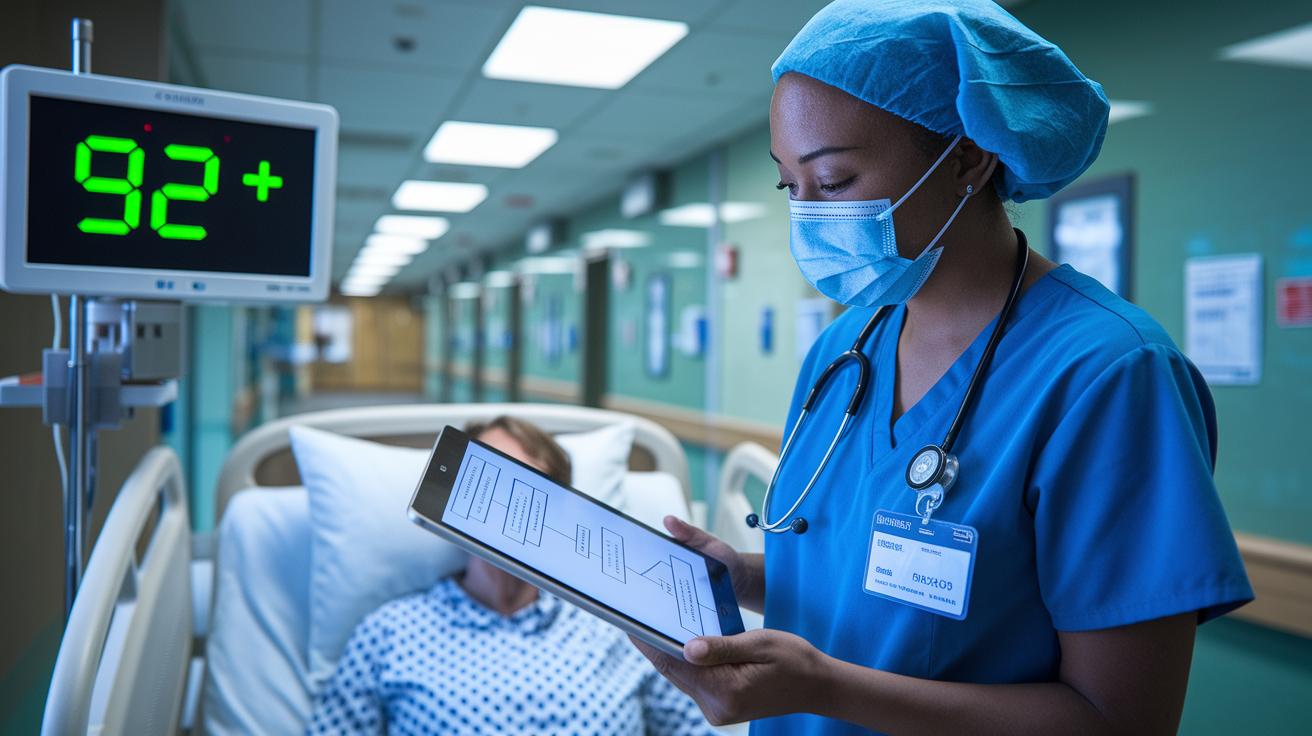
Emergency departments rely on a few smart tools to decide how urgent a patient's condition is. Nurses use clear flowcharts to guide them through each step based on symptoms and vital signs. For example, if a patient is breathing quickly, the flowchart might tell them to check the oxygen levels next. One step might read, "If oxygen saturation falls below 92%, take the patient for immediate evaluation." This clear, step-by-step method helps make sure nothing is missed and that serious issues are caught fast.
Digital systems also play an important role. They connect electronic records with decision support tools to make assessments more consistent. As soon as a nurse enters data, these platforms can quickly sort patients by urgency by tracking vital signs and medical history in real time. This sorting helps staff focus on patients who need immediate attention.
Key components of these tools are:
| Tool | What It Does |
|---|---|
| Flowcharts | Guide step-by-step symptom checks |
| Digital Platforms | Automatically sort patients by how urgent their condition is |
| Checklists | Make sure every important detail is reviewed |
These tools work together to keep care fast and consistent, ensuring each patient gets the prompt attention they need.
Challenges and Best Practices in Emergency Room Triage
Quick take: Busy ERs face many hurdles, but clear protocols and team training can help you care for every patient safely.
If you have any of these emergency signs, call emergency services or go to the nearest emergency department now:
• Too few staff to see patients quickly.
• Big differences in how symptoms are judged.
• Overwhelming number of patients when every second counts.
Common challenges in the ER include:
• Limited staff who must quickly assess several patients at once.
• Differences in clinical judgment that can change how symptoms are understood.
• Heavy patient loads that can strain resources and slow response times.
Hospitals use several strategies to handle these issues:
• They standardize protocols so everyone follows the same steps.
• They run simulation-based training sessions so teams can practice making hard decisions under pressure.
• They use rapid response teams that jump in quickly when patient numbers spike.
Regular data audits and feedback loops help teams learn from every case. By tracking errors and updating protocols, emergency departments can improve workflows, cut down on triage mistakes, and keep care reliable even under intense pressure.
Future Directions and Innovations in Emergency Room Triage Processes
New tools like artificial intelligence (AI) for acuity scoring are set to change how emergency rooms work. Wearable devices now track your vital signs in real time and send that data straight to triage systems. This helps doctors spot changes early and act fast. Telehealth protocols are also being added so that healthcare teams can assess patients remotely even before they arrive.
Early studies show that using AI for acuity scoring can lead to better patient outcomes and smoother operations in busy emergency rooms. Researchers are working on smart tools that analyze data faster and more accurately than older methods. New systems that sort patients before they reach the hospital can help hospitals use their resources wisely and decide on care quickly.
These changes are paving the way for a future where emergency triage is more responsive, driven by data, and effective. The goal is clear: improve how quickly and accurately care is given when it matters most.
Final Words
In the action, we reviewed how the emergency room triage process quickly sorts patients based on vital signs and symptoms. We walked through the role of nurses, the five-tier Emergency Severity Index, and digital tools that assist in rapid evaluations. The guide highlighted challenges and offered best practices, along with future innovations that promise to refine care further. These structured steps help you decide care priorities with confidence. Stay informed and positive as ongoing improvements make emergency care even safer.
FAQ
Triage system in emergency department PDF
The triage system PDF explains how emergency departments quickly sort patients. It outlines steps such as patient screening, vital sign checks, and using the Emergency Severity Index for proper prioritization.
What are the three levels of triage and triage levels 1 to 5?
The question on triage levels shows that older models used three levels, but most EDs now use a five-tier system—ranging from Level 1 (resuscitation) to Level 5 (non-urgent)—to meet different care needs.
Triage colour code in emergency
The triage colour code helps staff quickly identify patient urgency. Typically, red signals life-threatening issues, yellow indicates high risk, and green marks non-urgent cases to streamline treatment decisions.
Triage management in hospital
The question on triage management in hospitals refers to the structured process where nurses assess symptoms, check vital signs, and use protocols like the Emergency Severity Index to prioritize patient care efficiently.
How to do triage assessment and what are the steps of the triage process?
The answer to how to do a triage assessment is to begin with gathering the patient’s chief complaint, measuring vital signs, reviewing medical history, and then applying a protocol such as the Emergency Severity Index to determine urgency.
What is triage in a hospital for pregnancy?
The question about triage for pregnancy means that rapid evaluation is done for both the mother and baby. It includes checking vital signs and looking out for red flags to ensure timely, safe care.
Triage guidelines, the 5 stages of triage, and the 5 S’s of triage
The triage guidelines lay out a step-by-step process. They involve assessing symptoms and vital signs, assigning a severity level (typically in five stages), and directing patients to the level of care they require.