


Quick Take: Simple questions from a triage nurse can help decide if you need immediate, life-saving care.
When you arrive at an emergency room or urgent care, a friendly triage nurse will greet you and ask a few key questions. These questions help them quickly figure out if your condition could be life-threatening. They sort patients by urgency so that those with serious problems get help first. Their work is fast, clear, and focused on saving lives by making sure you get the right care at the right time.
Read on to learn more about how these skilled experts make life-saving decisions.
5 what does a triage nurse do: Life-saving!
Quick take: Triage nurses quickly sort patients so that those in the most danger get immediate care.
Triage nurses are the first people you meet when you enter an emergency room, urgent care clinic, trauma center, or poison control center. They ask simple, clear questions to check your symptoms and decide if you need rapid help. For example, in a busy ER, they quickly decide if a patient is emergent, urgent, or non-urgent.
Their daily role includes:
- Asking clear, step-by-step questions when you arrive.
- Sorting patients by how severe their symptoms are.
- Alerting doctors if a situation needs immediate action.
- Making sure patients with life-threatening issues get help fast.
- Helping to ease overcrowding by identifying non-urgent cases.
By making fast, careful decisions, triage nurses ensure that the right patient gets the right care at the right time. They don’t give routine treatments or prescribe medications; they follow strict protocols to guide their assessments.
You might be surprised to learn that in one shift, a triage nurse can check over 30 patients, each with unique and urgent needs.
Triage Classification Levels and Assessment Process
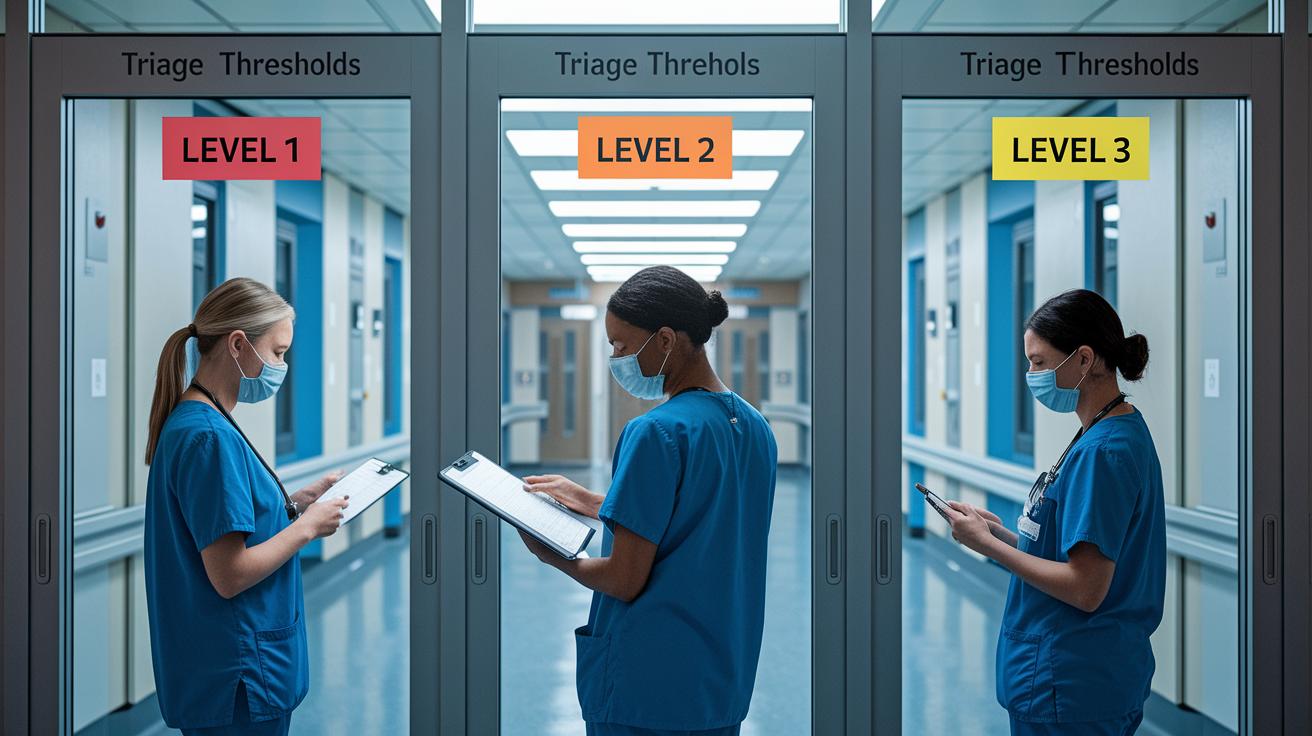
Triage nurses use clear, step-by-step methods to decide how quickly you need help based on your symptoms. They start by asking focused questions that check for the most dangerous signs first. If you show signs of a life-threatening problem, your condition is immediately marked as Level 1.
Patients are sorted into three priority levels:
- Level 1 (Emergent): Life-threatening issues that need immediate help. Think of severe chest pain or suddenly passing out.
- Level 2 (Urgent): Serious symptoms that should be seen within 30–60 minutes, such as breathing problems that are not too severe.
- Level 3 (Non-Urgent): Stable conditions where symptoms are mild, and you can wait for routine care.
Nurses follow set protocols like the Emergency Severity Index (ESI) to ensure everyone is evaluated in the same way. This approach helps make sure that those who need help right away get it without delay.
Diverse Settings for Triage Nursing Roles
Quick take: Triage nurses use clear, step-by-step methods to guide patients safely to the right care in many settings.
In hospital emergency rooms, triage nurses work non-stop. They follow simple rules like the Emergency Severity Index (a scale to rate how urgent a patient's needs are) and use fast-track paths for patients with less serious issues. Their focus is clear: get life-threatening cases help fast while quickly processing others.
In urgent care centers and outpatient clinics, triage fits both scheduled visits and walk-ins. Nurses use easy-to-follow flowcharts to lead patients through the process. Whether you have an appointment or just drop in, you get clear and simple instructions.
At poison control and telehealth centers, nurses assess your symptoms over the phone. They listen carefully, decide if you need to come in, or advise home care and self-management steps when it is safe.
In hospice and home health services, triage nurses work around the clock to support patients with serious illnesses. They manage symptoms and coordinate care to ease discomfort at all hours.
For physician groups and Accountable Care Organizations, nurses handle after-hours calls. They help Medicare patients by giving self-care advice, making referrals, and keeping care on track.
Education, Certification, and Key Skills for Triage Nurses

Quick Take: To be a triage nurse, you need an active RN license, the right certifications, and key skills to act quickly and kindly.
Triage Checklist:
- Get your active RN license.
- Complete a 2-year Associate or 4-year Bachelor degree in Nursing.
- Gain 2–5 years of experience in emergency, trauma, or critical care.
- Earn triage certifications like the ANCC Triage Certification (CTRN) or take online telephone triage courses.
- Practice with simulation exercises that mimic real emergencies.
- Update your skills through hands-on workshops and courses.
To start your career as a triage nurse, you must have an active RN license (a permit to work as a nurse). Most nurses earn this license by finishing a 2-year Associate degree or a 4-year Bachelor degree in Nursing. It also helps to work for 2–5 years in areas such as emergency, trauma, or critical care before moving into a triage role.
Certification can boost your skills and confidence. You might choose the ANCC Triage Certification (CTRN) or enroll in online courses about phone triage. Simulation exercises give you hands-on practice by mimicking real emergency situations. These programs help you respond fast and clearly in busy settings.
Keeping your skills current is very important. Nurses often attend workshops that explain triage systems such as the Emergency Severity Index (ESI) (a tool that rates how urgent a patient’s condition is), the Canadian Triage Assessment Scale, and the Australian Triage Score. These sessions also cover emergency rules and how to talk clearly during stressful events.
Success in triage nursing depends on quick, clear thinking and strong spoken assessment skills. Learning to use electronic health record (EHR) systems to manage patient data can make a big difference. And when you show empathy during stressful times, you connect with patients and help them feel understood while you make fast, careful decisions.
Phone and Remote Triage: Expanding the Nurse’s Role
Quick take: Phone triage nurses follow clear steps to spot serious symptoms fast so you get help when you need it.
They work by using well-known guidelines (like the Schmitt-Thompson rules) to ask precise, targeted questions. First, they check for emergency signs such as severe chest pain or trouble breathing. This careful method makes sure anyone needing urgent care is identified right away.
For example, one nurse, Tina, handled a call about facial swelling. By asking detailed questions, she recognized signs of a strong allergic reaction due to an ACE inhibitor mix-up. She quickly told the patient to head to the emergency room instead of suggesting a later pharmacy visit.
These nurses also work outside of hospitals. Many answer calls in 24/7 centers for doctor groups, insurers, or telehealth platforms. Their work reduces extra ER visits and offers prompt, clear guidance so every caller gets the right care at the right time.
Career Prospects and Compensation in Triage Nursing
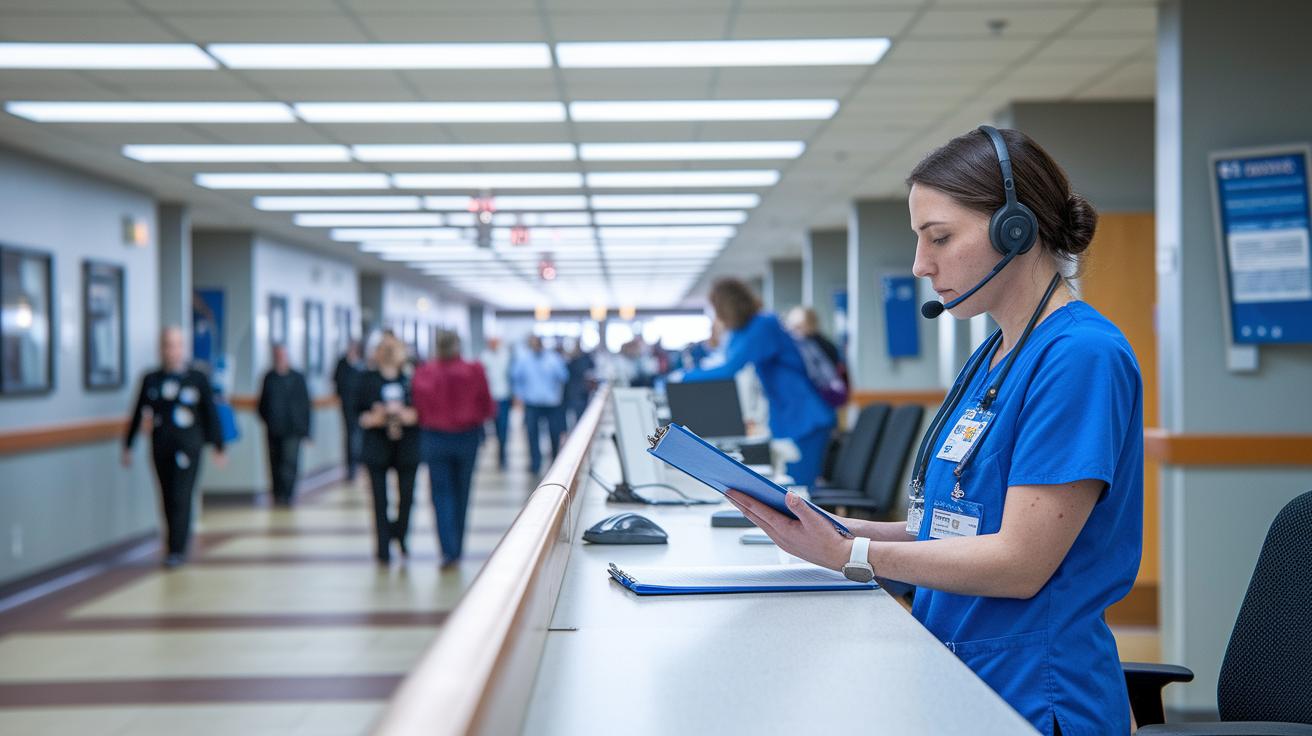
Triage nursing gives you flexible hours and a steady income. This career fits well if you need varied work options and a competitive pay rate. With earnings averaging about $70,000 a year, your salary can grow with experience, location, and extra certifications.
You can choose from full-time, part-time, or per-diem shifts. Remote work is also becoming common as more health systems add 24/7 telehealth and after-hours support.
Employers need skilled triage nurses to help guide patient care, lower unnecessary emergency visits, and offer virtual help. This change opens up many work settings such as hospital emergency rooms, urgent care centers, and insurance call centers.
| Experience Level | Salary Range | Common Setting |
|---|---|---|
| Entry-Level RN | $60,000–$65,000 | Hospital ER/Clinic |
| Mid-Career (3–7 yrs) | $70,000–$75,000 | Urgent Care/Telehealth |
| Senior/Certified CTRN | $80,000–$90,000 | ACO/Insurer Call Center |
Remote options and flexible shifts can help you balance work and life. Triage nursing is a practical and engaging career that lets you support patients while enjoying a stable schedule.
Final Words
In the action, we explored how triage nurses assess patients quickly, sort urgency levels, and work in diverse settings. We broke down tasks from rapid intake in emergency rooms to structured telephone triage and remote care. We touched on the education, certification, and skills needed as well as career prospects and compensation in these roles.
Remember, understanding what does a triage nurse do can help you appreciate their crucial work. Stay safe and informed, every step counts.
FAQ
What does a triage nurse do in a doctor’s office, emergency room, and remotely?
The triage nurse evaluates patients by asking key questions, quickly assigns urgency levels, and directs care. In the ER, they identify urgent cases; remotely, they use telephone protocols to guide when to seek in-person care.
What is the difference between a triage nurse and an ER nurse?
A triage nurse focuses on fast assessments to sort patients by urgency, while an ER nurse provides extended treatment and monitoring in the emergency room setting.
What skills and training are needed as a triage nurse?
Triage nursing requires effective communication, rapid critical thinking, and empathy. You must hold an RN license, have 2–5 years of emergency or critical care experience, and complete specialized training in remote or telephone assessment.
Is triage nursing hard?
Triage nursing is demanding due to the need for swift decision-making under pressure. With solid training and experience, it becomes a manageable and fulfilling role that greatly contributes to patient safety.
How long does it take to become a triage nurse?
Earning an RN license typically takes 2–4 years. Afterward, gaining 2–5 years of emergency or critical care experience equips you for the rapid assessment and decision-making required in triage roles.
What is the salary for a telephone triage nurse?
Telephone triage nurse salaries average around $70,000 annually, though this can vary based on region, experience, and whether the role is remote or in person.
What are the career options like remote, travel, and agency triage nursing?
Career options include remote positions, travel assignments, and agency roles. These jobs offer flexible shifts and varied work settings, all centered on providing prompt assessments and guiding patients to the right care.