


Quick take: A clear exit plan saves lives during an emergency.
If you see signs of danger, like a fire or a similar threat, call emergency services immediately.
What to do now:
• Pack a small bag with essential items.
• Pick at least one clear, safe route to exit your home.
• Listen to trustworthy alerts and instructions.
• Stay calm and act quickly.
This guide gives you simple, practical steps so you can protect yourself and your loved ones when every second counts. Even a little preparation now can make a big difference in a crisis.
Rapid Evacuation Roadmap for Immediate Action
Quick take: When danger appears, leave quickly to keep you and your family safe.
Triage Box:
- If you see thick, black smoke, raging fire, fast-rising water, or dangerous road jams, call emergency services now.
- If local alerts or trusted apps warn of worsening conditions, prepare to leave immediately.
- If you’re unsure but notice signs of trouble, use your plan and stay ready.
Plan Your Escape:
When an emergency strikes, a clear plan can save lives. Begin by preparing a survival kit with essentials such as at least a 3-day supply of water, nonperishable food, a basic first-aid kit, and any necessary medications. Knowing your options can help you leave quickly when danger is near.
Steps to Get Ready:
- Pack a survival kit with water, nonperishable food, first-aid items, and any medications you or your family need.
- Know at least two ways out of your home, workplace, and nearby areas.
- Decide clear roles for every household member, including caring for pets.
- Watch for trusted alerts via radios, text notifications, or emergency apps that warn you about fires, floods, or other threats.
- Prepare a Go Bag with personal documents, money, a change of clothes, and phone contacts so you’re ready to leave fast.
- Protect your home by moving outdoor flammable items indoors, turning off utilities if you can, and securing valuables.
- Leave as soon as you can, don’t wait for an official order. Early departure can help you avoid heavy traffic and worsening conditions.
Remember to keep a battery-powered radio or smartphone nearby. Designate a safe meeting point and check for live updates. Trust your plan, act quickly, and focus on getting everyone to a safe spot.
Crafting Your Personalized Emergency Evacuation Plan

Quick take: A clear, written plan helps you and your family act fast and stay safe during a disaster.
Emergency Preparation Summary:
• If you do not have a plan, you risk confusion and delays.
• Make sure every family member knows what to do.
• Update your plan often so it stays useful.
A written and customized plan helps you stay calm when a crisis hits. A clear plan gives everyone a simple guide to follow during disasters like tornadoes. It also lets you include special needs or extra instructions that general guides might miss.
Here is what to include:
- Create a contact list with phone numbers for family, friends, and trusted neighbors.
- Write down current medical details, such as medications and allergies.
- List pet care instructions, including where to find carriers and what their feeding times are.
- Mark safe exits and meeting points outside your home.
- Prepare a checklist for important documents and set aside a small amount of cash.
- Note any special instructions for those who need extra care.
Drawing simple maps or floor diagrams can also help. A clear map shows the fastest escape routes and meeting spots. Simple charts that list who calls whom and what role each person plays can cut down on confusion during an emergency.
Review your plan regularly. Update it every 6 months and practice it with your family at least once every 3 months. Run through your escape routes together and adjust the plan as needed. This helps everyone know their role and keeps your plan ready for when you need it most.
Mapping and Designing Evacuation Routes and Refuge Points
Creating clear evacuation maps for your home, work, and local area is key to being prepared. It helps you see at least two exit routes and find safe meeting spots away from danger. Visual aids like printed maps or digital diagrams make decisions easier when you’re stressed.
- Pick at least two exits for every building.
- Use different colors to mark your routes.
- Mark safe gathering spots in open areas away from hazards.
- Note key spots like utility shut-offs (where you turn off water, gas, etc.) and emergency contacts.
- Keep labels simple so everyone can understand the map.
Once your routes are drawn, choose secure assembly points. Pick places that everyone can reach easily and that remain safe during an emergency. Open fields or community centers work well because they have fewer obstacles, so everyone knows where to meet.
Keep your maps handy and share them with family, friends, or coworkers. Save digital copies on your phone or in the cloud and keep printed maps in common areas like near the front door. Review and update your maps regularly to reflect any changes. Simple, clear maps can be a lifesaver when you need to move fast.
Building Your Emergency Evacuation Kit
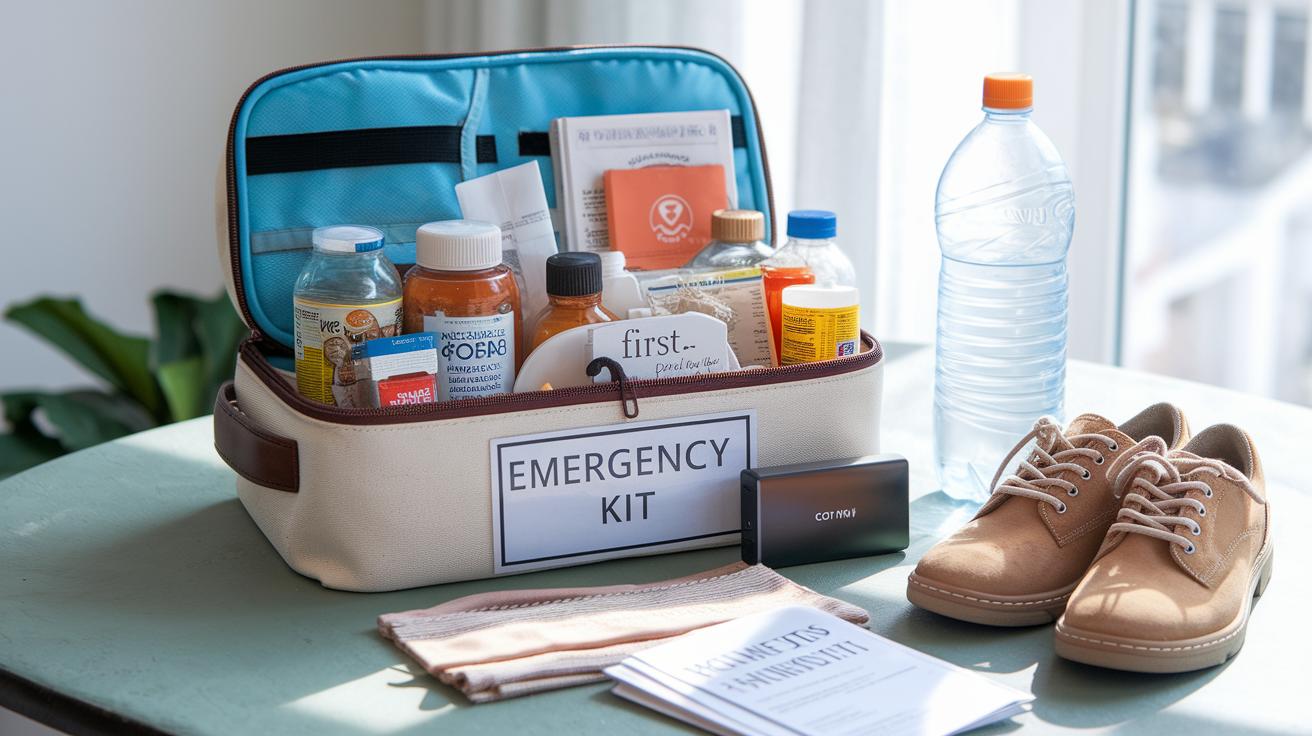
A ready kit helps you act fast in an emergency. If all your supplies are together, you can leave quickly and safely.
This kit should cover water, food, first aid, and extra needs like glasses, backup power, and pet care. Below are the must-haves:
- At least a 3-day water supply (enough drinking water for 3 days)
- Nonperishable food for 3 days (food that won’t spoil)
- A full first-aid kit
- Necessary prescription medications
- Eyewear supplies (glasses, contact lens solution)
- Copies of important documents (like IDs and insurance papers)
- A portable power bank
- A sturdy pair of shoes
- Cotton clothing for skin protection
- Pet or livestock supplies (feed, carriers)
Tailor your kit to match your family’s needs. If you use special medications or have unique dietary requirements, add those items now. You might also want to include extra items such as a flashlight, a multi-tool, or additional layers for cold weather. Check and update your kit regularly to ensure your supplies are current.
Emergency Evacuation Procedures for Diverse Scenarios
Wildfire Evacuation Protocol
When a wildfire is near, act fast. Pack an indoor emergency bag with water, nonperishable food, a first aid kit, and any needed medications. Bring outdoor flammable items inside to cut down on fire fuel. Wear cotton clothes and sturdy shoes to help protect against heat and flying sparks. Also, if you can, clear nearby brush or tall grass. For example, as soon as you see heavy smoke or flames, get your bag and reliable shoes ready and leave the area.
Flood and Hurricane Response
When floods or hurricanes are forecast, secure your home by boarding up windows and locking doors. Move your important belongings to higher structures before water levels rise. If it’s safe to leave, go to a designated area away from floodwaters. Listen to local alerts to know the right time to evacuate. For added safety, wear waterproof boots and durable clothes. For example, when floods are expected, promptly move your valuables and head for higher ground.
Tornado Shelter and Exit Steps
For a tornado, choose an interior room or a hallway without windows as your safe space. Regularly practice your escape plan with your family so everyone knows the fastest safe path. While sheltering, cover yourself with heavy blankets to lessen the risk from flying debris. Once the danger passes, leave your shelter quickly. For example, find a secure interior spot and run through drills so every family member is ready.
Workplace Emergency Exit Routine
At work, follow the sound of the alarm and stick to the clearly marked exit routes. Quickly move to your designated meeting area outside the building. Regular drills can boost your confidence to act calmly in an emergency. Stay composed and follow instructions from safety marshals. For example, when the alarm sounds, calmly head to your meeting point and await further guidance.
| Scenario | Pre-evac Steps | Protective Gear |
|---|---|---|
| Wildfire | Pack an indoor bag; bring flammable items inside; clear nearby brush | Cotton clothing; sturdy shoes |
| Flood/Hurricane | Board windows; move valuables to higher ground; evacuate when safe | Waterproof boots; durable clothes |
| Tornado | Select an interior safe room; practice drills; cover with heavy blankets | Heavy blankets; reliable footwear |
| Workplace | Follow alarm procedures; use marked exits; gather at meeting points | Appropriate work attire; comfortable shoes |
Practicing Drills and Effective Communication

Quick take: Regular drills help you know your role and exit safely when a crisis hits.
If you notice any problems during a drill, act now by checking your alarm system or evacuation route. Here’s what to do:
• Call emergency services if the alarm fails.
• Alert your team immediately if someone is unsure of their role.
Common causes of confusion in an emergency include unknown alarm sounds or unclear roles. To be prepared, take these steps:
- Set up a drill schedule that fits your routine and mark clear dates.
- Give each family or team member a specific role to follow during practice.
- Test alarms and alert systems to ensure they work correctly.
- Walk through your evacuation routes and try alternative paths.
- Record what happens during the drill and review it later.
Clear communication is key. Make a plan that tells you who contacts whom. Keep a backup contact list handy. Use several ways to get a message across, like SMS, radio, or alert apps. This helps everyone understand instructions quickly when time is short.
After every drill, meet briefly to talk about what went well and what you can improve. Use that feedback to make your emergency plan even better. With regular practice and clear communication, you will be ready to act fast and safely when a real emergency comes.
Safe Return and Post-Evacuation Assessment
Quick Take: Only return home when trusted local safety officials say it is safe.
If you have any emergency warning signs like major cracks, water flooding, or unsafe gas or electricity, call emergency services right away.
When returning, do this:
- Wait for an all clear from local safety officers. Do not go back until they confirm hazards are gone.
- Listen for updates from community crisis management groups.
- Once home, walk around carefully and check for damage such as cracks or water inside. Look at your utilities, electricity, gas, and plumbing, to make sure they are safe before you use them.
- If you see any problems, contact local professionals immediately for safe repairs.
Also:
| Step | Action |
|---|---|
| 1 | Verify safety with local authorities. |
| 2 | Note any damage and report to your insurance. |
| 3 | Clear debris and secure hazardous areas. |
| 4 | Reach out to community crisis resources for extra support. |
Final Words
In the action of preparing your plan, we outlined clear, step-by-step tips for rapid exit and emergency evacuation.
You learned how to build an emergency kit, map safe routes, and customize a plan that fits your needs.
We covered drills, effective communication, and safe return steps to assure you can act quickly during a crisis.
Keep practicing these steps and updating your plan. Stay alert and positive, knowing that each effort helps protect you and your loved ones.
FAQ
Q: Emergency evacuation plan
A: An emergency evacuation plan is a written guide that outlines safe exit routes, roles, and essential supplies to ensure everyone leaves quickly and safely during a threat.
Q: Emergency evacuation plan PDF
A: An emergency evacuation plan PDF provides a downloadable document version that you can print and keep handy, ensuring you have clear, step-by-step instructions during an emergency.
Q: Emergency evacuation near me
A: Emergency evacuation near you means local services and guidelines provided by community centers, fire departments, or local government to help people exit safely during a crisis.
Q: Emergency evacuation insurance
A: Emergency evacuation insurance refers to coverage that may help pay for travel and related expenses if you need to leave your area unexpectedly due to a disaster or other urgent threat.
Q: Emergency evacuation school
A: An emergency evacuation school plan is a detailed procedure that schools follow to safely evacuate students and staff during an emergency, ensuring everyone is accounted for and guided to safety.
Q: Emergency evacuation chicago
A: Emergency evacuation in Chicago involves specific city guidelines and resources designed to help residents and visitors quickly leave danger zones during events like severe weather or urban emergencies.
Q: Emergency evacuation route
A: An emergency evacuation route is a pre-planned pathway designed for a quick, safe exit from a building or area during a threat. It is marked clearly and practiced regularly.
Q: Emergency evacuation procedures in the workplace
A: Emergency evacuation procedures in the workplace are a set of instructions and designated routes aimed at guiding employees to safety in case of an emergency, ensuring a prompt and orderly exit.
Q: What to take if you have 15 minutes to evacuate?
A: If you have 15 minutes to evacuate, take your essential kit containing identification, medications, water, snacks, and important documents so you can leave promptly and safely.
Q: What is the meaning of emergency evacuation?
A: The meaning of emergency evacuation is to quickly leave a dangerous area using a pre-planned strategy to protect yourself and others from imminent harm during an emergency.
Q: What are the 5 steps of evacuation?
A: The 5 steps of evacuation include planning exit routes, preparing a survival kit, notifying household or team members, following designated paths, and assembling at a safe meeting point.
Q: What not to do during an evacuation?
A: What not to do during an evacuation is delay your exit, retrieve unnecessary items, re-enter hazardous areas, ignore safety instructions, or let panic disrupt a calm, orderly departure.