


Quick Take: When an earthquake strikes, having a ready kit can keep you and your loved ones safe.
If you don’t have a kit with food, water, first aid, and basic tools, act now.
Earthquakes hit suddenly and can disrupt water, power, and other services. This means that without a kit, you might face days without essential supplies. A good earthquake kit should last you for at least 3 days.
Here’s how to get started:
• Gather non-perishable food and bottled water.
• Include a basic first aid kit.
• Pack tools and supplies like a flashlight, batteries, and a whistle.
• Keep items easy to access in case of an emergency.
Take a moment now to check your supplies and update your kit. Being prepared gives you peace of mind when the ground shakes.
earthquake emergency kit: Be Safe, Stay Ready
Quick take: Prepare a kit now to help you survive if an earthquake strikes unexpectedly.
If you notice serious shaking or if basic services (water, electricity, phone) are lost, act immediately. Follow these steps for safety:
• If you feel unsafe during an earthquake, call emergency services now.
• If you don't have water, food, or medical supplies, know that your kit is there to help you for at least 3 days.
Building your own earthquake kit is a smart, life-saving move. In 1989 during the Loma Prieta quake, many people were left without essential services for days. A well-stocked kit helped them manage until help arrived. Your kit is more than just items in a bag, it is a planned resource to keep you safe and comfortable.
Here’s how to make your earthquake emergency kit:
- Choose a tough container or bag that won’t break if you drop it.
- Add core supplies, including non-perishable food, at least 1 gallon of water per person per day, first aid items, and simple tools.
- Sort your items by groups: food, water, tools, medical supplies, and communication devices.
- Label each section clearly so you can quickly find what you need.
- Keep your kit somewhere easy to access in an emergency.
After you put your kit together, check it often. Rotate food and water every 6 months, and update supplies as your needs change. Include printed emergency instructions and contact numbers inside your kit so you have them handy.
Stay prepared. Your careful planning today can make a big difference when an earthquake strikes.
Essential Food and Water for Your Quake Survival Kit

When an earthquake hits, you need steady energy and water to keep your body and mind alert. Keep a kit with non-perishable foods that deliver consistent energy for up to 72 hours. Choose items that are simple to open and eat without extra prep so you always have calories on hand.
Plan on storing at least 1 gallon of water for each person every day. This amount helps you stay hydrated while you wait for help and keeps your body fueled. Pair your water with high-energy foods that are easy to eat so you stay strong until services return.
Here is a simple checklist for your kit:
- Canned fruits and vegetables
- High-calorie energy bars
- Ready-to-eat meals in retort pouches
- A manual can opener
- One gallon of water per person each day
- Water purification tablets or a filter straw
- A collapsible water container
Check and rotate your supplies every 6 months. Replace old or expired food and water so you are ready if an earthquake strikes again.
First Aid Items and Utility Tools in Your Earthquake Kit
Quick take: Keep a ready kit with first aid supplies and simple tools so you can treat minor injuries and manage hazards quickly.
When an earthquake strikes, you may face cuts, scrapes, burns, or sprains. Your first aid pack should include bandages, antiseptic wipes, burn gel, gauze, and tape to help you treat these injuries right away. An organized kit with a clear, printed list of items ensures you know what to use when every moment counts.
In addition to medical supplies, add a few household tools. Items like an adjustable wrench, pipe tape, and a multi-tool can help you shut off gas or water if needed or perform quick repairs. This can prevent further damage and keep you safe until help arrives.
| Item Category | Examples | Quantity |
|---|---|---|
| First Aid | Bandages, antiseptic wipes, burn gel, gauze, tape | Complete kit |
| Utility Tools | Adjustable wrench, pipe tape, multi-tool | 1 each |
| Water Purification | Tablets, filter straw | 7-day supply |
Keep printed instructions in your kit as a quick guide. They should list first aid steps, how to safely use each tool, and where each item is stored. Review and update these instructions every 6 months so you're ready to act fast in any emergency.
Communication and Lighting Essentials for Quake Readiness
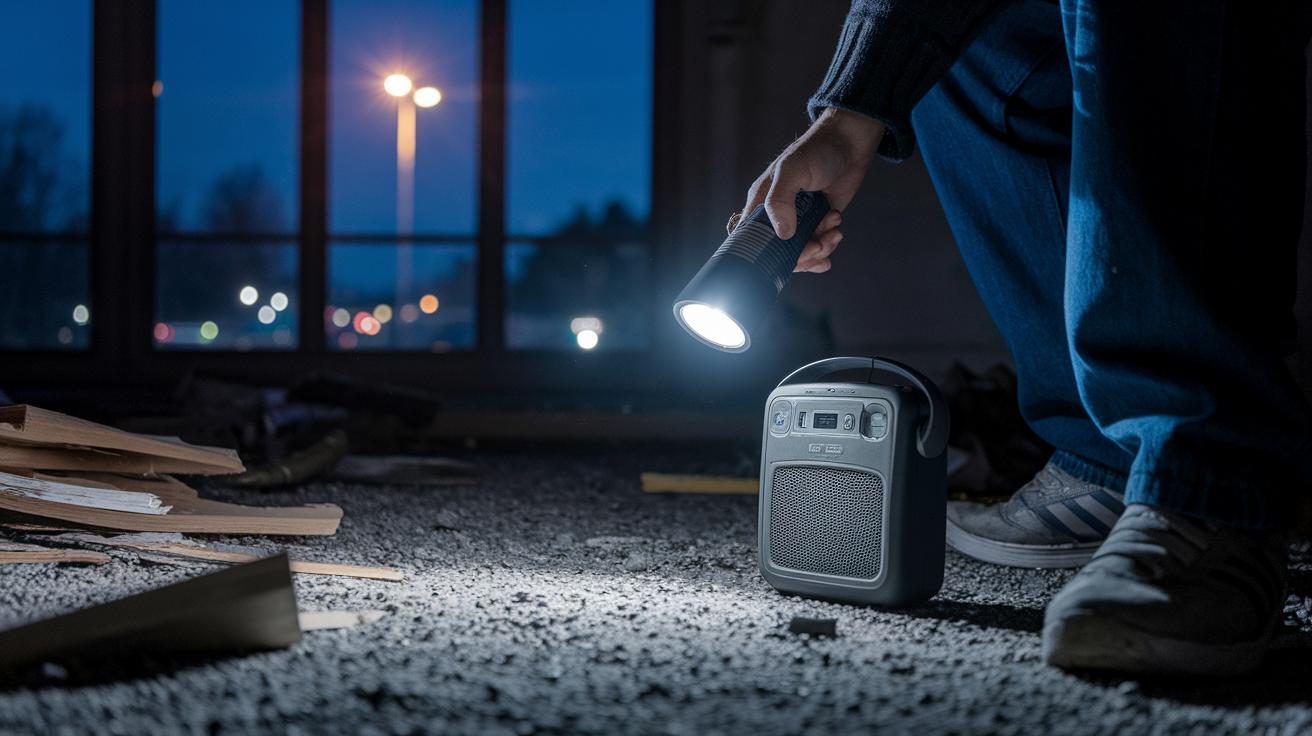
Quick take: Light and radio tools keep you safe when earth shakes cause power loss.
Triage Box:
If you have any of these emergency signs, call emergency services immediately:
- Severe injury or trapped under debris
- Inability to move safely due to complete darkness
Urgent: If you feel disoriented or are in a dangerous area, seek help right away.
Self-care: Use your backup lighting and radio to stay informed and safe.
When a quake hits, power can go out and leave you in darkness. Reliable lighting helps you move safely and avoid falls. Quick access to light lets you spot hazards fast so you can act without delay.
Keep a flashlight with extra batteries and glow sticks (quick backup lights) in each room. These simple additions can make a big difference when the power fails.
Staying informed is just as important. When cell service or internet is down, a rugged radio offers vital updates and weather alerts. A hand-crank or battery-powered radio will help you hear important messages. Pair it with a portable power bank to charge your phone if the outage lasts.
Add these trusted devices to your emergency kit:
- LED flashlight with 6 extra batteries
- Glow sticks for instant backup light
- Hand-crank or NOAA weather radio
- USB power bank (10,000 mAh) for phones
These tools let you see clearly and receive updates, giving you confidence during a quake emergency.
Vehicle and Pet Earthquake Emergency Kit Components
When an earthquake strikes, you need to act fast. Your car kit is stocked with essential items for both you and your pet. It gives you peace of mind when you must leave quickly, ensuring you have basic supplies for survival.
Here’s what to pack:
- Spare water bottles and high-energy snacks
- A first aid kit for you and your pet
- A 3-day supply of pet food with a collapsible bowl
- An extra leash, harness, and vaccination records for your pet
- A blanket or towel
- A multipurpose tool and an emergency whistle
Keep this kit in an easy-to-reach spot like under a car seat or in the trunk. Check and update your supplies regularly to make sure they are fresh and ready for use.
Extending Your Earthquake Emergency Kit for 72-Hour and 14-Day Needs

Your basic earthquake kit is made to keep you safe for about 72 hours with water, non-perishable food, and essential supplies until help arrives. For emergencies that last as long as 14 days, you need extra items to help you stay hydrated, energized, and able to handle daily tasks on your own.
Upgrade your kit with a few key additions that work for both a 3-day and a 14-day plan:
- Include high-calorie dehydrated meals. These foods are packed with energy and nutrients needed during long days.
- Add a solar charger to keep small devices powered when the electricity is out.
- Keep a portable stove so you can heat food or boil water if necessary.
- Stock extra fuel canisters to support your portable stove when you need to cook.
To make your kit cost-effective, buy items in bulk and choose budget-friendly brands. Watch for sales so you can restock without breaking the bank.
Storage, Maintenance, and Customization of Your Earthquake Kit
Make your earthquake kit ready by checking it every 3 months. Look at expiration dates, inspect packaging, and repack supplies every 6 months to keep food, water, and other items fresh. Test batteries, check your first aid supplies, and ensure your basic tools work. Keeping your kit neat helps you grab what you need fast.
Each time you check your kit, rotate consumables. Replace any expired, used, or damaged items right away. This routine helps avoid surprises during an emergency and keeps your kit reliable for your family.
Customize your kit to fit your household. If you have seniors, children, or pets, add extra medications, child-friendly snacks, and pet food or water. Check local seismic maps; for instance, many Californians live near faults. Adjust your supplies so everyone stays safe, no matter what changes.
Make your kit part of a complete earthquake safety plan. Regularly review your supplies and check insurance details, like deductibles between 5% and 25%, to fully protect your home.
Final Words
In the action, we walked through building a strong earthquake emergency kit with clear steps. You learned how to select a sturdy container, fill it with essential food, water, first aid items, lighting, and communication tools, and even prepared mobile packs for vehicles and pets. We broke down the kit into manageable sections, including a plan for both 72-hour and 14-day needs, plus maintenance tips for long-term readiness. Stay positive as you prepare your earthquake emergency kit and keep your loved ones safe.
FAQ
What should be included in an earthquake emergency kit?
An earthquake emergency kit should include water, non-perishable food, first aid supplies, utility tools, flashlights with extra batteries, a communication device, plus pet items if needed.
What are 10 key items for an earthquake emergency kit?
Ten key items are water (one gallon per person per day), non-perishable food, energy bars, canned food, manual can opener, first aid kit, flashlight, battery-powered radio, utility tool, and extra batteries.
How do I create an earthquake emergency kit for school or kids?
An earthquake kit for school or kids should include the basic supplies plus child-friendly first aid items, familiar foods, and simple instructions to help comfort and guide them during an emergency.
What items should not be put in an earthquake emergency kit?
You should avoid including perishable foods or overly specialized equipment that might not be useful during an emergency when space and durability are key.
How can I upgrade my earthquake kit for long-term needs?
To upgrade for long-term needs, add freeze-dried meals, portable cooking supplies, extra fuel canisters, and solar chargers, ensuring you are prepared for up to 14 days.
What constitutes the best earthquake preparedness kit?
The best preparedness kit covers water, food, first aid, lighting, tools, and communication devices, and is tailored to your family’s needs, including items for children and pets if applicable.
How do I prepare for major emergencies like WW3 at home?
Preparation for extended emergencies involves a broader plan than an earthquake kit, including long-term food and water storage, alternative energy sources, a secure shelter area, and a detailed family communication strategy.