


Quick take: A sudden, pounding headache might be more than stress, it could be a sign to act quickly.
Triage Box:
• If you experience a headache that comes on very suddenly, making your heart race, and you also have confusion, trouble speaking, weakness, or loss of balance, call emergency services now.
• If your headache is strong and does not ease or comes with other serious symptoms, seek care the same day.
• If the headache feels like common tension pain and does not worsen, monitor your symptoms and follow up with your clinician if needed.
Have you ever had a headache hit you out of the blue that makes your heart beat fast? I know that can be scary. Sometimes a sudden headache is your body’s way of warning you to check in with your health. In this guide, we break down when a sudden headache might be a serious concern and when it might just be a regular tension headache. Read on to learn what symptoms to watch for and how to act safely.
Key Facts on Sudden Headache: When to Seek Help
Quick take: A sudden, severe headache might signal a dangerous problem. Watch for red flags and act fast.
Triage Box:
- Call emergency services now if you have a headache that comes on in seconds and is very severe, especially if you also feel confused, vomit, or have other alarming symptoms.
- Seek urgent care if the headache feels different from your usual pain or if new symptoms appear.
- Monitor and note your symptoms if the pain is mild, but see a clinician if it doesn’t improve.
A sudden headache can hit like a bolt of lightning. Although it feels scary, research shows only about 10% of these headaches mean bleeding in the brain. Most headaches come from pain in your blood vessels, the tissues covering your brain (meninges), sinuses, or neck muscles. The brain tissue itself does not feel pain.
A small group of people, about 1% to 2%, may have tiny brain aneurysms which can burst and cause dangerous bleeding. Knowing when to worry is key. If you notice the headache reaches its worst pain in less than 1 minute and comes with vomiting or confusion, that’s a red flag and you should call 911 immediately.
Remember, a thunderclap headache is not just a regular headache. It may signal a serious condition like a subarachnoid hemorrhage (bleeding near the brain). When you feel a sudden, sharp pain that is different from what you normally experience, act now and get medical help.
Common Triggers of Sudden Headache Without Emergency Risk

Quick take: Tension headaches from muscle strain and stress are usually not an emergency.
Tension headaches affect about 75% of adults. They cause mild to moderate pain in your head. This pain often comes from tight muscles in your neck, shoulders, or forehead. After a long day at the computer, you might feel pressure around your head like a tightening band. This type of headache is common and linked to stress and muscle strain.
These headaches make up roughly 90% of sudden head pain cases. They can happen 3–4 times a week in some people. When anxiety builds up, you could feel an ache around your temples or scalp.
Common triggers include:
- Muscle strain from poor posture
- Stress and emotional pressure
- Fatigue and irregular sleep
- Overexertion during physical activities
Usually, the pain is a sign of tension and is not life-threatening. You can help ease the headache by managing stress, drinking enough water, and practicing relaxation techniques. If your headache pattern stays the same and you don’t get any new worrying symptoms, this pain rarely needs emergency care.
Differentiating Sudden Headache Types: Tension, Migraine & Cluster
Quick take: Sudden head pain may be a tension headache, migraine, or cluster headache. Use the clues below to decide if you need to rest, seek urgent care, or call emergency services.
If you notice any of these emergency signs, call emergency services now:
- Extreme head pain that comes on very suddenly and feels unlike your usual headaches.
- New confusion, weakness, slurred speech, or trouble walking.
- Sudden vision changes or severe neck stiffness.
Tension Headache
Tension headaches usually feel like a steady, tight band around your head. You may notice a mild to moderate pain on both sides. This pressure often comes with tender spots in your neck, shoulders, or scalp. They are usually linked to stress, poor posture, or tired muscles and do not typically stop you from doing your daily activities.
Migraine
Migraines bring a throbbing pain that often affects just one side of your head. They may also come with an aura (a short warning like flashing lights), nausea, and a strong sensitivity to light or sound. These headaches can last from 4 to 72 hours. They might force you to rest in a dark, quiet room. Women tend to have migraines more often than men, and the pain can feel very disruptive.
Cluster Headache
Cluster headaches give you a sudden burst of severe, one-sided pain concentrated around your eye. This pain is very sharp and intense, often described as an electric shock near your eye. These episodes come in groups during the day and may also cause eye redness or tearing. Cluster headaches are more common in men and are often seen in those who smoke.
Remember to track your symptoms, note the start time, how severe the pain is, and any other signs you experience. This simple record can be very helpful if you need to see a doctor.
Sudden Headache Red Flags and Serious Causes
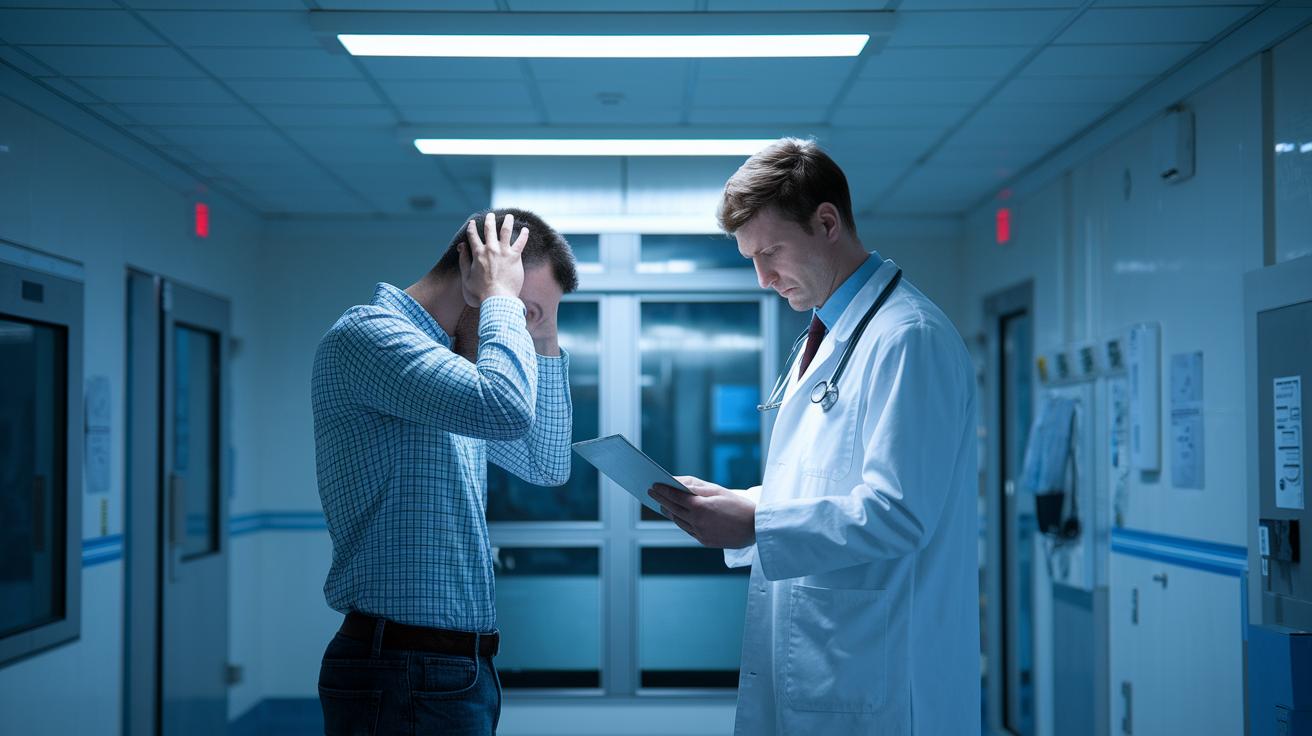
A very strong headache that starts suddenly can be a sign of a burst blood vessel in your brain (subarachnoid hemorrhage from a ruptured aneurysm). Even though only about 10% of these headaches are due to bleeding, you must get checked immediately if you have any warning signs.
In an emergency, a CT scan helps doctors see if there is abnormal blood in your brain. If you notice any of these symptoms, don’t delay in getting help.
Key warning signs include:
- "Worst headache ever" that peaks in less than 1 minute
- Sudden vomiting that isn’t tied to food
- Stiff neck or pain when you move
- Passing out or feeling confused
- Trouble speaking clearly or weakness in an arm or leg (focal neurological deficits)
- A seizure that starts with the headache
These points add important details without repeating earlier advice.
Diagnostic Steps for Sudden Headache in Clinical Assessment
Doctors start by asking about your symptoms and doing a physical exam to decide if your headache is simple or if there are warning signs. They look for signs like sudden strong pain, a stiff neck, changes in vision, or confusion. For example, if you have a stiff neck and feel confused, your doctor will likely order a CT scan to check for bleeding inside your head.
| Step | What They Look For | What They Do |
|---|---|---|
| 1 | History and physical exam | Ask about how the headache started, what triggers it, and any other symptoms |
| 2 | Warning signs like sudden severe pain, stiff neck, or neurological issues | Order a CT scan to check for brain bleeding |
| 3 | Normal CT scan but symptoms still worry the doctor | Consider additional tests like a lumbar puncture or an MRI |
This process is different from patient advice. It shows clear clinical steps and criteria that doctors follow. For example, if your CT scan comes back normal but your symptoms are still strong, your doctor may use extra tests to better understand the issue instead of relying only on the initial scan.
Immediate Home-Care for Sudden Headache Relief

When a sudden headache hits and no other worrying signs appear, you can take simple steps at home to ease the pain fast. For many people, over-the-counter medicines like acetaminophen or ibuprofen quickly relieve a mild headache. Drinking plenty of water, getting enough sleep, and reducing stress can also boost your comfort and help you feel better without seeing a doctor.
Always follow the label instructions on pain relievers. Using them too often may lead to rebound headaches, which means the pain can return repeatedly. Instead, try non-drug methods to ease the discomfort. Techniques such as deep breathing (slow, controlled breaths), yoga, or acupuncture can relax tense muscles and reduce headache intensity. Keeping a simple log of when your headaches occur and what seems to help can guide you in finding the best relief.
Try these quick home-care steps:
- Drink a full glass of water and rest in a dark room.
- Apply a cold pack to your forehead or temples.
- Take an over-the-counter pain reliever as directed.
- Practice deep breathing for 5 minutes.
- Do gentle neck and shoulder stretches.
These practical steps help you manage sudden head pain and make safe health choices at home.
When to Contact a Professional for a Sudden Headache
If your headache comes on very quickly, lasts more than 72 hours, or happens more than 3 times each week, you need to get professional help right away. These are warning signs that may point to a serious problem.
Keep a simple log of your headache by writing down the date, time, how long it lasts, and how bad it feels. This information can help your doctor decide what might be causing the headaches and choose the best treatment.
| Symptom | Action |
|---|---|
| Reaches full strength in less than 1 minute | Get care immediately |
| Lasts more than 72 hours | Call a professional |
| Happens over 3 times a week | See a specialist |
Final Words
In the action, this guide broke down key facts on sudden headache, outlining red-flag symptoms, common causes, and clear diagnostic steps. It explained how to spot life-threatening signs while offering practical home-care tips and self-management steps.
The post also helped you learn the differences between tension, migraine, and cluster headaches, so you can decide when it's safe to monitor or when to seek help.
By following these steps, you are better equipped to manage a sudden headache and stay safe.
FAQ
What are the causes of sudden headaches?
The causes of sudden headaches include primary headaches like tension, migraine, or cluster, as well as serious issues such as a bleeding brain aneurysm. A detailed evaluation is needed if red flags are present.
What does a thunderclap headache feel like?
The thunderclap headache feels sudden and severe, reaching its worst pain within seconds. It is a red-flag symptom and requires immediate medical attention.
What is an ice pick headache?
An ice pick headache feels like a sharp, brief stab of pain, often lasting only a few seconds. It usually does not signal a serious problem but warrants doctor consultation if frequent.
How do headache locations, like on the top, front, or left side, affect diagnosis?
The headache location, whether on top, front, or one side, can suggest different headache types such as tension, migraine, or cluster, though overall patterns and associated symptoms guide the diagnosis.
What does a sudden headache with nausea feel like?
A sudden headache with nausea may indicate a migraine or another issue. The presence of nausea alongside a quick headache onset could be a sign of a more serious condition needing medical review.
What does a pre-stroke headache feel like?
A pre-stroke headache may feel unusually severe and different from typical headaches, possibly accompanied by confusion, weakness, or other neurological symptoms, signaling the need for urgent care.
What does a stress headache feel like?
A stress headache feels like a dull, pressing pain on both sides of the head. It is often linked with muscle tension in the neck and shoulders and usually eases with rest and relaxation.