


Quick take: Changes in your leg color can be harmless or signal issues with blood flow or skin health.
If you have any of these emergency signs, call emergency services now:
• Sudden, severe leg pain
• Significant swelling or warmth
• Painful, bright red discoloration
Otherwise, watch your symptoms and follow these steps:
• Notice if the color change comes with pain or swelling.
• Track how long the change lasts and any other new symptoms.
• If the change doesn’t improve or you feel worse, call your clinician.
Sometimes, skin color changes are due to minor irritation or normal aging. Other times, they might hint at a change in blood flow or a skin condition that needs closer care. Knowing what to watch for helps you act early and take charge of your health.
Leg Skin Discoloration: Immediate Causes, Symptoms, and Next Steps
Quick Take: Leg discoloration can be a sign of blood flow issues that might need attention.
If you have any of these emergency signs, call emergency services now:
- Discoloration that does not fade over time
- Swelling in your leg that you can see or feel
- Pain or tenderness around discolored areas
- Itching or burning sensations
- Sudden increase in the size or darkness of the patches
Common Causes:
Leg discoloration often happens because blood is not flowing well. It can occur with varicose veins, poor blood flow (chronic venous insufficiency), or skin conditions. These changes are not just cosmetic; they can be early signs of something more serious.
What To Do Now:
- Check your symptoms. Note if you have pain, swelling, or new changes in your skin.
- Raise your legs a few times a day (for example, rest your feet on a stool for 10–15 minutes) to help reduce swelling.
- Wear compression stockings that feel comfortable to give gentle support.
- Avoid harsh soaps or lotions that might irritate the skin.
- Track your progress by writing down any changes in color, discomfort, or patch size.
When to Seek Help:
If you experience increasing pain, constant swelling, or quick changes in your leg’s appearance, contact your doctor or visit urgent care immediately. These steps help you decide when home care is enough and when you need a doctor’s advice.
Reviewed by: Dr. Amy Smith, MD – October 2023
Sources: Based on current clinical guidelines and expert review.
Identifying Hyperpigmentation Patterns on Lower Limbs
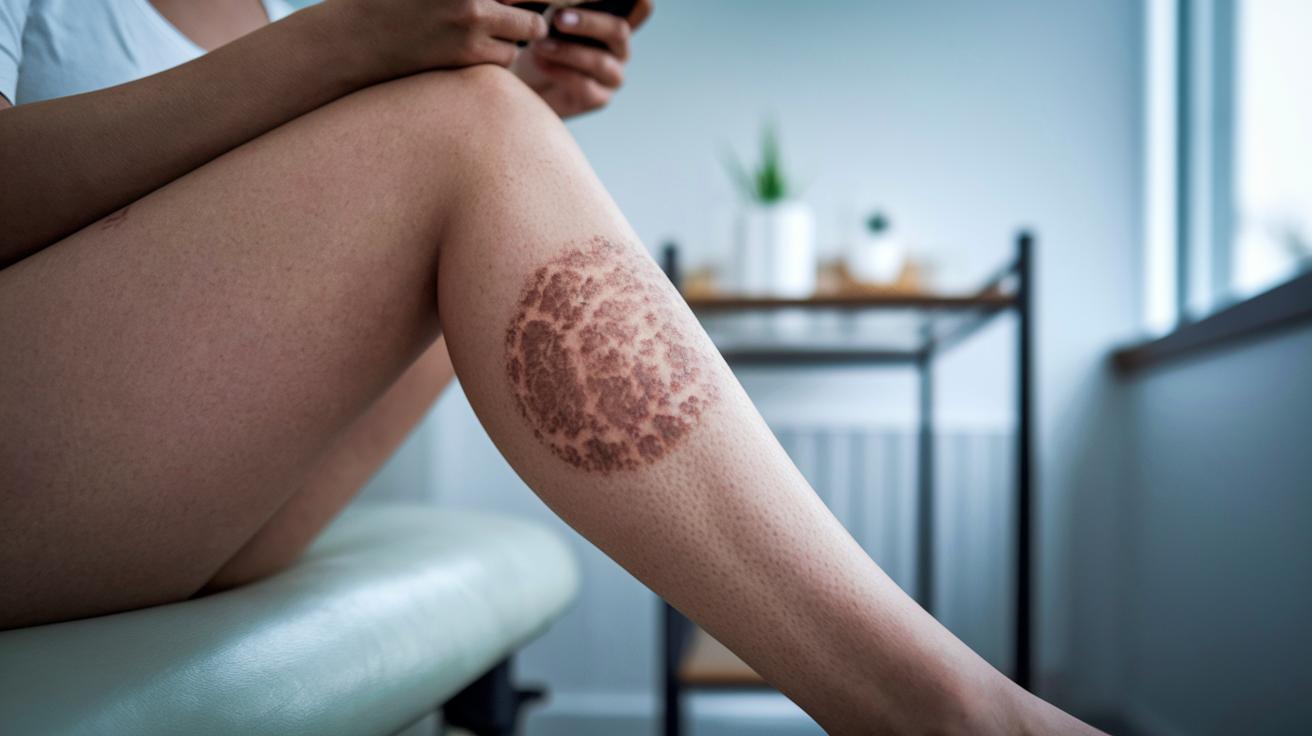
Quick take: Most dark or uneven patches on your legs are harmless, but note any changes in size, color, or shape.
Triage Box:
• If a patch grows quickly, bleeds, or gets an irregular border, call emergency services now.
• If a spot becomes darker or changes shape noticeably, seek same-day medical advice.
• Otherwise, monitor the area and note any differences with clear photos over time.
Hyperpigmentation means parts of your skin have more or less melanin (the pigment that gives your skin its color). You may see light brown patches, dark brown spots, or even shades of purple. Often, these patches appear along your leg’s sides, near veins, or over bony areas. For example, a small light brown spot near a vein is quite common.
Many of these changes follow clear patterns. You might notice a line of discoloration along a vein or a patchy look over a bony area. Compare photos of your legs from different times. Benign spots usually stay the same. But if you see changes in color or shape, that is a sign to check in with your healthcare provider.
Taking regular, clear photos is a simple way to track these spots. Consistent appearance over time is usually a good sign. However, if a spot grows darker or its shape shifts, it could mean you need medical evaluation.
Vascular-Related Discoloration: Venous Stasis, Varicose Veins, and Hemosiderin Deposits
When your vein valves don’t work right, blood pools in your lower legs. This can change your skin from red to brown. Varicose veins, which may look blue or purple, often appear at the same time. When blood doesn’t return properly, your leg tissues feel congested. You might notice swelling and discomfort along with these color changes.
Sometimes, blood leaks from these weak veins. When this happens, cell breakdown causes hemosiderin (a kind of iron deposit) to form in the tissues. This creates rust-colored or brown patches on your skin and may lead to pain or swelling. It is important to manage these signs to keep your legs healthy.
- Use compression stockings
- Elevate your legs
- Try sclerotherapy
- Consider laser therapy
With the right treatment, you could see better blood flow, less discomfort, and a more even skin tone. Taking steps to boost circulation and manage symptoms helps improve both the look and feel of your legs.
Non-Vascular Medical Contributors: Diabetes, Hormonal Imbalances, and Nutritional Deficiencies
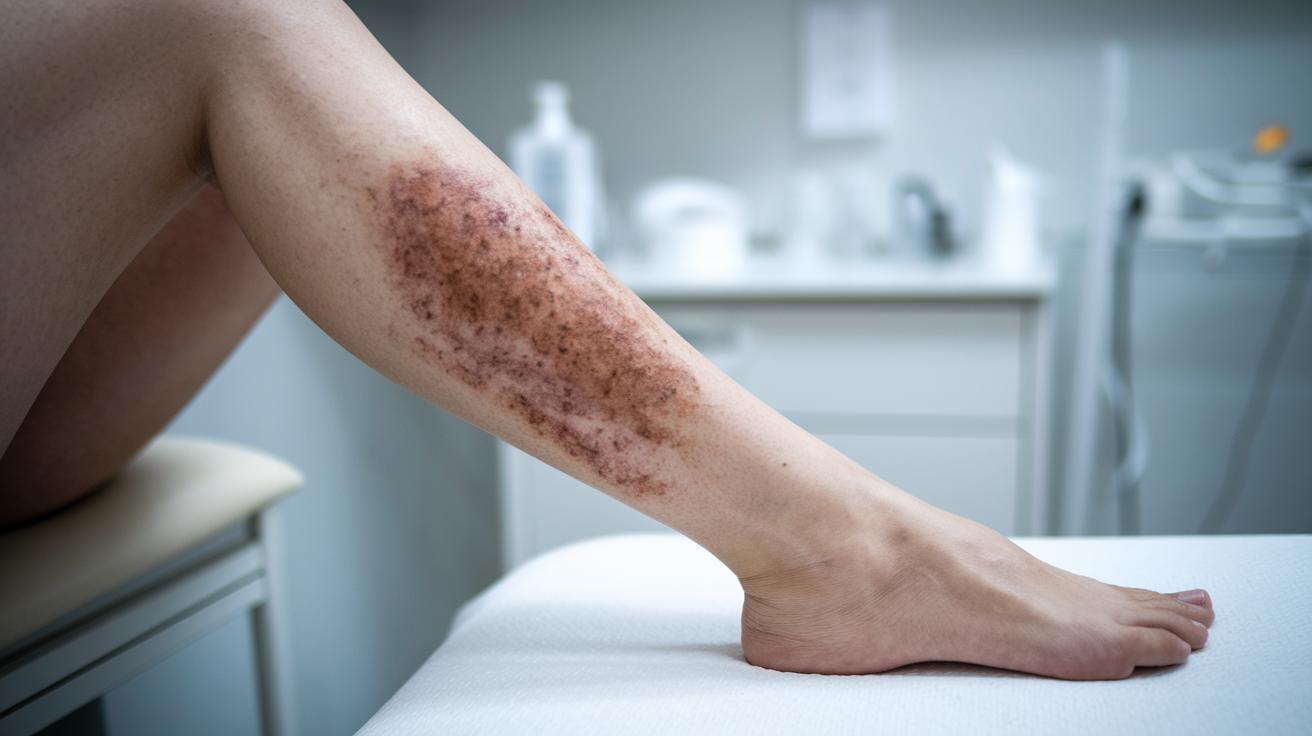
For many people with diabetes, you might notice dull brown patches on your legs. These appear because tiny blood vessels (microvessels) are damaged, reducing blood flow. The skin loses its even tone, and areas can look lighter or brown. If you have long-term diabetes and see these changes, keep an eye on them and mention them to your healthcare provider.
Hormone changes, which can happen during pregnancy, menopause, or with certain hormone conditions, may also affect your leg skin tone. Changes in hormone levels can cause spots that look similar to melasma (a skin condition that makes dark patches) and result in uneven coloration. If you see dark or blotchy patches, it might be a good idea to talk with your doctor.
Not getting enough key nutrients like iron, vitamin D, or vitamin B12 can also change your skin’s appearance. These nutritional gaps may make your skin look pale or mottled. A balanced diet or taking supplements can often help restore a more even tone and stronger skin.
Inflammatory and Infectious Factors: Dermatitis, Livedo Reticularis, and Fungal Infections
Quick take: Skin changes like red patches, lacy patterns, or spots can come from irritants, changes in blood flow, or a fungus.
Triage Box:
Red flags:
- Severe pain, swelling, or signs of infection (like fever or pus).
Urgent concerns: - Rapid spread, worsening symptoms, or new skin markings that trouble you.
Watch and self-manage: - Mild itching, scaling, or changes that stay steady.
Contact dermatitis and eczema show up as red or brown patches on your legs. They can itch or flake. Sometimes even a favorite lotion might cause unexpected skin irritation. To ease these symptoms, gently wash your skin with a mild cleanser, apply a cool compress, and avoid products that seem to trigger the reaction.
Livedo reticularis appears as a lace-like pattern with bluish-purple marks. This happens when small vessels in your skin experience changes in blood flow. Cold weather or certain medicines might bring out these patterns. Wearing light, warm clothing on your legs can help reduce the look of these marks while you plan to see a healthcare professional.
Tinea versicolor is a fungal condition that makes spots either lighter or darker than your normal skin tone and gives a fine scale. The affected areas may also feel dry and, if not treated, might spread. A good first step is to wash the area with a mild antifungal soap and keep an eye on any changes.
Diagnostic Process for Leg Discoloration: Clinical Evaluation, Imaging, and Differential Diagnosis

Quick take: Leg discoloration may signal issues with blood flow, skin, or overall health.
If you have sudden pain, swelling, a rapid change in color, or fever, seek help immediately.
Your doctor starts by asking detailed questions about when you noticed the color change, how it has progressed, and if you feel pain or swelling. They will also closely examine your skin and might take pictures to track small changes over time. This careful look helps decide if the discoloration is from a blood vessel problem, a skin issue, or another health concern.
If the history and visual exam do not reveal a clear cause, your doctor may suggest more tests. An ultrasound test is often used to check how well blood flows through your leg veins. Sometimes a small sample of skin (a biopsy) is taken to see if the change in pigment is harmless or if it could be a sign of something more serious, like skin cancer. A blood test may also be done to check levels of glucose, iron, and vitamin B12 to rule out other health issues. These tests together help your doctor pinpoint if the cause is related to your blood vessels, skin, metabolism, or a rare condition.
| Test | Purpose | Key Findings |
|---|---|---|
| Doppler ultrasound | Check your blood flow | Find problems like blocked flow |
| Skin biopsy | Study the skin pigment | Help rule out cancer |
| Blood panel | Screen for body-wide issues | Test for glucose, iron, and B12 levels |
Treatment and Management of Leg Pigmentation: Advanced Topical and Chemical Interventions
Quick take: These treatments work deep in your skin to lessen dark spots – use them as directed and watch for any irritation.
If you experience any of these, stop and call your doctor:
- Severe redness or swelling
- Intense burning or pain
- Noticeable peeling beyond mild irritation
Topical treatments change your skin’s color on a deeper level. Hydroquinone stops an enzyme (tyrosinase) that helps produce melanin, so less pigment builds up. Retinoids help your skin shed old cells, letting new and even skin emerge. Vitamin C fights damage and reduces extra melanin. For example, using a 3% hydroquinone cream every day after washing can slowly make dark areas lighter when used the right way.
A small case study shows that results can vary with different creams. One person using retinoid cream saw noticeable improvement in 6 weeks. Another using vitamin C serum twice daily noticed less patchiness after 3 months. These examples show that your success depends on the product you use and sticking to your routine. Here’s a simple plan:
- Apply a thin layer of the prescribed product exactly as directed.
- Watch for irritation like redness or peeling.
- Record any changes in skin tone every week.
Stick to your treatment plan to keep a balance between good results and possible side effects. If you notice mild irritation or dryness, you might need to ease up on the frequency or try a different formula. Starting with a low strength and slowly increasing it as your skin adjusts is best. This careful, evidence-backed approach helps manage your skin tone over the long term.
Skin Discoloration on Legs: Feel Radiant Today

Quick take: Daily habits can help even your leg skin tone and keep you feeling radiant.
If you have any of these emergency signs, call emergency services now:
- Sudden, severe leg pain or swelling (this could be a blood clot)
- Rapid redness or warmth in your legs
- Chest pain or shortness of breath
If you have any urgent concerns:
- Seek same-day care for severe discomfort in your legs
For basic self-care, try these steps:
- Walk briskly or do gentle leg stretches to boost blood flow.
- Elevate your legs for 10–15 minutes a few times a day to help blood return (this eases pressure in your veins).
- Use the stairs or do light stretching during TV time to keep your circulation strong.
- Protect your skin by wearing SPF to block harsh sun rays that can trigger uneven melanin production.
- Eat plenty of fruits and vegetables and add foods rich in antioxidants, like berries, leafy greens, and nuts, to help reduce inflammation.
- Drink plenty of water and try to avoid processed foods to support healthy skin from within.
These simple habits work together to help manage leg discoloration and let you feel comfortable and confident every day.
Final Words
In the action, this article broke down common causes of leg skin discoloration and highlighted key symptoms to watch for. It detailed simple self-care steps like leg elevation and compression while stressing when to seek medical care. The guide reviewed various potential triggers, from vascular issues to dermatologic conditions, and offered practical tips to help you track changes. Stay proactive about your health and remember that clear, focused care can make managing skin discoloration on legs easier. Keep a positive outlook and work with your clinician for the best results.
FAQ
What causes skin discoloration on legs?
The causes of skin discoloration on legs include venous issues, infections, hormonal changes, and diabetes. These factors can alter melanin distribution or cause blood pooling, leading to red, brown, or purple patches.
What does brown discoloration on legs indicate, and what does hemosiderin staining look like?
Brown discoloration often indicates hemosiderin staining, where blood breakdown products pool in the skin. This appears as rust-colored or brownish patches, typically resulting from chronic venous insufficiency.
What do white spots on leg skin signify?
White spots on leg skin can signal a fungal infection like tinea versicolor or a loss of pigment. They appear as small, lighter patches and may come with fine scaling or minor itchiness.
How does leg discoloration differ in children?
In children, leg discoloration may stem from eczema or minor infections rather than vascular issues. Persistent or unusual changes in color warrant a pediatric assessment to rule out underlying concerns.
What does leg discoloration due to poor circulation look like?
Legs affected by poor circulation often appear mottled or bluish with uneven pigmentation along the lower extremities. This change happens when blood flow issues cause pooling and reduced oxygen to the skin.
How does diabetes affect leg skin color?
Diabetes can cause dull, brown patches on the legs, known as diabetic dermopathy. This happens due to microvascular damage from high blood sugar, which affects skin repair and pigmentation.
Can lower leg discoloration be reversed?
Lower leg discoloration may be reversible when the underlying cause is treated early. Lifestyle changes, proper self-care, and medical guidance can help improve the skin’s appearance over time.
What are the treatment options for skin discoloration on legs?
Treatment options range from home remedies like leg elevation and compression stockings to topical therapies and medical procedures. Addressing the root cause is key to managing and reducing skin discoloration.