


Quick take: A new or changing spot on your leg may signal skin cancer.
If you notice a small spot on your leg that changes in size, color, or shape, it could be serious. Skin cancer happens when skin cells begin to grow out of control. Early detection is very important for a good outlook.
Red flags:
• Unusual bumps or growths
• Changes in color or size
• A spot that looks different from the rest
Too much sun can raise your risk, so protect your skin and check it regularly. If you see any of these changes, contact your doctor right away.
Keep an eye on your skin and act fast if something doesn’t seem right. Your health matters, so take these signs seriously and seek care promptly.
Leg Skin Cancer Overview: Symptoms, Risk Factors, and Treatment
Quick Take: Leg skin cancer means your leg cells are growing abnormally. It is important to watch for any unusual spots.
Triage Box:
- Red Flags: A spot that grows quickly, bleeds, or becomes painful.
- Urgent: See your doctor if a lesion shows uneven shape, color, or size.
- Self-Care: Check your legs often and protect them from too much sun.
Leg skin cancer happens when the skin cells on your legs start to grow in a strange way. These changes can cause lumps or patches that may be flat or bumpy, light or dark, and smooth or rough. Too much sun exposure can hurt your skin’s DNA, leading to these changes. Finding these signs early can help protect your health.
There are three common types of skin cancer that affect your legs:
- Basal cell carcinoma: This often appears as a shiny bump or a sore that does not heal.
- Squamous cell carcinoma: This usually shows as a red, scaly patch or a raised bump that may feel rough.
- Melanoma: The most serious type, it typically shows up as an uneven spot with different colors and irregular edges.
Use the ABCDE method to check your skin:
- Asymmetry: One half of the spot looks different from the other.
- Border Ir
Skin cancer on legs: Bright Health Outlook
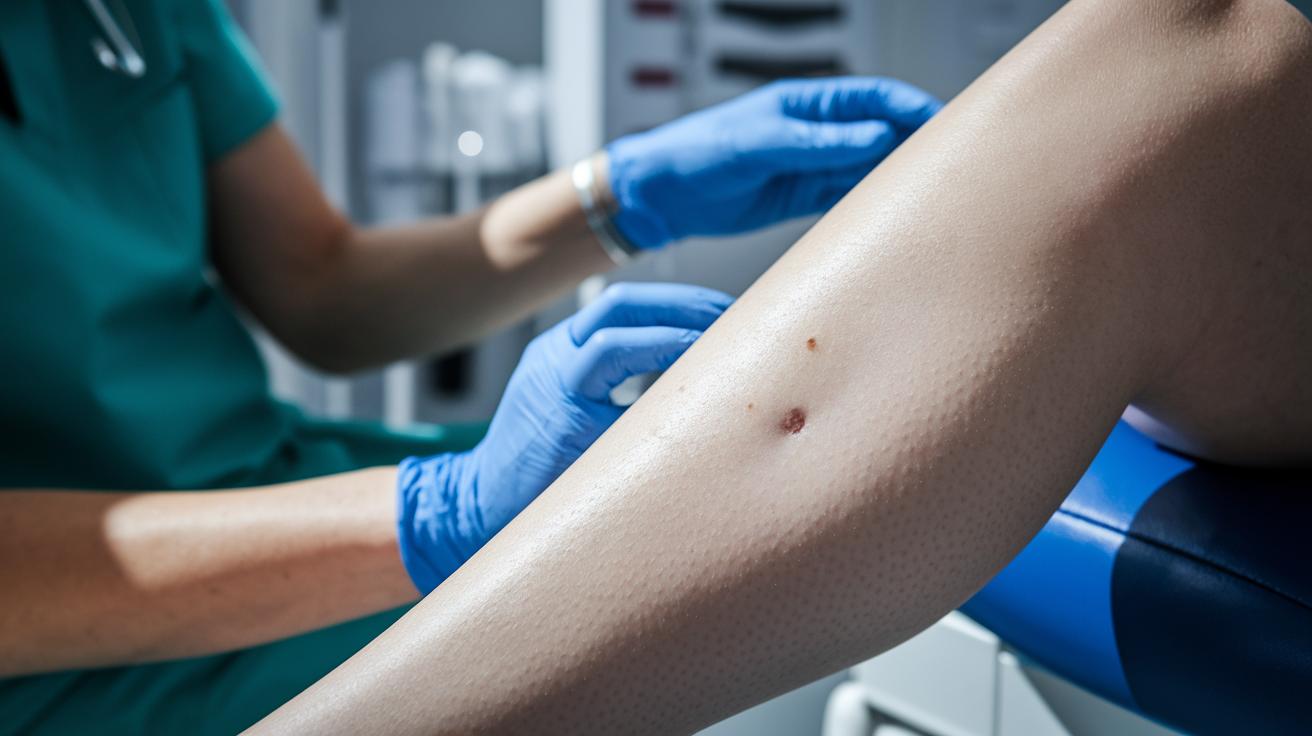
Quick take: Skin cancer on your legs can show up as unusual bumps or spots. Watch for any rapid changes, and get help if you notice worrisome signs.
Triage Box:
• If you see bleeding, rapid growth, or lesions that hurt, seek urgent care.
• If you notice changes in color, shape, or size, call your doctor.
• For regular care, check your skin often and protect yourself from too much sun.
Skin cancer on your legs happens when skin cells start to grow out of control. These abnormal spots can differ in texture, color, and shape. Catching them early makes treatment more effective.
Basal Cell Carcinoma on Legs
This type might show up as smooth, shiny bumps or sores that do not heal. They usually grow slowly and stay in one place. Because they can resemble harmless spots, it’s important to have any change checked by your doctor.
Squamous Cell Carcinoma on Legs
Look out for red, scaly patches or rough, raised bumps. These lesions form mostly on skin that sees a lot of sun. They may grow larger over time and can become tender, especially if they start to break open.
Melanoma on Legs
Melanoma usually appears as a spot that is uneven in shape and color. One side might look very different from the other, which is a sign to act quickly. This form is more aggressive, so early detection is very important.
Less Common Malignant Lesions in Legs
Some rare skin cancers might not look typical. They might bleed, develop a crust, or not heal normally. These unusual signs need extra attention to make sure they are not serious.
| Type | Key Features |
|---|---|
| Basal Cell Carcinoma | Shiny bumps or non-healing sores that grow slowly |
| Squamous Cell Carcinoma | Red, scaly patches or rough bumps on sun-exposed skin |
| Melanoma | Uneven spots with irregular colors and borders |
| Less Common Lesions | Lesions that bleed, crust, or do not heal as expected |
Risk Factors Contributing to Leg Skin Cancer
Sunlight and tanning beds are the main reasons for leg skin cancer. Too much UV light can hurt your skin by damaging its DNA and causing abnormal cell growth. If you have fair or sensitive skin, your legs absorb more UV light, which increases your risk. Wearing sunscreen and covering your legs can help protect your skin.
Family history and genes also matter. If skin cancer runs in your family or you tend to sunburn often, your risk goes up. Repeated sunburns and unprotected tanning can lead to harmful changes in your skin cells. Knowing these risks can help you keep an eye on your skin and seek care early if something changes.
Self-Examination Techniques for Skin Cancer on Legs

Quick take: Regular self-checks on your legs can help you spot changes early. If you see new spots, color changes, or sores that don’t heal, call your doctor.
If you notice any of these red flags, seek care now:
- New or changing moles or birthmarks
- Spots that bleed or itch
- Lesions that feel different (harder, softer, or uneven)
Check your legs every couple of weeks using these steps:
- Stand in front of a full-length mirror and look at the front and back.
- Look between your toes and along skin folds.
- Feel your moles and spots for any changes in texture or firmness.
- Take photos of spots that look different from before.
- Compare both legs, side by side.
- Write down any changes like itching, bleeding, or persistent shifts.
Taking a few minutes to check your legs may feel small, but it can make a big difference. Keeping a record of what you see with photos and notes helps your doctor understand any changes over time. Stay alert and act quickly if something looks off.
Diagnostic Evaluations for Suspected Leg Skin Cancer
Getting the right answer starts with a careful skin exam by your doctor. They check the spot’s texture, movement, and look to decide if it might be cancer or a harmless skin tag. They follow clear steps to make sure nothing is missed.
Clinical Examination and Dermoscopy
Your doctor first examines your skin closely. They might use a dermatoscope (a special light tool) to look at the spot in detail without touching it. Sometimes, they use ultrasound (a scan that uses sound waves) to check the depth and see blood vessel patterns that could point to cancer.
Biopsy Techniques
If the spot looks worrisome, your doctor will likely do a biopsy. This means taking a small piece of the spot with methods like a shave, punch, or by cutting it out. The sample is then examined under a microscope to see if cancer cells are present. This careful check makes sure even small changes are noticed.
Staging and Advanced Imaging
Once cancer cells are found, more tests come next. Tools like MRI (a magnetic scan) or more ultrasound tests help show how deep the spot goes and if it has spread to nearby tissues. This step is vital because knowing the stage of the cancer helps decide the best treatment options.
Treatment Methods for Skin Cancer on Legs

Quick take: Early-stage leg skin cancer usually needs careful surgery, while other treatments may be used for shallow or advanced cases.
If you notice bleeding, rapid growth, or increased pain, call your doctor right away.
Treating skin cancer on your legs focuses on removing cancer cells while keeping healthy skin safe. For small or early cancers, doctors often use a simple surgical cut or Mohs micrographic surgery (a method that removes cancer layer by layer). These procedures help take out all the abnormal cells with as little damage to normal skin as possible.
For cancers that stay near the surface, treatments like cryotherapy (freezing the cells) or laser therapy (using focused light) can destroy the cancer. Creams such as 5-fluorouracil and imiquimod work directly on the skin to clear out shallow tumors. These options often allow you to get treated without a major operation.
When the cancer is deeper or more aggressive, radiation therapy, using high-energy rays to kill cancer cells, might be the best choice. In some instances, especially with aggressive types like melanoma, doctors may add drugs that boost the immune system or target specific changes in the cancer cells. These treatments help control the disease when local methods alone aren’t enough.
Always follow up with your doctor for monitoring and any changes in your treatment plan.
Prevention and Follow-Up for Leg Skin Cancer
Quick Take: Keep your legs sun-safe and look out for any skin changes.
Triage Box:
- Red Flags: New moles, spots that don’t heal, or marks that change quickly.
- Urgent: If you see these changes, call your healthcare provider right away.
- Self-Care: Protect your skin with sunscreen, proper clothing, shade, and UV-blocking accessories.
Protect your legs by reducing sun exposure. Use a broad-spectrum sunscreen and wear clothes that cover your legs, especially between 10 a.m. and 4 p.m. Stay in the shade as much as you can. These steps help lower the chance of harmful damage to your skin cells.
If you have had treatment before, sticking to these habits can reduce your risk of the cancer coming back and prevent other complications.
Regular follow-up is key. Perform self-exams on your legs and book visits with a dermatologist to catch any suspicious changes early. Look out for new moles, spots that don’t heal, or sudden changes in existing marks. If you notice any of these signs, contact your healthcare provider immediately.
Routine check-ups help monitor your skin’s health and ensure that any changes get the attention they need. For more details on why regular check-ups matter, see what is preventive care (https://spiritsocietyofpa.com?p=190).
Final Words
In the action, we covered signs, risk factors, and ways to check for skin cancer on legs. We broke down the types, diagnostic steps, treatment options, and prevention tips into simple steps you can follow.
You now have a clear idea of what to watch for and when to get help. Keep an eye on any changes and take timely action. This straightforward approach can help you stay safe and act promptly when needed.
FAQ
What do early-stage leg skin cancer photos show?
Early-stage leg skin cancer photos show lesions that can be smooth or rough, light or dark, with irregular borders and color variations. They help identify abnormal growths early on.
What are common treatment options for skin cancer on the legs?
Common treatment options include outpatient surgical removal such as excision or Mohs surgery, cryotherapy for superficial spots, laser therapy, topical creams, and sometimes localized radiation or immunotherapy for more advanced cases.
How does basal cell carcinoma appear on the leg?
Basal cell carcinoma on the leg often appears as a pearly or waxy bump or a sore that does not heal. It tends to have a raised edge and may bleed if irritated.
How serious is skin cancer on the legs?
The seriousness varies by type; while basal cell carcinoma is usually less aggressive, melanoma can be dangerous. Immediate evaluation and treatment are key to preventing further spread.
What are common symptoms of skin cancer on the legs?
Common symptoms include changes in existing moles, new growths, irregular borders, uneven colors, and lesions that do not heal. Noting these signs early can prompt timely medical review.
What does skin cancer on the leg feel like?
Skin cancer on the leg can feel firmer, rougher, or raised compared to surrounding skin. Some lesions may be slightly tender or change in texture over time.
What defines Stage 1 skin cancer in the leg?
Stage 1 skin cancer in the leg is characterized by a small lesion, usually less than 2 cm, with limited spread into surrounding tissue. Early detection at this stage often leads to a favorable outcome.