
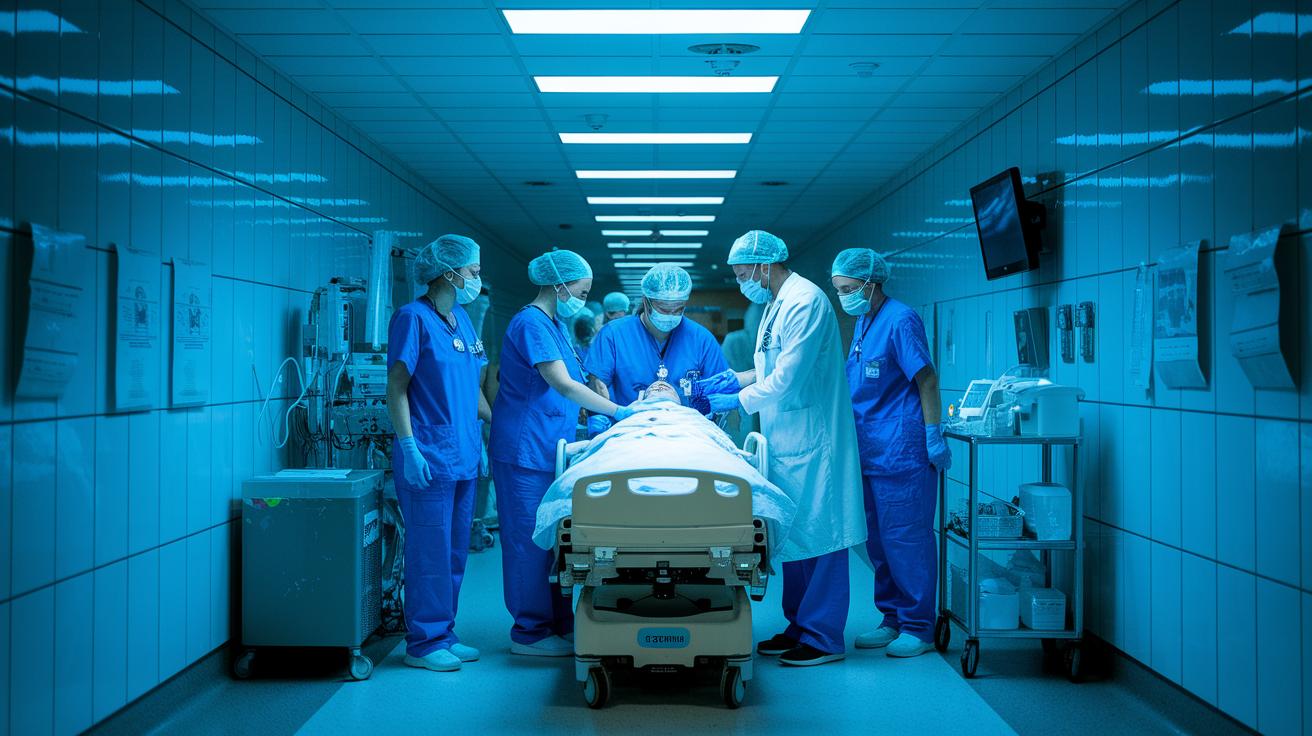

Quick Take: In the ER, every minute counts.
When you arrive at the emergency room, a five-level triage system makes sure anyone with life-threatening symptoms gets help first. This method sorts patients by urgency, so those with severe issues, like chest pain, trouble breathing, or sudden severe pain, are seen immediately. Hospitals follow clear, step-by-step guidelines that help them act fast in emergencies and manage less urgent cases as needed.
This organized approach means that each action is measured to save lives, ensuring that every second is used wisely. Understanding how swift prioritization works can give you peace of mind and help you feel prepared if you or a loved one ever need urgent care.
order of triage in the ER: Swift Prioritization
Quick take: ERs use a five-level system to make sure patients with the most urgent needs get help first.
Triage Box:
• If you have severe chest pain, major bleeding, or signs of a heart attack, call emergency services now.
• If you experience major trauma or confusion (trouble with clear thinking), seek same-day care immediately.
• If you have moderate trouble breathing or strong limb pain, get evaluated within about 30 minutes.
• If you have minor belly pain or superficial injuries, care can be managed on a less urgent timeline.
• If your issue is very small, watch and manage at home until it improves.
Most emergency rooms follow a five-level scale like ESI or CTAS. Level 1, known as resuscitation, is reserved for life-threatening emergencies that need immediate action. For example, someone with a severe heart attack or major bleeding is treated right away.
Level 2 covers very urgent conditions. This level fits cases like major trauma or a change in consciousness that are not instantly fatal but could worsen quickly. Patients in this group are checked rapidly to avoid lost time.
Level 3 is for urgent issues that need attention within about 30 minutes. This might include strong pain in a limb or moderate breathing difficulty. Level 4 is for lower urgency concerns where symptoms are stable, such as minor abdominal pain or slight injuries. Level 5 is reserved for non-urgent matters, where the complaints do not require immediate treatment.
Sorting patients by these levels helps hospitals use their resources wisely. This process means that the most critical conditions get handled first, and more stable cases are looked after in order. For example, a patient with a fast heart rate and severe chest pain is rated Level 1 and sent immediately for advanced care.
Step-by-Step ER Triage Levels and Evaluation Sequence

Level 1 covers the most dangerous emergencies. These cases need help right away. Life-saving devices like automated heart shock devices (defibrillators) and real-time monitors (electronic tracking) help staff act immediately. For example, one hospital’s system alerts the team as soon as a patient goes into cardiac arrest, so help arrives fast.
Level 2 is for very urgent problems such as severe chest pain, confusion, or major injuries. Modern protocols include telemedicine (remote video consultations) so a specialist can advise even before a full checkup. For instance, if you feel strong chest pressure, your health record may be reviewed quickly to catch a potential heart attack in time.
Level 3 covers urgent issues like trouble breathing or intense limb pain that can worsen if not treated within 30 minutes. Many emergency rooms use electronic alerts to keep track of waiting times. For example, if a patient’s shortness of breath gets worse while waiting, computerized systems prompt staff to check on them sooner.
Level 4 is for less urgent conditions such as mild allergies, minor pain, or small skin problems. Some hospitals use nurse-led check-in kiosks that constantly update patient status, so if symptoms change, help is provided without delay.
Level 5 applies to nonurgent matters, including minor chronic or acute issues. These patients are guided towards scheduled follow-up care instead of immediate emergency treatment.
| Triage Level | Current Update |
|---|---|
| Level 1 | Real-time monitors and automated alerts enable immediate life-saving measures |
| Level 2 | Telemedicine consults and quick health record reviews help act fast |
| Level 3 | Electronic alerts monitor wait times and prompt timely checks |
| Level 4 | Nurse-led kiosks continuously update patient status for quick reevaluation |
| Level 5 | Referral systems guide nonurgent cases to scheduled follow-up care |
Tools and Criteria Driving ER Triage Sorting Protocols
When you come into the ER, a triage nurse gathers essential details about your visit. They ask why you're here, check your medical history, and quickly take vital signs like temperature, heart rate, and blood pressure, all in less than 5 minutes. Standard questions help them understand your symptoms fast and clearly.
Next, your information goes into a decision tool based on well-known guidelines such as the ESI (Emergency Severity Index). Think of it as a flowchart that directs you to the right area. For instance, if you have very serious symptoms, you are sent to the resuscitation bay. If your symptoms are not as severe, you might go to urgent care or a minor treatment area.
Key steps in this process include:
- Explaining your reason for visit and sharing your history.
- Measuring and checking vital signs.
- Filling out a simple symptom checklist quickly.
These steps help the hospital keep triage organized. The flowchart system makes sure every patient is ranked correctly so that those who need emergency care get it immediately, while others receive efficient treatment.
Critical Case Assessment in the ER Triage Order

Quick Take: Fast, clear triage saves lives.
You must spot life-threatening signs right away. Studies show that when teams work together and get alerts before a patient arrives, treatment starts faster.
Level 1 cases show clear danger. These include a stopped heart, heavy bleeding, or a blocked airway. For example, if someone involved in a car accident has no pulse, they need help breathing and an urgent blood transfusion. Starting treatment within minutes can make a big difference.
Level 2 cases involve serious signs that are not immediately deadly. These might include a drop in consciousness or a significant injury. For example, a head injury with growing confusion fits into this group. Checking vital signs quickly and taking prompt action helps stabilize the person.
| Level | Key Signs | Example | Response |
|---|---|---|---|
| Level 1 | Heart stopping, heavy bleeding, blocked airway | Car accident with no pulse | Start resuscitation and follow emergency steps |
| Level 2 | Drop in consciousness, serious injury, heart attack signs | Head injury with confusion | Quick check and stabilization |
New insights show that clear pre-alerts from paramedics and using strict trauma categories make the triage process work smoother.
Imagine your paramedic alerts the ER about a patient with heavy blood loss. This lets the team get ready to act immediately.
Post-Triage Care Pathways and ER Emergency Care Hierarchy
Quick take: After triage, you are sent to a care area that matches how urgent your condition is.
If you have any of these emergency signs, call emergency services now:
- Severe breathing trouble
- Chest pain or pressure
- Unresponsiveness or fainting
Then, if your symptoms are very serious, you go straight to the resuscitation bay. For cases that are urgent but not life-threatening, you are quickly guided to a fast-track or urgent care area. If your condition is less urgent, you may wait in a designated area until a provider can see you.
This system helps the whole team work smoothly like a well-rehearsed drill. Clear patient flow keeps beds and staff used efficiently. One nurse put it this way: before getting treatment, patients are sorted like pieces on a chessboard with every move aimed at the best care.
Key steps include:
- Sorting patients into clear groups
- Matching urgency to the right treatment area
- Using beds and resources in a smart, planned way
This setup makes sure that those who need help fast get it quickly, while others follow a planned route. It keeps the emergency system efficient and focused on what each patient needs most.
Final Words
In the action, we walked through how the ER sorts patients using a five-level system. We detailed how nurses quickly gather key information to decide each patient’s care path. We looked at the immediate steps for critical cases and how algorithms guide patient routing. This explanation shows how triage in the ER keeps everyone safe by ensuring rapid, focused care. The process helps deliver the right help at the right time. Stay poised and trust your care team to prioritize safety and well-being.
FAQ
What are the guidelines and systems used for triage in the emergency department?
The emergency department uses a five-level system (like ESI and CTAS) to classify patients. This system helps identify those needing immediate resuscitation and sorts others by urgency and non-urgency.
What does the triage colour code in emergency indicate?
The triage colour code signals patient urgency, often using red for life-threatening conditions and green for non-urgent cases. It guides first responders in choosing the treatment order.
What are the 5 levels of ER triage and how do they work?
The five levels start with Level 1 (resuscitation) for immediate care and go to Level 5 for non-urgent issues. Each level directs response times, ensuring critical cases get prompt treatment.
What are the three levels of triage?
Some settings simplify triage into three groups: emergent, urgent, and non-urgent. This basic system quickly categorizes patients, though many hospitals now use a more detailed five-level method.
What is triage in a hospital for pregnancy?
Triage for pregnancy in hospitals assesses both maternal and fetal health. Staff immediately evaluate signs and symptoms to quickly identify any complications that may require urgent care.
What is the triage process in the ER and what order do patients get treated?
The ER triage process collects history, symptoms, and vital signs. Patients are then prioritized from life-threatening (immediate care) to non-urgent cases, ensuring those most in need are treated first.
Who gets priority in the ER?
Priority in the ER is given to patients with severe conditions, such as cardiac arrest or significant trauma. These critical cases are treated immediately, while less urgent cases are seen afterward.