


Quick take: This diagram shows where migraine pain usually strikes your head.
If you notice any of these warning signs, call emergency services now:
- Sudden, severe headache different from your usual migraine
- Trouble speaking or loss of balance
- Vision changes or numbness
Have you noticed that your migraine often hurts at the same spots? This chart marks key areas such as your temples, forehead, eyes, and scalp. It shows where pain might feel more intense during an episode so you can spot patterns. Use this visual guide to better explain your pain to your doctor and to take steps that may help you manage your migraine.
Graphic Migraine Head Pain Diagram and Pain Zones
This diagram gives you a simple visual guide to where migraine pain usually shows up. It marks common head areas so you can quickly see which part might hurt during an episode. The image outlines the head and clearly labels spots like the temples, forehead, eyes, scalp, and sides.
You might experience pain that feels sharp or pulsating on one side, or a more steady pressure on both sides. This easy layout helps you notice patterns and makes it simpler to talk with your care provider about managing your symptoms.
- Temples
- Forehead
- Ocular region (around the eyes)
- Scalp and sides
Migraine pain can be intense and move around. It often starts with a throbbing feeling in the temple, then shifts toward the forehead and eye areas. As it spreads, the pain may also involve the scalp and sides of the head, which are areas tied to surface blood vessels. Keeping track of these zones makes it easier to identify what might trigger your migraine.
Review the diagram regularly to help you notice changes and guide your talks with your care provider.
Neural Pathways and Brain Structures in Migraine Head Pain Diagram
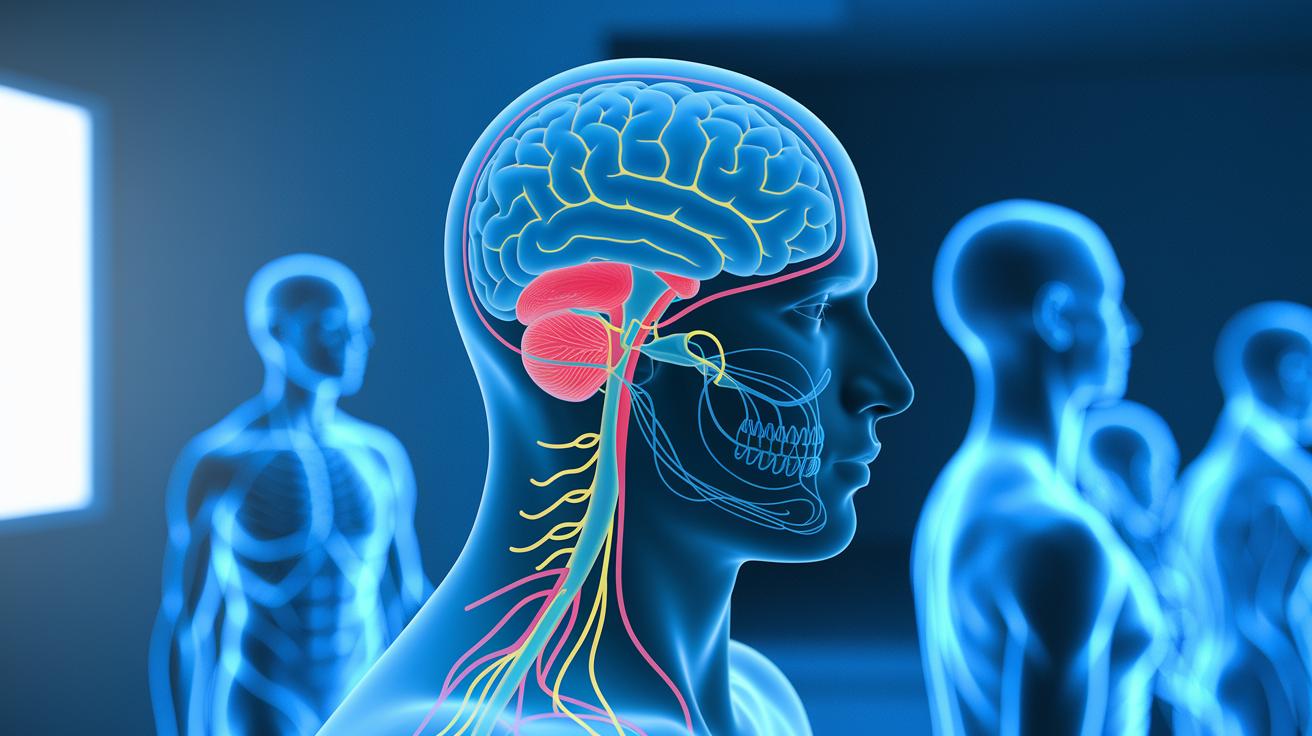
When you experience a migraine, your head tissues send irritation signals through the trigeminal nerve. This nerve acts like a built-in alarm, carrying messages straight to your brain.
Inside your skull, blood vessels can change size during a migraine. Arteries might widen or narrow, and this change prompts the release of chemical messengers (vasoactive peptides) that adjust blood flow and create a throbbing pain.
The first three nerves in your neck also play a part. They send pain signals from both your head and neck and offer feedback on your posture. If your neck isn’t properly aligned, it can make the pain feel even worse.
Mapping Migraine Head Pain Diagram Patterns Across Head Regions
Migraine pain can hit one side of your head or both. Most often, you feel a throbbing pain on one side, but about 40% of the time, it feels like pressure on both sides. Studies show that more than half of people with migraines start with one-sided pain. This means your pain may focus in one temple rather than being spread out.
Migraine pain also tends to move as the episode goes on. For instance, pain can begin in one temple and shift to the forehead or the back of your head (occiput) within 15 to 30 minutes. The table below shows some common patterns:
| Region | Initial Pain | Shifted Pain | Time |
|---|---|---|---|
| Temple | Throbbing on one side | Moves to forehead or back of head | 15-30 minutes |
| Forehead | Starts from temple pain | Makes the pain more widespread | N/A |
During a migraine, you might also feel the pain spread to your scalp and neck. This can make it harder to hold your head and can add to the pressure you feel during an episode.
migraine head pain diagram: Clear Visual Relief

Quick take: Migraine aura gives you a visual warning that head pain may soon follow.
If you notice any of these signs, call emergency services now:
• Sudden, severe vision loss
• Confusion or unusual weakness with vision changes
• A headache that starts very abruptly and feels worse than normal
About 20% of people with migraines see aura signs. These signals start in the part of your brain that controls vision. They usually appear 10 to 30 minutes before the headache begins, giving you time to track your symptoms.
Common aura symptoms include wavy zigzag lines, blind spots, and flashing lights. You might notice these in one or both eyes, with shifting patterns that cover your normal view for a short time.
By adding these visual signals onto a head diagram, you create a clear map of your migraine progress. This visual guide shows where you usually see changes and can help you discuss your migraine patterns and head pain with your care provider.
Trigger Zones Breakdown and Pain Flowchart in Migraine Head Pain Diagram
A migraine attack can start from everyday events. Even small changes like certain foods, dehydration, hormone shifts, or weather changes can set off a chain reaction that leads to migraine pain. When a trigger occurs, it activates the trigeminal nerve (a major nerve in your head) and sends a signal to your brain. This signal causes your blood vessels to widen or behave erratically. As these blood vessels change, you begin to feel the migraine pain, often described as throbbing, sharp, or persistent.
Below is a simple table that shows the steps from trigger to pain:
| Trigger | Neural Response | Vascular Change | Pain Outcome |
|---|---|---|---|
| Certain foods | Trigeminal nerve activates | Blood vessels widen | Throbbing pain |
| Dehydration | Nerves become sensitive | Vessels lose control | Persistent pressure |
| Hormonal shifts | Chemical imbalance | Sudden vessel expansion | Sharp, one-sided pain |
| Weather changes | Nerve signals vary | Fluctuating arterial response | General head pressure |
Use this flowchart to track your own headache triggers. It can help you see how everyday changes might lead to migraine pain. Then, review your findings with your provider to fine-tune your care plan.
Using Migraine Head Pain Diagram for Diagnosis and Treatment Planning

Clinicians use this diagram like a head map to tell the difference between common headache types. It shows where you feel pain so doctors can decide if it's a migraine, tension headache, cluster headache, or cervicogenic headache (neck-related headache). For instance, migraines can feel like a one-sided, pulsing pain, while tension headaches create a tight band of pressure across your head. This clear layout helps guide safe and accurate diagnosis.
Patients can also use this diagram to monitor their own symptoms and learn more about their headaches. With labels for the temples, forehead, eye area, and scalp, you can easily mark where the pain occurs during an episode. This simple self-checking makes it easier to share updates with your provider so that any changes in your headache patterns can be caught early.
Using the diagram in planning treatment is very practical. It helps point out when treatments like upper cervical alignment (NUCCA, a method to adjust neck alignment) or specific medications might work best. For example, if pain is centered near the neck or eyes, it may suggest trying a structural correction or a particular drug approach. This method connects the way your head and neck line up with the pain you feel.
It’s important to watch for warning signs. The diagram can help you spot red flags like a sudden “worst headache” or unexpected shifts in pain location. If these occur, you should get checked by a doctor right away to rule out serious issues.
Final Words
In the action, this guide breaks down a migraine head pain diagram to show key zones such as the temples, forehead, ocular region, and scalp. It explains nerve roles, vascular changes, and how aura and trigger zones work together to shape pain patterns. The post also covers how these visuals support symptom tracking and treatment planning. Clear illustrations can help you spot red flags and prepare focused details for your clinician. Stay proactive and trust that these insights offer a safe path forward.
FAQ
What is a post traumatic headache?
A post traumatic headache refers to pain that occurs after a head injury. It often follows a concussion and requires monitoring to ensure proper recovery.
What is a tension headache?
A tension headache refers to pain that feels like a tight band around your head. It may come from muscle strain or stress and often eases with rest.
What is a rebound headache?
A rebound headache means that frequent use of headache medications can cause recurring pain when the medicine wears off. Careful management of medication is needed.
What does headache location meaning and its causes refer to?
Headache location meaning and its causes explain that different head pain areas can point to various origins. For example, front head pain might indicate sinus issues while neck strain can affect the back of the head.
What causes a spinal headache?
A spinal headache occurs after a spinal fluid leak, often following a lumbar puncture. It usually worsens when you’re upright and may improve when lying down.
What are types of headache with pictures and their reasons?
Types of headache with pictures and their reasons provide visual guides showing various headache styles like migraine, tension, and cluster, each with distinct symptoms and underlying causes.
What is a hypertension headache?
A hypertension headache means pain linked to high blood pressure, often felt at the back of the head. It can come with other high blood pressure signs and should be evaluated if severe.
What is a TMJ headache?
A TMJ headache refers to head pain caused by issues in the jaw joint (temporomandibular joint). It typically presents as discomfort near the temple and jaw, often with clicking or jaw stiffness.
Which part of the head is painful when you have a migraine?
Migraine pain often impacts the temple, forehead, or ocular region. Some may experience one-sided throbbing pain while others feel discomfort across both sides.
What are the 5 C’s of migraines?
The 5 C’s of migraines outline key points: causes, characteristics, clinical features, classifications, and care options. These help in understanding and managing migraine symptoms effectively.
When should I go to the ER for a migraine while pregnant?
You should visit the ER for a migraine when pregnant if you experience sudden, severe pain, vision changes, exceptionally high blood pressure, or any signs that suggest complications.
What can you give a child for a migraine?
When treating a child’s migraine, the answer typically involves consulting a healthcare provider. They may recommend age-appropriate over-the-counter pain relievers and hydration, with careful dosing based on the child’s weight and age.