


Quick Take: A stomach cramp in men might be a minor issue like gas or overeating, but sometimes it can signal something more serious.
Triage Box:
• If your pain is severe, lasts longer than 3 days, or is accompanied by a fever (102 F or above), call emergency services now.
• If you feel nauseous, dizzy, or the cramp is getting worse, seek same-day medical advice.
• Otherwise, monitor your symptoms and try simple home care.
Stomach cramps in men can come from everyday causes like gas or eating too much. However, cramps can also mean there might be another problem. This guide explains common causes, points out key signs to watch for, and gives you quick relief tips. Keep an eye on your symptoms and act now if anything feels off.
Male Stomach Cramps Explained: Key Facts & Overview
Quick take: Cramps in your stomach area can be mild and short-lived or signal a more serious issue.
Triage Box:
• If you have severe pain that makes it hard to stand, call emergency services now.
• If the pain lasts longer than 2 hours or gets worse, seek same-day care.
• If you notice a swollen scrotum with pain, get help immediately.
Male stomach cramps are pain felt between the bottom of your ribs and above your thighs. Often, the pain is mild and may come from gas, overeating, or simple indigestion. In many cases, these cramps settle on their own in about 2 hours.
Sometimes the discomfort can be more severe. It might disturb your sleep or make daily tasks hard to do. Intense pain could signal a serious problem. For example, testicular torsion (when a testicle twists, cutting off its blood supply) causes pain in the lower abdomen and a swollen scrotum. This is a male-specific emergency that needs immediate surgery to fix the issue.
It is important to note how long your pain lasts and whether it feels worse over time. If you experience ongoing or worsening cramps, see your doctor as soon as possible. Keep track of your symptoms and act quickly if any warning signs appear.
Common Causes of Male Stomach Cramps
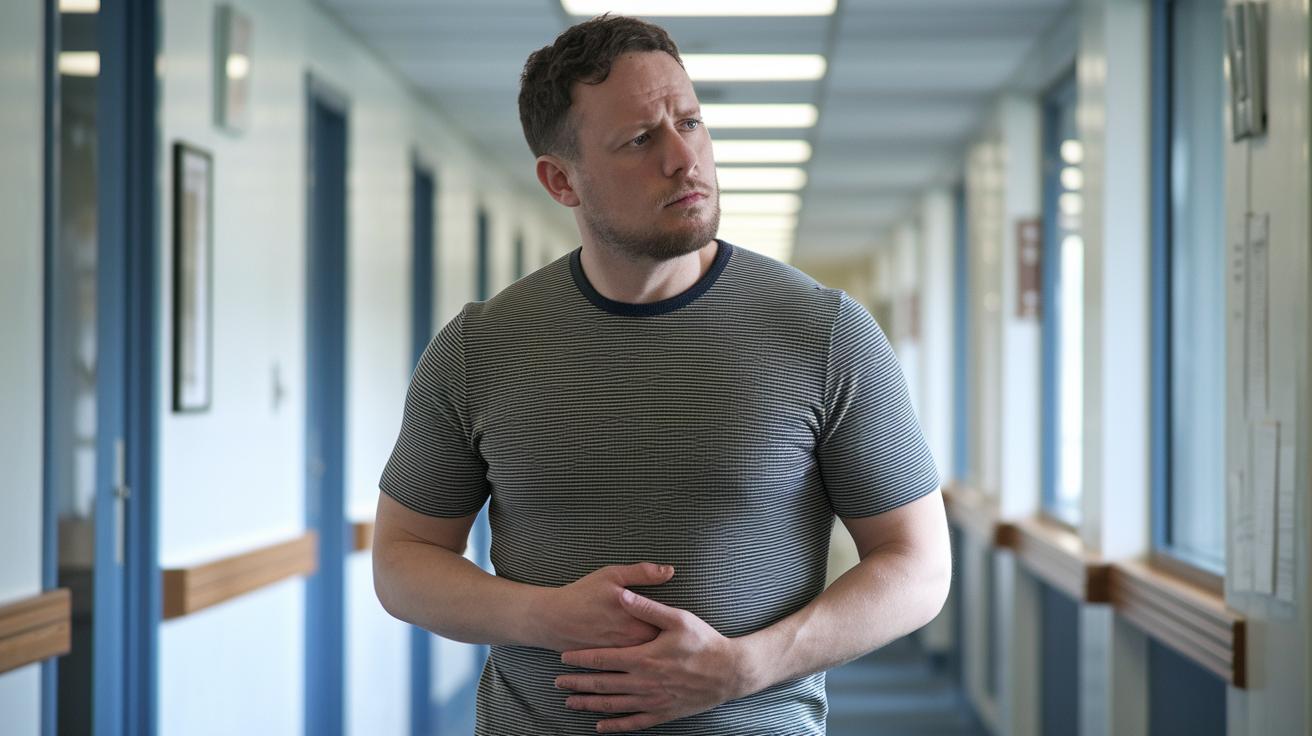
Quick take: Mild cramps usually come from common habits, while severe cramps may signal a serious condition. If you notice extra symptoms or your pain worsens, seek medical help right away.
Triage Checklist:
- If you have sharp pain in your lower right side, call emergency services now.
- If cramping comes with vomiting, fever, or pain that spreads, get urgent care.
- For regular cramps or mild discomfort, monitor your symptoms and follow basic self-care steps.
Mild Causes of Male Stomach Cramps
Often your stomach cramps because of everyday habits or slight tummy upset. These cramps are usually not serious and go away on their own. They happen when your digestive system gets a little irritated without any deep injury. Common mild causes include:
- Gas from fizzy drinks: Bubbles can build up and stretch your stomach.
- Eating too much or too fast: This puts pressure on your stomach, causing cramps.
- Constipation from low fiber: Hard stools can make your tummy work overtime and hurt.
- Indigestion or heartburn: A burning feel inside may lead to brief cramps.
- IBS (irritable bowel syndrome): This issue can cause crampy, uneven stomach sensations.
- Functional dyspepsia (chronic indigestion): You might feel a steady, mild cramp over time.
Severe Causes of Male Stomach Cramps
Sometimes, cramps signal a condition that needs quick attention. These serious cases often come with extra signs that you shouldn’t ignore:
- Appendicitis: Sharp pain in your lower right side may mean your appendix is swollen. Call for help right away.
- Bowel obstruction: Cramping paired with vomiting can mean your intestines are blocked.
- Gallstones: Intense spasms on the right side may suggest a blocked bile duct.
- Kidney stones: Severe pain that travels toward your groin calls for immediate testing.
- Gastritis or ulcers: A burning pain in your stomach can show that the lining is inflamed or damaged.
- Infections (viral or bacterial): Fever and diarrhea with cramps can point to an infection.
- Inflammatory bowel disease: Ongoing, crampy pain may indicate a long-term problem that needs management.
Recognizing Symptoms & Red Flags in Male Stomach Cramps
If you have stomach pain and any of these serious signs, call 911 immediately:
- Severe pain that stops you from moving or standing.
- Pain that lasts more than 2 hours.
- A fever with belly pain.
- Vomiting or spotting blood in your vomit or stool (for example, bright red on toilet paper).
- A firm lump or swelling in your belly.
Write down when your symptoms start and any changes you notice. This helps your doctor decide what to do next.
Home Remedies & OTC Relief for Male Stomach Cramps

Quick take: Most stomach cramps can be managed at home, but check for warning signs and act promptly if you feel very sick.
If you experience any of these emergency signs, call emergency services now:
- Severe, worsening pain
- A fever over 102°F
- Vomiting blood or finding blood in your stool
Otherwise, try these simple steps to ease your discomfort:
- Drink clear fluids like water, flat soft drinks, or half-strength sports drinks.
- Use over-the-counter antacids to calm stomach acid.
- Take simethicone (a medicine that helps reduce gas) as directed.
- Avoid ibuprofen because it can irritate your stomach.
- Rest and do only gentle activities.
- Apply a warm compress to your stomach to relieve cramping.
- Keep a pan or trash bin nearby if you feel like vomiting.
Monitor how you feel over the next few hours. If the pain worsens or you develop new symptoms, contact your clinician right away.
Medical Treatments for Male Stomach Cramps
Quick Take: When home care isn’t enough, your doctor may use medicines or surgery to help ease your stomach cramps.
Triage Box:
If you have any of these emergency signs, call emergency services now:
- Severe, sudden pain
- High fever
- Unstoppable vomiting
- Blood in your stool
If your cramps continue even after trying simple home care, your clinician might suggest prescription medications to ease the pain. Medicines known as antispasmodics relax tight muscles in your gut. This helps reduce pain and brings your digestive system back to normal. Your doctor will check how strong your pain is and look at other symptoms before deciding whether you need medicine, surgery, or both.
Sometimes, extra stomach acid or an infection can make your cramps worse. In these cases, your doctor might prescribe medications that lower stomach acid, like proton pump inhibitors (PPIs) or H2 blockers. If tests show a bacterial infection, you might get antibiotics too. These choices are based on careful tests and a clear look at your symptoms so you get the right kind of relief.
If medicines do not work or if you face complications like appendicitis, gallstones, or a blockage in your intestine, surgery may be needed. Procedures such as removing your appendix, taking out the gallbladder, or clearing a bowel blockage can offer long-term relief. Your clinician will do a full evaluation and explain the benefits and risks before recommending surgery.
Common medication classes used include:
- Antispasmodics
- Stomach acid reducers (PPIs or H2 blockers)
- Antibiotics
Diet & Lifestyle Strategies to Prevent Male Stomach Cramps

Quick take: Adjusting your eating habits and daily routine can help keep cramps away.
Triage Box:
If you have any of these emergency signs, call emergency services now:
- Sharp pain that comes on suddenly and feels very intense
- Fever or bloody stools
If your cramps are worsening or you notice new, worrying symptoms, seek same-day care.
For mild, recurring cramps, try these self-care steps at home.
Your daily habits play a big role in preventing cramps. Instead of eating one large meal, try several small meals. For example, you might enjoy a light salad with whole-grain crackers instead of a heavy lunch. This helps your stomach avoid stretching too far and makes digestion easier.
Foods rich in fiber, like whole grains, fruits, and vegetables, keep your gut moving smoothly. Think of fiber as nature’s broom; it helps clear your system and reduces constipation. Drinking water throughout the day also supports proper digestion and keeps cramps at bay.
It also helps to limit foods that can irritate your stomach. Fatty, spicy, or very acidic foods may trigger discomfort. Instead, opt for steamed vegetables or lean proteins. Swap a fizzy drink for water or herbal tea to give your gut a break.
Taking steps to reduce stress and include light exercise can also ease stomach spasms. A short walk after a meal can boost digestion and calm your body. Even a few minutes of deep breathing or relaxation can make a difference.
Here’s a quick checklist:
- Eat several small, balanced meals
- Add high-fiber foods like fruits, vegetables, and whole grains
- Drink water regularly throughout the day
- Avoid heavy, spicy, or acidic foods
- Include light exercise and stress-reducing activities after meals
When to Seek Professional Care for Male Stomach Cramps
Quick take: If your cramps last more than 1-2 days or come with dangerous signs, get help right away.
If your stomach cramps continue for more than 1-2 days, it’s time to see a doctor. Severe pain that keeps you still, a high fever, nonstop vomiting, or diarrhea that won’t stop means you need urgent care.
If you have any of these signs, call emergency services now:
- Blood in your stool or vomit
- Inability to pass stool or gas
- A very tender, painful spot in your belly
For example, if the pain is so bad that you can’t stand, act immediately.
Your safety matters most.
Final Words
In the action of understanding male stomach cramps, we broke down common causes, warning signs, and ways to ease discomfort at home. You now have clear steps for when to watch, when to treat at home, and when to seek urgent care. We covered both simple remedies and key medical signs, along with tips on diet and lifestyle changes to help prevent future episodes. Stay mindful of your body and act safely. Moving forward, be confident knowing you have a solid plan for managing these symptoms.
FAQ
What does male lower abdominal pain below the belly button mean?
Male lower abdominal pain below the belly button may signal mild cramping from gas or indigestion, though it can also indicate more serious issues needing prompt evaluation.
What causes stomach cramps in men and why am I cramping as a man?
Stomach cramps in men often stem from mild issues like gas, overeating, or constipation, but they can also result from severe conditions such as appendicitis or testicular torsion that require immediate care.
How do you stop a guy’s stomach cramp and what male stomach pain medicine can help?
Stopping a stomach cramp may involve rest, hydration, and a warm compress, while over-the-counter options like antacids or simethicone can relieve symptoms until you consult a clinician.
How long do stomach cramps last for men and what if they persist for days?
In men, mild stomach cramps typically last about 2 hours; if cramps persist for days, they may indicate a serious issue that should be evaluated by a healthcare provider.
What are the types of stomach pain in men, including cramps with bloating and diarrhea?
Men can experience various stomach pains, from bloating and mild cramps related to gas or overeating to cramps accompanied by diarrhea, which might suggest an infection or digestive disorder.
What treatment options exist for male stomach cramps?
Treatment for male stomach cramps ranges from home remedies like clear fluids, rest, and OTC antacids to prescription medications or even surgery for severe conditions, depending on the underlying cause.