


Quick take: JumpSTART Triage uses a simple check to quickly find the children who need immediate care.
If you are in an emergency, every second counts. JumpSTART Triage first checks if a child can walk. Kids who can walk are less likely to be seriously injured. This simple test lets responders focus on children with the most severe injuries while keeping others safe.
This method speeds up care when time is tight. Quick, smart decisions like these make a big difference in saving lives. Remember, in any crisis, act fast and focus on those who need help right away.
Understanding JumpSTART Triage Overview
JumpSTART Triage is a system that quickly sorts children during a mass casualty event. It is based on the standard START method (Simple Triage and Rapid Treatment) but has been adjusted for kids. Triage means sorting patients by how serious their injuries are. This method helps responders decide who needs help the fastest.
The process starts by checking which children can walk. Those who can move on their own are called "walking wounded" and are sent to a safe spot. This step quickly clears the area so responders can focus on children who cannot walk and need urgent care.
Under OCEMSA guidelines, JumpSTART Triage stresses rapid checks. Responders look at breathing, blood flow (how well blood moves around), and mental state. This clear and simple approach lets them make fast and careful choices even when things are chaotic.
Before the incident escalated, responders spotted the walking wounded. A quick check of whether kids can walk can truly save lives. By using this method, responders use their resources better and help the most at-risk children get care without delay.
Core Principles of the Accelerated JumpSTART Triage System

Quick take: This system sorts children fast by checking who can walk and who needs more help.
When you see a child who can walk (the walking wounded), move them to a safe spot so you can focus on kids with more serious injuries.
For children who can’t walk, check three simple things:
• Their breathing
• Their blood flow (how well blood is moving)
• Their mental alertness
This clear checklist speeds up your decisions. In one real-life case, using this method cut down the time it took to decide who needed help first.
The process also means you don’t force a child who can’t walk to move, so you avoid causing additional harm. It gives you a solid, step-by-step way to decide which kids need urgent care quickly when things are hectic.
Remember: When you check if a child can walk, you immediately know who could be at risk and who can safely wait.
Step-by-Step JumpSTART Triage Process
Quick take: Sort children fast by their ability to walk for safe, quick care.
Start by scanning the scene for children who can walk. Direct these kids straight to a safe area. Do not try to make a child who cannot move on their own walk; this may make their injury worse.
Next, focus on children who cannot walk. Follow these simple steps:
- Check the child's breathing. Look for fast, slow, or uneven breaths.
- Check their blood flow by looking at their skin color and how quickly color returns when you press on their skin (capillary refill).
- See how their brain reacts by checking if they respond to touch or sound.
This quick exam helps you decide who needs immediate help and who can be monitored. If you're unsure about any step, refer to the OCEMSA pediatric triage guidelines. Also, use tools like the DICO HandBook and the BLS Kardex for more details.
After your check, sort the children into groups for immediate care or later monitoring based on their signs. Use these resources to guide your decisions:
- OCEMSA pediatric triage guidelines
- DICO HandBook quick reference
- BLS Kardex pediatric treatment protocols
- Procedures for moving walking children to the safe area
Follow these steps carefully and always keep the child's safety in mind.
Pediatric vs. Adult JumpSTART Triage Protocols Comparison

JumpSTART is a version of the START method tailored for children. It uses age-based vital signs and weight limits because kids are not just small adults. Their bodies work differently, so the check focuses closely on whether they can move safely, breathe well, pump blood (shown by how fast skin color returns), and stay alert. Children often take quick, shallow breaths. Their skin color or capillary refill (the time it takes for color to return when you press the skin) can help show how well blood is flowing.
In adult protocols, a fixed set of breathing and blood flow numbers is used. Adults tend to show a steadier reaction so standard numbers work well. Both methods check if a patient can walk, breathe normally, how fast blood returns, and if they are alert. The pediatric version adds age-specific checks that help catch problems early, ensuring children get the right care fast.
| Criteria | Pediatric JumpSTART | Adult START |
|---|---|---|
| Ambulation | Check if the child can move by themselves safely | See if the patient can walk as a quick sign |
| Respiratory Rate Thresholds | Rates are adjusted by age to spot mild distress | Breathing rates follow fixed numbers |
| Capillary Refill | Consider weight and skin features to judge circulation | Use a standard time check for color return |
| Mental Status | Look at developmental and behavior cues | Focus on alertness and clear responses |
These differences help ensure that children are checked with care. Knowing a patient’s age and weight can make a critical difference in emergency treatment.
Applying JumpSTART Triage in Mass Casualty Incidents
If you’re facing a mass casualty event, printed triage charts can be a real lifesaver. They help your team check vital signs and injury patterns quickly so you don't need to repeat steps.
A printed, step-by-step triage flowchart (download here: https://thequickesttips.com?p=1444) shows you which vital signs to check first and when to take urgent action. This simple chart follows trusted guidelines and keeps your checks fast and clear.
Key printable resources help by:
- Confirming your first checks with a clear list.
- Cutting down mistakes in high-pressure moments.
- Giving you a steady guide to make fast decisions.
Training and Best Practices for JumpSTART Triage Deployment
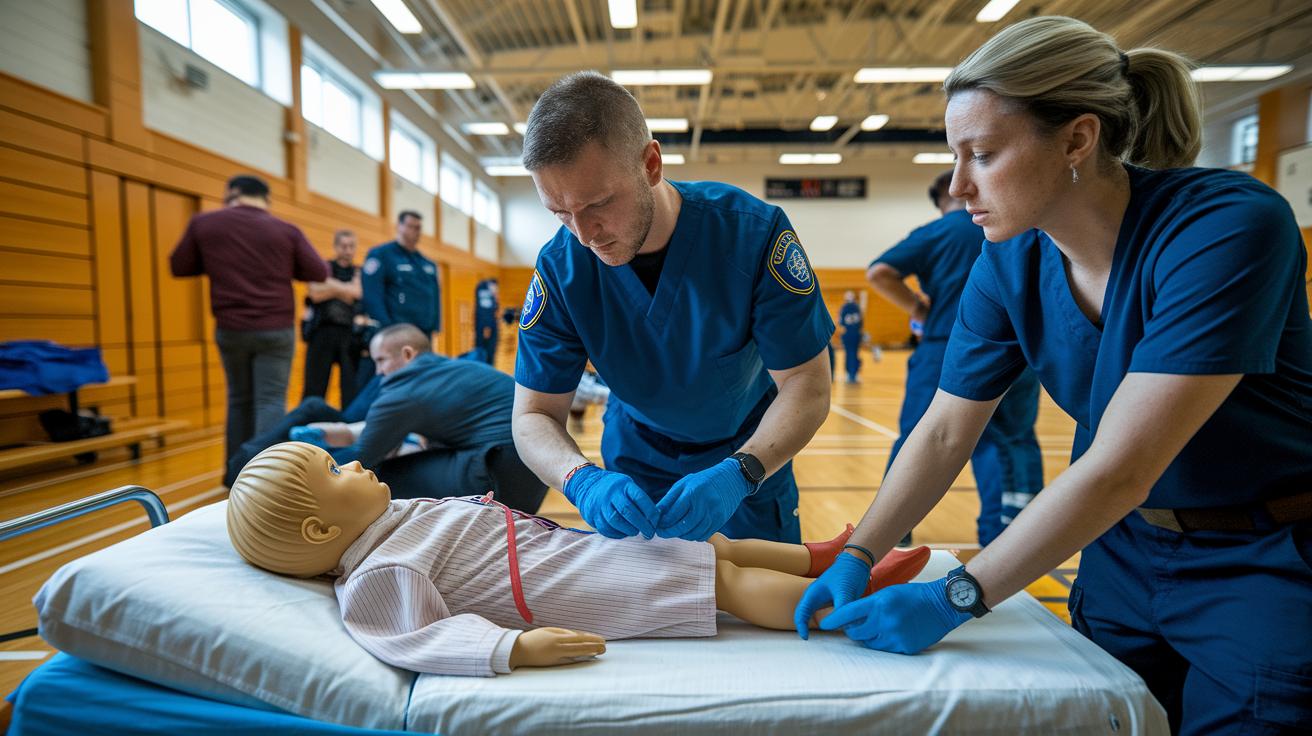
Quick take: Regular realistic drills help you save valuable seconds in pediatric emergencies.
Triage Box:
- Call emergency services now if responders use outdated methods.
- Seek urgent refresher training if drills aren’t practiced often.
- Watch and self-manage by tracking performance improvements after every session.
Training for JumpSTART Triage is built on realistic hands-on drills that boost your skills when dealing with children in emergencies. You learn to examine young patients quickly, even in chaotic scenes with many casualties. Using simulation modules drawn from respected sources like the DICO HandBook and BLS Kardex gives you a safe space to practice speedy decision-making. One team’s drill even cut precious response time by minutes during a simulated mass casualty event.
Keeping your skills current is crucial. Regular certification reviews and refresher courses based on OCEMSA standards help you stay sharp. These structured sessions allow your team to spot any gaps, fine-tune your approach, and perform better when real emergencies occur.
Key training components include:
- Taking part in focused, hands-on EMT drills.
- Using detailed simulation training modules.
- Following routine certification reviews as per OCEMSA guidelines.
- Conducting regular debriefs and refresher courses to refine performance.
By investing in comprehensive training and clear safety protocols, you and your team will be well-prepared for critical incidents involving children, ensuring every second counts.
Final Words
In the action, we reviewed how JumpSTART Triage works. We looked at the pediatric focus, compared it with adult protocols, and provided a clear, step-by-step guide. We also highlighted key resources like OCEMSA guidelines, DICO HandBook, BLS Kardex, and procedures for walking wounded. This guide helps you quickly sort symptoms and decide on emergency care, same-day evaluation, or careful monitoring. Using jumpstart triage empowers you to act safely and confidently during critical moments. Stay prepared and trust these practical steps in challenging situations.
FAQ
What is the JumpSTART triage PDF?
The JumpSTART triage PDF is a downloadable document that outlines pediatric triage guidelines and procedures for responders, following OCEMSA standards.
What age group is JumpSTART triage designed for?
The JumpSTART triage targets pediatric patients, ensuring that children’s unique medical and developmental needs are addressed in emergencies.
How does JumpSTART triage differ from START triage?
The JumpSTART triage adapts the START process for children by modifying criteria like respiratory and perfusion assessments, while START triage focuses on adult protocols.
What is the JumpSTART triage algorithm?
The JumpSTART triage algorithm is a rapid, step-by-step process that first identifies ambulatory (walking) children, then performs quick checks on respiratory function, perfusion (blood flow), and mental status on non-ambulatory patients.
What does JumpSTART stand for in triage?
The term JumpSTART highlights a modified approach to the START system, emphasizing rapid pediatric assessment, though it is not a strict acronym but a designation for its adapted methodology.
Is JumpSTART triage used by EMTs?
The JumpSTART triage is used by EMTs in mass casualty scenarios to quickly and safely classify injured children, ensuring appropriate and timely care based on established guidelines.
How should JumpSTART triage be applied in adults?
For adult patients, standard START triage criteria apply because JumpSTART is specifically adapted for children; adjustments ensure each age group gets the proper assessment protocol.
What are the four triage categories in the JumpSTART pediatric system?
The four triage categories in the JumpSTART pediatric system are immediate, delayed, minor, and deceased, helping responders prioritize care according to injury severity.
When should START and JumpSTART triage systems be used?
START triage is used for adult patients, while JumpSTART triage is specifically designed for children, ensuring that each group is assessed with criteria best suited to their needs.
What are the four steps in the START triage process?
The four steps in the START triage process are checking if the patient can walk, assessing respiratory rate, evaluating perfusion (capillary refill), and testing mental status to quickly determine care priority.