
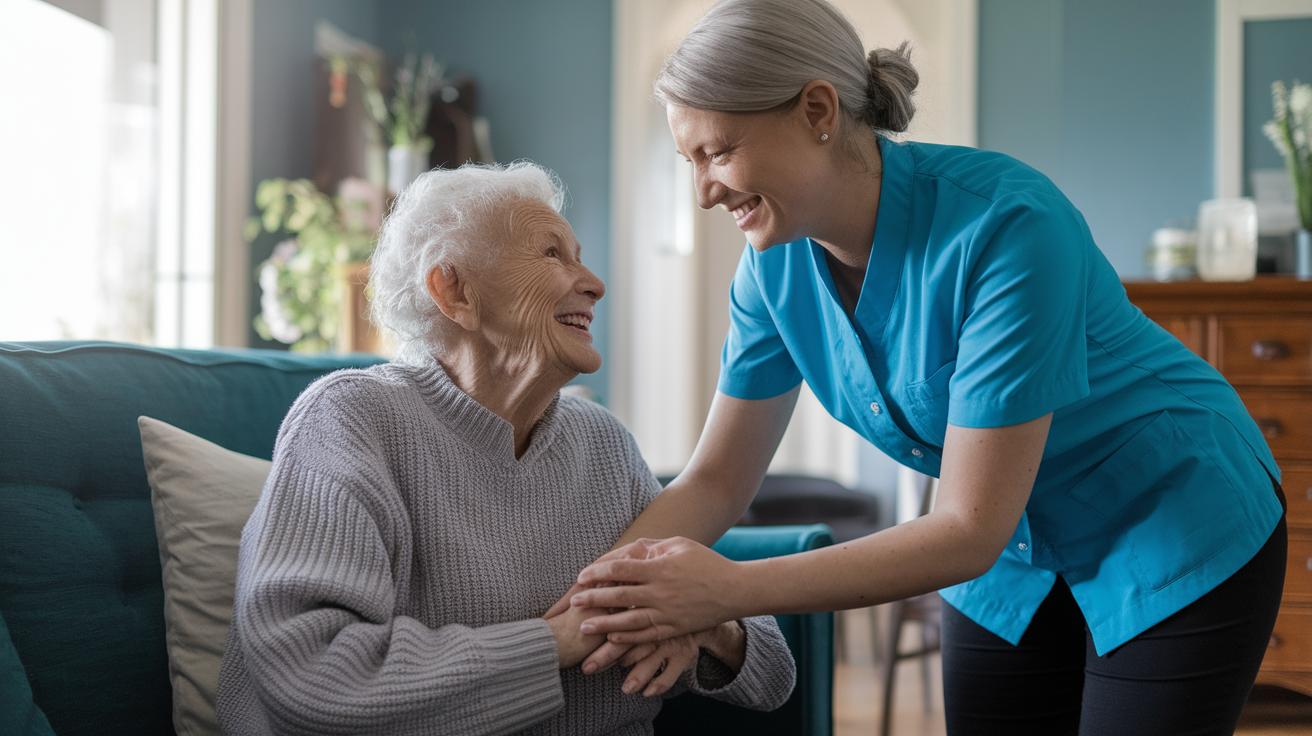

Quick take: Home care can help keep your aging parent safe and comfortable at home.
If you feel uneasy about your loved one’s safety, you are not alone. Many families struggle with daily routines and worry about falls. Home care offers kind, steady support so your parent can stay independent in the home they love. By choosing a reliable caregiver, you ensure they receive personal care while you gain some peace of mind.
home care for elderly parent: Heartfelt Home Support
Quick take: Home care helps your parent stay safe, comfortable, and independent in their own home.
If you see your parent struggling with daily tasks or at risk of a fall, call for help immediately. Otherwise, consider home care services that offer steady support every day.
Home care services let your elderly parent live where they love – at home. A caregiver may help with tasks like bathing, dressing, and moving around safely to lower fall risks. They also manage errands and help with simple chores so your parent can feel secure and dignified.
These services often include:
- Respite care to give you a well-earned break
- Assistance with personal hygiene to boost confidence
- Mobility support to reduce fall risks
- Light housekeeping, meal prep, and errands to ease daily burdens
Many providers offer 24/7 care. That means help is only a phone call away if any safety issues arise. This approach combines household help with basic medical support so you feel sure your parent is well looked after.
These caring services are tailored to fit your family’s unique needs, offering both physical help and emotional comfort. For more details and additional caregiver resources, visit caregiver support resources.
Types of Home Care for Elderly Parent: In-Home Support Options

Home care services for your aging parent are here to help with daily tasks at home. These services are set up to match your parent’s unique needs and offer help with routine activities.
A trained caregiver can provide respite care so you get a break while your parent receives help with daily routines. They also assist with personal care like bathing and hygiene to keep your parent comfortable and safe. Other services include help with moving around (ambulation) and basic household tasks such as doing laundry. They can also handle light housekeeping, meal preparation, and running errands so your parent enjoys a neat and well-managed home.
Some programs offer specialized care such as support for Alzheimer’s and dementia (conditions that affect memory and thinking) to help with reminders and supervision. There is also veteran support to address the special needs of those who have served. For families that need constant care, some providers offer 24/7 live-in support, ensuring help is always near. Integrated care models, like ArchCare PACE, bring together medical, physical, and social services to give your parent well-rounded support at home.
- Respite care
- Hygiene and bathing assistance
- Help with ambulation and laundry
- Light housekeeping and meal preparation
- Errand services
- Alzheimer’s/dementia care and veteran care
- 24/7 live-in support
Cost Breakdown for Home Care for Elderly Parent
Understanding home care costs helps you know exactly what you're paying for. You may see differences based on where you live, the caregiver's experience, and the care needed. In larger cities, the hourly rates are usually higher than in smaller towns. More experienced caregivers often charge a higher rate. If you opt for live-in care, it usually costs more than hourly care.
Key factors that affect costs include:
• Hourly rates based on how complex the services are
• Package deals that offer extended service bundles
• The choice between live-in care and hourly care
• Minimum hour rules some agencies might have
| Type of Care | Cost Factors |
|---|---|
| Hourly Care | Base hourly rate and service intensity |
| Live-in Care | Total daily rate plus overnight care |
| Package Deals | Bundle pricing with several services |
It is smart to compare several providers to get a clear idea of fees in your area. Ask each provider for a complete quote and check for extra costs like travel, meals, or added services. Tracking expenses now can help you budget for a care plan that meets your parent’s needs without surprises.
Government Assistance for Home Care for Elderly Parent: Programs and Benefits

Government help can ease the cost of caring for your elderly parent at home. Support is available through Medicare home health services and state Medicaid caregiver programs. For example, ArchCare PACE is a plan that combines Medicare and Medicaid benefits. It brings nursing-home-level services to your parent’s home with a team that handles medical care, therapy, and daily support. One family shared, "ArchCare PACE allowed us to keep my mom at home safely while she received quality medical attention." That shows how trusted this support can be.
Medicaid also offers programs where you can get paid for caring for your parent. These consumer-directed assistance programs let family caregivers earn compensation for the care they provide. The rules, including who qualifies and how much you can get, differ by state (for example, in Texas, Florida, Virginia, or Oregon). It’s a good idea to contact your local Medicaid office to see if your family qualifies.
There are also extra programs for low-income seniors. These may include additional benefits like respite care grants, which can help cover the cost of giving you a break from caregiving. Usually, there are clear guidelines, such as income limits and service requirements, to follow when applying.
Before you apply, take these steps:
• Review the eligibility criteria for the program.
• Write down any questions you have.
• Note the documents required by your state program.
Overall, these government programs and Medicare home health coverage are here to ease the burden of home care costs. This lets you focus on your parent’s well-being while ensuring they get the professional care they need at home.
Home Modifications and Safety for Home Care for Elderly Parent
Keeping your parent's home safe can help lower the risk of falls and injuries. Poor lighting, wobbly stair railings, and slippery floors can make everyday movements dangerous. Plan for home care that includes changes to the environment and regular health checks.
Here are some steps you can take right away:
- Install grab bars in areas like the bathroom.
- Place non-slip mats in the shower and by entryways.
- Improve lighting in hallways and on stairs to remove dark spots.
- Secure any loose stair railings to give proper support.
- Clear walkways of clutter to ensure easy movement.
- Consider an emergency response system for quick help if needed.
Imagine a home where brighter lights and clutter-free paths replace potential hazards. One family shared that adding grab bars reduced their mom’s fear of falling. Making these simple adjustments can greatly reduce risks and help your parent feel safer at home.
Selecting Private Caregiver Services for Elderly Parent Home Care

Quick tip: Check credentials and ask clear questions to keep care safe.
When you choose a caregiver, make sure they have proper licenses, certificates, and clean background checks. Ask direct questions like, "How do you remind seniors about their medication?" and "What is your experience with dementia care (memory care)?" One caregiver said, "I always check credentials first to ensure safety and quality."
Follow these steps:
- Build a shortlist by getting recommendations from family, friends, or local resources.
- Check each candidate’s credentials. Look for valid licenses, certificates, and recent background checks.
- Interview potential caregivers. Ask about daily care tasks, personal assistance, and memory care techniques. Ask, "What methods do you use with seniors?" to understand their hands-on experience.
- Get references and contact past clients to learn about their reliability and dedication.
- Compare care models. For example, the ArchCare PACE team offers coordinated care with several therapies in a single plan.
If you need more support managing your own caregiving role, visit the family caregiver support program here:
https://spiritsocietyofpa.com?p=264
| Step | Focus Area |
|---|---|
| Shortlisting | Gathering recommendations and initial research |
| Credential Check | Verifying licenses, certificates, and background |
| Interviews | Discussing daily care, medication reminders, and dementia care |
| References | Receiving feedback from previous clients |
Keep a clear record of your findings and compare your options carefully before making a decision.
Real-Life Success Stories of Home Care for Elderly Parent
Families report big improvements through home care. One family said, "ArchCare PACE allowed us to keep my mom safe at home while she got both medical and personal help." This is just one example of how good home care can boost well-being and help your loved one stay independent.
A daughter shared that finding care that kept pace with her father's changing needs brought her comfort. As his health shifted, the caregivers updated his care plan to match. "It felt like the care grew with him," she said. This shows that home care can be personalized to meet your parent's unique needs.
Other families have noted that steady in-home support not only boosts physical health but also lifts emotional spirits. Some benefits they mentioned are:
- Regular check-ins that ease worry
- Personalized care routines that make daily life smoother
- Ongoing changes in care as needs evolve
These stories teach us valuable lessons. Families have learned that combining medical care with personal support can create a safe and nurturing setting. Services like those from ArchCare PACE help boost independence and give caregivers peace of mind. This practical approach shows that thoughtful home care can lead to better outcomes for both your elderly parent and the whole family.
Final Words
In the action, we broke down the many parts of home care for an elderly parent. We covered daily assistance options, cost breakdowns, government support programs, and needed home safety tweaks. We also looked at the selection process for trusted caregiver services and shared real-life success stories. Each section aimed to give clear next steps so you can plan care confidently. Every part supports safe, practical home care for an elderly parent. Keep moving forward and trust that proper planning brings peace of mind.
FAQ
What does in-home care for elderly parents mean?
In-home care for elderly parents means providing support at home, including help with personal care, meal prep, light housekeeping, and medical reminders, allowing seniors to remain safe and comfortable in their own space.
How do you take care of elderly parents at home?
Taking care of elderly parents at home includes assisting with daily tasks, ensuring safety with home modifications, preparing meals, managing medication, and providing companionship while using professional in-home support services when needed.
How can I get paid for taking care of my elderly parents at home?
Getting paid for caregiving may involve enrolling in government programs like Medicaid personal assistance or consumer-directed care, where family caregivers can receive compensation based on state-specific eligibility and rates.
Is free in-home help available for seniors?
Free in-home help for seniors may be available through community programs and government-funded initiatives, including Medicaid waivers and local nonprofit offerings, which assist with daily living and medical support.
What government assistance is available for caregivers of elderly parents?
Government assistance for caregivers includes state Medicaid programs, Medicare home health coverage, and consumer-directed personal assistance plans that help offset care costs and sometimes offer caregiver payments.
What is the 40 70 rule for aging parents?
The 40 70 rule is a guideline some agencies use to evaluate care needs, often relating to cost coverage and eligibility. Check with local care programs to understand if this rule applies in your area.
What should I do if my elderly parents have no money?
If your elderly parents have no money, explore public assistance programs, nonprofit resources, and state-funded care programs designed to help low-income seniors access in-home services and safety support.
How do I find private care for elderly at home near me?
Finding private care for elderly at home involves researching local licensed agencies, checking reviews, interviewing caregivers about their experience, and verifying credentials to match your parents’ specific needs and living situation.