

Quick take: A simple, clear plan can be your family's lifeline during a disaster.
When disaster strikes, being prepared is key to keeping everyone safe. A calm plan not only saves time but also builds trust among family members during an emergency. Clear steps help you cut through panic and confusion and turn chaos into action.
Here’s how you can prepare:
• Decide who will do what during an emergency.
• Choose a safe meeting spot where everyone can gather.
• Plan how to keep in touch when phone lines are busy.
Taking a few moments now to map out your roles and meeting points can make a huge difference later. It’s a straightforward way to reduce stress and boost your safety when every second counts.
Family Emergency Protocol: Calm Steps in Crisis
Quick Take: A clear plan keeps everyone safe and calm in a crisis.
If you are in immediate danger, call emergency services now (in the US, dial 911).
• Call emergency services if you’re in danger.
• Make sure every family member knows what to do.
• Act quickly and follow your pre-made plan.
A solid emergency plan helps each family member know their role at every stage of a crisis. When things get stressful, a clear plan stops confusion and builds confidence.
- Talk about how you will all connect. Ask each other what number to use and where to meet if you are separated.
- Write the plan down using a simple template. This written plan gives everyone a reliable guide.
- Practice the plan a few times each year. Rehearsals help everyone feel comfortable and know their role.
Keep an updated list of key emergency contacts, including fire, police, and ambulance numbers. Save this list on cell phones and keep a copy near your home phone. Having these numbers handy makes it easier to get help quickly when every second counts.
Agree on one meeting spot for your whole family. Choose somewhere familiar like a neighbor’s yard or another spot near your home. This ensures you can regroup fast if communication stops and keep moving with your emergency plan.
Family Emergency Protocol: Communication Strategy & Role Assignments
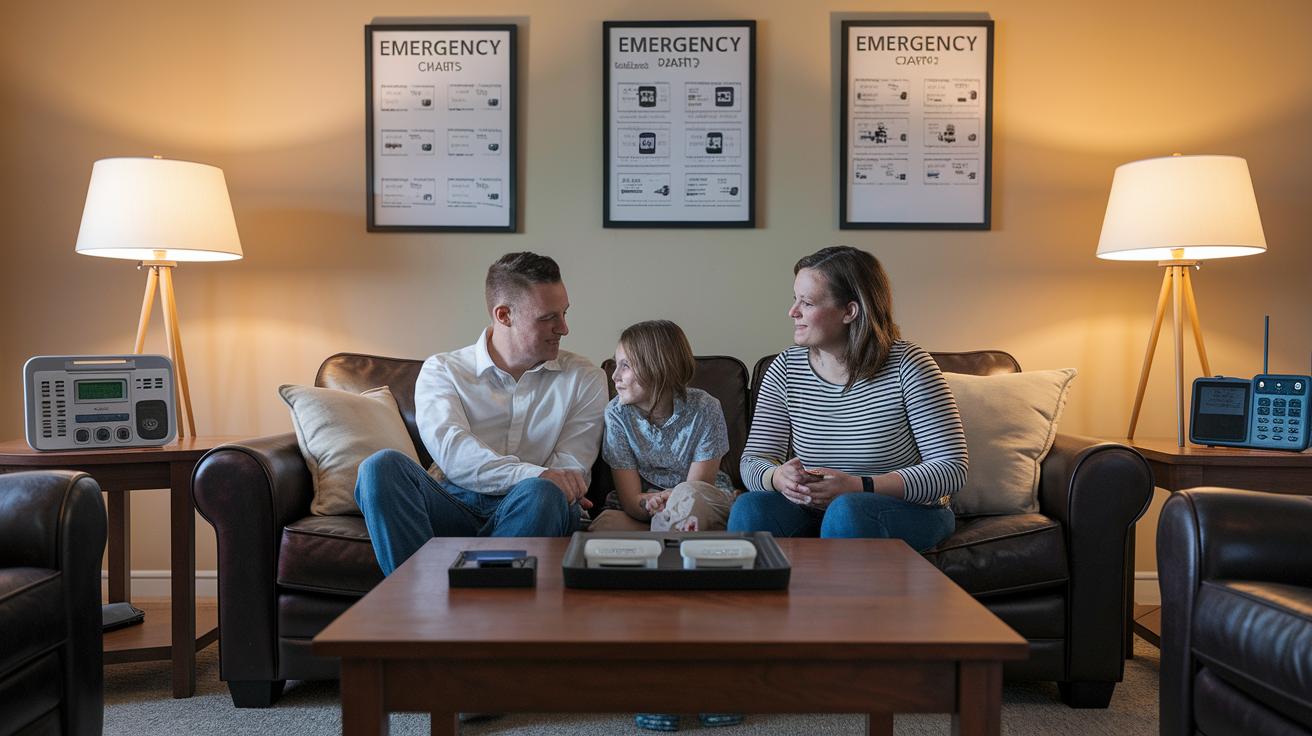
Quick take: In an emergency, use every available tool to stay connected and safely manage roles.
Triage Box:
• If you feel unsafe, call emergency services immediately (911 in the US).
• Use backup communication methods when primary ones fail.
• Follow designated roles closely to avoid confusion.
When a crisis hits, you need more than one way to contact your family. Keep key phone numbers, fire, police, ambulance, and trusted neighbors, saved on your cell phones and posted near your home phone. This way, if one line fails, you have another reliable option for calling help, sharing updates, or coordinating next steps.
Below is a table showing common communication methods, when to use them best, and important notes:
| Communication Method | Best-Use Scenario | Notes |
|---|---|---|
| Mobile Phone | Urgent calls | Keep spare batteries |
| Group Text | Family check-ins | Label as “Family Group” |
| Two-Way Radios | No cell service or power outages | Keep them charged |
| Landline/VoIP | Home base contact | Post numbers near the phone |
It also helps to set clear roles. Choose one person to be the main caller for 911 and another to handle the emergency supply kit. Have someone check that everyone is safe and connected. This role-sharing makes sure that, in the midst of chaos, you know exactly who does what.
Finally, update your central contacts list regularly. Keep a digital copy and a paper one with all current numbers. Reviewing and adding numbers now and then gives everyone confidence during a crisis, helping you avoid mistakes when every second matters.
Family Emergency Protocol: Assembling Your Emergency Supply Kit
Quick Take: Your emergency kit covers your basic needs when unexpected events hit.
Triage Box:
• Act now if your kit is missing key items.
• Urgent: Check that water and food are in good condition.
• Watch: Regularly review and update your supplies.
A readiness kit is your backup plan for power outages, harsh weather, or sudden evacuations. It helps you and your family stay safe until help comes or services return. Use this checklist to build your kit:
- 1 gallon of water per person per day (for a 3-day supply)
- A 3-day supply of nonperishable food
- A battery-powered or hand-crank radio
- A flashlight with extra batteries
- A first aid kit
- A whistle to signal for help
- A dust mask and plastic sheeting
- Moist towelettes, garbage bags, and zip-lock bags
- A wrench or pliers to turn off utilities
- A manual can opener
- Local maps
- Cell phone chargers and a power bank
Store your kit in a cool, dry spot that you can reach easily during an emergency. Check it every few months to replace expired food or batteries. Go over the kit with your family so everyone knows where it is and what it holds.
Family Emergency Protocol: Mapping and Practicing Evacuation Routes
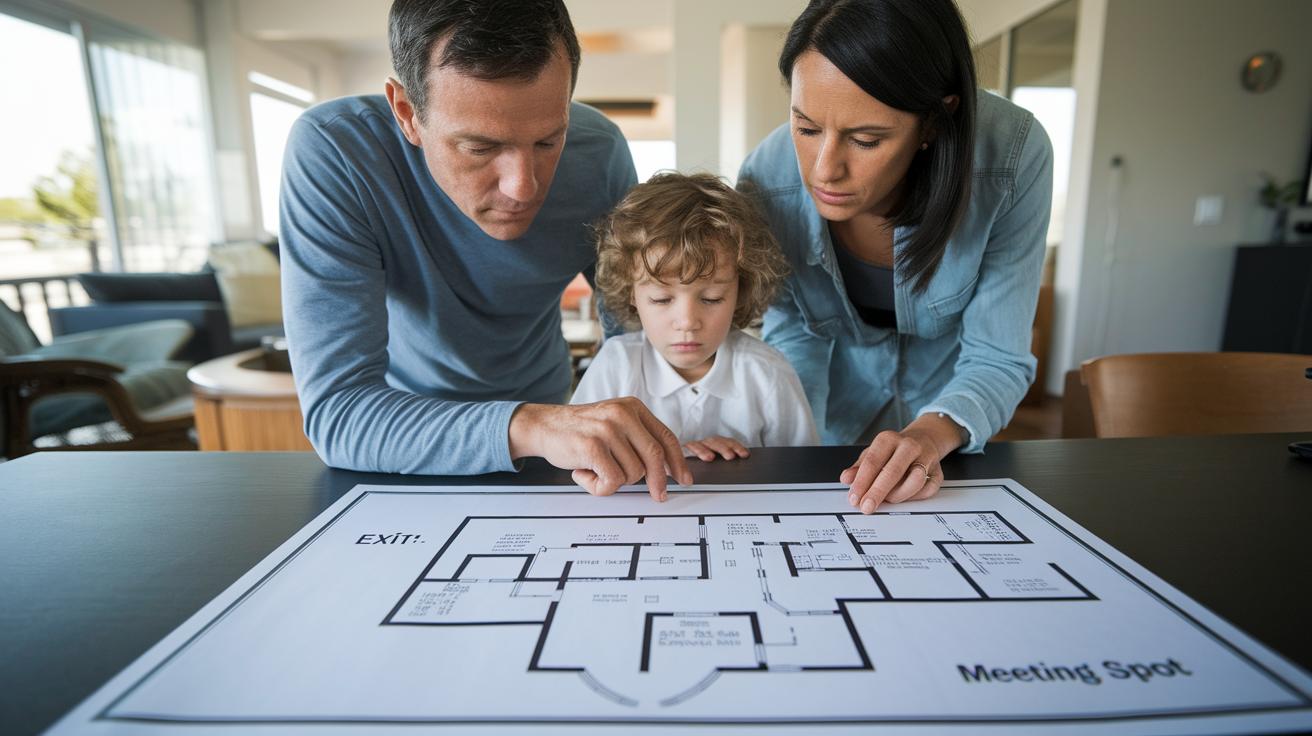
Quick take: Practice your escape plan now so your family stays safe.
If you see any immediate danger, call emergency services right away. Then follow your escape plan.
Mapping your home’s exits and choosing a meeting spot can save lives when every second counts. When one way might be blocked, having extra options makes a big difference. Planning both main and backup routes for every room cuts down on confusion when an emergency hits. A clear, drawn-out plan helps each family member know exactly where to go.
Follow these steps to create your evacuation plan:
- Draw a layout of your home and mark every exit.
- Map out a main route and a backup for each room.
- Pick a meeting spot outside (like a mailbox or a neighbor’s yard).
- Consider needs for kids, elderly members, and pets.
- Update your plan when your household changes.
Practice your mapped routes with your family. Walk through the plan together so everyone becomes familiar with the fastest paths and the meeting spot. Regular rehearsals help each person know what to do during a real emergency. This steady practice keeps your family prepared and confident.
Family Emergency Protocol: Training, Drills, and Ongoing Practice
Quick Take: Regular practice drills help your family stay calm, know what to do, and fix any gaps in your plan.
If any drill shows confusion or missed steps, review immediately and adjust your plan.
Regular drills let everyone learn what to do when stress is high. Running these realistic exercises a few times a year builds confidence and shows you where to improve. Each drill brings the plan to life so every family member understands their role during an emergency.
Here are key steps for effective drills:
- Practice different scenarios such as fire, flood, or power outage.
- Involve every family member and plan backup roles.
- Time each drill and record how long tasks take.
- Hold a quick meeting right after the drill to discuss what worked and what could be better.
- Update your emergency plan and supplies based on the feedback.
Keep a simple tracker to log drill dates and outcomes. Write down what passed smoothly and where there were delays. This record helps you see progress over time and adjust your protocol to keep it effective and reliable.
Family Emergency Protocol: Documentation, Review, and Updates

Keep your emergency plan written down and stored in both paper and digital forms. Using a form like the Red Cross plan form helps you list all the important details clearly. Place a printed copy in a spot where everyone in your home can find it quickly and keep a digital copy on your phone or in cloud storage.
Review your plan once a year or any time your household changes, such as when you have a new baby, move, or add a pet. During these reviews, update:
- Emergency contacts
- Supplies list
- Drill logs
- Contacts for cleanup or repair services
Regular updates make sure your plan stays current so you and your family know what to do when time is tight.
Family Emergency Protocol: Procedures for Common Emergencies
Quick Take: Have a clear plan and act fast during any emergency.
If you notice increasing danger, call emergency services now. If you’re not in immediate peril, follow these steps:
• Prepare clear, written instructions for natural disasters, fires, floods, storms, and other hazards.
• Make sure every family member knows what to do if the situation changes.
• Secure utilities and follow local safety updates as soon as possible.
Every home should have extra steps added to its basic emergency plan. These specific procedures help everyone in the household know how to respond calmly and quickly. Understanding your local safety guidelines and knowing the exact actions to take builds confidence when you need to act fast.
| Emergency Type | Key Protocol Actions | Immediate Next Steps |
|---|---|---|
| Fire | Evacuate through the nearest exit and close doors | Call 911; gather at a prearranged safe spot |
| Flood | Move to high ground and shut off electricity | Check local alerts; grab your emergency kit |
| Power Outage or Storm | Use flashlights and keep the fridge closed | Check on neighbors; update your family |
If conditions get worse or you remain in danger, call 911 right away. Once you are safe, register your status online through trusted services like the Red Cross. This lets family and friends know you are okay and helps authorities support you if needed.
Local shelters, relief organizations, and volunteer groups can offer extra help after a crisis. They provide advice for rebuilding, restoring utilities, and accessing affordable support. These resources can make the recovery period smoother as you work to return to normal life.
Final Words
In the action, you now have a clear step-by-step guide to enhance your family emergency protocol. This post outlined discuss, document, and practice as the core steps, highlighted the need for accessible emergency contacts and pre-set meeting spots, and provided checklists for supplies and mapped escape routes. Regular drills and plan updates ensure every family member knows their role. Following these steps boosts your preparedness and safety, giving you confidence that together you can handle emergencies and keep everyone protected. Stay ready and stay safe.
FAQ
Frequently Asked Questions
What is a Family Emergency Plan PDF?
A Family Emergency Plan PDF is a ready-to-use document that outlines steps for emergencies, including key contacts, meeting spots, and clear instructions on what each family member should do.
What is an example of a Family Emergency Plan?
An example of a Family Emergency Plan provides a structured guide that details roles, communication methods, and meeting locations, helping families prepare and act safely during a crisis.
What is a Family Emergency communication plan?
A Family Emergency communication plan sets out clear steps for staying in touch during emergencies, listing primary and backup contact methods to ensure that everyone is connected when it matters most.
What is a Family Emergency Plan Template Word?
A Family Emergency Plan Template Word is a customizable document in Microsoft Word format that helps you outline emergency procedures, organize contact information, and designate meeting points efficiently.
What is an Emergency Preparedness plan PDF?
An Emergency Preparedness plan PDF is a printable document that details essential steps, such as preparing supplies, mapping evacuation routes, and listing emergency contacts to help your family stay safe during crises.
What is the FEMA emergency preparedness plan template?
The FEMA emergency preparedness plan template offers a structured form to document important emergency actions, vital contacts, and resource lists, making it easier to prepare a reliable family safety plan.
What is an Emergency communication plan PDF?
An Emergency communication plan PDF is a document that outlines how to connect during a crisis, detailing backup communication methods and key contacts to keep your family informed and safe.
What is an Emergency Plan Template for home?
An Emergency Plan Template for home is a pre-designed document that helps create a detailed household action plan, including evacuation routes, communication strategies, and a checklist for necessary supplies.