


Quick take: Hospital codes guide teams to act fast in emergencies.
Triage Box:
• If you see signs of a fire or smoke, call for help immediately.
• If you notice someone in life-threatening distress, act quickly as directed.
• Always follow the clear, pre-set rules of your local hospital.
Hospitals use specific codes as clear alerts during emergencies. For example, Code Red tells staff there is a fire or smoke, while Code Blue means there is a serious problem that threatens life. These codes cut through confusion so every team member knows exactly what to do.
This system helps hospital teams work quickly and confidently when every second counts.
Emergency medical codes Spark Clarity and Confidence
Quick Take: These color codes help hospital teams act fast and clearly during emergencies.
Triage Box:
- If you see a Code Red (fire or smoke), alert nearby staff immediately.
- If you encounter a Code Blue (life-threatening event), call for urgent help.
- Follow your hospital’s emergency steps.
Hospitals use color codes to signal urgent problems fast without alarming patients or visitors. For example, Code Red means there might be fire or smoke, while Code Blue indicates a life-threatening issue. These codes let every staff member know their role instantly, helping everyone act quickly.
With around 155 million Emergency Department visits in the U.S. in 2022, clear signals are more important than ever. These codes guide teams by:
- Identifying incidents rapidly
- Allowing quiet, clear communication
- Minimizing public alarm
- Clarifying who does what
- Standardizing responses across shifts
- Reducing the time it takes to respond
- Supporting consistent staff training
Using these clear, organized alerts makes hospitals safer. Every team member gets the message immediately, so emergencies are handled swiftly and effectively.
Key Color-Coded Emergency Medical Codes Explained
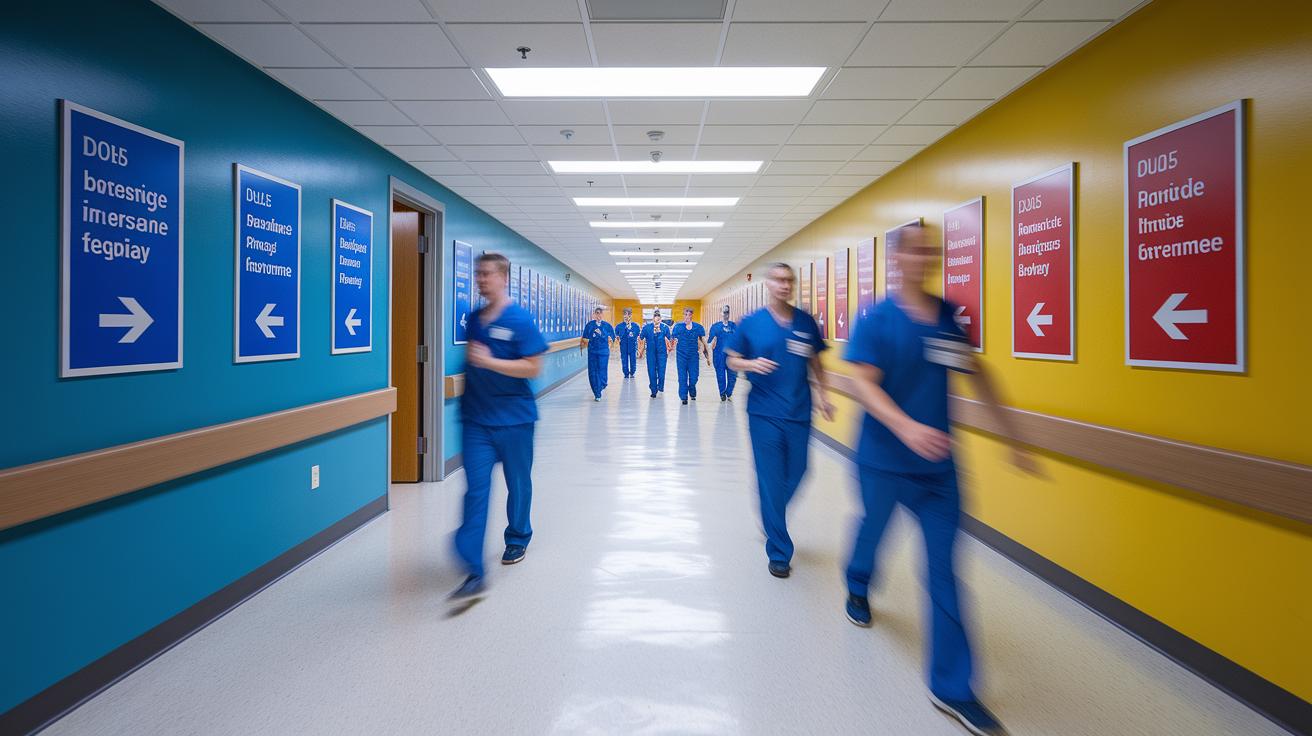
Hospital staff use these color codes to spot emergencies fast. Each color tells you what type of emergency is happening so the right team can respond immediately. The table below shows common codes, what they mean, and which group usually responds.
| Code | Situation | Typical Response Team |
|---|---|---|
| Blue | Medical emergency (cardiac or respiratory arrest) | Resuscitation team: doctors, nurses, respiratory therapists |
| Red | Fire or smoke detection | Fire safety crew, facility management, security |
| Black | Bomb threat or suspicious device | Security, law enforcement, bomb squad |
| Pink | Infant abduction | Security, nursing, administrative lockdown team |
| Purple | Child abduction (over 12 months) | Lockdown team, security, child safety unit |
| Orange | Hazardous material spill or mass-casualty event | Hazmat team, environmental services |
| Brown | Smaller hazardous spills | Facility safety, environmental services |
| White | Pediatric emergencies | Pediatric resuscitation team |
| Gray | Combative or aggressive individual | Security personnel |
| Green | Full evacuation during external disasters | Evacuation crew, hospital coordination team |
Using these codes helps hospitals act fast and keep everyone safe. When you see a color alert, staff know exactly which team to call and what steps to take. This clear system cuts down on delays and helps prevent panic during stressful times.
Standard Protocols and Response Procedures for Emergency Codes
Emergency codes follow a simple, five-step process that keeps everyone safe. You first spot a problem, then alert the team, gather the right groups, manage the situation, and finally end the alert once it is safe.
Step 1. Detection
Watch carefully for any issues. Look for patient signs, sensor alerts, or reports from inside. This step is all about noticing things quickly.
Step 2. Activation
Once a problem is detected, a clear announcement or a dedicated phone call tells everyone what is happening. This step makes sure no one misses the warning.
Step 3. Mobilization
Next, the necessary teams, such as security, medical, and environmental services, are brought together. Their goal is a fast, coordinated response.
Step 4. Operation
Each team member then follows their specific role. They work to manage the emergency in a calm and organized way.
Step 5. Deactivation
When the danger is over and everything is under control, the alert is officially ended. This step confirms that the situation is safe again.
Regular drills and practice simulations are key to keeping the team ready. These practice sessions help you work through real-life scenarios like a simulated cardiac arrest. They sharpen your response skills and build confidence. Every drill helps reduce response times and reinforces the important roles each staff member plays.
After a response, reviews are done to learn from the incident. If an emergency code is mistakenly triggered or canceled too early, the team looks for any gaps or delays. The lessons learned are then used to make the process even better. This constant evaluation helps keep the emergency response both reliable and safe for everyone involved.
Variations and Standardization of Emergency Medical Code Systems

Quick take: Hospitals use different emergency codes that can confuse staff and delay the response.
Triage Box:
- Emergency: If a confusing code leads to delayed care, alert your supervisor immediately.
- Urgent: Ask for clarification on code meanings from your facility.
- Self-check: Review your hospital’s guidelines to stay informed.
Hospitals across regions use various color signals because there is no national rule for uniform meanings. For example, one facility might label a bomb threat as Code Black while another uses Code Black for a different event. This can create mix-ups when staff move between systems or during transfers.
Many hospitals now add clear, plain language alerts alongside their traditional codes. Instead of saying Code Red, they might simply announce “fire.” This straightforward approach helps everyone, from staff to visitors, understand the situation right away.
Professional groups are urging a move toward one common set of signals. Standard guidelines can make training easier, speed up responses, and improve coordination between facilities. This step towards uniformity can reduce errors during emergencies and enhance overall safety.
Implementing and Managing an Effective Emergency Code System
Quick take: Clear written rules and regular drills help everyone act fast and safely during an emergency.
When you set up an emergency code system, start with clear policy documents that explain every step when a code is called. Administrators write these guidelines and use staff training sessions to make sure you know what to do. Badges, posters, and digital guides help keep the steps fresh in everyone’s mind. Regular drills and practice emergencies keep your team ready and improve their performance. Clear policies help your team act in predictable and safe ways when it matters most.
Keep your system sharp by checking the rules often. Administrators track key numbers like response times and follow-up on how well everyone sticks to the rules. Your team’s feedback and after-action reviews guide quick improvements. These audits make sure the emergency codes stay up-to-date with the latest safety standards and meet your needs.
Emergency Medical Code Quick Reference Chart

We've merged this information into the "Key Color-Coded Emergency Medical Codes Explained" section so you can easily find all the details in one spot.
Emergency Medical Code Protocols and Standards
Code Blue is for when an adult has a serious emergency such as a heart attack or stops breathing. Code White is for children who need special care right away. For example, if an adult collapses, a Code Blue is called immediately.
Hospitals don’t all use the same codes. Different regions and facilities use their own systems. You should learn the specific system used where you work. For example, a code at one hospital may mean something different at another.
Emergency codes are announced fast over speakers, pagers, and internal phones to alert everyone quickly during a crisis. For example, you might hear, "Attention all units, Code Blue in progress."
The point of using color codes is to share emergency information quietly. Colors help team members act quickly without upsetting patients or visitors. For example, a color code can keep the scene calm while signaling urgent action.
If you aren’t part of the clinical team, stay calm and follow your supervisor’s instructions. Avoid areas where emergency teams are working. For example, if you are non-clinical, keep away from emergency zones and listen for updates.
Final Words
In the action, we examined how emergency medical codes work to keep patients and staff safe. We outlined the basic steps of detection, activation, and deactivation, and highlighted the role of drills and audits to boost readiness.
We also broke down the color-coded signals that help speed up responses during crises. Remember, understanding these emergency medical codes can empower you to act quickly and confidently during a crisis. Stay proactive and keep safety first.
FAQ
What are hospital emergency codes?
Hospital emergency codes are color-coded alerts that help staff respond quickly. They signal different crises like fires, medical emergencies, or security concerns to keep patients and visitors safe.
What does Code Green in a hospital mean?
Code green indicates an environmental emergency, often prompting a full evacuation. It helps staff quickly organize safe exits and secure patient well-being.
What does Code Yellow in a hospital refer to?
Code yellow usually flags a potential internal hazard or weather-related issue. The definition can vary, so staff follow specific facility protocols to manage safety.
What do Code Pink and Code Purple mean in a hospital?
Code pink and code purple both signal infant or child abduction events. They require an immediate lockdown and coordinated response to protect vulnerable patients.
What does Code Red in a hospital signal?
Code red alerts staff to fires or smoke incidents. It triggers evacuation plans and dispatches fire and safety teams to control the emergency swiftly.
What does Code Orange mean in a hospital?
Code orange indicates a hazardous material spill or a mass-casualty event. It mobilizes specialized teams to secure the area and manage the incident safely.
What does Code Brown in a hospital indicate?
Code brown typically signals a less severe spill or contamination event. It prompts cleanup actions and minor safety measures to maintain a secure environment.
What are the emergency codes used in hospitals?
Emergency codes include colors like blue, red, black, pink/purple, orange, brown, white, gray, and green. Each code describes a specific crisis to ensure rapid and clear staff response.
What is the code for a medical emergency in a hospital?
Code blue is commonly used for medical emergencies such as cardiac or respiratory arrest. It calls for a multidisciplinary team to perform immediate life-saving interventions.
What are good code words for emergencies in healthcare?
Good code words are simple, color-based terms that enable discreet, rapid communication. They allow staff to understand and respond to emergencies without alarming everyone.
What is Code Gold in the ER?
Code gold often designates security emergencies, such as violent or combative behavior. It signals the need for a security team intervention to protect staff and patients.