


Quick take: Recording how you feel every day may help you notice important health trends.
If you experience any new or worsening symptoms, call your doctor right away.
Why track your symptoms?
• It can reveal patterns that might otherwise be missed.
• It gives you a simple diary of how you feel day to day.
• It helps you and your doctor make smarter decisions.
How to start your symptom tracker:
- Write down the date and time of any symptom.
- Describe exactly what you feel (sharp, burning, dizzy, etc.).
- Note if something seems to trigger your symptoms.
- Bring this record to your next appointment for a clearer picture of your health.
Tracking your symptoms is a simple way to take charge of your well-being and share clear details when you visit your doctor.
Quick Start Guide to Creating Your Personal Symptom Index
A personal symptom index is a simple tool that lets you jot down your daily symptoms. It helps you and your doctor spot patterns over time. Remember, this tracker is not a substitute for professional advice, it’s here to support you in monitoring your health and sharing clear details during appointments.
Keeping your own symptom tracker can uncover trends that might otherwise be missed. It gives you an easy way to answer questions like, "When are my symptoms worst?" or "How do my daily routines change my condition?" This method not only teaches you about your own health but also helps you make better choices when managing ongoing issues.
Steps to create your tracker:
- Decide what signs and symptoms to record.
- Note down your symptoms every day, including how strong they feel and how long they last.
- Keep your notes organized so you can see patterns easily.
- Look over your records regularly and share them with your doctor.
Using these steps, you build a personal index that fits your needs. This clear record supports strong, proactive conversations with your healthcare provider and helps you take charge of your well-being.
Planning Your Personal Symptom Index Framework

Start by setting clear tracking goals to guide your personal health record. Think about what you want to learn, whether you’re managing a long-lasting condition or checking how your medicine affects you. Write down the key details you plan to record such as the type of symptom, its strength on a simple scale (1 means mild, 10 means severe), how long it lasts, and any factors or triggers you notice. For example, if bright light tends to cause headaches, note the time and setting. This clear goal helps you collect useful details and makes it easier to discuss your health with your doctor.
Next, set up a simple, consistent system to record your symptoms. Use a measurement scale like 1 to 10 for every entry and stick to it. Try to record your symptoms at regular times, such as after meals or just before bed, to see any patterns during the day. Follow a routine that checks off each key detail, so you build a dependable record over time. This organized approach turns your symptom log into a practical tool for tracking your health and discussing it during your doctor visits.
Data Collection Methods for Your Symptom Index
Tracking how you feel each day is very important. You can use a low-tech paper journal or a digital tool like a mobile app. Choose a method that fits into your daily routine. These tools help you note the time, medicine amounts, and even lifestyle details. This extra information makes it easier to see trends in your health.
| Method | Pros | Cons |
|---|---|---|
| Mobile App | Automated reminders and easy-to-read charts | May have subscription fees and privacy concerns |
| Spreadsheet | Custom formulas and free to use | Takes time to set up and lacks reminders |
| Paper Journal | No technology needed and very portable | Can be lost and charts must be drawn by hand |
| Wearable Device | Tracks data continuously | Expensive and might not show detailed symptoms |
Keep your tracking routine steady. Set a daily reminder to write down your symptoms. You might do it after eating or before bed. Linking your notes to regular activities, such as taking medicine or having a meal, can make it easier to remember. Use an alarm on your phone or a smartwatch if that helps. By making tracking part of your day, you can collect better data and notice health trends over time.
Organizing Your Symptom Index for Clarity and Access
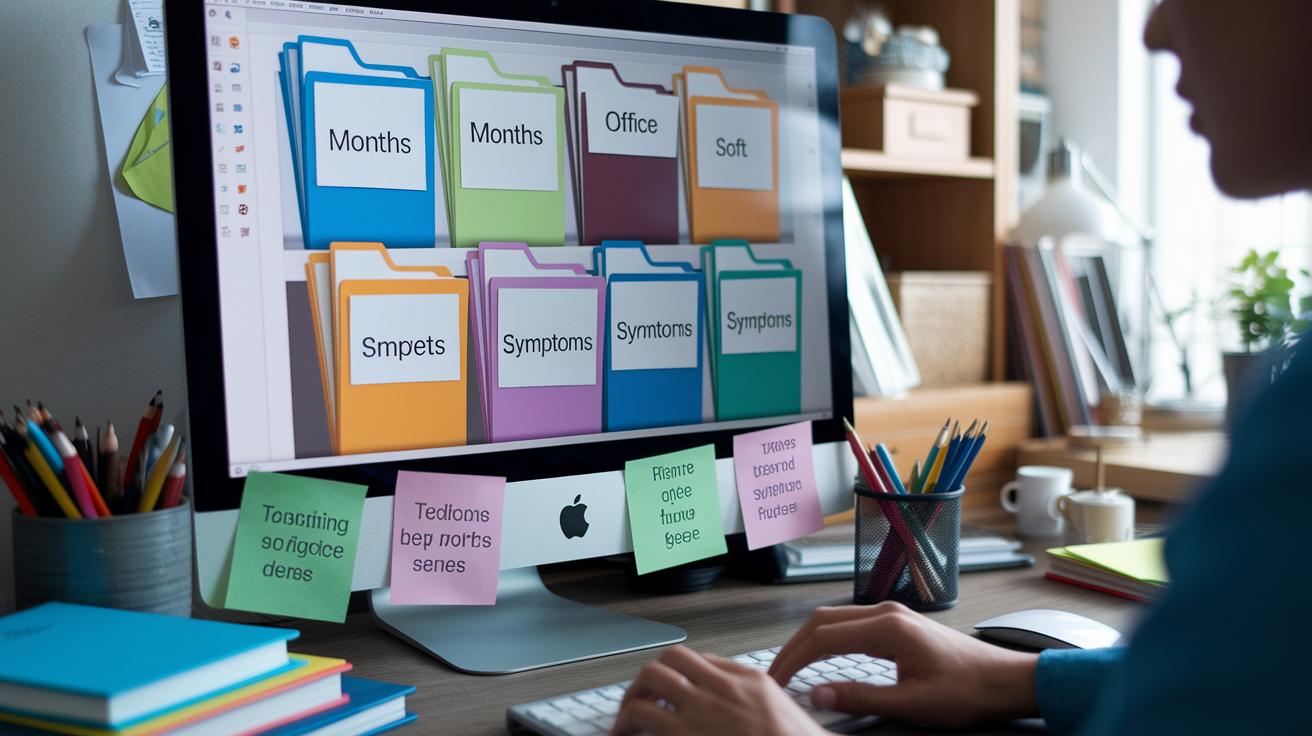
Set up a digital symptom log by creating folders on your computer or in cloud storage. Name your folders by month or by condition so your entries stay in order. In each folder, use subfolders or include the date, type of symptom, severity, and notes in the file name. This clear system helps you find records quickly and see changes over time. For example, you might create a folder called "March 2023 – Headaches" for all headache entries from that month.
If you prefer keeping a paper log, a binder works just as well. Use dividers to separate different symptoms or time periods. Write the date, a brief description of your symptom, how severe it is, and any extra notes at the top of each page. This method makes your log easy to review, especially when you need to show it at a doctor’s appointment.
When it’s time to share your information with healthcare providers, convert your records into a shareable format. Export your digital files as PDFs or take clear screenshots of your organized logs. For paper records, scan the key pages into digital files. These steps help ensure your detailed notes are ready for discussion with your clinician.
Analyzing Your Personal Symptom Index for Health Insights
Quick take: Your symptom log can reveal patterns that help you make smart care choices.
Triage Guidelines:
If you notice any of these red flags, seek medical help right away:
- Severe or sudden pain
- New or worsening symptoms
- Feelings of extreme dizziness or faintness
Review your log regularly. Use simple charts like line graphs to see how often symptoms occur and bar graphs to compare their strength. For instance, you might see that your headaches spike after stressful meetings or that your energy dips after big meals. These visuals turn your notes into clear signals that show how your daily habits match up with your symptoms.
This information not only guides your own care but also makes talks with your clinician more effective. If you find that certain triggers consistently lead to discomfort, try small changes and watch for improvement. When you share these easy-to-read patterns during appointments, your clinician gets a clearer picture of your health.
Your symptom index goes beyond basic notes, it becomes a practical tool to help you take control of your well-being.
Template and Examples for a Personal Symptom Index

Daily Symptom Log Template
A daily symptom log is a simple tool to help you keep track of how you feel. Each day, write down the date and time, describe the symptom you experienced, and rate its strength on a scale from 1 to 10. Use plain language to note any triggers like a change in weather or a stressful event. You can add extra notes to explain if the symptom started after breakfast or during a hectic day. This clear format makes it easy for you and your doctor to see any changes or patterns over time. Start your log today and look for things that repeat, such as headaches in the afternoon or tiredness after a new medicine.
Weekly Summary Chart Example
A weekly summary chart turns your daily notes into an easy-to-read overview. Use a table with columns like Date Range, Average Intensity, Count of Entries, and Key Notes. For instance, you might list "01/01–01/07" as the date range, record an average score of 4, note that the symptom happened 5 times, and add a note like "worse on stressful days." This summary helps you notice trends that may not be clear when looking at daily logs alone. You can add more rows if a certain symptom needs extra attention. Adjust the layout to match your needs so that you have a personalized summary to discuss with your healthcare provider.
| Date Range | Average Intensity | Frequency Count | Key Notes |
|---|---|---|---|
| 01/01–01/07 | 4 | 5 | Worse on stressful days |
Final Words
In the action, you gained a clear guide on creating a personal symptom index. You learned key steps for planning metrics, collecting data, organizing entries, and analyzing results. This blog post showed how a detailed tracker can improve your health discussion with clinicians. It also explained practical ways to manage and monitor your symptoms effectively. Keep using these steps for your personal symptom index and stay proactive about your health. Every small effort boosts your ability to manage symptoms and enhances your overall well-being.
FAQ
Where can I find the Brief Symptom Inventory PDF, free download, test, or checklist?
The Brief Symptom Inventory (BSI) is a self-report tool for assessing psychological symptoms. Evidence-based PDFs, free downloads, tests, and checklists are available on trusted health sites and through clinician resources.
How can I access an online Brief Symptom Inventory?
Accessing an online Brief Symptom Inventory involves using reputable health websites or clinician portals. Many platforms offer validated, web-based assessments to help you monitor your symptoms effectively.
Where can I find DSM-5 Cross Cutting Symptom Measure PDFs, including Level 2?
DSM-5 Cross Cutting Symptom Measure PDFs, including the Level 2 version, are typically shared on respected mental health association sites and research centers that provide clinician-reviewed resources.
Where can I get a Symptom Journal Template or app?
A Symptom Journal Template and app can simplify daily symptom tracking. Trusted health websites and major app stores offer these tools to help you record and review your symptoms for better health management.
How do I make a symptom tracker?
Creating a symptom tracker starts with identifying key symptoms, deciding on measurement metrics, and recording consistent entries. Use a journal, spreadsheet, or mobile app to compile and review your personal health data.
What are the 7 attributes of a symptom?
The 7 attributes of a symptom usually include type, severity, duration, timing, frequency, triggers, and the impact on your day-to-day life. Tracking these assists in spotting trends and discussing them with your clinician.
Is there a website where I can list my symptoms?
Several reputable digital platforms offer tools to list and monitor your symptoms. Look for clinician-reviewed websites that ensure secure and accurate symptom tracking for proactive health management.