
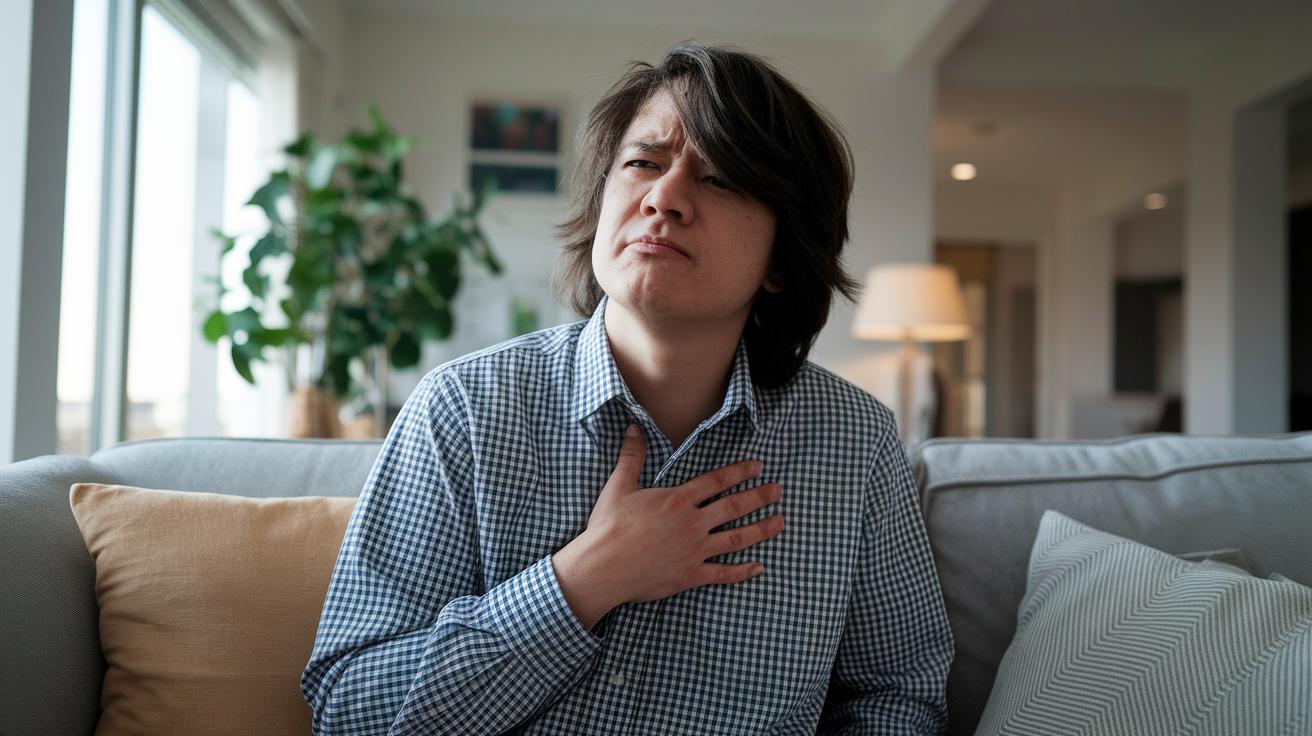

Quick take: Chest tightness after eating may be acid reflux.
If you have severe pain, trouble breathing, or the pain spreads, call emergency services now.
Sometimes after a meal you might feel a tight pressure in your chest. It might seem like a small annoyance, but it could mean that stomach acid (the burning liquid in your stomach) is moving up into your esophagus (the tube that carries food to your stomach).
This guide will help you spot the warning signs and give you simple tips to ease your discomfort. Read on to learn how to track your symptoms and decide when you should reach out for extra help.
chest tightness and acid reflux: Feel Better Now
Quick take: Acid reflux happens when stomach acid goes up into your esophagus and causes chest tightness. Most cases aren’t emergencies, but watch for any warning signs.
If you have any of these emergency signs, call emergency services now:
- Severe, crushing chest pain lasting several minutes
- Pain that spreads to your arms, neck, or jaw
- Trouble breathing or feeling very dizzy
Acid reflux, also called gastroesophageal reflux disease (GERD), happens when the valve between your stomach and esophagus doesn’t close right. When this happens, acid can back up and cause a squeezing pressure behind your breastbone. This pressure might even travel to your arms or back. The most common symptom is heartburn, a burning feeling in your chest or throat after eating, because the acid irritates the esophagus lining.
You might notice the discomfort eases after you take antacids (medications that neutralize stomach acid) or change your diet. Spicy, fatty, or acidic foods often trigger these symptoms. The intensity of pain can change from day to day.
Tracking your symptoms can really help. Write down the time they occur, what you ate beforehand, and how long the pain lasts. This checklist can help you and your clinician tell if acid reflux is causing your symptoms or if something else might be to blame. Once you see a pattern, you can adjust your meal choices and timing to help prevent the pain.
Knowing that a weak esophageal valve is behind these symptoms is key. With your clinician, you can decide on treatments and lifestyle changes that help you feel better quickly.
Differentiating Gastroesophageal vs Cardiac Chest Pressure
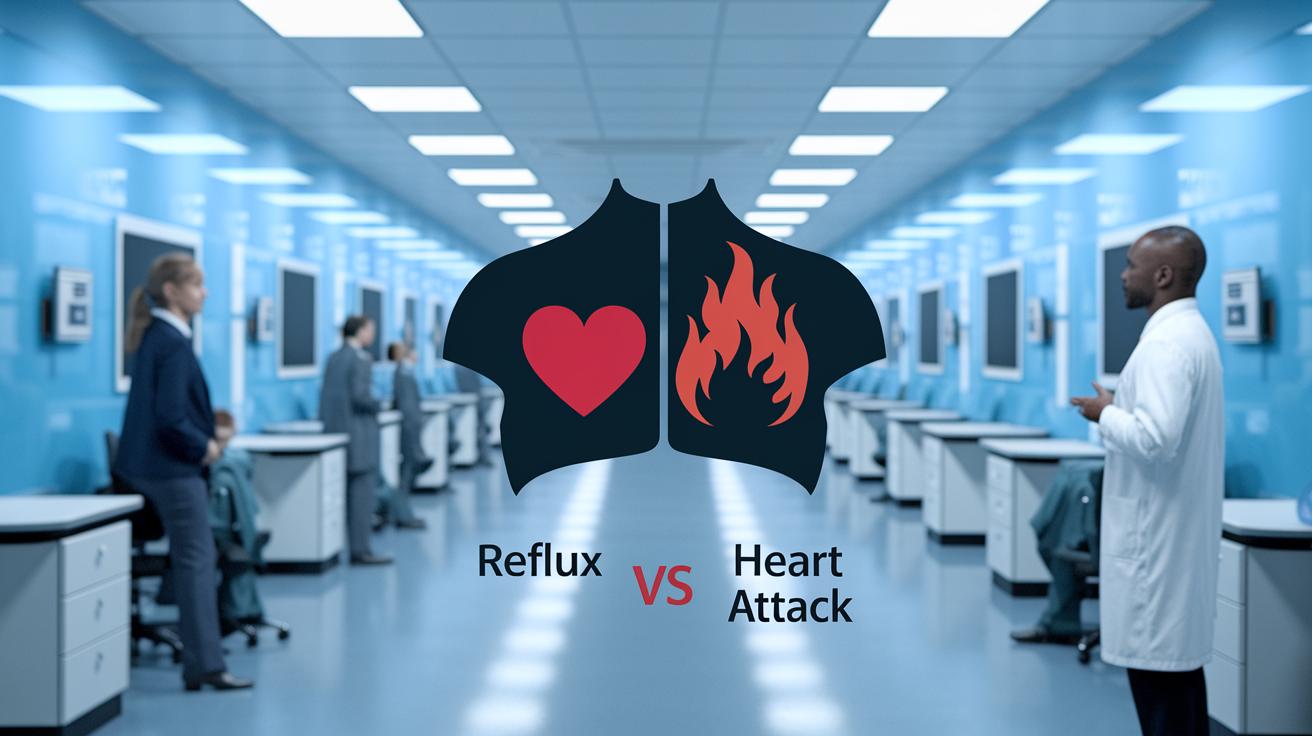
Chest pain can be confusing. Reflux pain usually comes after eating. It feels like burning and lasts from a few minutes to several hours. Antacids often help it. This type of pain is linked to what you ate.
On the other hand, pain from the heart happens with a heart attack or low blood flow. A heart attack can block blood to the heart, hurting the heart muscle. This pain comes on suddenly and feels very strong. It often feels like a heavy pressure that doesn’t ease with antacids. It may also spread to your arm, neck, or jaw, and is more likely during physical activity.
Key points to note:
| What Happens | Reflux Pain | Heart Pain |
|---|---|---|
| When it occurs | After eating | Unexpected, even without eating |
| How it feels | Burning | Heavy, crushing pressure |
| Response to antacids | Often gets better | Does not improve |
| Spreading | Stays in your chest | Can move to arm, neck, or jaw |
If your chest tightness lasts or gets worse, especially during activity, get medical help right away.
Recognizing Additional GERD Symptoms Alongside Chest Tightness
Quick take: GERD can show extra signs that may need action if they get worse.
If you experience any of these serious symptoms, act now:
- Trouble breathing, such as wheezing or shortness of breath.
- A hoarse voice or sudden loss of voice.
- Vomit that is green, yellow, or resembles coffee grounds (this can indicate bile or blood).
GERD isn’t just about chest tightness. Sometimes, stomach acid escapes its normal place and affects other areas like your lungs and throat. When this happens, you may feel wheezing or shortness of breath that can look like asthma. Your throat (the tube that carries air and food) might also become inflamed, causing a hoarse voice or temporary loss of voice.
Another sign is acid regurgitation. This means the acid moves upward into your esophagus (the tube connecting your mouth to your stomach), leaving you with a sour or bitter taste. You might also notice bad breath that doesn’t go away even after brushing or using mouthwash.
Watch for changes in your vomit as well. If you see colors like green or yellow, or if it looks like coffee grounds, it could be a sign of irritation or even bleeding in your digestive tract. In these cases, it’s best to seek medical advice promptly.
What to do:
- Notice changes in your breathing, like wheezing or shortness of breath.
- Track any hoarseness or loss of voice.
- Watch for a sour taste or stubborn bad breath.
- Look out for unusual colors in your vomit and tell your doctor if you see them.
Urgent Signs: When Chest Tightness Goes Beyond Reflux
Quick Take: If your chest pain and unusual vomit don’t improve with antacids, this may signal a serious issue.
If you experience any of these red flags, call emergency services now:
- Persistent chest pain that doesn’t get better with treatment.
- Vomit that looks red or like coffee grounds.
- Sudden shortness of breath, dizziness, or unexpected sweating.
These signs may point to a heart problem or an injury to the esophagus. Record when your symptoms start, how long they last, and any changes you notice. Sharing this information with your clinician is key to getting the right care quickly.
Lifestyle Adjustments to Ease Chest Tightness and Prevent Reflux
Quick take: Small, everyday changes can ease chest tightness from reflux and help you sleep better.
Triage Box:
• Call emergency services now if you experience severe chest pain, pain that spreads to your arm or jaw, or shortness of breath.
• Seek same-day medical care if your symptoms worsen or do not improve in a few days.
• Otherwise, follow these self-care tips and discuss any changes with your clinician.
Keeping a healthy weight is a simple yet powerful step. Eating a balanced diet and exercising regularly can lower your chances of heartburn and heart-related issues. Even small changes now may lead to less chest tightness later.
Plan your meals carefully. Do not eat within 2 to 3 hours before bedtime to give your stomach plenty of time to digest. For example, after dinner, wait a couple of hours before going to sleep. This method helps keep stomach acid in place. You can also raise the head of your bed about 6 to 8 inches. This helps gravity hold the acid where it belongs and prevents nighttime reflux.
Watch your diet. Spicy, fatty, or acidic foods can trigger discomfort. Keep a simple log of when you feel symptoms, and try cutting back on those foods. Adding more low-acid fruits and vegetables may lead to calmer nights and fewer episodes of chest tightness.
Managing stress is also important. Stress can boost acid production, which may worsen reflux. Try deep breathing or a short walk after a stressful moment. For a simple exercise, sit quietly, breathe in slowly for 4 seconds, hold for a moment, and then exhale slowly for 4 seconds. Repeat several times to ease tension.
Keep a journal to track your meals, symptoms, and stress-relief activities. Share your notes with your clinician to help tailor further treatment.
Treatment Options: From Antacids to Proton Pump Inhibitors for Chest Tightness

If acid reflux is making your chest feel tight repeatedly, there are over-the-counter options that can help ease your discomfort. Each kind of medicine works in a slightly different way. Antacids quickly neutralize stomach acid to give you fast relief, but they only last about 1–2 hours. This is a good choice when you need quick relief after a meal that causes that burning feeling in your chest.
H2 blockers lower the amount of acid your stomach makes. They usually take 30–60 minutes to work and can ease symptoms for 6–12 hours. You can take them before meals or at bedtime to help manage your symptoms as they appear.
Proton pump inhibitors (PPIs) work by blocking acid production through specific signals in your esophageal lining. They might take 1–4 days to show full effect, but they keep discomfort at bay for 24–48 hours. These are best used as part of your daily routine rather than a quick fix.
| Medication | Onset Time | Duration | Usage Guidelines |
|---|---|---|---|
| Antacids | Minutes | 1–2 hours | Up to 4 times daily after meals |
| H2 Blockers | 30–60 minutes | 6–12 hours | Before meals or at bedtime |
| Proton Pump Inhibitors | 1–4 days for full effect | 24–48 hours | Once daily before breakfast |
Choosing the right treatment depends on your symptom pattern and your daily schedule. Talk with your clinician to decide which option best suits your needs.
Final Words
In the action, this article broke down how acid reflux can cause chest tightness, sharing practical ways to tell it apart from heart issues. It reviewed common GERD symptoms, urgent signs that need immediate care, and lifestyle adjustments that can help lower discomfort. Treatment options from antacids to proton pump inhibitors were also outlined. Make sure you watch your chest tightness and acid reflux symptoms closely, track them, and share clear details with your clinician. Stay proactive and positive as you take steps toward relief.
FAQ
Q: GERD chest pain location
A: GERD chest pain is felt behind the breastbone and can extend to the arm or back when stomach acid irritates the esophagus.
Q: How to relieve GERD chest pain fast
A: To relieve GERD chest pain fast, use antacids to neutralize stomach acid and take slow, steady breaths while avoiding common trigger foods and drinks.
Q: How do I stop chest tightness after eating
A: You can stop chest tightness after eating by eating smaller meals, avoiding lying down immediately, and taking a gentle walk to help your digestion.
Q: Can acid reflux cause chest pain without burning
A: Acid reflux can cause chest pain without the burning sensation by creating a squeezing pressure that differs from the typical heat of heartburn.
Q: Acid reflux or heart attack quiz
A: An acid reflux or heart attack quiz offers a comparison of symptoms but cannot replace a doctor’s evaluation; call a clinician if you’re unsure about your symptoms.
Q: Can acid reflux cause chest pain and arm pain
A: Acid reflux can cause chest pain that radiates to the arm, though arm pain is often linked with heart issues, so it’s important to get checked if you experience this.
Q: Can GERD cause chest pain on the left side
A: GERD can cause chest pain on the left side when acid irritates the esophagus; however, left-sided pain also warrants evaluation to rule out heart-related causes.
Q: Chest pain after eating not heartburn
A: Chest pain after eating that is not heartburn may be due to acid reflux irritating the esophagus, which creates pressure but not the burning sensation typical of heartburn.
Q: Does acid reflux cause chest tightness?
A: Acid reflux can cause chest tightness as the acid irritates the esophagus, leading to a squeezing feeling that mimics other types of chest pressure.
Q: How do you get rid of tight chest from acid reflux?
A: Getting rid of a tight chest from acid reflux involves using antacids, modifying your diet, and elevating your head when sleeping to reduce reflux symptoms.
Q: What to give a child for acid reflux?
A: For a child with acid reflux, treatment generally includes dietary adjustments and doctor-recommended medications; always consult a pediatrician before starting any treatment.
Q: What does acid reflux feel like in pregnancy?
A: In pregnancy, acid reflux feels like a burning sensation or chest tightness that increases after eating or when lying down, common as pregnancy hormones relax the esophageal muscles.