


Quick Take: Some bumps on your scalp might be nothing serious, but others can be a warning sign that needs care.
If you notice any of these signs, call emergency services now:
• Bumps that grow fast or change color
• Bleeding or painful bumps
• Sudden new bumps that look very different
Common causes of scalp bumps include an infection of the hair follicles (folliculitis), skin issues like fungal acne, and in rare cases, skin cancer. Check your scalp daily and note any changes you see.
Here’s what you can do:
- Look for bumps that are red, swollen, or painful.
- Write down when you first saw them, how big they are, and if they change.
- Keep an eye on them for a few weeks.
- If they don’t go away or you see any of the warning signs above, call your doctor right away.
Taking a few minutes to track your symptoms can help you and your doctor decide the next best step. Stay safe.
Scalp Bumps at a Glance: Types and Urgent Signs
Quick Take: Some scalp bumps are minor, while others may signal a more serious problem. Use this guide to know when to seek prompt care.
If you have any of these signs, call emergency services now:
- Bump grows quickly
- Bleeding or non-healing bump after 2 weeks
- Bump larger than 1 cm
- Firm, fixed bump
- Fever or swollen lymph nodes
- Unexplained tiredness or weight loss
Common Causes:
• Folliculitis: Hair follicle infection that leads to painful pustules.
• Fungal acne: Evenly spread red, itchy bumps caused by a fungus.
• Head lice: Tiny bumps with visible lice eggs (nits) and persistent itching.
• Acne mechanica: Bumps from friction caused by headgear or a tight hat.
• Psoriasis: Raised, rough plaques with a silver scale on the scalp.
• Eczema: Red, inflamed patches that sometimes form bumps and scales.
• Skin cancer: Irregular, changing lesions that may bleed or fail to heal.
This guide helps you match your symptoms with possible causes and decide when to act fast. If any urgent signs appear, reach out to a healthcare provider right away.
Detailed Types of Scalp Bumps and Symptom Confirmation
Folliculitis Bumps
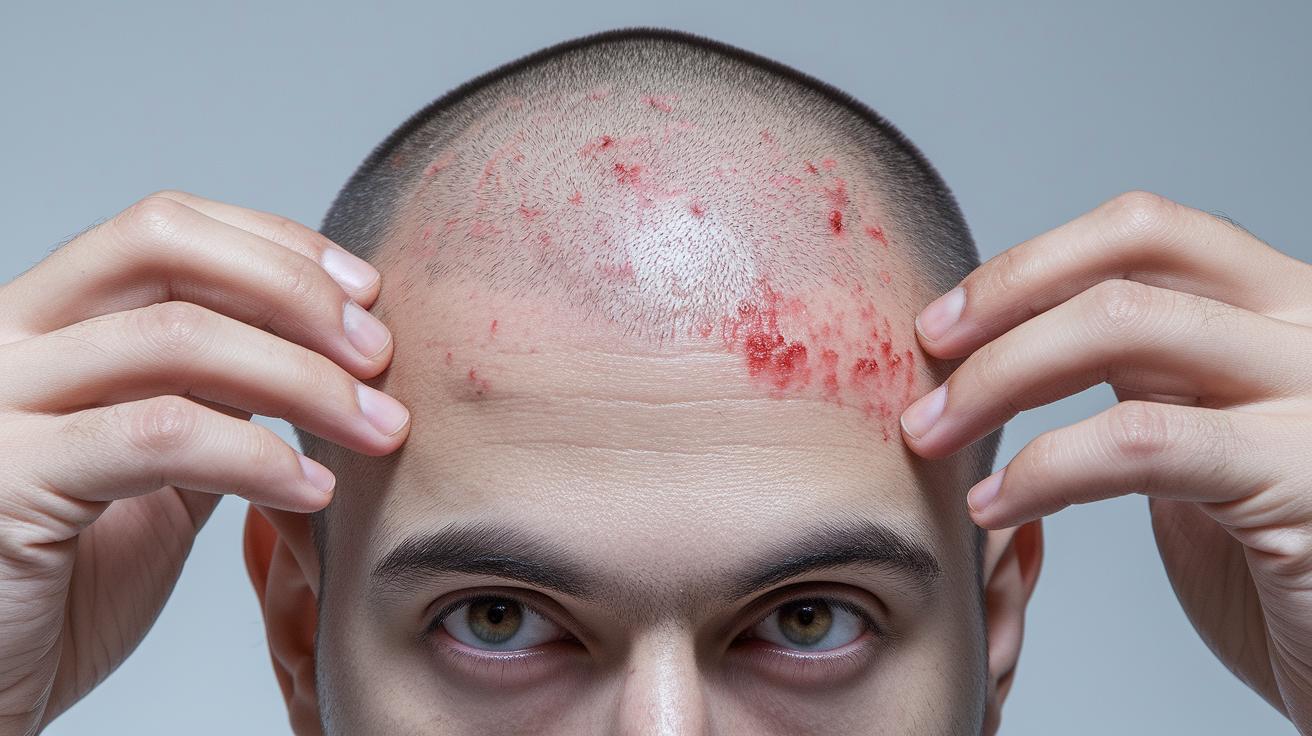
Folliculitis bumps are small, tender, pus-filled pimples around your hair follicles. They can form a light crust and usually appear suddenly on the top of your scalp, often after friction or a minor injury.
Fungal Acne Papules
Fungal acne papules show up as even, red bumps that feel very itchy but not usually painful. They tend to develop slowly and spread evenly across the affected part of your scalp.
Pilar Cysts
Pilar cysts are hard, firm lumps that develop under your scalp skin. They grow slowly, cause little to no pain, and usually stay about the same size over time.
Psoriasis and Eczema Lesions
In psoriasis, you might see raised, silvery patches with a rough feel. Eczema, on the other hand, causes red, oozing spots with fine scales. Both can itch a lot and may cover larger areas of your scalp.
Acne Mechanica Spots
Acne mechanica spots appear because of friction or pressure from headgear like helmets or tight straps. These small red bumps usually develop exactly where your skin meets the gear.
Lice Bite Irritations
Lice bites cause tiny, very itchy spots on your scalp. You might also notice nits, which are lice eggs stuck on your hair. If you see these, it means you have an infestation that needs special treatment.
Scalp Cancer Lesions
Scalp cancer lesions may look like bumps with pearly or scaly edges. They can sometimes ulcerate or look uneven, and usually form on parts of the scalp exposed to the sun. These bumps can change over time and should be checked by a doctor.
When to Worry: Red Flags in Scalp Bumps
Some bumps on your scalp may need quick medical care. Check for these warning signs immediately:
- Bumps that grow fast, bleed, or do not heal within 2 weeks
- Painful or tender lumps over 1 cm that feel hard or stuck
- Moles or spots that change in color, shape, or size
- Bumps that occur with fever, unexplained weight loss, tiredness, or swollen glands
Write down the size of the bump, how long it has been there, and any changes you see. This information can help your doctor decide on the best care.
Home Treatments for Scalp Bumps: From Shampoos to DIY Remedies
Quick take: Most scalp bumps result from irritation or mild infection, and you can often ease them with the right home care.
Triage Box:
• If you feel severe pain, see signs of a spreading infection, or develop a fever, call emergency services right away.
• If your bumps worsen quickly or cause significant discomfort, seek same-day medical advice.
• Otherwise, try these home treatments and keep an eye on your symptoms.
There are two main treatment paths: one using medicated cleansers and shampoos and another with natural DIY remedies. Both methods work to tame fungal acne, folliculitis (inflammation of hair follicles), dandruff, and minor infections by reducing irritation and calming inflammation.
Medicated Cleansers and Shampoos
These products can help clear up scalp bumps fast by targeting the root causes. Try these steps:
• Use ketoconazole 2% shampoo twice a week. This antifungal formula helps reduce yeast overgrowth.
• Wash with a salicylic acid shampoo. It gently removes dead skin cells and unclogs hair follicles to lower irritation.
• Choose an antibacterial cleanser that contains chlorhexidine or tea tree oil. This reduces bacteria and soothes inflamed bumps.
• Try a zinc pyrithione anti-dandruff shampoo. It balances scalp oils and fights dandruff and minor infections.
Follow product directions closely and rinse well to avoid drying out your scalp. For example, regular ketoconazole shampoo use can cut down fungal flare-ups significantly.
DIY Natural Remedies
If you prefer natural methods, these home treatments can soothe your scalp and boost its overall health:
• Mix a few drops of tea tree oil with a carrier oil (making a 5% dilution) and gently massage your scalp. This mix offers antifungal and antibacterial benefits.
• Rinse with apple cider vinegar diluted 1:4 (ACV to water). It helps balance your scalp’s pH and reduce fungus-related bumps after washing.
• Apply pure aloe vera gel to your scalp and let it sit for 20 minutes. This cools the skin and eases inflammation.
• Massage coconut oil into your scalp before shampooing. It moisturizes and calms irritation.
• Create a baking soda scrub by mixing 1 tablespoon baking soda in 2 tablespoons water. This mild scrub exfoliates and clears clogged pores without harsh chemicals.
Using these treatments consistently can help you manage scalp bumps while keeping your scalp healthy and comfortable. Always monitor your symptoms, and if you notice any red flags, seek medical help promptly.
Preventing Scalp Bumps with Scalp Care and Lifestyle Habits
Quick take: Keeping your scalp clean and relaxed can help stop bumps from forming. If you see any red or painful spots, contact your doctor.
Start with a gentle rhythm for your scalp. Use an exfoliating shampoo 2–3 times a week. Follow each wash with a hydrating mask to remove buildup and calm irritation.
Check your scalp once a month in a bright room. Watch for early signs of irritation or any changes. This simple routine helps you catch problems early.
Also, clean your brushes, combs, and hats regularly. Doing so removes oils and bacteria that may clog hair follicles.
Stress can also trigger flare-ups. Try daily meditation or regular exercise to keep stress levels down.
Before bed, rub a light oil or leave-on serum into your scalp. This helps protect your skin and locks in moisture overnight.
| Step | What to Do |
|---|---|
| 1 | Wash with a gentle, exfoliating shampoo 2–3 times weekly, then use a hydrating mask. |
| 2 | Perform a monthly self-check in a well-lit room for signs of irritation or changes. |
| 3 | Clean brushes, combs, and hats often to clear oils and bacteria. |
| 4 | Reduce stress with daily meditation or exercise to lessen hormone-driven flare-ups. |
| 5 | Apply a light oil or leave-on serum at night to support your scalp’s barrier and moisture. |
Following these steps not only improves scalp health but also helps prevent issues like folliculitis (infection of hair follicles) or fungal acne. A steady routine gives you peace of mind and a healthier scalp.
Final Words
In the action, this article reviewed key types of bumps on scalp. It explained the main conditions, shared red flags like rapid growth or bleeding, and outlined clear home treatments and self-care tips. It also detailed useful scalp hygiene practices to help prevent future issues. This guide aims to arm you with simple steps and plain advice so you can quickly decide if you need emergency care or a routine check-up. Stay focused, keep calm, and use these insights for safe, proactive care.
FAQ
What are bumps on scalp shampoo?
The bumps on scalp shampoo is a medicated cleanser designed to clean the scalp, remove excess oils, and help prevent irritations or infections that lead to bump formation.
What do bumps on scalp pictures show?
The bumps on scalp pictures often show red papules, small cysts, or scaly patches that indicate various conditions, helping you compare your symptoms with common scalp issues.
What do pimple-like bumps on scalp that hurt mean?
The pimple-like bumps on scalp that hurt suggest irritation or folliculitis, where small, painful pustules form around hair follicles and may require targeted treatment.
What are hard bumps on scalp?
The hard bumps on scalp are typically firm nodules that could indicate cysts or other benign growths, and they might need medical evaluation if they change or grow.
What are small hard bumps on scalp?
The small hard bumps on scalp usually refer to tiny, firm cysts or follicular keratosis that remain stable but should be monitored for sudden changes.
What is the treatment for small bumps on scalp?
The small bumps on scalp treatment can include medicated shampoos, warm compresses, or natural remedies like diluted tea tree oil, along with monitoring for any worsening of symptoms.
What do itchy bumps on scalp pictures indicate?
The itchy bumps on scalp pictures indicate red, irritated patches that may result from fungal infections or dermatitis, guiding you to consider self-care or professional advice.
What is a remedy for itchy bumps on scalp?
The remedy for itchy bumps on scalp often involves using medicated shampoos or natural treatments like aloe vera and diluted tea tree oil to soothe irritation and reduce inflammation.
What are stress bumps on the head?
The stress bumps on the head are small, tender spots that may result from stress-induced hormonal changes, usually improving with proper stress management and scalp care.
How do you get rid of hair bumps on your scalp?
The way to get rid of hair bumps on your scalp is to adopt a gentle scalp care routine that includes medicated cleansers, warm compresses, and, if necessary, consultation with a clinician for persistent issues.