

Quick Take: Most skin bumps are harmless. But if you notice changes, pain, or fluid leakage, don’t wait, seek care.
If any of these are present, call your doctor now:
• The bump is growing fast or larger than 1 inch.
• It feels very painful or tender.
• It starts to leak clear or colored fluid.
• You notice redness or swelling that worsens.
Many bumps on your skin are common. They can be little pimples from clogged pores or skin tags that simply irritate you. Some bumps may leak a bit of fluid, while others are dry and harmless.
What to do:
- Write down when you first saw the bump and note any changes in size, color, or pain.
- Keep track of any new symptoms, like increased tenderness or spreading redness.
- If the bump stays the same for a few days without pain, you may just monitor it.
- If it changes or you feel unsure, call your doctor for advice.
By watching your bump and noting any changes, you can feel more confident about knowing when it’s time to get help. Stay calm and keep a close eye on any symptoms.
Most Common Butt Cheek Bumps and How to Recognize Them
Quick take: Many types of bumps can show up on your butt, and knowing their signs helps you decide if you need to see a doctor.
Pilonidal cysts form near the base of your spine, in the crease between your buttocks. They start as a small, irritated bump that can get painful and turn into a pit under the skin. If infected, these cysts might leak a foul-smelling fluid. They often come back and are more common in men. Think of it like a stubborn pimple that sometimes oozes an unpleasant liquid.
Anal abscesses are swollen, painful lumps near your anus that can fill with pus. The pain is sharp and tends to worsen when you sit or move. This is a clear sign that you might need urgent care.
Anal skin tags are small, soft pieces of extra skin around the anal area. They usually don’t hurt but might cause a little itch when they rub against your clothes. They can blend in with the surrounding skin, which sometimes makes them hard to notice.
Anal warts start as tiny bumps around the edge of your anus. Over time, they can enlarge and change in texture or color. While they generally aren’t very painful, they can be annoying, especially if they multiply or don’t go away.
Bumps from folliculitis occur when your hair follicles become inflamed, showing up as small, red pustules that can be tender, especially when you sit. In a similar way, keratosis pilaris happens when a buildup of keratin (a skin protein) forms rough, non-painful bumps that may itch. These conditions are sometimes called butt acne and often develop from sweat and rubbing during daily activities.
Lipomas are soft, movable lumps under the skin that grow slowly. They usually don’t hurt, which makes them less worrisome compared to other types of bumps.
When to See a Doctor About Your Butt Cheek Bump
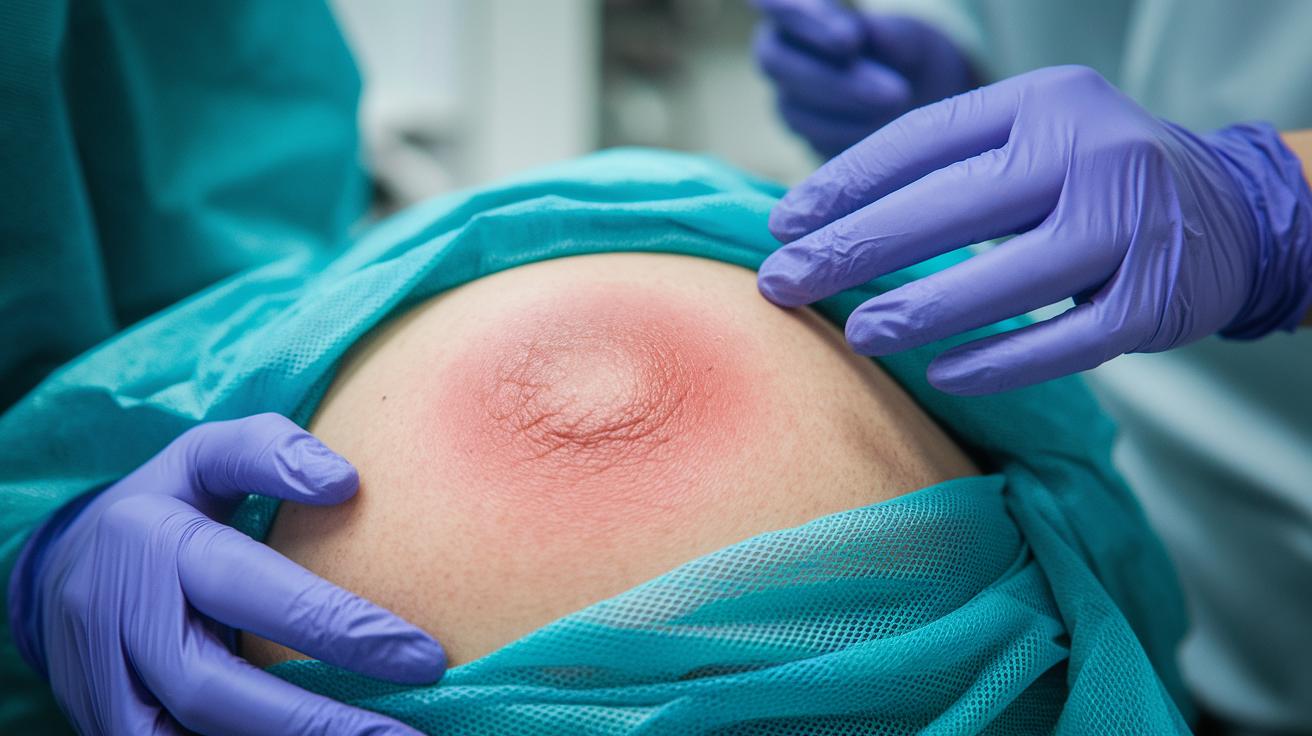
Quick take: A painful or leaking bump on your butt may need prompt evaluation.
If you experience any of these warning signs, call your doctor or go to urgent care:
- Sharp pain right at the bump.
- Recurrent lumps that come back even after home care.
- Bump leakage of foul-smelling pus or blood.
- A pit or cavity forming in the skin.
- Fever or other signs of infection.
- Bump that does not improve with over-the-counter treatment.
A bump that causes persistent discomfort or pain may signal a problem that self-care can’t fix. For example, chronic pilonidal cysts sometimes increase your long-term risk and may need surgery. Don’t wait if the bump gets worse or you notice red flags. Acting early can help prevent complications like an abscess.
Treatment Options for Bumps on the Butt Cheek
If a bump on your butt is causing pain or worry, you have several treatment choices. You can try over-the-counter solutions or visit your doctor for professional care.
When a pilonidal cyst (an infected pocket near your tailbone) hurts or gets infected, your doctor might suggest draining it or doing a pilonidal cleft lift surgery. These steps help ease pain and lower the chance of the cyst coming back.
For small skin issues like buttne, you can use a benzoyl peroxide wash or a salicylic acid cleanser. These medicines clear your pores and calm swelling. Many people also use antibacterial soap to reduce irritation and lower the risk of infection.
If your bump comes from folliculitis (infection of hair follicles), applying a topical antibiotic like mupirocin with warm compresses can help it heal faster. For keratosis pilaris (small, rough bumps), creams with keratolytics (substances that break down skin buildup) like lactic acid or urea can smooth your skin.
When bumps are anal skin tags, your doctor often removes them in the office. If a lump is a lipoma (a soft, moveable mass) and it bothers you, minor surgery might be used to take it out.
| Condition | Treatment |
|---|---|
| Pilonidal Cyst | Drainage or pilonidal cleft lift surgery |
| Buttne | Benzoyl peroxide wash |
| Folliculitis | Topical antibiotics and warm compress |
| Keratosis Pilaris | Creams with keratolytics |
| Anal Skin Tags | Office removal |
Home Remedies and OTC Care for a Butt Cheek Bump
Quick Take: Your bump can usually be managed at home with gentle care, but watch for signs that need medical help.
If you have any of these emergency signs, call emergency services now:
- The bump becomes very red, swollen, or painful
- You develop a fever
- Pus or other signs of infection appear
If your symptoms worsen or don’t get better in a few days, seek urgent care.
Self-Care Steps:
- Wash the area every day with a mild, fragrance-free antibacterial soap. When drying, pat gently with a soft towel; avoid rubbing hard to keep the skin calm.
- About 2–3 times a week, use a chemical exfoliant with 2% salicylic acid to clear clogged pores. After exfoliating, apply a moisturizer labeled non-comedogenic (it won’t block pores) for a soothing touch.
- If you notice swelling, try a warm compress on the bump to help ease discomfort and reduce inflammation.
- Avoid tight clothing and long periods of sitting, as these can cause extra friction and irritation.
- Don’t pick at the bump. Let your skin heal naturally.
- If you often get pilonidal cysts, consider using a hair removal cream (depilatory) every 2–3 weeks as extra care.
Use these steps as a routine to help keep your skin comfortable. Monitor the bump and act now if you notice any worsening signs.
Prevention and Home Remedies for Butt Cheek Bumps
Quick tip: Taking a few simple steps can help keep irritation and bumps at bay.
• Wear loose, breathable fabrics like cotton or moisture-wicking material. This helps your skin stay dry.
• After you exercise or sweat heavily, shower right away with a gentle, fragrance-free cleanser.
• Dry your skin by patting it with a fresh towel. Remember to swap out towels and undergarments every 2-3 days.
For the crease area between your butt and leg, keep it hair-free by using a gentle hair-removal cream every 2 weeks.
If you notice any bumps, try a mild over-the-counter cream (such as hydrocortisone, following label directions) or use an antiseptic wash to ease irritation.
Fun fact: Many people have found that switching to breathable fabrics cuts irritation a lot.
Final Words
In the action sections above, we explored common causes of a bump on butt cheek, ranging from pilonidal cysts and folliculitis to anal skin tags and other bumps. You now have quick tips to notice red flags and clear steps for home care. Remember to track your symptoms and seek professional help if conditions worsen. The practical advice on treatment, daily care, and prevention helps you move forward with confidence. Stay positive and proactive about your health.
FAQ
How can I treat a painful or swollen bump on my buttock?
The painful or swollen bump may be due to folliculitis, a pilonidal cyst, or an abscess. Start with gentle cleansing, warm compresses, and an OTC antibacterial wash. If symptoms worsen or persist, seek medical care.
What does a painless lump on the buttock or inner cheek indicate?
A painless lump in these areas could be a benign lipoma or a skin tag. It usually does not cause worry unless it changes in size or causes discomfort, in which case a doctor should evaluate it.
What characteristics distinguish bumps on the buttocks that do not look like pimples?
Bumps on the buttocks that are not pimples may appear as red inflamed folliculitis, rough keratosis pilaris, warts, or cysts. Comparing pictures and noting texture can help you decide if further care is needed.
What might cause a bump on my buttock that isn’t a pimple?
A bump that isn’t a pimple might be from a pilonidal cyst, inflamed hair follicles, or a lipoma. Such bumps have different textures or pain levels and should be monitored for any changes.
What does a buttock boil typically look like?
A buttock boil usually appears as a red, swollen, and painful lump filled with pus. It may be tender to the touch and often causes localized discomfort, requiring prompt medical evaluation if severe.
Are buttock bumps linked to hygiene practices?
Buttock bumps can be linked to hygiene. Keeping the area clean with gentle, fragrance-free soap and avoiding prolonged moisture helps reduce bacteria and friction, which can lower the risk of developing bumps.