
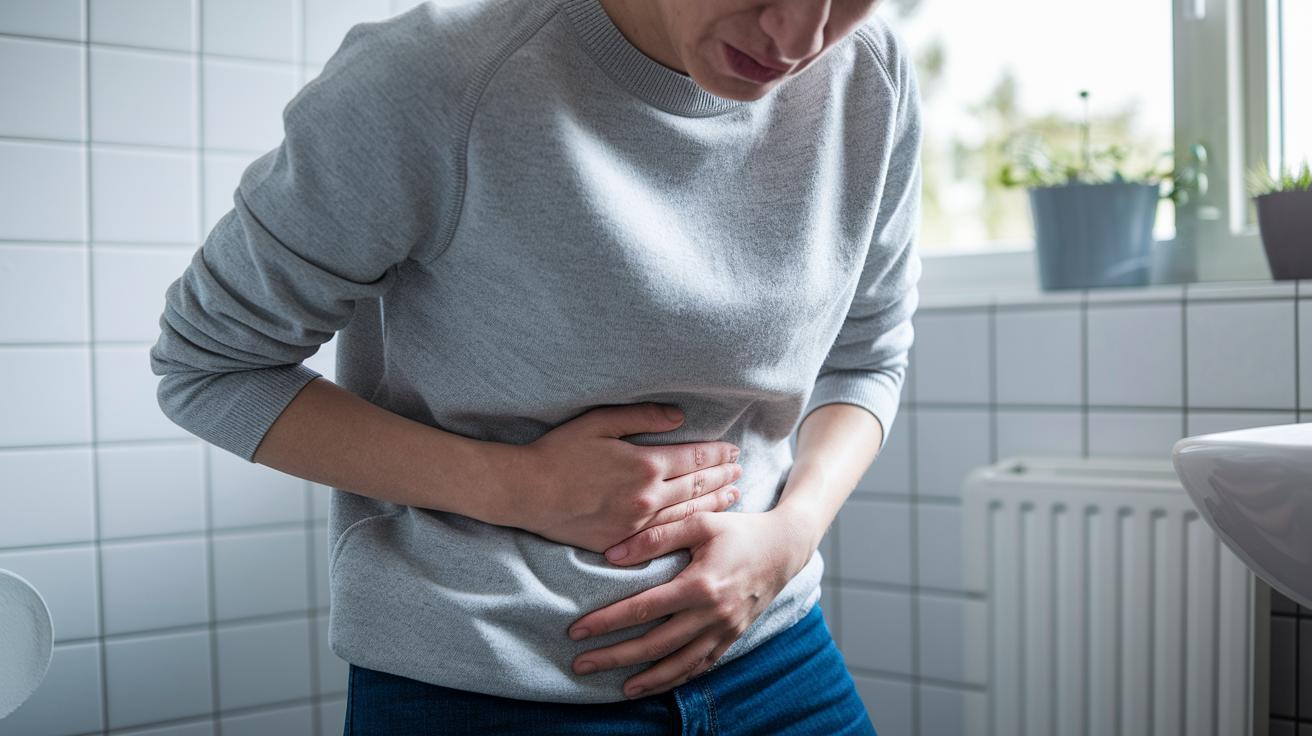

Quick Take: A sharp ache after using the bathroom might be a sign of constipation, swollen veins, or a small tear around the anus.
If you experience any of these emergency signs, call emergency services immediately:
• Heavy bleeding
• Severe, worsening pain
• Fever or chills
Your discomfort may have several common causes. It could be due to constipation (hard, dry stool), swollen veins from straining, or tiny tears near the anus. It helps to track when the pain happens, how long it lasts, and if you have any other symptoms.
At home, try drinking plenty of water, eating more fiber, and resting to ease the discomfort. If the pain does not improve or you notice any red flags, contact your healthcare provider for further care.
By noting your symptoms and their timing, you can decide whether simple home care is enough or if you need to seek medical attention.
Common Causes of Abdominal Discomfort After Bowel Movement
Quick take: Belly pain when you go can come from many issues. Monitor your signs, and if you feel severe pain, see a doctor.
Triage Box:
If you experience very sharp or continuous pain, blood in your stool, fever, or if you feel unusually weak, call emergency services or seek urgent care.
Abdominal pain related to bowel movements can affect different areas in your lower body. You might feel a quick, sharp cramp or a steady, aching pain. This discomfort may show up before, during, or after you go, and it might go away quickly or stick around.
Here are some common causes:
- Constipation: Hard, infrequent stools can stretch your colon, making each movement hurt.
- Hemorrhoids: Swollen veins near your rectum or anus can cause itching, bleeding, and lingering pain when you sit or move.
- Anal fissure: A small tear in the skin around the anus may cause a sharp, burning pain when stool passes.
- Irritable Bowel Syndrome (IBS): This condition affects many adults and causes cramping, bloating, and changes in bathroom habits, which can lead to pain after a bowel movement.
- Inflammatory Bowel Disease: Conditions like Crohn’s disease and ulcerative colitis cause long-term inflammation, leading to cramping and discomfort as you pass stool.
- Proctitis: Inflammation in the rectal lining, often linked to infections or past radiation, can cause throbbing pain after defecation.
- Endometriosis: When tissue similar to the uterine lining grows near the bowel, it can pinch or cramp during stool passage, causing significant pain.
- Skin conditions: Problems like psoriasis or eczema may make the skin around your anus split or become irritated, leading to discomfort when wiping or passing stool.
If you have persistent or unexplained pain, contact your healthcare provider for a proper evaluation.
Mechanisms of Abdominal Discomfort After Bowel Movement

Quick take: Mild pain after a bowel movement can happen, but severe or unusual pain means you should act now.
If you have any of these emergency signs, call emergency services now:
- Intense, unrelenting pain.
- Bright red blood in your stool.
- A fever over 102°F (38.9°C).
When your colon works normally, its muscles squeeze to move stool along and then relax once you’re finished. This smooth process usually causes little or no pain. For more details on how your colon works, check out Digestive System Function.
Sometimes, extra straining, a sudden increase in the amount of stool, or very sensitive nerves can disrupt this balance. These factors can trigger strong muscle spasms in both your colon and pelvic floor. In some cases, your colon reacts too forcefully, causing a cramp during or after you go.
You might feel discomfort right after a bowel movement because the colon’s muscles rebound after contracting. If you have irritable bowel syndrome (IBS) (a condition that makes your gut very sensitive), even a mild muscle squeeze can cause sharp pain.
Diagnosing Causes of Abdominal Discomfort After Bowel Movement
If you feel pain after a bowel movement, your doctor will check your symptoms for clues. They look for patterns seen in conditions like irritable bowel syndrome (IBS) using guidelines called Rome IV (rules used to diagnose IBS) and simple blood and stool tests. These tests help rule out infections, anemia (low red blood cells), thyroid problems, or celiac disease (gluten sensitivity) and decide if your pain comes from a functional bowel issue instead of another problem.
If you have a sharp pain during your bowel movement that might signal a more serious cause, your doctor may recommend a colonoscopy with a biopsy (taking a small sample of tissue) for further study. They test for inflammatory bowel disease (IBD) by checking markers like C-reactive protein (CRP, a sign of inflammation) and calprotectin (a protein that increases with gut inflammation). Imaging tests such as ultrasound or CT scans are also used to look for conditions like deep pelvic endometriosis, tumors, or other growths.
A simple physical exam plays a key role too. Your doctor can spot anal fissures (small tears) by visually examining the area and check for hemorrhoids (swollen veins) during a rectal exam. For advice on when to seek immediate help, please refer to the Triage Flowchart for Abdominal Pain.
Red Flags of Abdominal Discomfort After Bowel Movement

Quick take: Some signs after a bowel movement may mean you need urgent care.
If you have any of these signs, talk with a doctor right away:
- Unrelenting pain lasting more than 48 hours: Pain that refuses to ease and gets worse after two days.
- Fever over 101°F: A high temperature that shows your body is fighting an infection.
- Blood in your stool or black, tarry stools: Finding blood or an unusual dark color in your stool is very concerning.
- Unexplained weight loss of more than 5 lbs in one month: Losing weight quickly without trying can mean something serious.
- Persistent vomiting or signs of severe dehydration: Continuous vomiting or feeling very dehydrated may lead to other complications.
For more details, please refer to the Red Flag Checklist for Severe Abdominal Pain.
Self-Care Tips for Managing Abdominal Discomfort After Bowel Movement
Quick take: Try smart eating, proper posture, warm baths, and gentle exercises to ease discomfort.
If you experience severe pain, heavy bleeding, or fever, call emergency services now.
A balanced diet and plenty of water can make a big difference. Aim for 25–30 g of fiber each day. This means eating fruits, vegetables, and whole grains, which help keep your stools soft and regular. If you have IBS (irritable bowel syndrome), you might also add soluble fiber supplements and probiotics to support your digestion.
Changing how you sit during bowel movements may help, too. Put your feet on a small stool when you sit. This simple adjustment can ease tension in your lower belly.
For extra relief, try warm baths. A 10- to 15-minute warm Sitz bath can soothe muscle cramps and lower discomfort. Also, doing pelvic floor exercises or talking with a physiotherapist can help relax and strengthen your muscles.
Keep a simple diary to track your diet, stress, and pain. Write down what you eat, how you feel, and when the pain occurs. This will help you spot any triggers and give useful details to your healthcare provider if you need more advice.
Final Words
In the action of breaking down common causes, underlying mechanisms, diagnostic steps, red flags, and self-care tips, this article aimed to simplify understanding of abdominal discomfort after bowel movement. It offered practical advice and clear direction to help you decide on the next steps.
The guide focused on both best practices at home and important red flags that require medical evaluation. Positive steps and informed decisions can lead to better outcomes and improved comfort.
FAQ
Lower abdominal pain after bowel movement female
Lower abdominal pain after a bowel movement in females may point to conditions like constipation, anal fissures, or IBS. Tracking its pattern and accompanying symptoms can guide you on whether to seek care.
Upper stomach pain after bowel movement
Upper stomach pain following a bowel movement may indicate issues like indigestion or reflux, though it might also be related to normal colon movement. Persistent or severe pain warrants further evaluation by a clinician.
Lower abdominal pain after bowel movement male
Lower abdominal pain after a bowel movement in males could signal problems such as constipation, anal fissures, or inflammatory conditions. Noticing any changes and discussing them with a healthcare provider is advisable.
Upper abdominal pain after bowel movement female
Upper abdominal pain after a bowel movement in females may be linked to digestive upset or gallbladder issues. This discomfort should be monitored, and if it intensifies, you should get a professional assessment.
Lower abdominal pain before bowel movement
Experiencing lower abdominal pain before a bowel movement can result from the build-up of stool or the effort needed to pass hard stools. Such pain might indicate constipation or IBS, so tracking symptoms is useful.
Why does my stomach hurt after pooping when constipated?
The stomach hurting after pooping when constipated usually happens because hard stools stretch the colon walls and trigger muscle spasms. Increasing fiber and water intake may help, but persistent pain should be evaluated.
What are the symptoms of IBS in females?
IBS symptoms in females often include abdominal cramping, bloating, and changes in stool consistency—ranging from diarrhea to constipation. These symptoms typically vary with meals and bowel movements.
How to relieve poop cramps?
Poop cramps can often be relieved by taking a warm sitz bath, staying hydrated, and doing gentle pelvic floor exercises. These actions may help ease the cramping and promote a more comfortable bowel movement.
Why am I so uncomfortable after I poop?
Feeling uncomfortable after pooping might be due to muscle spasms, stretching from hard stools, or conditions like hemorrhoids and IBS. Observing the pain pattern and associated symptoms helps determine if professional care is needed.
Why does my stomach ache after pooping?
A stomach ache after pooping can occur when the colon muscles spasm or stretch while passing stool. This pain may be part of conditions like IBS or an anal fissure, so reviewing your symptoms can be important.
What does IBS poop look like?
In IBS, stool consistency can change frequently, appearing either loose and watery or hard and lumpy. These fluctuations, along with cramping and bloating, are common indicators of the condition.
What is a red flag for abdominal pain?
A red flag for abdominal pain includes severe discomfort lasting more than 48 hours, a temperature over 101°F, blood in the stool, or unexpected weight loss. Any of these signs require prompt medical evaluation.