


Quick take: Chest pressure may come from several causes, check for emergency signs like severe pain or trouble breathing.
If you have chest pressure with intense pain, shortness of breath, lightheadedness, or fainting, call emergency services now.
Chest pressure can feel tight or heavy. It might scare you, but it isn’t always a heart problem. Sometimes muscle strain, stress, or acid reflux (when stomach acid flows back into the esophagus causing burning) can make your chest feel uncomfortable.
Keep an eye on your symptoms. Note when the pressure starts, how long it lasts, and if anything makes it worse. This information can help your clinician decide what to do next.
Taking simple steps like resting and noting any changes can guide you toward a healthier heart. If the pressure continues or worsens, seek medical help promptly.
Recognizing and Interpreting Pressure Inside Chest
Feeling pressure in your chest can feel like a tight squeeze, a heavy weight, or a firm grip that isn’t caused by the heart. You might notice it in a specific spot or spread across your chest, and it can come and go or linger for a while. Although it sometimes looks like classic heart pain (angina), most often it stems from muscle strain or stress.
Chest pressure can come from several places. It might be linked to heart problems like coronary artery disease or other heart issues, but it can also be due to lung conditions, acid reflux (when stomach acid moves into your esophagus), muscle or rib strain, or even anxiety. If you feel this pressure along with worsening pain, trouble breathing, or other warning signs, get checked by a clinician right away. Understanding these causes helps you decide whether to care for it at home or seek immediate medical advice.
Cardiovascular Causes of Chest Pressure

Heart problems can make your chest feel tight and heavy. This pressure may feel like a squeeze around the heart or behind the breastbone. It happens when the heart or its tissues are not working well. Fast action is needed if the pressure is strong or lasts for a long time.
• Pericarditis: Inflammation of the heart sac causes a sharp, burning, or stabbing pain.
• Aortic dissection: A tear in the main artery sends a sudden, severe, and tearing pain, along with signs of poor blood flow.
• Coronary artery disease/angina: Narrowed heart arteries cause a strong, squeezing pain that starts during activity and may fade with rest.
• Coronary microvascular disease: Problems in the small heart vessels, especially in women, lead to a steady, tight feeling that does not follow the typical angina pattern.
If you feel a consistent squeeze or pressure, monitor your symptoms and talk with your doctor. Watch for red flags like sudden severe pain, pain that spreads, or ongoing pressure. Noting these details can help you decide if you need urgent care or a routine checkup.
Respiratory Conditions Triggering Chest Pressure
Pneumonia
Pneumonia is an infection caused by bacteria, viruses, or fungi. It can make your chest feel suddenly tight and painful. You might also have a cough and fever. Every deep breath may bring a sharp, uncomfortable pain in your chest.
Pleurisy
Pleurisy happens when the thin lining around your lungs becomes inflamed. This condition causes sharp pain each time you breathe, almost like a squeeze between your ribs. You may feel a tight, pinching pressure with every breath.
Pulmonary Embolism
A pulmonary embolism is very serious. It happens when a blood clot blocks an artery in your lung. This can cause sudden, intense chest pressure, a fast heartbeat, and shortness of breath. Sometimes you may even cough up blood. If these signs appear, you should seek urgent care right away.
Pneumothorax
Pneumothorax occurs when air leaks into the space around your lung, causing it to collapse. This may lead to a brief, tight feeling in your chest or sustained, dangerous pressure. Small leaks might improve with rest, but larger ones require immediate medical treatment.
Gastrointestinal Factors in Mid-Chest Pressure
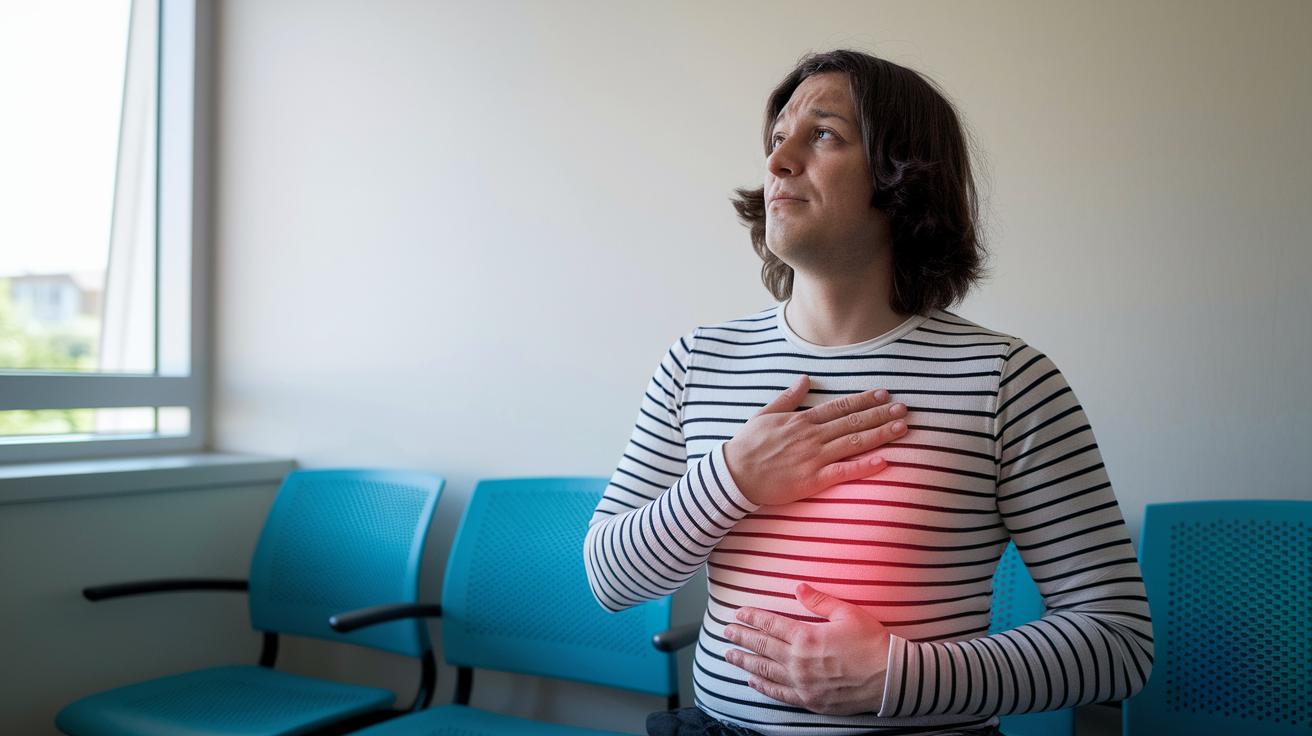
Quick Take: Your chest may feel tight from your digestive system, not your heart.
Triage Box:
• Red Flags: Call emergency services now if you experience severe chest pain, trouble breathing, pain that spreads to your arm, neck, or jaw, or sudden fainting.
• Urgent: Seek same-day care if the pressure lasts over 3 days or worsens.
• Monitor: Note when the pressure happens and what you ate before the symptoms began.
Many digestive issues can cause a tight, squeezing feeling in your chest. When stomach acid flows back into your esophagus (GERD, which means acid reflux), you may feel a burning pain behind your breastbone. A hiatal hernia, where a part of your stomach pushes up into your chest, can add to this discomfort. Gas buildup and indigestion after a heavy meal can also make your chest feel even tighter, mimicking heart pain even though it is linked to digestion.
Sometimes the diaphragm (the muscle under your lungs that helps you breathe) moves during digestion and creates a similar tightness. These feelings are usually temporary but can be scary. Remember, these signs are related to your digestive system. If this chest pressure continues or worsens, consult a clinician to rule out any complications and keep your heart healthy.
Musculoskeletal Sources of Pressure Inside Chest
Quick take: Chest pressure can come from muscle and bone issues, not just the heart.
Triage:
• Call emergency services now if you have severe chest pain, trouble breathing, pain that spreads to your arm or jaw, or if the pain is very strong.
• Seek same-day care if the pain starts suddenly after an injury or if it feels worse when you move.
• Monitor your symptoms if the pressure is mild and comes with movement, note when it happens and mention it to your doctor if it gets worse.
Sometimes muscle and bone problems cause a tight, focused pressure in your chest. For example, costochondritis (inflammation of the cartilage that joins your ribs to your breastbone) can make your chest feel sharp, especially when you take a deep breath or cough. Even a small injury or heavy physical work can bruise your chest, cause rib fractures, or tighten your muscles so that you feel a squeezing sensation along the chest wall.
Spasms in the small muscles between your ribs can also create a tight, compressing feeling. This pain might be felt more strongly after heavy lifting, playing sports, or after a fall. Watch out for sore rib joints or tenderness when you press on your chest. These clues can help you decide if you should just rest and monitor your symptoms or if you need to talk to a healthcare provider. Remember, musculoskeletal pain usually comes back with movement or pressure on the area, which helps set it apart from other, more serious conditions.
Stress and Anxiety-Induced Chest Pressure

Quick take: Anxiety can cause a heavy, tight feeling in your chest.
Triage:
• If you have severe chest pain that lasts more than a few minutes, call emergency services now.
• If you feel short of breath or notice pain spreading to your arm or jaw, seek help immediately.
• If these feelings make it hard to do everyday activities, record your symptoms and talk to a trusted health professional.
Anxiety and panic attacks can make your chest feel squeezed and heavy. You might notice rapid breathing and a fast heartbeat when this happens. That tightness can come on suddenly with a sense of dread and even make you feel like you’re not getting enough air.
Emotional stress affects your body in real ways. When you’re very stressed, your chest might feel as if it’s being gripped tightly by a vise. This feeling may come out of nowhere or stick around for a long time, causing worry about your heart. If you notice this chest pressure interfering with your day, jot down when it happens, how long it lasts, and how bad it feels. Use this record to discuss your symptoms with a healthcare professional.
Often, you’ll feel the pressure most during stressful moments like public speaking, tight work deadlines, or arguments. In these moments, try calming techniques such as deep breathing or progressive muscle relaxation. These steps may help ease the tightness and lower your stress.
When to Seek Medical Help for Chest Pressure
Quick take: If you have chest pressure that sticks around or comes with other warning signs, act fast.
Chest pressure may feel like a heavy squeeze even if it doesn’t hurt like a classic heart attack. Sometimes, a heart attack can show up as a crushing pressure that lingers for more than 20 minutes. You might not feel the typical chest pain, but the pressure is still a warning sign. It can be hard to tell if it’s from your heart or something like stress or a muscle strain. However, some signals mean your heart might be in danger, and any delay can lead to more serious damage.
If you notice any of these signs, get help immediately:
- Pressure that lasts longer than 20 minutes
- Pain spreading to your arm, jaw, or neck
- Sudden, heavy sweating
- Feeling sick to your stomach
- Severe shortness of breath
Diagnostic Tests for Chest Pressure Evaluation

Quick take: Chest pressure can come from problems in your heart, lungs, or digestion. If you have severe pain or trouble breathing, call emergency services now.
Triage:
• Call emergency services now if you experience crushing chest pain, severe shortness of breath, or fainting.
• Seek urgent care if your symptoms worsen rapidly.
• Otherwise, monitor your symptoms and follow your doctor’s advice.
Doctors use different tests to find the cause of chest pressure. An EKG (heart monitor) checks your heart’s rhythm and can show if blood flow is low. A chest X-ray looks at your lungs to spot problems like pneumonia or a collapsed lung. If a blood clot or tear in an artery is suspected, a CT angiogram creates detailed images of your blood vessels, including your aorta. The D-dimer test looks for signs of blood clotting when the cause of pressure is not clear. For pain that might relate to acid reflux or stomach issues, an endoscopy gives a close look at your esophagus and stomach to spot irritation or damage.
These tests give clear results so your healthcare team can plan the safest and best treatment for you.
| Test | Purpose |
|---|---|
| EKG | Checks heart rhythm and blood flow |
| Chest X-ray | Examines lungs for pneumonia, collapsed lung, or other issues |
| CT angiogram | Creates detailed images of blood vessels to detect clots or tears |
| D-dimer test | Detects blood clotting activity |
| Endoscopy | Inspects the esophagus and stomach for reflux or damage |
Home Remedies to Relieve Pressure Inside Chest
Quick take: These simple steps may ease mild chest pressure if no severe symptoms are present.
Triage box:
If you have any of these emergency signs, call emergency services now:
- Severe chest pain that spreads to your arm, neck, or jaw.
- Trouble breathing or feeling faint.
- Sudden weakness or confusion.
If your chest pressure worsens or lasts more than a few days, seek urgent care.
When you notice a gentle pressure in your chest, try deep breathing with your diaphragm (the muscle below your lungs). This helps relax stiff muscles and clear your mind. A warm compress on your chest can soothe soreness, and gentle stretches can ease tightness in your upper body. You can also adjust your posture by sitting up straight or lying in a relaxed position to reduce the pressure. For example, you might say, "I breathe slowly and deeply to help open my chest," to remind yourself to take calming breaths.
Changing your daily habits and managing stress can also relieve chest tightness. Meditation or progressive muscle relaxation can lower anxiety and ease that uncomfortable squeeze. Try taking short breaks during busy days for mindful breathing or stretching. These home remedies help ease both physical symptoms and stress, supporting your overall well-being. Keep note of your symptoms while using these methods to track whether they improve or if you need to consult a doctor.
Final Words
In the action, we broke down causes and signs for pressure inside chest, from heart and lung issues to digestive and stress-related triggers. We explained what red flags to watch for, offered practical home tips, and showed when you should seek urgent help.
This guide gives you clear steps to track your symptoms and prepare for a clinician visit. Take these points to heart, stay alert, and know that each step you take brings you closer to confident, safe care.
FAQ
Weird feeling in chest no pain
The weird feeling in your chest without pain may indicate mild muscle strain, acid reflux, or anxiety. Keep an eye on your symptoms, and if they worsen, contact a healthcare professional.
Pressure in the middle of chest and what causes pressure in the chest?
The pressure in your mid-chest can stem from heart, lung, digestive, or muscle issues. Conditions like gas, reflux, anxiety, or even heart problems can cause this, so monitor your symptoms.
Female pain in middle of chest and what causes chest pain in a woman?
Female chest pain in the middle is often linked to digestive reflux, muscle strain, or heart issues such as microvascular problems, which can present differently in women than in men.
Why does my chest feel tight and heavy, and why do I feel like I can’t breathe?
Chest tightness and heaviness along with difficulty breathing may be due to anxiety, muscle strain, or more serious heart or lung issues. Watch for additional signs like sweating or pain, and seek urgent care if they occur.
How to relieve chest tightness and chest tightness from anxiety?
To relieve chest tightness, try deep breathing exercises, gentle stretching, and applying a warm compress to the area. These steps can ease anxiety-related symptoms, but if they persist, consult a clinician.
Why does my chest feel like I have something stuck?
The sensation of something stuck in your chest can point to acid reflux or esophageal issues, and may also be linked to anxiety. Consider dietary modifications and see a healthcare provider if the feeling continues.