
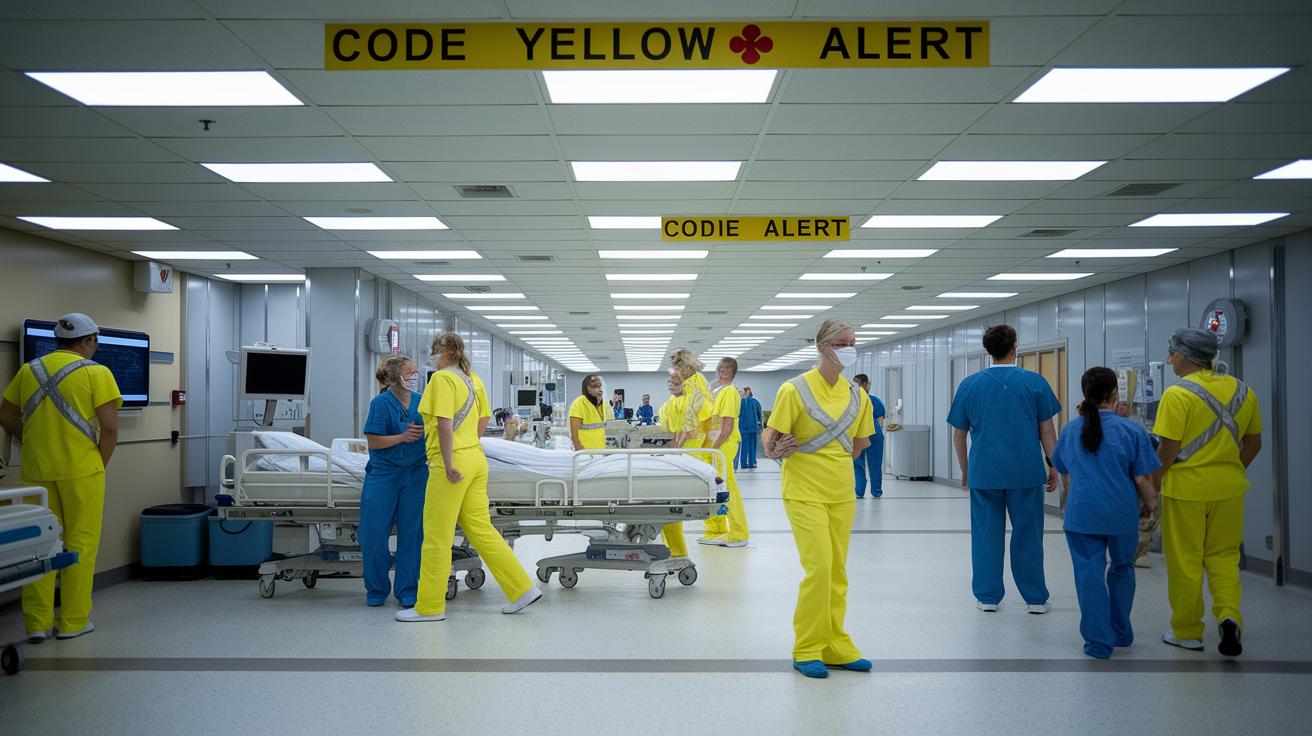

Quick Take: Code yellow is an alert for an urgent issue that isn’t life-threatening but needs quick, organized action.
Triage Box:
• Red flags: None for code yellow, you’re not facing an immediate life-threatening crisis.
• Urgent steps: Hospital staff spring into clear safety measures.
• Routine care: The team keeps operations smooth while you remain calm.
Have you ever wondered what really happens behind the scenes when a hospital faces a pressing problem that isn’t a severe emergency? A code yellow signals that something needs fast attention. It isn’t as dramatic as a code red or blue, but every second still matters. When a code yellow is called, staff move quickly to protect patients and ensure everything runs safely. In this way, hospitals handle urgent issues efficiently without causing panic in the waiting room.
Defining Hospital Emergency Code Yellow
Quick take: Code yellow is a hospital alert for an urgent internal issue that is not life-threatening.
Triage Box:
- If you notice a problem that fits the code yellow description, quickly follow your hospital’s safety steps.
- If you are unsure, notify your supervisor immediately.
- Keep calm and secure the affected area.
Hospitals use color codes like code yellow to manage emergencies quietly and efficiently. These codes help staff respond fast without alarming patients or visitors. Code yellow tells the team that something urgent is happening. Although it is not a life-threatening event, it still requires a prompt, measured response.
A safety committee first set up these color codes in 1999 and updated them in 2014. While detailed public information on code yellow is limited, it works within the same system as other alerts like code blue or code red.
Using code yellow means everyone knows what to do. It lets teams quickly coordinate actions like securing an area or starting extra safety procedures. This clear communication is key to keeping the hospital safe and running smoothly.
Hospital Emergency Code Yellow Protocols and Response Procedures

When an internal issue happens, follow a clear, step-by-step plan to keep everyone safe. First, as soon as something unexpected occurs, you call your supervisor and the command center using the established alert procedures.
At this moment, team members quickly secure the affected area and share short, clear updates using secure communication. Each team knows their specific role, whether it’s monitoring entry points, protecting sensitive areas, or preparing for possible escalation. Leaders then give further instructions, ensuring that all staff stay informed without causing alarm to patients or visitors.
If the alert turns out to be a mistake, supervisors or the command center cancel it right away following pre-set procedures. The incident is reviewed afterwards to improve the response for the future. All updates are sent through secure channels, keeping the information clear and controlled.
Sticking to these code yellow protocols minimizes confusion and supports swift, effective action during any unexpected problems. Regular drills help build team confidence and ensure the protocols work efficiently in real situations.
Hospital Emergency Code Yellow Sparks Clear Safety Measures
Hospitals use emergency codes as a quick way to manage different kinds of problems. Each code tells the staff about the type of emergency and how serious it is. Code yellow stands apart because it flags urgent issues inside the hospital that do not immediately risk life.
Here are the other common codes:
- Code Blue: This means an adult is in a life-threatening situation, like a heart stoppage (cardiac arrest) or trouble breathing (respiratory failure).
- Code White: This alerts the team to a child emergency that needs special equipment.
- Code Red: This signals a fire that could lead to an evacuation.
- Code Purple: This is used when a child is missing or there is a suspected abduction, triggering a lockdown.
- Code Gray: This warns of an aggressive or combative person and calls for security.
- Code Orange: This is for spills of dangerous materials that need careful cleaning (decontamination).
- Code Green: This deals with multiple casualties or helps find a patient who is at high risk and missing.
- Code Silver: This alerts staff to an active shooter or an armed intruder.
- Code Black: This is for bomb threats that require planned evacuations along with law enforcement.
- Code Pink: This focuses on infant abduction, increasing exit checks and locking down the area.
Unlike the other codes, code yellow is used for problems that need a fast response without creating panic. When code yellow is called, hospital teams secure the area and act quickly but calmly. They follow a clear plan and a chain of command to keep everyone safe and to stop the problem from getting worse.
This system helps keep hospital operations running smoothly while ensuring that staff can focus on safety for everyone inside.
Regional Standards and Variations for Hospital Emergency Code Yellow
Quick take: Different regions use Code Yellow in ways that follow local rules, but a move toward a consistent approach is underway.
Hospitals in various areas follow local safety rules for Code Yellow. Some regions check through local regulators and use their own methods to put policies in place. Recently, six states have pushed for a single color-code system. This helps staff know exactly what to do, without causing unnecessary worry.
Ontario hospitals have used their own emergency codes for a long time. In the past, you might have heard “Doctor Red” instead of “Code Blue.” Such differences sometimes confused teams. Now, many places want a standard way to announce emergencies so everyone knows the proper steps.
In the United States, 25 state groups switched to plain-language overhead paging codes back in 2020. This change was meant to make internal alerts clearer and easier to follow. Washington State joined these efforts in 2025, aligning its approach with broader guidelines. Regular policy checks help hospitals keep their alert systems simple and effective.
Regular reviews and compliance checks are now a standard part of managing these alert systems. By following clear protocols, every Code Yellow activation is precise and reliable. This uniform communication helps hospital teams respond quickly and safely during internal incidents.
Training and Drills for Hospital Emergency Code Yellow
Hospital teams practice Code Yellow drills to be ready for sudden in-house emergencies. These drills use hands-on simulations where every team member follows a clear chain-of-command. In each session, you learn the step-by-step procedures and role-specific tasks. For example, one drill starts with a sudden power loss in a busy area. Staff quickly secure the area and report the incident using the established channels.
This training program has three main parts:
- Simulation exercises that mimic real emergencies so you understand the timing and order of tasks.
- Regularly updated training modules that add new safety tips and response methods.
- Leadership drills where supervisors guide and check all actions taken during the drill.
Key training elements include:
- Practicing the command sequence during exercises.
- Running role-based drills with clear tasks for each team member.
- Holding mock briefings to reinforce proper notification methods.
After each drill, staff review the event and check their readiness. This review helps identify what worked well and spots areas to improve. Every drill is a chance to refine the protocols and improve teamwork across departments.
Regular practice builds confidence. When a true Code Yellow occurs, everyone is ready to act quickly and safely.
Communication Best Practices During a Code Yellow

Quick take: Use calm, simple words to tell patients that your team is handling an internal issue.
When a Code Yellow happens, use clear, short messages to let patients know that everything is under control. For example, you might say, "We are addressing an issue to keep your care on track." This reassures them and avoids causing worry.
After the event, hold a review meeting to discuss how your messages worked. In these sessions, you look at which statements helped keep patients calm and which might need adjusting. One team review noted that using clear, reassuring language left patients feeling informed and at ease, leading to small changes in the standard message.
Final Words
In the action, we broke down what hospital emergency code yellow means and how it fits within the color-coded alert system. We reviewed protocols, compared similar alerts, discussed regional differences, and highlighted staff training drills and patient communication methods.
Each step helps you grasp the importance of a clear emergency plan and the roles of various teams. Use this guide to help guide immediate next steps and stay well informed about hospital emergency code yellow.
FAQ
What are hospital emergency codes and hospital codes?
Hospital emergency codes are color-coded alerts that let staff know about different emergencies quickly and discreetly. They help initiate a coordinated response without alarming patients or visitors.
What is Code Red in a hospital?
Code Red indicates a fire or similar critical event that demands immediate action from hospital staff using pre-established protocols to protect lives and property.
What does Code Yellow mean in a hospital or the ER?
Code Yellow signals a specific internal crisis that may require rapid mobilization of certain teams. It is part of a standardized alert system designed to coordinate discreet and swift responses.
What is a yellow emergency?
A yellow emergency refers to situations classified under Code Yellow. It involves circumstances that need a quick, organized response without triggering broader panic among patients and visitors.
Which type of emergency is indicated by Code Yellow?
Code Yellow indicates an internal crisis when speedy, secure communication is needed among hospital teams to manage a potentially disruptive situation.
What is Code Green in a hospital?
Code Green typically indicates a mass casualty incident or a missing high-risk patient, prompting rapid mobilization and coordinated action from designated response teams.
What is Code Pink in a hospital?
Code Pink refers to an infant abduction or missing baby situation. It triggers a hospital lockdown and monitoring procedures to protect vulnerable pediatric patients.
What is Code Orange in a hospital?
Code Orange signals a hazardous material spill or decontamination event. This alerts staff to follow specific safety protocols to manage chemical or contaminant exposure.
What is Code Brown in a hospital?
Code Brown is not universally standardized. Its meaning can vary and may refer to internal incidents like hazardous spills or other localized emergencies as defined by each facility.
What is the most serious code in a hospital?
Code Blue is generally seen as the most critical, as it deals with life-threatening conditions like cardiac arrest or respiratory failure, necessitating an immediate medical response.