
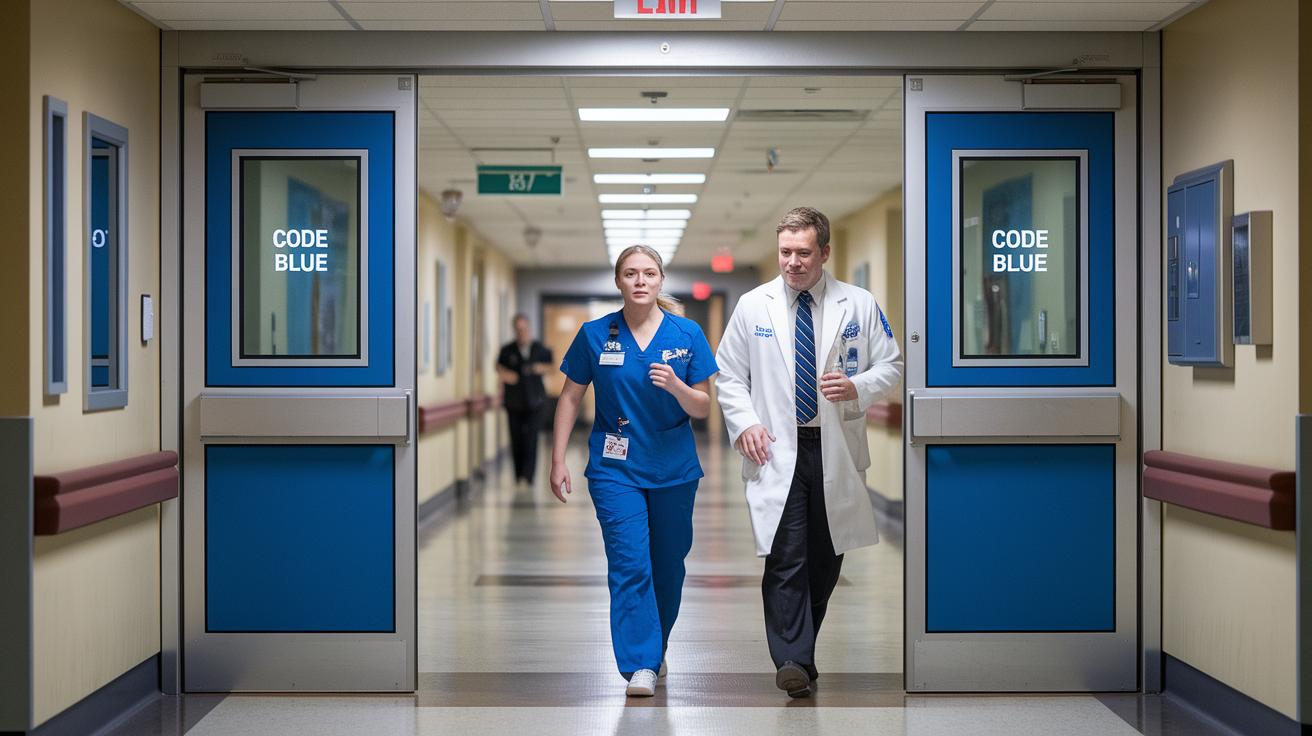

Quick take: A Code Blue is a hospital alert that signals a life-threatening emergency where every second matters.
Triage Box:
• Emergency: Unresponsive patient or signs of collapse – call emergency services immediately.
• Urgent: Patient showing extreme changes in breathing or heart rate – require immediate medical attention.
• Self-monitor: Not applicable in a hospital setting; let the experts handle it.
When a hospital calls a Code Blue, it means a patient may be in danger of dying. The team – doctors, nurses, and specialists – rush in with life-saving tools like a crash cart (a mobile emergency kit filled with vital supplies). They work fast and precisely to help the patient recover.
In this guide, we explain how a Code Blue works and why quick, careful steps can save a life.
Decoding Code Blue Protocol in Hospitals
Quick take: Code Blue is a sudden, life-threatening event that calls for immediate help.
When you hear Code Blue, it means a patient may have stopped breathing, lost their pulse, or become unresponsive. In these moments, a team of doctors, nurses, pharmacists, and respiratory therapists springs into action.
The team quickly brings the crash cart (a mobile cart with life-saving equipment) to the patient. Every second counts. They first check if the patient has any special instructions, like a Do Not Resuscitate order, before starting treatment.
Clear and calm communication is key. For example, one responder might announce, "Patient in room 305, unresponsive, possible arrest, status unknown." This helps everyone understand the situation fast.
Hospitals follow strict Code Blue rules. These guidelines cover steps such as chest compressions, timely defibrillation (a shock to restart the heart), and accurate drug doses. Each step is vital for helping the patient regain stability.
Regular drills help the team practice these steps. Simulated emergencies ensure that every team member knows their role, speeding up the response when a true Code Blue occurs. With continuous training, teams can act fast and give the best possible care.
Activation Process and Communication for Code Blue Alerts

Quick take: When a patient shows signs of a severe decline, activating Code Blue immediately can save a life.
Triage Box:
- If the patient is unresponsive, has no pulse, or is not breathing, act now.
- Press the Code Blue button or announce the emergency loud and clear.
- Call for help immediately.
When you see a patient in trouble, press the Code Blue button or shout the emergency over the speaker. This step makes sure all team members hear the call for help.
Once the alert is sent, a crash cart arrives in minutes. It carries tools to open the airway, support breathing, and restart the heart (restore circulation). The team then follows a rapid checklist to handle the situation. For instance, one team member might say, "Room 402, patient unresponsive, Code Blue activated" so everyone knows the location and the patient's condition.
Using standard handoff phrases, like stating the patient location, condition, and code details, keeps the message clear. This clarity matters because every second counts.
Hospitals review the alert system regularly. They check how fast the response is and how clear the signal remains. These audits help improve the procedures and make sure every team member is ready. For more on the steps and definitions, see the emergency management guide (https://thequickesttips.com?p=1337).
Clear communication and quick action are key to saving lives.
Roles and Responsibilities in a Code Blue Response Team
Quick Take: When seconds count, every team member knows their role and acts fast to save lives.
The team leader, usually a doctor, quickly organizes the scene and tells everyone what to do. They guide the team so that decisions are made fast and correctly.
An airway specialist, often a respiratory therapist or anesthetist, immediately takes charge of the patient’s breathing. They work to keep the airway open so the patient can get enough air.
A compression provider, who might be a nurse or a doctor, starts chest compressions right away. Their job is to push on the chest to keep blood moving until the heart starts beating on its own.
A pharmacist or nurse is in charge of giving medicines like epinephrine (a fast heart medication). They follow a quick checklist to prepare and deliver the drug accurately.
Other nurses step in to help by monitoring vital signs and getting equipment ready. This focus on one task helps to avoid any delays during the emergency.
Clear role assignments are key. Hospitals use step-by-step checklists that cover chest compressions, the right moment to shock the heart (defibrillation), proper drug doses, and care after the heart starts. This helps everyone know exactly what to do when the alert sounds.
Regular drills and training keep the team prepared. For example, one nurse might call out, "Room 210 Code Blue, patient unresponsive," and the leader promptly tells the compression provider, "Start compressions now." Simple, clear commands like this help reduce confusion and save lives.
Training, Drills, and Simulation for Code Blue Preparedness
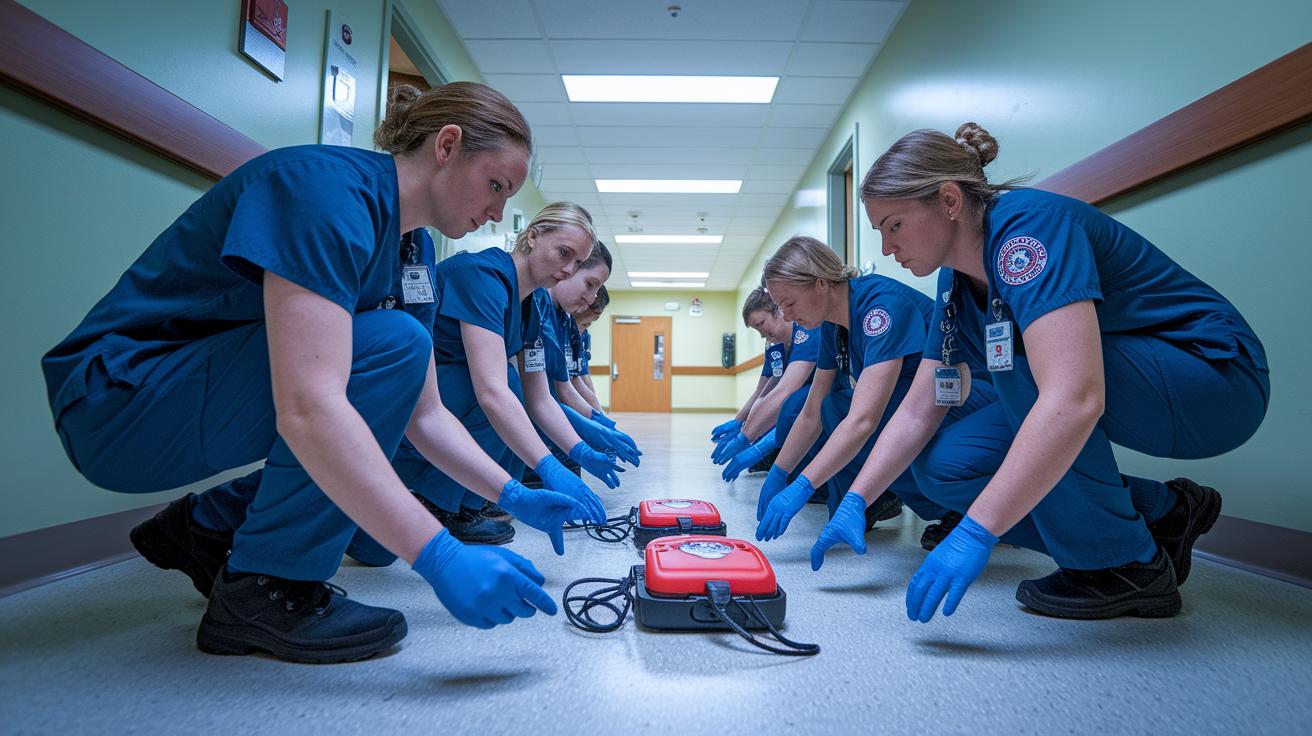
Hospitals make sure every staff member takes resuscitation training every 1-2 years. You learn basic life support (BLS) and advanced cardiac life support (ACLS) to perform good chest compressions and handle defibrillation (using a shock to restart the heart). Regular training builds a strong base for everyone during a Code Blue.
Drills mimic real Code Blue events. You might practice on situations like ventricular fibrillation (a dangerously fast heartbeat) or asystole (no heartbeat). Teams practice securing an airway, doing compressions, and giving medications. For example, a team leader might call out, "Room 405, Code Blue! Simulate ventricular fibrillation now," so everyone quickly knows their role and communicates clearly.
After each drill, the team meets to review key details like response time, how deep the compressions were, and when medications were given. These reviews help everyone see what went well and what could be better.
Some hospitals also use simulation software to recreate complex patient cases. These virtual exercises boost your practical skills and teamwork by following your facility's color-code system and protocols. Reviews from both live and virtual drills help the team get ready to act fast when lives are at risk.
Variations and Standardization of Code Blue Signals Across Facilities
Quick take: Standard color codes across hospitals help staff respond quickly during emergencies.
Triage Actions:
- If you notice unfamiliar codes, ask for clarification right away.
- Review your facility’s emergency signals.
- Work to standardize codes for safer, faster responses.
Hospitals can use different codes in crises. For example, many places use Code Blue for medical emergencies and Code Red for fire. Some hospitals also use Code Black for bomb threats. When you work in more than one hospital, these differences can lead to confusion.
Using one set of color codes across all hospitals can cut down on mistakes and speed up the response when minutes matter. One method is to review how each facility uses these codes. This helps build a common approach among different teams.
Automated alert systems are also helpful. They send clear, quick alerts to the right people as soon as an emergency happens.
A clear leadership structure is key. When everyone knows who is in charge, it’s easier to follow the right steps during a crisis. Standard procedures across facilities lead to faster decisions and actions.
Regular checks on these systems can show where changes are needed. By unifying codes and using smart technology, hospitals can boost patient safety during critical moments.
Documentation and Post-Event Review of Code Blue Events

Quick take: Record each Code Blue event with clear time stamps and details to help improve care.
Every Code Blue event must be logged with the exact time it started. Write down when compressions began, when a defibrillator (a device that gives a shock to the heart) was used, and when medications were given. These clear records help everyone learn and respond better next time.
Right after the event, the whole team meets for a debrief. During this discussion, each member talks about how well they followed the steps, how clear the communication was, and whether the equipment was ready. Here is what is usually done:
- Record the exact time of the alert, each intervention, and recovery efforts.
- Check that all resuscitation steps were followed correctly.
- Review how clear and efficient the information exchange was.
Outcome details, like survival to discharge and brain function (neurologic status), help update quick response checklists and training. For example, a record might note: "At 14:32, compressions started; defibrillation at 14:35; patient stable at 14:50."
Keeping a full audit trail ensures the team meets guidelines and helps drive continuous improvements in urgent care plans and procedures.
Final Words
In the action, this article broke down the hospital emergency code blue protocol. It explained clear activation steps, defined team roles, and stressed the need for regular drills and post-event reviews. The guide highlighted vital signs, mapping of responsibilities, and the importance of documentation to improve crisis response. Every step is designed to ensure quick, decisive action during a medical crisis. Stay calm, act quickly, and rely on clear procedures to support effective care and positive outcomes.
FAQ
Q: What do hospital emergency codes like Code Red indicate?
A: The hospital emergency codes indicate specific crisis types. Code Red usually signals fire, while other codes, like Code Blue, denote medical emergencies that need immediate action.
Q: What does Code Blue signify, and how serious is it? Can a patient survive it?
A: The Code Blue signals a life-threatening medical emergency such as cardiac or respiratory arrest. It is very serious, but with rapid, coordinated care, patient survival is possible.
Q: What is Code Black in a hospital?
A: The Code Black is used in some hospitals to indicate a bomb threat. Staff follow specific safety protocols to secure the area and ensure everyone’s safety.
Q: What does Code Pink mean in a hospital?
A: The Code Pink alerts staff to a potential infant or child abduction. Hospital teams quickly work to secure exits and locate the child to ensure their safety.
Q: What does Code Purple indicate in a hospital?
A: The Code Purple is often used to signal a violent or combative situation. This prompts the rapid deployment of security and trained personnel to manage the crisis.
Q: What do Code 1, Code 2, Code 3, and Code 4 designate in a hospital?
A: Codes numbered 1 to 4 are used in some hospitals to show varying levels of urgency or patient conditions. Their meanings differ by facility, so staff rely on local guidelines.
Q: What is considered the most serious code in a hospital?
A: The most serious code is typically Code Blue, which signals an immediate, life-threatening emergency requiring urgent resuscitative measures.