


Quick Take: Chest tightness can feel like a firm squeeze near your breastbone. It may be linked to heart issues, muscle strain, or acid reflux.
If you have any of these emergency signs, call emergency services now:
• Severe, crushing pain that spreads to your arm or jaw
• Shortness of breath or difficulty breathing
• Sweating, nausea, or feeling faint
If your pain gets worse or lasts longer than a few minutes, seek same-day medical care.
Chest tightness might come from several causes. It could be an issue with your heart, a strained muscle, or even acid reflux (a burning feeling when stomach acid flows up into your throat after eating). This guide breaks down these possibilities in simple terms so you can act wisely.
Keep track of your symptoms:
- Note the start time, how long the tightness lasts, and any other signs.
- Write down what makes the pain better or worse.
- Share this information with your clinician if the problem continues.
Remember, this information is to help you understand your symptoms. If things feel off or your symptoms worsen, don't wait, get help right away.
Chest Tightness Explained: Definition and Overview
You might feel a heavy or tight feeling in the center of your chest. Many people describe this as pressure, squeezing, or a very full feeling near the breastbone. Some even say it feels like a firm grip around the chest. For instance, you could explain it by saying, "It feels like someone is gently pressing on my chest," which helps your doctor understand your experience.
This feeling can be mild or strong and may change throughout the day. Sometimes it comes on quickly; other times it builds up slowly. You might notice it after exercise, during stressful moments, or even when you're relaxed.
Chest tightness can be linked to heart issues or come from other factors like lung, muscle, or stomach problems. For example, if you feel tightness after eating, it might be due to acid reflux instead of a heart problem.
Pay attention to how often the pain happens, its strength, and what seems to cause it. Sharing these details with your doctor can help find the source of your symptoms.
Heart-Related Causes of Chest Tightness

Quick Take: Chest tightness can be a warning sign of a heart issue, so watch for other symptoms and act quickly if things get worse.
Triage: If you experience chest tightness with pain spreading to your arm or jaw, sudden shortness of breath, or unusual sweating, call emergency services now (911 in the US) or get to the nearest emergency room.
Chest tightness from heart problems often happens when blood flow is blocked, when fluid builds up, or when the heart’s covering is inflamed. When plaques (buildup inside your arteries) narrow the passages for blood, less oxygen reaches your heart. This is known as coronary artery disease and can make your chest feel squeezed or pressured. In congestive heart failure, your heart does not pump blood well. This causes fluid to back up in your lungs, leading to a heavy, tight feeling in your chest and making it hard to breathe. Pericarditis is when the thin layer around your heart becomes inflamed, usually due to an infection or another illness. This condition produces a sharp, intense tightness that may get worse when you take deep breaths.
| Condition | Key Features |
|---|---|
| Coronary artery disease | Narrowed arteries lower oxygen flow, causing a squeezing pressure. |
| Congestive heart failure | Poor blood pumping leads to fluid in the lungs, making the chest feel heavy. |
| Pericarditis | Inflammation of the heart’s covering causes sharp, worsening tightness during deep breaths. |
Each condition shows its own signs. With coronary artery disease, tightness often comes during exercise or stress and may ease with rest. In congestive heart failure, you might also notice leg swelling or feel very tired. Pericarditis tends to hurt more when you change position or breathe deeply. If you see additional symptoms like pain that spreads to your arm or jaw, or if you break out in unexpected sweating, it is important to seek medical care immediately.
Non-Heart Factors Behind Chest Tightness
Sometimes, chest tightness does not mean there’s a heart problem. The pressure you feel can come from your lungs, stomach, or chest muscles. For example, if you have asthma, your airways tighten (bronchial constriction) and can make your chest feel squeezed, especially when cold air or exercise triggers your symptoms. You might say, "My chest feels squeezed after running on a chilly day."
Acid reflux happens when stomach acid flows back into your esophagus. This can cause a burning or tight feeling that might be confused with heart pain. Similarly, muscle strain or costochondritis (inflammation of the cartilage connecting your ribs to your breastbone) can create a sharp, local ache along the chest wall. This pain usually worsens with movement or deep breaths.
Other non-heart conditions may also lead to chest tightness by affecting nearby structures. The key is that these issues do not disturb your heart’s blood flow or function.
List of common non-heart causes:
- Asthma causing tightened airways
- Acid reflux (GERD) irritating the esophagus
- Muscle strain from overuse
- Costochondritis with inflamed rib cartilage
- Peptic ulcers affecting the digestive system
- Rib fractures weakening chest stability
Recognizing Symptoms and Red Flags of Chest Tightness

Quick take: Chest tightness with certain extra symptoms may signal something serious.
Triage Box:
If you have any of these danger signs, act immediately:
- Pain spreading to your arm or jaw.
- Sudden dizziness.
- Cold sweats.
- Nausea.
When your chest feels tight, check if you struggle to take a full breath or feel short of breath. You might also experience a fluttering in your chest (often called "butterfly" feelings) or a steady, dull pressure. Each of these sensations could mean different things.
Even if your chest discomfort seems mild, combining it with the symptoms above means you should seek help right away. For example, you might say, "My heart fluttered and then I felt a sharp pain in my arm," to explain how serious it felt.
Write down when your symptoms occur, how long they last, and what you were doing at the time. This information can help your healthcare provider understand your situation better.
When to Seek Medical Help for Chest Tightness
Quick Take: New, worsening, or persistent chest tightness may indicate something serious.
If your chest feels tight in a new way, gets worse, or lasts more than 5 minutes without any change, get help now.
Triage Steps:
- If the tightness starts when you are active and does not ease within 5 minutes of resting, call emergency services immediately.
- Call immediately if you experience pain that spreads to your arm or jaw, trouble breathing, sweating, nausea, or sudden dizziness.
- If the tightness begins unexpectedly while at rest or feels different from past episodes, seek urgent care.
What to Record:
- Write down when the tightness started, how long it lasted, what you were doing, and any steps you took to relieve it.
- Note any new symptoms or changes in your condition.
Example: "Chest tightness started at 2:15 PM after climbing stairs, lasted 6 minutes, and did not improve with rest."
At-Home Remedies to Relieve Chest Tightness
Quick take: Chest tightness might be from muscle strain or acid reflux. Try these simple steps at home, if you experience severe pain or trouble breathing, call emergency services immediately.
If you have any of these emergency signs, call emergency services now:
- Sudden, severe chest pain
- Difficulty breathing or shortness of breath
- Pain spreading to your arm, neck, or jaw
- Fainting or feeling very lightheaded
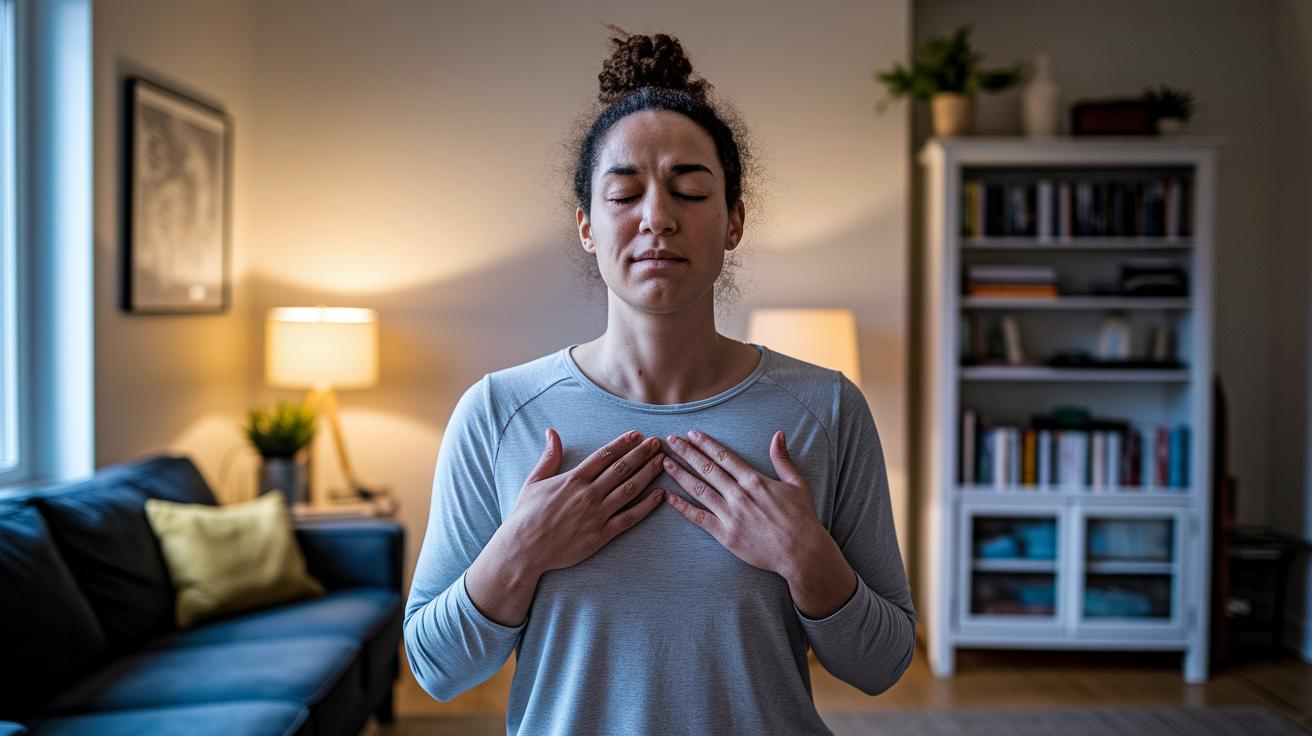
Chest tightness can often be eased with a few safe, simple techniques. When you feel a squeeze in your chest, try calming your body with relaxation methods. Deep belly breathing (diaphragmatic breathing) and progressive muscle relaxation can lower tension quickly and help you feel more at ease.
Adjusting your posture is another easy step. Sit up straight with your shoulders back and do some gentle stretches that open up your chest. This simple change can relieve pressure and let you breathe more freely. If you think your tightness is caused by acid reflux (when stomach acid flows back up, causing burning in your chest), try taking an over-the-counter antacid, elevating the head of your bed, or making small tweaks to your diet to reduce acid buildup.
For muscle soreness, applying a warm compress or a heating pad on your chest (the area over your breastbone) may relax tight muscles and relieve discomfort.
Here are five practical techniques to try at home:
- Practice deep belly breathing to relax your chest muscles.
- Sit up straight and do gentle stretches that open your chest.
- Apply a warm compress to the area to ease muscle tension.
- Elevate your head while sleeping if you have acid reflux symptoms.
- Use over-the-counter antacids after meals to reduce discomfort from acid reflux.
Deep Breathing Exercise
Try this deep belly breathing routine to ease chest tightness:
- Sit comfortably.
- Place one hand on your chest and the other on your stomach.
- Slowly inhale for 4 counts as you let your stomach rise.
- Exhale for 6 counts while your stomach falls.
- Repeat the cycle 5 times.
Remember, these techniques are for mild chest tightness. If your symptoms worsen or new issues appear, please seek medical attention promptly.
Preventing Recurring Chest Tightness Through Lifestyle
Quick Take: Steady lifestyle habits can ease chest tightness when no dangerous signs are present.
If you have any of these emergency signs, call emergency services now:
- Crushing chest pain that does not lessen
- Pain spreading to your arm, neck, or jaw
- Trouble breathing, feeling faint, or sudden dizziness
If your symptoms change fast or you have more shortness of breath, seek same-day care.
Self-care steps if these warning signs are absent:
- Do moderate exercise daily for about 30 minutes (like brisk walking, cycling, or swimming)
- Eat a diet rich in fruits, vegetables, and whole grains to lower inflammation
- Practice calming activities such as yoga, meditation, or mindfulness, and get enough sleep
- Avoid smoking to protect your heart and airways
- Maintain a healthy weight and use good posture during your daily activities
These practical lifestyle changes can help lower the chance of recurring chest tightness
Final Words
In the action of breaking down the steps, we explored how chest-tightness feels, why it happens, and when to act fast. We walked through heart-related and non-heart factors, pointed out warning signs, and shared practical steps to ease discomfort. We also covered lifestyle changes that can help reduce episodes over time. Remember to track your symptoms and share clear details with your clinician. Keep in mind what is tightness in chest and use this guide to stay informed and proactive about your well-being.
FAQ
How to relieve chest tightness
Relieving chest tightness involves using at-home techniques such as deep breathing, posture adjustments, and relaxation to help reduce the feeling of pressure in your chest.
Chest tightness no other symptoms
Experiencing chest tightness with no other symptoms often means you feel a localized pressure or heaviness, which can be linked to muscle strain, stress, or acid reflux rather than heart-related issues.
Weird feeling in chest no pain
A weird feeling in the chest without any pain typically indicates an unusual pressure or tightness that may be attributed to anxiety, muscle tension, or mild acid reflux instead of a heart problem.
What causes chest pain in a woman
Chest pain in a woman can be caused by heart-related conditions such as coronary artery issues or non-cardiac factors like acid reflux, pericarditis, and musculoskeletal strain, highlighting the need for careful evaluation.
Why does my chest feel tight and heavy
A tight and heavy chest can result from several factors including heart conditions like angina and non-cardiac causes such as acid reflux, asthma, or muscle strain that create a pressing sensation in the chest.
Female pain in middle of chest
Female pain in the middle of the chest is described as a central pressing sensation that may stem from heart conditions, acid reflux, or musculoskeletal strain, making it important to track triggers and patterns.
How to relieve chest tightness and shortness of breath
Relieving chest tightness along with shortness of breath involves using deep breathing exercises, maintaining good posture, and seeking guidance from a clinician if symptoms persist or worsen.
How to cure chest pain
Curing chest pain begins with identifying its underlying cause; heart-related pain requires urgent care, while non-cardiac pain might improve with rest, warm compresses, or antacids after consulting a professional.
What does chest tightness feel like?
Chest tightness feels like a constricted, heavy, or squeezing sensation around the central area of the chest, varying from mild pressure to a more pronounced squeeze based on the underlying cause.
How to relieve a tight chest?
To relieve a tight chest, use techniques such as deep breathing, gentle stretches, and posture adjustments along with relaxation methods like warm compresses to ease the sensation effectively.
What does “tight in the chest” mean?
The term “tight in the chest” means experiencing a constriction or pressure in the chest area, often due to causes like muscle tension, stress, acid reflux, or even heart-related conditions.
When to worry about chest pain in pregnancy?
Worry about chest pain in pregnancy arises if the pain is severe, accompanied by shortness of breath, sweating, or radiates to other areas; in such cases, seek immediate medical help and consult your clinician.