


Quick take: Home health care brings expert support right to your home so you can recover safely without a hospital stay.
If you feel unsure about needing a hospital stay, know there is another option. Home health care gives you trusted help at home. Skilled nurses, caring aides, and therapy professionals come to you if you need help after surgery, injury, or illness.
This type of care is made just for you. It supports your healing and builds your independence. The care is clear and practical, helping you get back to your everyday routine safely and comfortably.
Home Health Care Defined
Home health care brings skilled medical help right to your home. It is for people recovering from surgery, injury, illness, or for those managing long-term conditions. Registered nurses (trained healthcare professionals), therapists (movement and healing experts), and home health aides (assistants for daily care) all play a role in helping you feel better. This care is usually short-term and aims to boost your independence so you can get back to your normal routine. It is a safe and practical choice compared to a long hospital stay.
A doctor must order home health care, and you need to meet Medicare’s homebound rules, which means it is very difficult for you to leave home without help. The length of care depends on your medical needs and your progress. The goal is to provide quality, tailored support where you feel most comfortable.
In‐Home Nursing and Support Services in Home Health Care
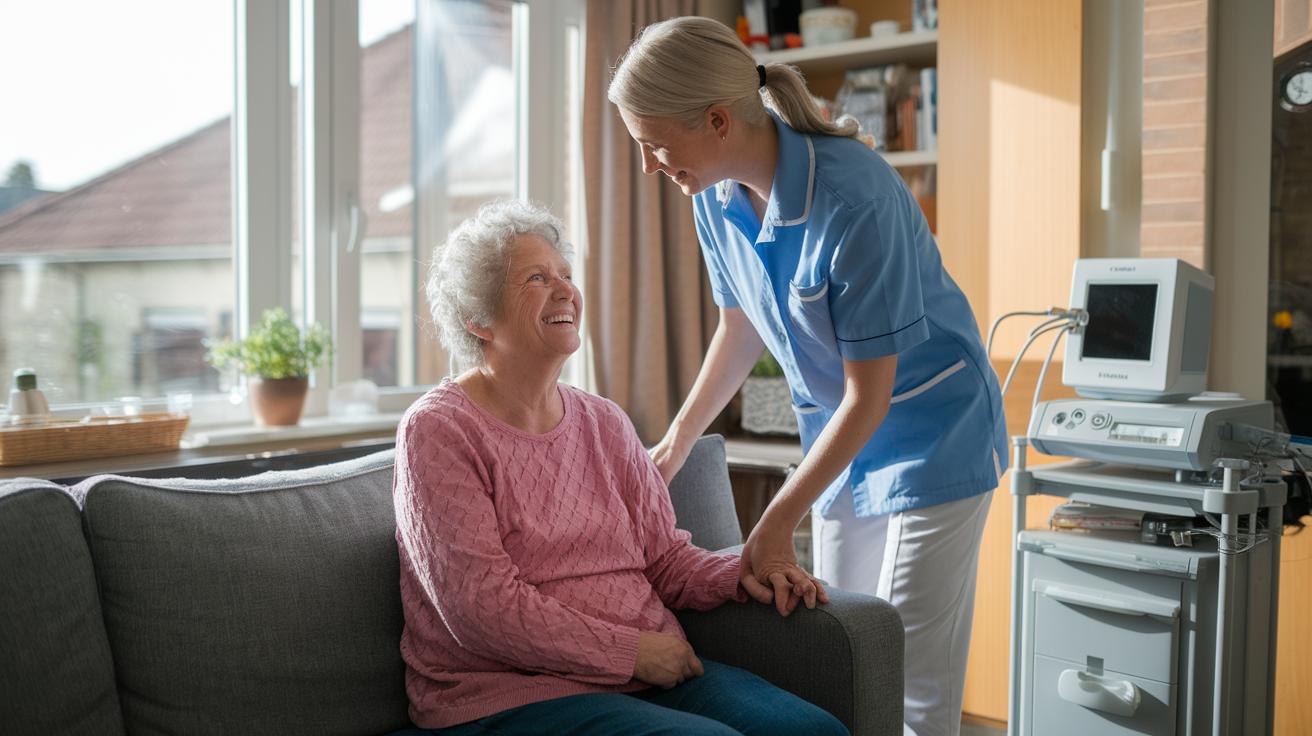
In-home nursing services bring skilled medical care right to your door. They help you recover from surgery or injury and manage long-term conditions like diabetes or heart issues. This care is for anyone living alone or in assisted living, ensuring that trained professionals guide your treatment day by day.
You may receive help with:
- Skilled nursing (IV therapy and checking your medicine)
- Wound, ostomy (body openings managed with care), and catheter care
- Physical therapy to boost movement
- Occupational therapy to improve daily tasks
- Speech and swallow therapy to aid eating and talking
- Medical social work for counseling and planning local resources
- Home health aide support for bathing, dressing, and meal prepping
All these services work together so you get care that fits your needs. Skilled nursing checks your medicine and treatment progress. Wound and catheter care stop problems before they begin. Therapy sessions help you move better and stay independent. Speech and swallow therapy works to bring back simple actions like eating and talking. Medical social work connects you with helpful community services. And home health aides take care of tasks like showering and cooking. This team approach helps you recover faster, lowers the chance of going back to the hospital, and makes your daily life better.
Key Benefits of Home Health Care for Patients
Home health care gives you professional care right at your doorstep. You get one-on-one help in a familiar, safe place that feels like home. This comfort can help you relax and support your recovery.
Your care team works with you to set up a care plan that fits into your everyday life. They help you get back to your normal routine step by step. Family members also gain support as professionals coordinate services at your home.
Studies show that skilled care at home can lower hospital readmissions by 20% (one in five cases). Patients enjoy the convenience and continuous care of home health, which can also reduce overall costs.
This patient-focused approach makes sure you receive quality care where you feel best. It is designed to promote better outcomes and help you move steadily toward feeling more like yourself.
Eligibility and Coverage for Home Health Care

Quick take: Home health care is for people who are hard-pressed to leave home and need short-term skilled help.
If you struggle to leave home without help, you might be eligible for home health care. A doctor must confirm you need services like nursing or therapy. Medicare generally covers these services at full cost when you meet the rules. Medicaid, Medicare Advantage, and private plans can vary by state, so it is important to check your specific policy.
• Call emergency services now if you experience any sudden changes in your condition.
• Seek same-day advice if you have concerns about how your care is covering essential needs.
• Monitor your routine care and follow up with your doctor as scheduled.
Your coverage usually lasts as long as your doctor certifies that you need skilled care. This can include help with medicine management, wound care, or catheter maintenance. Keep in mind that extra services like help from personal care aides might lead to extra costs. Always review your insurance details to know what is covered and what might cost you more.
Sources: Medicare guidelines reviewed by expert clinicians [1].
[1] Medicare Guidelines. Last updated 2023.
Selecting a Licensed Home Health Care Provider
To choose a home health care provider, first make sure the agency is state-licensed and Medicare-certified. Ask your doctor, hospital discharge planner, or case manager for a referral. After you get a referral, the agency will assess your needs and make a care plan just for you. They work closely with your doctor, and federal quality checks and patient feedback help you trust the care you receive.
When you review agencies, check that their team is properly qualified. Their staff should include registered nurses (RNs), licensed practical nurses (LPNs), therapists, and certified home health aides. Look for clear details on these points:
- License and certification
- Staff training and credentials
- How they plan and coordinate your care
By taking these steps, you ensure that you receive skilled and professional support at home to help manage your health and recovery.
Home Health Care Versus Other Care Options

Quick take: Home health care brings skilled, personalized medical support into your home to help you recover, while other care options meet different needs.
Home health care helps you regain strength and independence with nursing, therapy, and rehab services right where you live. It is different from hospice care, which only focuses on comfort for people in the final stages of life without trying to cure an illness.
Assisted living offers support with daily activities and social interaction. However, it does not provide the medical care and therapy you receive with home health care. Inpatient rehabilitation gives you intensive therapy at a facility, but home health care delivers similar services in a familiar environment.
Below is a quick comparison of the care options:
| Care Option | Main Goal | Location |
|---|---|---|
| Home Health Care | Restore strength and independence | Your home |
| Hospice Care | Provide comfort for terminal illnesses | Home or facility |
| Assisted Living | Support daily living and social needs | Residential facility |
| Inpatient Rehabilitation | Offer intensive, structured therapy | Rehab center |
Home health care is a good option if you are recovering from surgery or managing a long-term condition and need ongoing medical care. Hospice care is meant for those who need comfort during a terminal illness. Assisted living and inpatient rehab help with social and intensive recovery needs depending on your level of support.
Always talk with your healthcare provider to decide which option best meets your needs.
Final Words
In the action steps here, you learned the basics of home health care. We covered its definition, key services including skilled nursing and in-home support, as well as the benefits and eligibility criteria. You also saw how to choose a licensed provider and compare home health care with other care options. Each section offers clear, easy-to-follow guidance to help you act safely and confidently.
Keep in mind what is home health care when planning your next steps for care at home.
FAQ
Who qualifies for home health care services?
You qualify if you are homebound, need intermittent skilled care like nursing or therapy, and have a doctor’s order confirming your condition.
How much does Medicare pay for home health care per hour?
Medicare covers 100% of covered home health services instead of paying hourly. Actual agency charges may vary based on service specifics.
What are some home health care examples?
Examples include skilled nursing visits, physical therapy, wound care, and support from home health aides for personal care activities like bathing or dressing.
How long will Medicare pay for home health care?
Medicare will continue to cover your care as long as your doctor certifies ongoing need, typically reassessing every 60 days during recovery.
Where can I find a home health care pdf?
You can access downloadable resources detailing home health care services on official websites such as Medicare or state health department pages for comprehensive guidelines.
What home health services are covered by Medicare?
Medicare covers skilled nursing, physical, occupational, and speech therapy, as well as certain home health aide services when prescribed by your doctor and meeting eligibility criteria.
What is home health care nursing?
It involves skilled nursing services provided at home, including medication management and wound care, all delivered under a doctor’s order to support patient recovery.
Is home health care covered under Medicare Part A or B?
Home health services fall under both parts—Part A covers hospital-related care and Part B covers outpatient services—depending on your specific needs.
What is the meaning of home health care?
It is professional medical care provided at a patient’s home to aid in recovery, manage chronic conditions, or support rehabilitation after hospital discharge.
Does Medicare pay for a home assistant?
Medicare does not typically pay for non-medical personal care or home assistant services, focusing its benefits on clinically necessary skilled care.
What is the most common home care service?
Skilled nursing care is the most frequently provided service in home health, addressing health monitoring, post-surgical recovery, and chronic condition management.
What is the most common diagnosis for home health care?
Many patients receive home health care after surgery, for chronic conditions, or complications from strokes, with post-hospital recovery being a prevalent scenario.