


Quick take: A few simple daily steps can help your skin look healthy and bright.
If your skin becomes red, starts to burn, or feels irritated, call your clinician right away.
Most people skip the basics that help protect and repair their skin every day. A daily checklist can remind you to:
• Cleanse – wash away dirt and oil
• Tone – balance and refresh your skin
• Hydrate – keep your skin moist
• Protect – apply sunscreen to guard against the sun
These clear, practical habits make it easier to spot any changes early. Track your routine and note any differences so you can adjust your care plan as needed. Read on to begin your journey to a healthier, brighter complexion now.
Core Skin Health Checklist Overview
This checklist helps you keep your skin healthy and bright every day. Follow these simple steps to care for your skin:
- Cleanse: Use a gentle cleanser both in the morning and at night to wash away dirt and oil.
- Exfoliate: Lightly scrub your skin a few times each week to remove dead skin cells.
- Tone: Pat on a mild toner to even out your skin’s pH (balance of acidity) and prepare it for the next step.
- Apply vitamin C: In the morning, dab on a vitamin C serum to brighten your skin and ward off damage.
- Moisturize: Smooth on your moisturizer when your skin is still damp to seal in hydration.
- SPF application: Every day, protect your skin with at least SPF 15. For extra defense, choose a broad-spectrum SPF 30 or higher.
- Monthly self-exam: Once a month, check your skin for any changes in moles, freckles, or spots using ABCDE rules (Asymmetry, Border, Color, Diameter, Evolving).
- Dermatologist visit: If you have a higher risk or notice changes, visit your dermatologist each year.
- Diet & hydration: Eat foods rich in omega-3, antioxidant fruits, and vegetables, and drink plenty of water to nourish your skin from within.
- Sleep & stress management: Get good sleep and manage stress so your skin can repair and rejuvenate overnight.
Sticking to these daily steps helps protect your skin from environmental stress and aging while keeping it naturally vibrant.
Daily Facial Cleansing and Hydration Routine
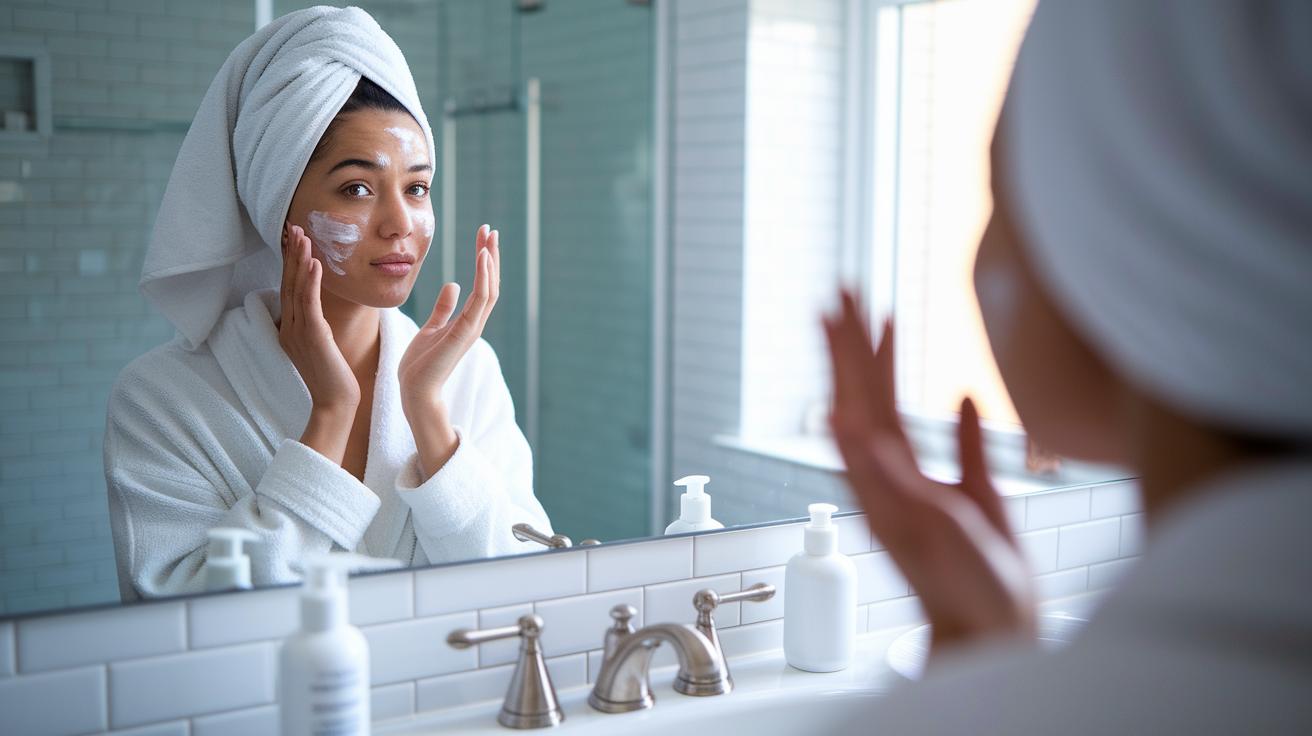
Protect and repair your skin with this simple day and night routine.
Morning Routine:
- Cleanse your face with a gentle cleanser to wash away dirt and oil.
- Use a toner (a liquid that refreshes and balances your skin) to even out your skin’s pH.
- Apply vitamin C serum to brighten your skin and help protect against environmental damage.
- While your skin is still a little damp, add a moisturizer to lock in hydration.
- Finish with SPF sunscreen to shield your skin from harmful UV rays.
Night Routine:
- Remove all makeup to keep your pores clear.
- Clean your face thoroughly to eliminate dirt, oil, and any leftover sunscreen.
- Gently exfoliate about twice a week to help get rid of dead skin cells.
- Apply a night cream or sleep mask to lock in moisture and support skin repair while you sleep.
When trying new products, start slowly. Begin with a cleanser, moisturizer, and SPF. Once your skin feels comfortable, introduce toner or vitamin C serum, always test a small amount on your inner wrist and wait 24 hours to check for any irritation.
Sun Protection Strategies and Skin Condition Assessment
UV light can hurt your skin. The sun is strongest from 10 a.m. to 2 p.m., so try to do outdoor activities before or after these hours to give your skin a break.
When you use sunscreen, make sure to reapply it well. If you're active outdoors, put it on every 2 hours, or sooner if you're swimming or sweating. Use this guide to help:
| Situation | Reapplication Timing |
|---|---|
| Regular outdoor time | Every 2 hours |
| After swimming or heavy sweating | Immediately |
| When using water-resistant sunscreen | Follow product label instructions |
Wearing protective clothing also helps. Choose wide-brim hats, long sleeves, or clothes made with UV-blocking fabric for extra defense.
Check your skin often in a full-length mirror with good lighting. Look for changes in texture, shape, or color. If a spot has an uneven border or color, it could be an early warning sign and you might need to talk with your doctor.
Assessing Skin Health: Self-Examination and Professional Insight

Quick take: Regular skin checks help you catch changes early so you can get help fast.
Triage Box:
• Call your doctor if a spot or mole grows rapidly, bleeds, or starts itching a lot.
• Seek urgent care if you see a mole changing in color, size, shape, or texture.
Regular skin reviews let you spot changes that might signal a health problem. Checking your skin every month makes it easier to notice subtle differences in moles, freckles, or spots that could be signs of trouble like skin cancer. A simple self-exam lets you see shifts in size, color, shape, or texture. Using guidelines like ABCDE (Asymmetry, Border, Color, Diameter, Evolving) is a smart way to keep an eye on your skin. Your own observations give you good information to share with your doctor when expert advice is needed.
Self-Examination Steps
Check your skin using these steps:
- Remove any makeup so you see your skin clearly.
- Stand in a well-lit room with good lighting.
- Use a large mirror to review your entire body.
- Note any changes, especially in size, texture, or color.
- Repeat this exam every month to catch changes over time.
When to See a Dermatologist
If skin cancer runs in your family or you have many moles, professional advice is important. Call your doctor if you notice any new or changing spots, or if a mole shifts in size, shape, or color. High-risk individuals should get a full-body skin exam by a dermatologist at least once a year. This professional check works with your self-exams to catch early signs of skin conditions so you can get treatment quickly.
Skin Health Checklist: Radiant skin starts now
Quick take: Follow these simple skin steps to calm irritation and boost your glow.
If you have sensitive or oily skin, use products that are free of fragrance and parabens. Always test a small patch of skin first. Use a gentle cleanser that removes dirt but keeps your skin’s natural shield intact. Pick moisturizers labeled non-comedogenic to avoid clogged pores and keep skin soft. A lotion rich in ceramides can help lock in moisture and protect you from daily irritants. And don’t wash your face too often; overwashing can increase oil and cause irritation.
For aging skin, add a vitamin C serum to brighten dull skin and bring out a natural glow. Look for firming peptides and wrinkle-prevention treatments to support your skin’s structure and elasticity. If your skin feels irritated by new actives, use calming ingredients like aloe vera, niacinamide (a soothing ingredient), or colloidal oatmeal. These can help ease redness and sensitivity while keeping your skin smooth.
Remember to check your skin regularly and adjust your routine as needed. With these steps, you build a steady routine that works whether your skin is sensitive, oily, or showing signs of aging.
Lifestyle Checklist for Optimal Skin Health

Your skin reflects the choices you make every day. A nutrient-rich diet gives you a glowing complexion. Fill your meals with omega-3 sources like salmon and add colorful fruits and vegetables packed with antioxidants. Keep a water bottle nearby and drink water throughout the day. This helps flush out toxins and supports hydration. A balanced diet nourishes your skin from the inside, reduces inflammation, and promotes an even skin tone.
Getting enough quality sleep is key. When you sleep well, your skin repairs itself and fights signs of aging. Manage your stress, too. High stress can raise cortisol (a stress hormone) levels, which may worsen problems like acne or eczema. Regular exercise boosts your blood flow, delivering oxygen and nutrients to your skin for a healthy glow. Good sleep, stress relief, and exercise work together to support your skin’s natural defenses.
Protect your skin from the environment all year long. Use indoor air filters to cut down on pollution at home, and rinse your face when you come in from the outdoors. Always include sun protection in your routine, especially when the sun is strong. Use hats, protective clothing, and sunscreen to keep irritants and UV rays at bay. These simple steps help keep your skin safe and looking its best every day.
Final Words
In the action, this article provided a skin health checklist to guide you step by step. We covered a daily regimen, sun protection tips, self-exam procedures, and how to adapt your routine to your skin type. Each part is designed to help you quickly spot warning signs and care for your skin safely. Stick with these simple steps, track your progress, and remember that consistency is key. Keep up these healthy habits and enjoy the benefits of taking care of your skin.
FAQ
Q: How do you make your skin glow naturally at home and get clear skin naturally at home?
Making your skin glow naturally at home means using a gentle cleanser, keeping the skin hydrated, eating nutrient-rich foods, and protecting your face from the sun to support clear, bright skin.
Q: What are some healthy skin tips for the face and top skin care steps to follow at home?
Healthy skin care at home includes cleansing, toning, moisturizing, using antioxidant serums, and applying sunscreen daily. This simple routine helps keep your face clear, balanced, and well protected from environmental stress.
Q: What is the 7 days glowing skin challenge?
The 7 days glowing skin challenge is a one-week plan that encourages daily tasks like proper cleansing, hydration, and sun protection to boost radiance and support overall skin health.
Q: What is the 4 2 4 rule in skincare?
The 4 2 4 rule in skincare is a guideline for a balanced routine. It suggests following four essential steps in the daytime routine, two key steps at night, and allowing a four-week period to notice improvements.
Q: What is the 7 point checklist?
The 7 point checklist is a tool used to evaluate skin spots. It looks at features such as asymmetry, border, color, diameter, evolution, and additional factors to help decide if a skin change needs professional evaluation.
Q: What are the 5 basics of skin care?
The 5 basics of skin care include cleansing, exfoliating, toning, moisturizing, and applying sunscreen. These steps build a solid routine to help keep your skin clear, healthy, and well protected.
Q: What are the 5 C’s of skin cancer?
The 5 C’s of skin cancer refer to color, consistency, change, contour, and context. Observing these signs can help you notice early skin changes that may require a prompt evaluation by a health professional.