


Quick Take: A heavy squeeze on your chest can signal a serious issue.
If you have any of these signs, call emergency services now:
• Severe chest pressure that lasts more than a few minutes
• Trouble breathing or shortness of breath
• Pain that spreads to your arm or jaw
Have you ever felt a heavy pressure in your chest that just won’t go away? It can be very scary, especially when you also feel short of breath or notice pain in your arm or jaw. This guide explains what chest pressure might mean, highlights key warning signs, and tells you when to seek help. Understanding these signals could make a big difference in keeping you safe.
Keep track of any symptoms, including when they start and how long they last. This will help your doctor figure out the best care for you. Stay informed, and remember that taking action early can protect your health.
Recognizing Pressure on the Chest: Definitions and Key Sensations
Quick take: Chest pressure feels like a steady, heavy squeeze. If you experience worsening pressure along with breathing trouble, dizziness, or pain spreading to your arm or jaw, call emergency services now.
If you have any of these emergency signs, call emergency services now:
- Severe pain or pressure that worsens quickly
- Trouble breathing or sudden dizziness
- Pain spreading to the shoulder, arm, neck, or jaw
You may also notice these urgent concerns:
- Shortness of breath that does not ease
- Persistent tiredness or fatigue with the pressure
For milder cases, keep an eye on your symptoms and talk with your healthcare provider if they do not improve.
Pressure on your chest can feel like a constant, dull weight or a band squeezing across your chest. It is not sharp or sudden. Instead, it comes slowly and sticks with you, making everyday tasks feel more difficult.
Unlike a sharp pain that is sudden and focused in one spot, chest pressure is more spread out and can cover a wider area. You might also feel shortness of breath, weariness, or a general discomfort. These signs help you know that this is chest pressure and not another kind of pain.
Key signs to watch for include:
- A constant feeling of heaviness
- A broad, diffused discomfort that may spread out
- The sensation can move to your shoulders, arms, neck, or jaw
- It usually comes with shortness of breath and fatigue
Noticing these signs is important. Understanding that chest pressure is a steady, widespread discomfort with possible spreading and breathing issues can help you decide when to watch your symptoms and when to seek help. Share these details with your healthcare provider to ensure you get the right follow-up care.
Cardiac Compression Indicators Behind Pressure on the Chest
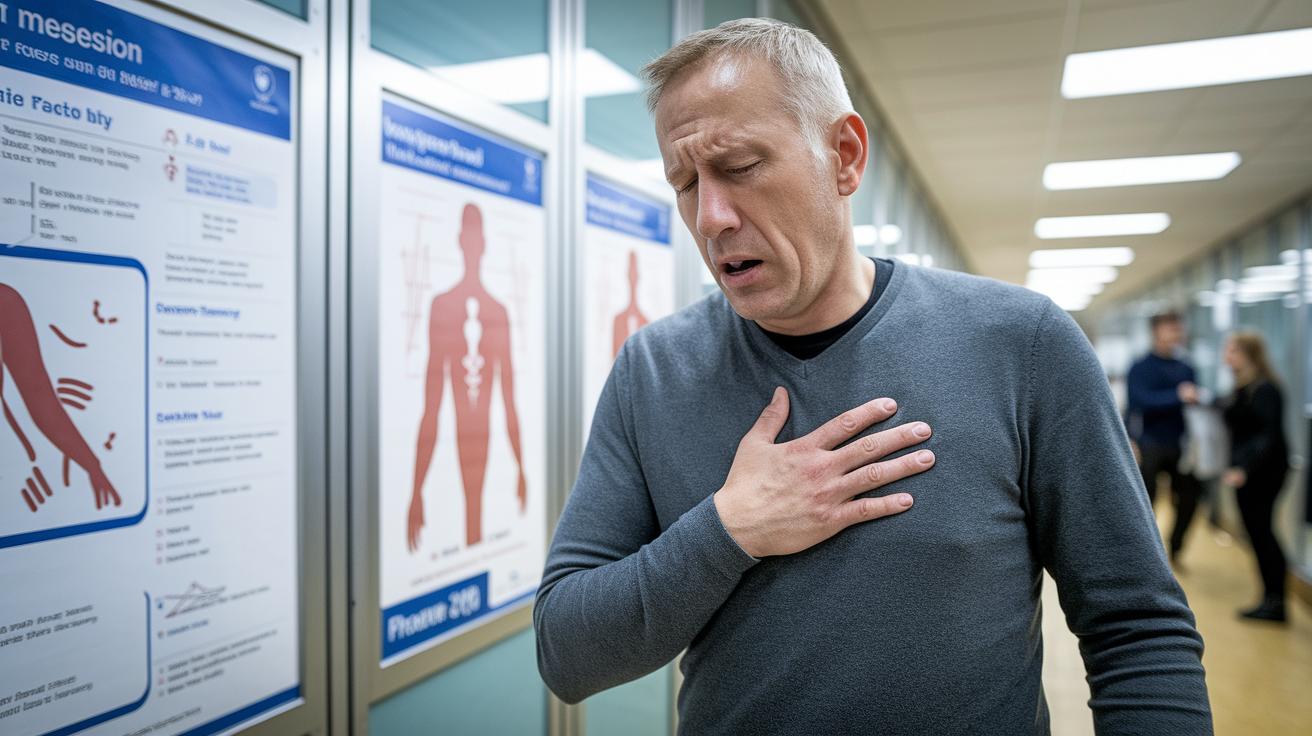
Quick take: Chest pressure may be a sign of heart trouble.
Triage:
• If you feel severe chest pressure that spreads to your arm, jaw, neck, or back, call emergency services now.
• If the pressure comes with trouble breathing, sweating, or nausea, seek same-day medical care.
• If the discomfort happens with activity or stress and eases with rest, note the details and follow up with your doctor.
Heart problems can give you a heavy, squeezing feeling in your chest. This pressure might start when you exercise or feel stressed, because your heart isn’t getting enough blood.
Angina
Angina happens when your heart’s blood flow drops during exercise or stress. You may feel a squeezing pressure that gets better when you rest. Sometimes the pain spreads to your shoulders or arms. Even small amounts of effort can bring on these symptoms, turning everyday tasks into a challenge.
Myocardial Infarction (Heart Attack)
A heart attack occurs when one of your heart’s arteries suddenly gets blocked. This causes a strong, lasting pressure that can move to your arm, jaw, neck, or back. You might also experience sweating, nausea, or trouble breathing. This kind of pain does not go away and is a sign to act fast.
Pericarditis
Pericarditis is the inflammation of the sac that surrounds your heart. It causes a steady, pressing pain that may get worse if you lie down or take deep breaths. This consistent pain is a cue to see a doctor for proper care.
Risk factors like high blood pressure, high cholesterol, and a family history of heart disease can make you more likely to experience these symptoms. Since these signs can seem alike, it’s important to get checked by a clinician to know exactly what is happening and to decide the best treatment.
Pulmonary and Respiratory Distress Signals Causing Chest Pressure
Quick take: A heavy chest and trouble breathing can be warning signs of a serious lung problem.
If you have any of these emergency signs, call emergency services now:
- Sudden sharp chest pressure with rapid heartbeat (fast heart rate)
- Acute shortness of breath that starts suddenly
- Coughing up blood
Pulmonary embolism is a condition where a blood clot, often from your leg, moves up to your lung. This sudden blockage cuts off blood flow and can cause fast heartbeats, sudden breathlessness, and chest pressure. In some cases, you might cough up blood. These signs mean you need to get help right away.
Pneumonia is an infection in the lung tissue. It causes your lungs to become inflamed and can give you a heavy or tight chest along with a fever and a cough that brings up mucus. Pleurisy, on the other hand, happens when the thin layer around your lungs gets inflamed, leading to sharp chest pain when you breathe in. Although the symptoms overlap, pneumonia usually comes with signs of an infection, while pleurisy is marked by pain during breaths.
For those with long-term lung issues like COPD (chronic obstructive pulmonary disease, a long-lasting lung problem), chest tightness can be a constant struggle. These steady symptoms are different from the rapid distress seen with embolisms or infections. If your breathing changes or the pressure in your chest worsens, reach out to a healthcare professional right away.
Gastrointestinal and Musculoskeletal Roots of Pressure on the Chest
Quick take: Chest pressure may come from your gut or your muscles; learn the key signs to guide your next steps.
If you have any of these emergency signs, call emergency services right away:
- Trouble breathing or severe shortness of breath
- Intense chest pain spreading to your arms or jaw
- Fainting, sudden weakness, or confusion
If none of these are present but the pain worsens or continues, seek same-day care. Otherwise, watch your symptoms and follow up with your doctor if they don’t improve.
GERD (gastroesophageal reflux disease) happens when stomach acid backs up into your esophagus (the tube that carries food from your mouth to your stomach). This causes a burning pain that feels like a tight squeeze in your chest, especially after eating or when lying down. You may also notice a sour taste in your mouth.
Gas buildup can make you feel bloated or unusually heavy in your midsection after a meal. This feeling can mimic chest pressure, particularly after eating rich or spicy foods.
On the other hand, chest muscle pain often comes from costochondritis or a muscle strain. Costochondritis is inflammation of the cartilage that connects your ribs to your breastbone. It causes localized pain, which may worsen when you move or press on the area. A strain from overuse or injury usually brings a broader, persistent soreness in the chest wall.
Recognizing these differences can help you understand if your discomfort is more likely related to your digestive system or to your chest muscles.
Anxiety and Stress-Driven Pressure on the Chest Episodes
Quick take: Chest tightness from anxiety and stress often feels like a tight squeeze. Watch for worsening symptoms that may need immediate care.
If you have any of these signs, call emergency services now:
- Severe or unrelenting chest pressure
- Worsening trouble breathing
- Intense dizziness or fainting
- Pain that feels different or more severe than usual
Panic attacks can make your chest feel like it's being squeezed suddenly. You might notice a fast heartbeat, sweating, trembling, and shortness of breath. Many describe it as a tight grip on the chest that makes breathing hard.
Chronic stress can also bring on chest tightness. You may feel intermittent pressure that comes and goes, along with dizziness, nausea, or even rapid breathing when stress is high. A deep breath might ease it a bit, but the tightness could return as stress builds.
It’s important to tell the difference between stress-related chest pressure and pain from a physical problem. Stress or anxiety usually triggers chest pressure that improves with relaxation. In contrast, chest pain from an organic cause tends to stay constant and does not change with your mood.
Knowing these differences can help you decide when to try self-care and when to seek help from a healthcare provider.
Red Flags for Pressure on the Chest and When to Act

Chest pressure can be a warning sign of a serious problem. If you have chest pressure that does not go away or gets worse, it is important to act quickly. Look for these signs:
- If the pressure lasts more than 3 minutes while you are at rest.
- If the feeling changes from what you have experienced before.
- If mild discomfort suddenly turns into a heavy, crushing sensation.
- If the pressure comes with new signs you never felt before.
- If familiar symptoms mix with changes during activity.
If any of these occur, call 911 immediately. For more red flags, review the earlier section on emergency signs.
Home Care Strategies to Ease Pressure on the Chest
Quick take: Simple steps like controlled breathing, good posture, and mindful eating can help ease chest pressure.
Triage Box:
- Call emergency services immediately if you have severe chest pain, trouble breathing, or feel faint.
- Seek same-day medical help if your symptoms worsen or do not improve soon.
- Use self-care strategies like deep breathing, gentle massage, heat, and dietary changes to ease discomfort.
Try diaphragmatic breathing by slowly inhaling through your nose so your belly rises and then exhaling softly through your mouth. Focus on deep, slow breaths for about 5 minutes. While you breathe, you can also try progressive muscle relaxation. This means you tense a muscle group for a few seconds, then relax it, working through your body step by step. These exercises help lower overall tension and may reduce the pressure in your chest.
Good posture can also make a difference. Sit up straight to reduce muscle strain. Gently massage your chest with your fingers if you feel muscle tightness. You might also use a warm heat pack on your chest. The warmth can boost blood flow and help ease soreness. Experiment with these to see what eases your discomfort.
Your diet may play a role as well. Eating too much at one time or trigger foods can worsen acid reflux (backflow of stomach acid) and add pressure to your chest. Try having smaller meals spread out over the day instead. If you notice acid-related discomfort, over-the-counter antacids may provide relief.
If muscle strain seems to be causing your symptoms, a mild pain reliever like ibuprofen could help. You might also consider herbal teas or a magnesium supplement for extra muscle relaxation. Keep a simple tracker, note the time of your meals, activities, and how strong the pressure feels. This record can help you and your healthcare provider spot patterns and decide on the best care plan.
Final Words
In the action, you’ve explored how pressure on chest can come from heart issues, lung problems, digestive causes, muscle strain, or even stress. Each section offered practical hints and sign checklists to guide immediate responses.
You now have a clearer view of when to watch, act, or seek help. Use the advice as a foundation for careful self-assessment and discussing symptoms with a clinician. Stay positive, stay safe, and trust your informed next steps.
FAQ
Frequently Asked Questions
Why does my chest feel heavy or tight with no pain?
The feeling of heaviness or tightness without pain may come from muscle strain, acid reflux, or anxiety. It is a diffuse pressure rather than a sharp pain, and it can feel unsettling.
What causes pressure in the middle of the chest for women?
Pressure in the middle of the chest in women can be linked to heart-related issues, digestive reflux, costochondritis (inflammation of rib cartilage), or stress. Each condition presents differently and may need medical review.
Can anxiety cause chest tightness?
Anxiety can cause chest tightness by triggering muscle tension and rapid breathing, leading to a squeezing or heavy feeling in the chest. This reaction is a common physical response to stress.
How can I relieve chest tightness?
To relieve chest tightness, try deep breathing exercises, relaxation techniques, or applying a heat pack to tense areas. Over-the-counter remedies may help if related to acid reflux or muscle strain, but seek clinical advice if symptoms worsen.
When is chest tightness concerning?
Chest tightness becomes concerning when it starts suddenly, lasts more than a few minutes, or is accompanied by shortness of breath, pain radiating to the arm or jaw, sweating, or nausea. In these cases, call emergency services immediately.
Why would someone feel pressure on their chest?
Pressure on the chest can have various causes, including heart conditions, lung problems, gastrointestinal issues, musculoskeletal strain, or anxiety. Assessing other symptoms helps determine whether prompt medical care is needed.