
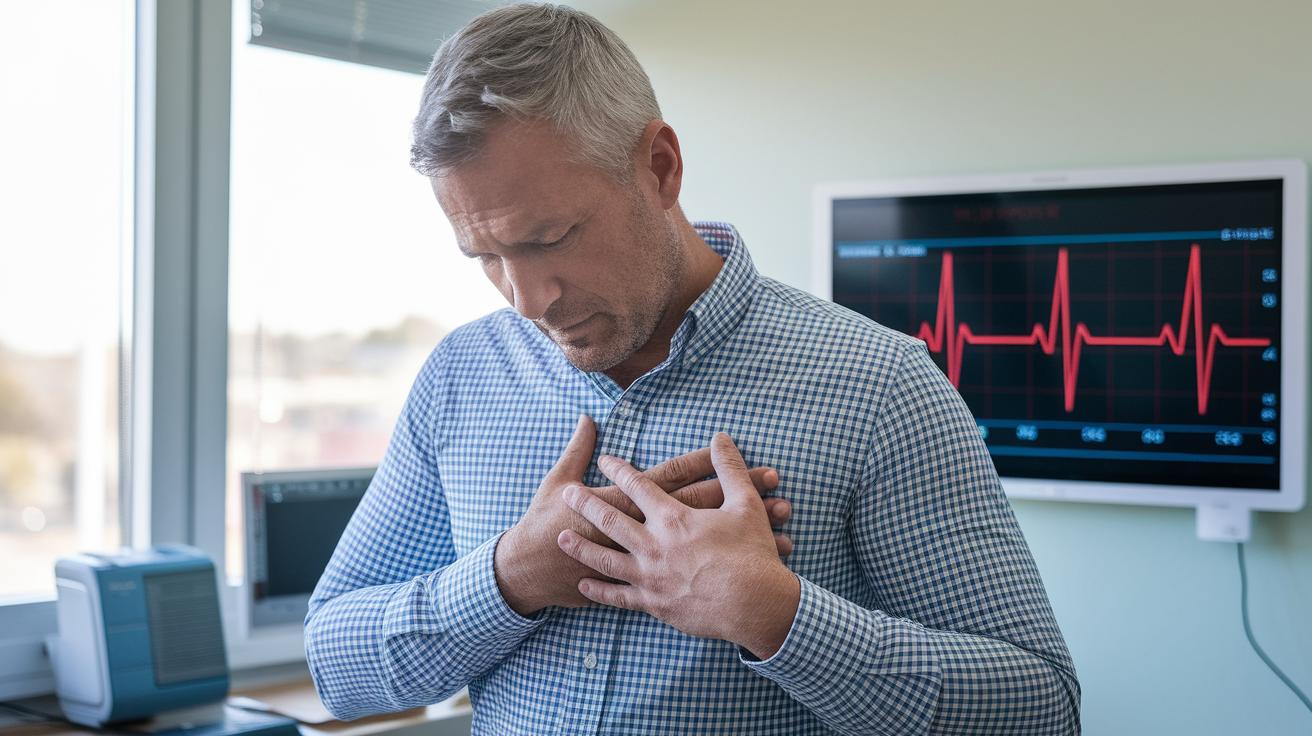

Quick take: Fast or fluttering heartbeats can be harmless but may also signal a need to check with your doctor.
If you experience any of these emergency signs, call emergency services now:
• Chest pain
• Fainting
• Severe shortness of breath
Sometimes you might feel your heart flutter or race suddenly. It can feel like a flip of a switch in your chest, neck, or throat. Many people notice these fast beats during doctor visits. Often these palpitations come from daily habits. Other times they might point to a bigger issue.
If you keep having these symptoms or they come with other warning signs, talk to your provider as soon as you can. Understanding your heart’s messages now can help you take the right steps later.
Palpitations at a Glance: Symptom Snapshot
Palpitations are when you notice your heart beating fast, skipping a beat, or fluttering. You might feel these signs in your chest, neck, or throat. They can start suddenly during normal activities and last only a few seconds or continue for several minutes. This quick change in your heartbeat can feel alarming.
About 16% of visits to a primary care provider mention these unusual heartbeats. In most cases, they are harmless. However, palpitations can also point to triggers or underlying issues that may need attention. Sometimes, what feels like a simple flutter might be a sign of a more serious heart problem.
- Where you feel them: chest, neck, or throat
- How long they last: a few seconds to several minutes
- What you notice: skipped beats, extra beats, or a racing heart
- Frequency: mentioned in about 16% of primary care visits
- Overall: usually not serious, but sometimes a warning sign
If you have these episodes often, talk with your healthcare provider to make sure everything is okay.
Common Triggers of Palpitations: Lifestyle and Emotional Factors

Your daily habits and feelings can change how your heart beats. Too many stimulants or stressful moments make your body release adrenaline (a hormone that speeds up your heart). This is normal and can cause extra or skipped beats even if your heart is healthy.
Here are some common triggers:
- Caffeine
- Nicotine
- Alcohol
- Illegal stimulants
- Panic or anxiety
- Dehydration
- Poor sleep
Sometimes, other issues trigger similar heart reactions. For example, an overactive thyroid (hyperthyroidism, which means your glands work too fast), low blood count (anemia), or imbalances in body salts (electrolytes) can make your heart flutter even when you haven’t changed your habits.
Try keeping a simple log:
- Note the date and time.
- Write down what you were doing.
- Record how you felt.
- Mark if you had any stimulants or stress.
This record can help your doctor decide if your symptoms come from everyday choices or another condition needing further tests.
Danger Signals in Palpitations: When Symptom Snapshot Turns Urgent
- Chest pain that feels very sharp or heavy
- Fainting spells (sudden loss of consciousness)
- Severe trouble breathing (shortness of breath that is hard to ease)
- A fast heartbeat that does not slow down
- New palpitations if you already have heart problems or a family history of sudden heart events
- Neurologic signs like confusion or losing your balance
If you see any of these signals, act right away. If your heart starts pounding, and you feel lightheaded or weak, it may be more than just a minor flutter. These signs can be early alerts for serious heart issues. Call emergency services immediately to get the urgent care you need and help prevent more problems.
Diagnostic Snapshot for Palpitations: Quick-Check Methods

Quick take: Simple tests help your doctor decide if your palpitations are harmless or need more care.
If you have any of these emergency signs, call emergency services now:
- Chest pain
- Fainting or severe dizziness
- Shortness of breath that worsens
- A fast or irregular heartbeat that is new or very strong
Your doctor begins by looking at your medical history and doing a physical exam. These first steps help spot why your heart might be beating fast or oddly. Next, blood tests check for issues like anemia (low blood count), electrolyte imbalances (problems with body salts), or thyroid problems that might be causing the sensation.
Once these basic tests are done, more focused tests check your heart’s electrical activity and structure.
| Test | Purpose | Duration/Notes |
|---|---|---|
| ECG | Records your heart’s electrical rhythm | About
Home-Care Snapshot: Quick Management Steps for PalpitationsQuick take: Most mild palpitations can be managed at home with simple changes in your daily routine. If you have any of these emergency signs, call emergency services now:
If your palpitations are frequent or become more uncomfortable, contact your healthcare provider right away. For mild palpitations, try these steps:
These steps reduce triggers for a racing heart and help support a steady rhythm. Drinking water and eating balanced meals give your body the tools it needs to work well. A steady sleep pattern and light exercise can boost your overall well-being, while stress relief techniques ease anxiety. Keeping a diary helps you share clear details with your healthcare provider during visits. Watch your symptoms closely. If your palpitations stick around, get worse, or feel more upsetting, set up a check-in with your provider to review your condition. Final WordsIn the action, you learned palpitations can come with skipped beats or a racing pulse, and they are common. The guide covered what triggers these symptoms, when to watch for red flags like chest pain or dizziness, and how home care can help manage mild cases. It also explained key diagnostic methods to rule out serious issues. The palpitations symptom snapshot gave you clear, evidence-based tips on monitoring and reducing symptoms. Take small steps each day, and act swiftly if new or worsening signs appear. Stay safe and proactive. FAQWhen to worry about heart palpitations
Heart palpitations warrant concern when they occur with chest pain, shortness of breath, dizziness, or fainting. These red flags mean you should seek urgent medical evaluation for possible serious heart issues.
Heart palpitations but normal ECG
A normal ECG with palpitations can indicate that the heart rhythm is not dangerous. However, recurring episodes or additional symptoms should prompt a follow-up with your healthcare provider for further evaluation.
Palpitations treatment
Treating palpitations often starts with lifestyle changes such as reducing caffeine and alcohol, managing stress, and staying hydrated. Persistent symptoms should be evaluated by a clinician who might perform further diagnostic tests.
Palpitations causes
Palpitations typically stem from triggers like stress, high caffeine intake, and dehydration. Other causes may include thyroid issues or electrolyte imbalances. It is best to discuss these triggers with your doctor for proper management.
Can heart palpitations kill you
While most heart palpitations are not deadly, they can signal serious issues if they occur with additional symptoms like severe chest pain or fainting. In such cases, immediate medical care is necessary.
Heart palpitations for 3 days
Experiencing palpitations for 3 days is concerning since prolonged episodes may indicate an underlying issue. It is important to consult your healthcare provider for a proper evaluation and appropriate testing.
Heart palpitations when lying down
Palpitations that occur when lying down may stem from changes in body position or increased awareness of your heartbeat. Still, if they persist or worsen, a medical review is recommended to rule out any issues.
Heart palpitations for months
Having palpitations for months can signal an ongoing condition that needs attention. It is wise to schedule an appointment with your doctor to discuss your symptoms and possibly undergo a full cardiac evaluation.
What are the warning signs with palpitations?
Warning signs of palpitations include chest pain, fainting, rapid or sustained heart rates, severe shortness of breath, and neurological changes. These symptoms require immediate medical attention to rule out serious conditions.
What causes heart palpitation in children?
In children, palpitations are often linked to anxiety, high activity levels, or sometimes underlying heart conditions. If a child frequently experiences palpitations, it is important to have them evaluated by a pediatrician.
Can heart palpitations cause sweating?
Heart palpitations can indeed lead to sweating, especially when they occur with anxiety or a drop in blood pressure. If you notice excessive sweating together with palpitations, you should consult your doctor for further advice.
What is the red flag for palpitations?
A red flag for palpitations includes the presence of chest pain, fainting, severe breathing issues, or neurologic symptoms along with a rapid heartbeat. These signs suggest the need for urgent medical evaluation.
Subscribe Today GET EXCLUSIVE FULL ACCESS TO PREMIUM CONTENT SUPPORT NONPROFIT JOURNALISM EXPERT ANALYSIS OF AND EMERGING TRENDS IN CHILD WELFARE AND JUVENILE JUSTICE TOPICAL VIDEO WEBINARS Get unlimited access to our EXCLUSIVE Content and our archive of subscriber stories. Latest article |