
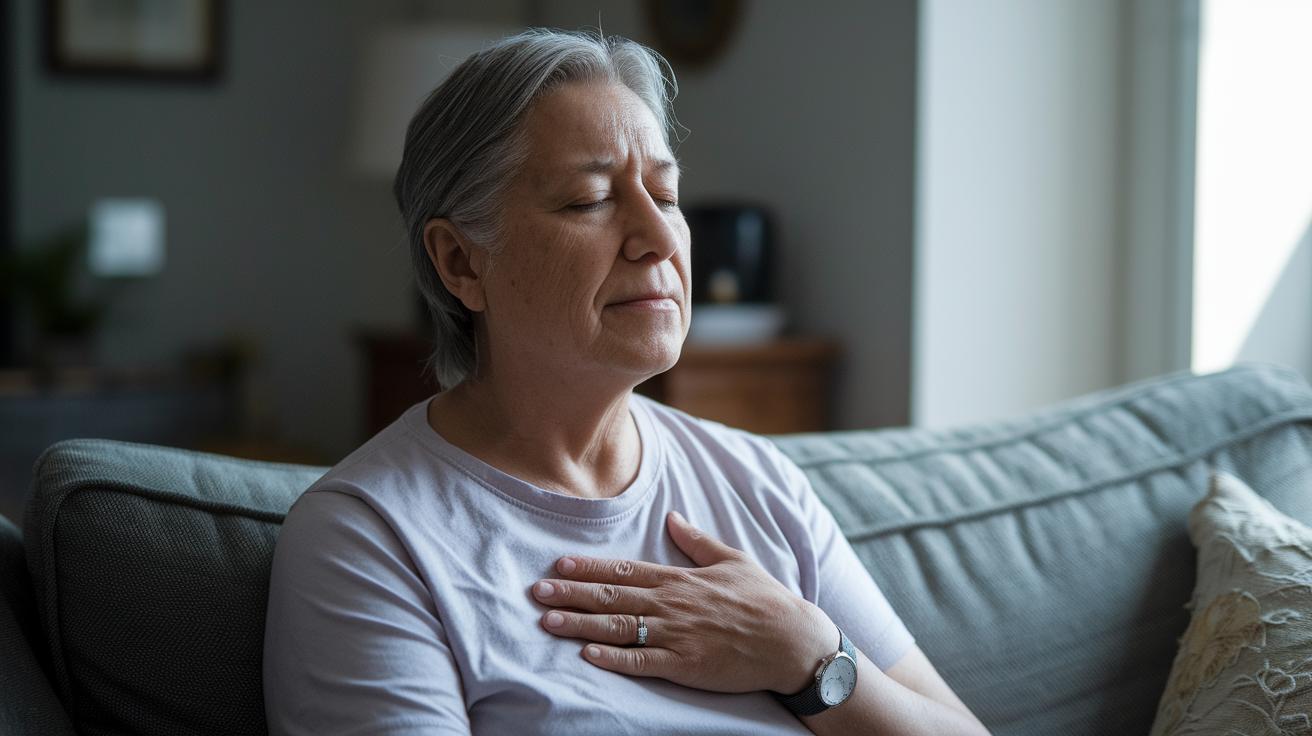

Quick Take: Chest pressure is usually not a heart attack, but watch for serious signs.
If you have any of these warning signs, call emergency services now:
• Severe pain spreading to your arm or jaw
• Shortness of breath or difficulty breathing
• Fainting or sudden dizziness
If your chest pressure is mild, monitor your symptoms and note any changes.
Sometimes, you might feel a heavy or tight spot behind your breastbone. It can be unsettling, and you may worry it’s something serious. Many times, this pressure is caused by stress, indigestion (upset stomach), or acid reflux (burning feeling when stomach acid backs up).
Most of the time, these causes are not related to a heart attack. However, if your pain grows worse, spreads, or comes with other symptoms like shortness of breath, don’t wait. Reach out to a clinician or go to a healthcare facility to be safe.
Remember, it’s normal to feel worried about chest discomfort. Keep track of when it happens, what you were doing, and any additional symptoms. This will help your healthcare provider decide on the right care for you.
Mid Chest Pressure Explained: What It Means and When to Be Concerned
Quick take: This pressure behind your breastbone is often not a heart attack, but if it’s severe or lasts several minutes, act fast.
If you have any of these emergency signs, call emergency services now:
- Severe, unrelenting pressure lasting more than a few minutes
- Trouble breathing or shortness of breath
- Pain that spreads to your jaw, arm, or back
Often, mid chest pressure feels like a heavy or tight spot right behind your breastbone. It can come on suddenly and might be alarming, but many times it’s due to simple causes like stress or indigestion. Sometimes, the discomfort happens because of acid reflux (when stomach acid irritates the esophagus), which often causes a burning or tight feeling after meals.
Other times, the pressure might be caused by a strained chest muscle or costochondritis (inflammation of the rib cartilage).
However, be cautious. If the pressure is intense, lasts more than a few minutes, or comes with extra symptoms such as difficulty breathing or pain spreading to your jaw, arm, or back, you could be facing something more serious like angina or even a heart attack. In rare cases, a sudden, sharp pain could signal a blood clot in the lungs (pulmonary embolism).
It’s a good idea to keep track of when your symptoms occur. Note if the pressure happens during physical activity or while you’re resting. This can help you and your doctor decide if you need urgent care.
Cardiac-Related Mid Chest Pressure: Angina, Heart Attack, and Risk Factors

Quick take: Chest pressure can mean your heart isn’t getting enough blood, or it could be a heart attack.
If you have any of these emergency signs, call emergency services now:
• Heavy chest pressure that does not ease with rest
• Difficulty breathing or shortness of breath
• Pain that spreads to your jaw, arm, or back
• Nausea, sweating, or dizziness
Angina is a tightness or squeezing right behind your breastbone that usually happens with physical effort or stress. It gets better when you rest. This feeling shows that your heart isn’t getting enough oxygen and blood because your arteries are narrowed. Imagine stopping a brisk walk because your chest feels too tight.
A heart attack is more serious. You might feel a heavy, unrelenting pressure that won’t go away, even if you rest. Other signs include shortness of breath, nausea, sweating, and dizziness. The pain can even spread to your jaw, arm, or back. Think of it as a heavy weight on your chest. This situation needs immediate medical help.
Risk factors for these heart issues include high blood pressure, high cholesterol, obesity, diabetes, and smoking. These factors speed up plaque buildup in your coronary arteries. If you have any of these conditions, even a little chest pressure should prompt you to see your doctor soon.
It’s important to watch for changes in your breathing. If you notice the discomfort gets worse with activity or comes with breathing problems, write down:
• When the pressure occurs
• How long it lasts
• Any other symptoms you feel
This record can help your doctor decide your next steps and ensure you get safe care.
Non-Cardiac Origins of Mid Chest Pressure: Digestive and Musculoskeletal Causes
Acid reflux is a common cause of chest pressure. It creates a burning feeling behind your breastbone, especially when you lie down after eating. This happens because stomach acid irritates your esophagus (the tube that brings food from your mouth to your stomach).
Costochondritis is a type of irritation in the cartilage that connects your ribs to your breastbone. You might notice a sharp pain when you press on this area. If your chest feels tender when you touch it, it could be due to costal pain syndrome caused by this irritation.
Excess gas in your intestines can also cause chest discomfort. This happens in short bursts and may worry you because the pain can feel similar to heart issues. Usually, the discomfort comes and goes on its own.
Gastritis (inflammation of the stomach lining) and stomach ulcers (sores in the stomach lining) may lead to pain that starts in your upper belly and moves up to your chest. With gastritis, the pain might be burning or aching and tends to worsen over time, often after you eat. Stomach ulcers can cause deep, persistent pain, especially if the stomach’s protective lining is damaged.
Gallstones and liver inflammation can also create discomfort in the center of your chest. This pain is often linked to eating fatty meals and might come with tenderness in the upper belly or signs that your liver area is sore.
| Cause | Primary Symptom | Key Detail |
|---|---|---|
| Acid reflux | Burning behind the breastbone | Feels worse when lying down after meals |
| Costochondritis | Sharp, pinpoint pain | Pain is evident when pressing on the chest wall |
| Excess intestinal gas | Central chest discomfort | Pain comes in brief bursts |
| Gastritis | Upper belly ache radiating to the chest | Pain increases after eating |
| Stomach ulcers | Deep, aching pain | Pain may worsen when the stomach is empty or after eating |
| Gallstones/Liver inflammation | Chest-center discomfort | Triggered by fatty meals and may include abdominal tenderness |
Recognizing Red Flag Symptoms in Mid Chest Pressure

Quick take: Mid chest pressure with extra warning signs can mean a serious problem. If you have any of the symptoms below, call emergency services (911 in the US) right away.
If you have any of these emergency signs, call emergency services immediately:
- Sudden, crushing pressure in the middle of your chest
- Pain that spreads to your jaw, left arm, or back
- Trouble breathing or a quick onset of shortness of breath
- Heavy sweating that isn’t caused by physical activity
- Feeling nauseous, lightheaded, or actually fainting
- Coughing up blood or a fast, unexplained heartbeat
These symptoms are serious. Don’t wait, get help now.
At-Home Evaluation of Mid Chest Pressure: Self-Palpation and Monitoring
Quick take: Your chest pressure might be caused by muscle issues or something inside your body. Check your symptoms carefully and act if you see warning signs.
If you have any of these emergency signs, call emergency services now:
- Severe, sudden chest pain.
- Trouble breathing or shortness of breath.
- Pain that spreads to your arm or jaw.
Try a gentle check at home. Use your fingertips to lightly press along your chest wall. If pressing one spot brings on the same pain, it could be from a muscle strain or costochondritis (inflammation of the cartilage connecting your ribs). If you don’t feel any surface tenderness, the pressure might come from inside your body.
Pay attention to whether the pain stays the same or changes when you change positions. For example, if you feel more pressure while lying on your back, it might be linked to internal causes rather than a problem with the chest wall. Write down when the pressure appears, if it follows meals or exercise, and how long it lasts. Also note how strong the pain feels and any shortness of breath.
Here’s a simple checklist to help you:
- Press gently along the middle of your chest.
- See if the pain is the same when you press.
- Write down the time the pain occurs and any relation to meals or activity.
- Record the pain’s duration, its strength, and any breathing problems.
This self-check can help you understand your symptoms better and guide your talk with a healthcare professional.
Managing Mid Chest Pressure: Home Relief and When to Seek Professional Care

Quick take: Mild chest pressure may be caused by acid reflux or stress and can often be managed at home if you follow simple steps. But if warning signs appear, act immediately.
If you have any of these emergency signs, call emergency services now:
- Severe pain that worsens with activity
- Trouble breathing or feeling very short of breath
- Profuse sweating or fainting
- Intense pressure that doesn't improve
Common Causes:
Mild chest pressure is often linked to acid reflux (stomach acid moving upward) or stress. Changing your eating, sleeping, and daily routines can ease the discomfort.
Home Remedies and Lifestyle Changes:
- Eat small, frequent meals.
- Avoid trigger foods like fatty or spicy items.
- Use over-the-counter antacids after meals to reduce excess stomach acid.
- Raise the head of your bed while you sleep to lessen reflux.
- Practice slow, controlled breathing: Inhale slowly through your nose, hold for a few seconds, then exhale gently.
- Use a warm compress on your chest to ease muscle strain.
- Maintain an upright posture during the day to reduce chest pressure.
When to Consult a Healthcare Professional:
- If the pressure lasts longer than 7 days or grows stronger with activity.
- If you find unusual tenderness during self-checks.
- If you experience extra signs such as shortness of breath or discomfort that stops you from your daily activities.
- If the pressure disrupts your sleep or everyday routines despite home care.
Your doctor may recommend tests like an ECG (heart test), blood work, or chest imaging to understand the problem better. They might also suggest physical therapy or prescribe medications to lower inflammation and reduce muscle pain. Keep a simple record of your symptoms to share during your follow-up visits.
Final Words
In the action, we tackled mid chest pressure by breaking down causes, differences between cardiac and non-cardiac origins, and clear at-home checks. We outlined red flags that need prompt attention and offered practical self-care tips to monitor the symptom safely.
Keep track of how long the pressure lasts, note any extra symptoms, and be ready to share these details with your healthcare provider. Stay calm, record your experiences, and move ahead with confidence in managing your health.
FAQ
What causes chest pain in a woman?
Chest pain in a woman may result from heart issues like angina or even non-cardiac causes such as acid reflux or musculoskeletal strain. Tracking symptoms and risk factors can help guide care.
What does a weird feeling in the chest with no pain mean?
A weird feeling in your chest can be linked to mild indigestion, anxiety, or muscle tension. Noticing when it happens helps decide if you need medical advice.
What causes chest tightness or tight pain in the middle of the chest?
Chest tightness often comes from acid reflux, costochondritis (chest wall inflammation), or anxiety. Noting the timing and triggers is useful for determining when to get checked.
How can I relieve chest tightness?
You can ease chest tightness by practicing slow breathing, using over-the-counter antacids for reflux issues, and trying gentle stretching. Persistent symptoms should be reviewed by a professional.
Why am I feeling pressure in the middle of my chest?
Feeling pressure in your chest might stem from indigestion, stress, or more serious issues like heart-related conditions. Keeping a record of the details helps your healthcare provider evaluate your symptoms.
When should I worry about chest pressure?
Worry if the chest pressure is sudden, severe, or comes with symptoms such as shortness of breath, sweating, nausea, or pain spreading to the arm or jaw. Immediate medical care is needed if these occur.
What causes heaviness in the middle of the chest?
Heaviness in the chest can be due to digestive issues, costochondritis, or heart-related problems. Monitoring how long it lasts and its intensity is important in deciding if you should seek help.