


Quick take: Mild meal discomfort can be a sign of EoE, but most times it is not dangerous.
If you have any of these warning signs, call emergency services now:
- Severe chest pain
- Trouble breathing
- Extreme difficulty swallowing that does not improve
If your symptoms are mild:
- Note any brief sensation of food sticking or mild discomfort during meals.
- Monitor how long the feeling lasts and if it gets worse.
- Check in with your doctor if the discomfort continues or you feel more pain.
Sometimes, those odd feelings during meals may just be your body’s way of sending you a signal. Mild discomfort or a brief stickiness when swallowing can happen without serious harm. Recognizing these signals early helps you know when you can relax and when it’s time to call your doctor. This guide explains the common signs of EoE, what they mean, and how to use your body’s signals to stay safe.
Recognizing Core EoE Symptoms
Quick take: EoE causes your esophagus to swell from allergies, and you might feel food sticking or chest discomfort when you eat.
Triage Box:
• If you experience sudden severe chest pain, trouble breathing, or complete food blockage, call emergency services immediately.
• If you have significant pain or ongoing difficulty swallowing, seek urgent care.
• Otherwise, monitor your symptoms and talk to your doctor soon.
EoE is a long-lasting allergy that makes your esophagus inflamed. The swelling happens when white blood cells called eosinophils (allergy cells) build up in your throat. This inflammation can change how you feel when you eat.
Noticing the signs early can help you act before more serious problems, like food getting stuck, occur. Here are some common signs you may experience:
| Symptom | Description |
|---|---|
| Food sticking in your chest or throat | A feeling that food is not passing easily. |
| Sharp or persistent chest discomfort | Pain that feels burning or stabbing. |
| Heartburn not relieved by typical remedies | Acidic pain that does not improve with antacids. |
| Food impaction | Episodes when food gets lodged, making it hard to swallow even saliva. |
| Difficulty swallowing bulky or dry foods | Challenges with chewing or swallowing foods like steak, chicken, rice, or bread. |
| Repeated signs of esophageal inflammation | Ongoing discomfort that comes back regularly. |
Your signs may vary by age. Adults commonly report food sticking and pain during meals, while children might show less obvious discomfort or have issues with food textures. Many people with EoE are male and also have allergies such as asthma or eczema.
If you notice these symptoms, track what happens and share this with your doctor. Early attention can help manage the condition before it leads to more serious issues.
Reviewed by: [Clinician Name], Gastroenterologist | Last Updated: [Date]
Identifying EoE Symptom Triggers and Risk Factors
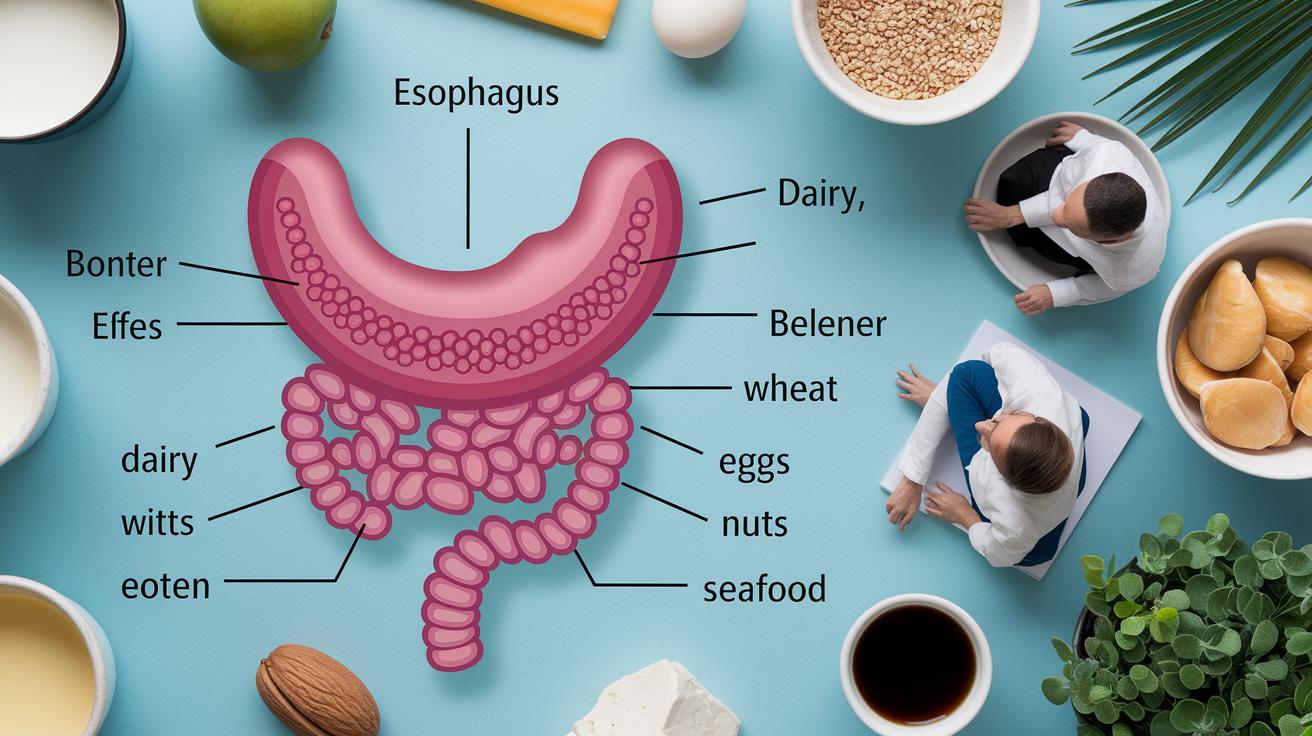
When you encounter allergens, your body can send eosinophils (a type of white blood cell) to your esophagus. This leads to inflammation as your immune system fights what it sees as a threat. Often, the reaction builds slowly over time. Some people feel mild discomfort long before severe symptoms appear.
If you have asthma, eczema, or food allergies, you might be more likely to have EoE. An extra-sensitive immune system can make your esophagus react strongly to common allergens, which increases inflammation and discomfort.
Common food triggers include:
- Dairy
- Wheat
- Eggs
- Soy
- Nuts
- Seafood
Hard-to-chew foods like steak or bread may also trigger symptoms. Seasonal allergens such as pollen can worsen inflammation during certain times of the year. Adjusting your diet and watching for seasonal changes may help you manage your triggers.
Diagnostic Evaluation for EoE Symptoms
If your symptoms have lasted for several days or more, your doctor may refer you to an EoE specialist. Your gastroenterologist (a doctor who treats stomach and digestion problems) will ask detailed questions about your swallowing issues, chest pain, and how long you have been dealing with these problems. They will also review any history you have of allergies or food reactions. This thorough history helps guide the needed tests.
Next, your doctor will perform an upper endoscopy. This is when a small flexible camera is used to look inside your esophagus. They check for clear signs like rings, long narrow grooves (furrows), and swelling (edema) that point to inflammation. These visual clues help the specialist see if there is any narrowing that might need immediate care.
After the endoscopy, a small tissue sample (biopsy) is taken from your esophagus. This sample is examined under a microscope to count eosinophils (a type of white blood cell). Finding more than 15 eosinophils per high-power field suggests EoE. This test is key because it provides the evidence needed to confirm the diagnosis.
In some cases, your doctor might also order allergy tests, such as skin or blood tests, to look for food or environmental triggers. Although these tests can offer extra clues, the biopsy results remain the main tool for diagnosing EoE and tailoring your treatment plan.
Distinguishing EoE Symptoms from Acid Reflux and Other Conditions

Quick take: EoE (eosinophilic esophagitis) and acid reflux (GERD) can feel very similar but need different tests for a clear answer.
Triage Box:
• Red flags: If you have severe chest pain, feel food stuck, or experience sharp pain when swallowing, call emergency services.
• Urgent concerns: If your symptoms do not improve with over-the-counter acid blockers, seek same-day care.
• Watch and self-manage: Keep a simple diary of your symptoms, noting when they start and what seems to make them worse.
Both conditions often cause chest discomfort, heartburn, and trouble swallowing. You might notice food getting stuck or a sharp, sudden pain in your chest. These similar signs can hide key differences that only further tests can reveal.
For example, when you get a biopsy (a tiny tissue sample test) for suspected EoE, the test usually shows many eosinophils (a type of white blood cell). This increase does not happen with GERD. On the other hand, doctors use pH monitoring (a test that checks how much acid is in your esophagus) and look at how you respond to acid blockers to diagnose acid reflux.
Sometimes, nonacid reflux can cause symptoms like EoE and might not improve with the usual acid medications. In these cases, or if there are concerns about how your esophagus moves, your clinician might use tests like manometry (which measures muscle contractions) or imaging to get a better picture of what is going on.
Getting the right diagnosis is key. By comparing your history with these test results, your provider can give you the proper treatment and avoid delays in addressing the inflammation in your esophagus.
Treatment and Management Strategies for EoE Symptoms
Quick take: You can manage EoE with the right medicines, smart diet changes, and, if needed, a simple procedure. Stay in touch with your care team and track your symptoms.
Triage Box:
If you have any of these signs, call emergency services now:
- Severe or complete difficulty swallowing food or liquids.
- Sudden, intense chest pain.
- Trouble breathing or signs of respiratory distress.
Urgent: If your symptoms worsen quickly, seek same-day care.
Watch and Manage:
- Keep a symptom diary with the date, foods eaten, and how severe your symptoms are.
- Follow your care plan closely and note any changes.
Many patients depend on medications to ease EoE symptoms. Topical steroids like budesonide (for example, in products such as EOHILIA) lower swelling in the esophagus over about 12 weeks. They work by reducing the inflammatory cells that cause trouble swallowing.
This treatment not only helps with current symptoms but also stops long-term issues like scarring (fibrosis) and narrowing (strictures) from developing. By acting right where the problem is, these medications let your esophagus heal gradually. You might notice that food stops sticking and you feel less chest discomfort.
Changing your diet is another key step. Many people with EoE follow diets that cut out common allergens, like the six-food elimination or targeted elimination diet. You can work with your health care provider to test food restrictions and watch how your symptoms change. Keeping a food and symptom diary makes this process easier and helps pinpoint which foods may be triggering your discomfort.
Often, you may try avoiding foods like dairy, wheat, eggs, nuts, and seafood for a trial period. During this time, teaming up with a dietitian ensures you still get balanced nutrition while tracking what causes discomfort. Later on, you can slowly add foods back to see which ones give you trouble.
If long-term inflammation causes your esophagus to narrow, a specialist may perform an endoscopic dilation. This simple procedure gently stretches your esophagus to ease the narrowing and improve swallowing. Recording your symptoms, with details like the date, what you ate, and how severe the symptoms were, can help your care team adjust your treatment plan and boost your quality of life.
Managing EoE over time means working closely with a gastroenterologist and an allergist. Regular check-ups help them see how your esophagus is healing. They may adjust your medications or diet based on changes in your symptoms or lifestyle. Keeping track of your progress empowers you to manage your condition with confidence.
Final Words
In the action, this guide explained what an eoe symptom looks like, key triggers for esophageal inflammation, and which tests confirm the diagnosis. It compared differences with acid reflux and outlined practical steps for managing the condition using medications and diet adjustments. Checklists, symptom trackers, and expert tips help you decide when emergency care, a same-day evaluation, or home monitoring is best. Stay informed and empowered as you work with your clinician to improve quality of life.
FAQ
What is EoE?
The condition EoE is a chronic allergic disorder where high eosinophil counts cause inflammation in the esophagus, leading to swallowing difficulties and discomfort. It needs proper diagnosis and ongoing management by healthcare professionals.
What are common symptoms of EoE in adults and children?
The symptoms of EoE include difficulty swallowing, food impaction (when food gets stuck), chest pain, and heartburn. These signs can vary in severity between adults and children, as shared in online discussions.
How is eosinophilic esophagitis treated or managed?
The treatment of EoE involves dietary adjustments to avoid trigger foods, medications like topical steroids to reduce inflammation, and sometimes esophageal dilation if narrowing occurs, all under a clinician’s guidance.
What happens when EoE goes untreated?
When EoE is left untreated, ongoing inflammation may lead to scarring and narrowing of the esophagus, increasing the risk of food impactions and the need for urgent medical attention.
What are eosinophilic esophagitis cancer symptoms?
The symptoms of EoE are not related to cancer. EoE does not cause cancer-specific signs; however, any unexpected changes in symptoms should be evaluated promptly by a healthcare professional.
Can you live a long life with EoE?
Living a long life with EoE is possible with proper treatment, dietary management, and regular follow-ups, which help control symptoms and reduce complications over time.