


Quick Take: If food seems stuck when you swallow, it might be dysphagia (difficulty swallowing), a sign to check for red flags and act quickly.
If you have any of these emergency signs, call emergency services now:
• Trouble breathing or choking
• Severe chest pain or fainting
If you notice these urgent symptoms, seek same-day care:
• Sudden, worsening pain with swallowing
• Noticeable weight loss or persistent discomfort
For milder issues, track your symptoms and follow up with your doctor if they get worse.
Sometimes, swallowing can feel like food is getting stuck. This could mean your throat or esophagus isn’t moving food smoothly, which might be dangerous. In this guide, we explain common reasons for this problem and give clear steps on what to do next. Follow the checklist above, and if any red flags appear, act now.
difficulty swallowing symptom snapshot: Clear Insight
Quick take: Trouble swallowing (dysphagia) may mean your mouth, throat, or esophagus isn’t moving food and liquids safely, and you might need prompt care.
If you have any of these signs, call emergency services now:
- You have trouble breathing when swallowing.
- You feel severe chest pain or notice blue lips.
- You feel like food is completely blocking your airway.
Dysphagia is when you have a hard time swallowing. It can feel like a lump in your throat or like food gets stuck on its way down. For example, you might say, "Every time I swallow, it feels like something is in my way."
Studies show that about 84% to 93% of people with moderate to severe Alzheimer’s face serious swallowing problems. This is important because difficult swallowing can let food slip into your airway, raising the risk of complications like aspiration (when food or liquid goes into your lungs). This snapshot helps you understand what dysphagia is and why these numbers matter in everyday life.
Common Causes in Your Difficulty Swallowing Symptom Snapshot
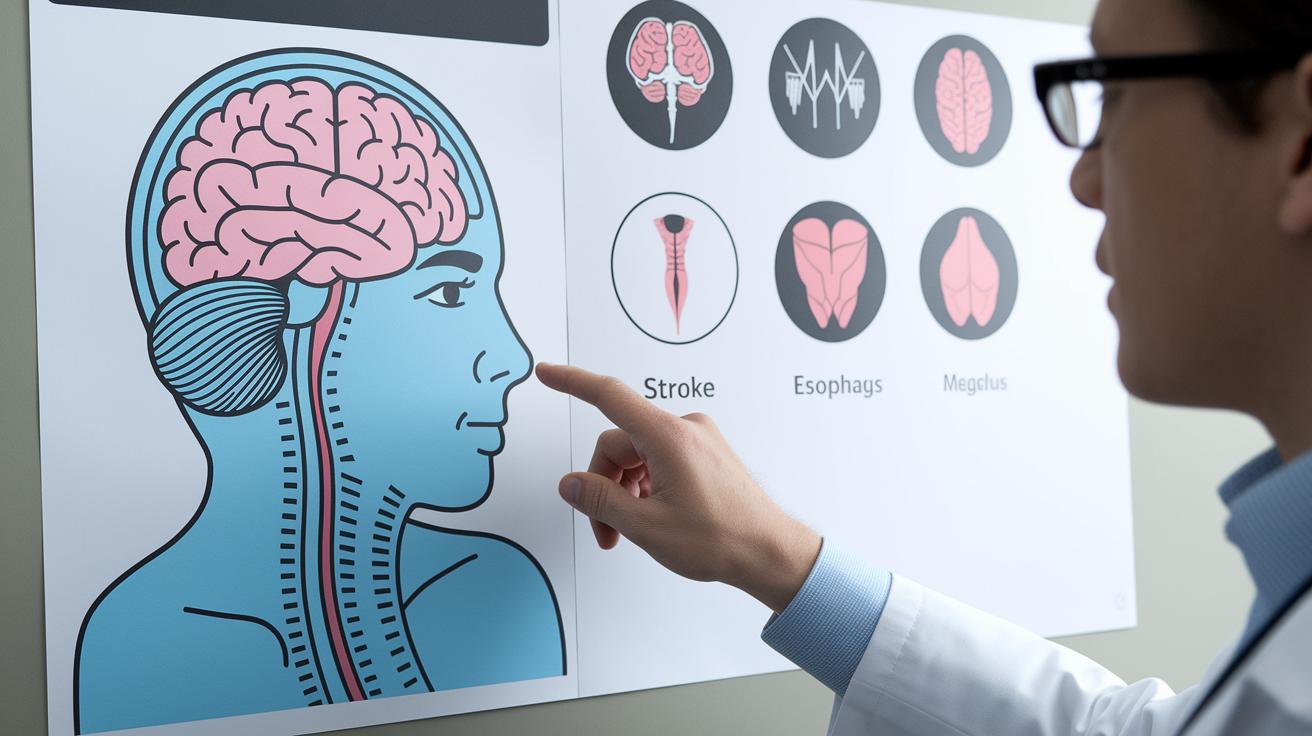
You might have trouble swallowing for many reasons. It can happen because of problems with your brain or nerves, changes in structure, or issues with muscle movement that normally help food and liquids move safely. Each problem can make swallowing unsafe and affect your airway. Sometimes one main issue is to blame. Other times, a few reasons mix together. For example, a stroke can damage nerves that control your muscles, while changes in the esophagus make it harder for food to pass through.
- Brain and nerve issues such as stroke or Alzheimer’s
- Narrowing of the esophagus (strictures) or thin membranes (webs)
- Movement troubles like achalasia (difficulty moving food) or scleroderma (tissue hardening)
- Inflammation in the esophagus (esophagitis)
- Growths in the esophagus, including cancer
- Muscle weakness from conditions like myasthenia gravis
- Injury or scarring after surgery
Sometimes more than one problem happens at once. Nerve issues and physical blockages can work together to make swallowing tougher. Recognizing these mixed causes is important because it helps doctors plan the right treatment. They will check both nerve and muscle function to see if nerve damage worsens a blockage or if weak muscles make it hard for food to move down smoothly. This full evaluation guides them in reducing risks during meals.
Red Flags in Difficulty Swallowing Symptom Snapshot
Quick take: Trouble swallowing that comes with coughing, a wet voice, weight loss, or dehydration may be a warning sign that something serious is happening.
If you have any of these emergency signs, call emergency services now:
- Coughing or clearing your throat a lot during or right after eating or drinking
- A wet, gurgly voice when you speak after swallowing
- Unexpected weight loss
- Signs of dehydration (feeling very thirsty, dry mouth, or lightheadedness)
Your body tells you when food or liquid is not moving properly from your mouth to your stomach. When you feel like food is stuck in your throat or chest, it might not be getting where it needs to go. This puts you at risk for choking or breathing food into your lungs (aspiration), which are serious problems that need prompt care.
Act now if these red flags continue or get worse. It is important to have a doctor check these symptoms right away. Stay safe and listen to your body.
Diagnostic Evaluation in Difficulty Swallowing Symptom Snapshot
Quick take: Your doctor will review your history, examine you, and use imaging tests to find out why swallowing is hard.
Triage:
• If you feel like food or liquid is going down the wrong way, have trouble breathing, or experience sudden severe pain, call emergency services now.
• If your symptoms get worse quickly, seek same-day medical care.
• Otherwise, follow your clinician’s advice and monitor your symptoms.
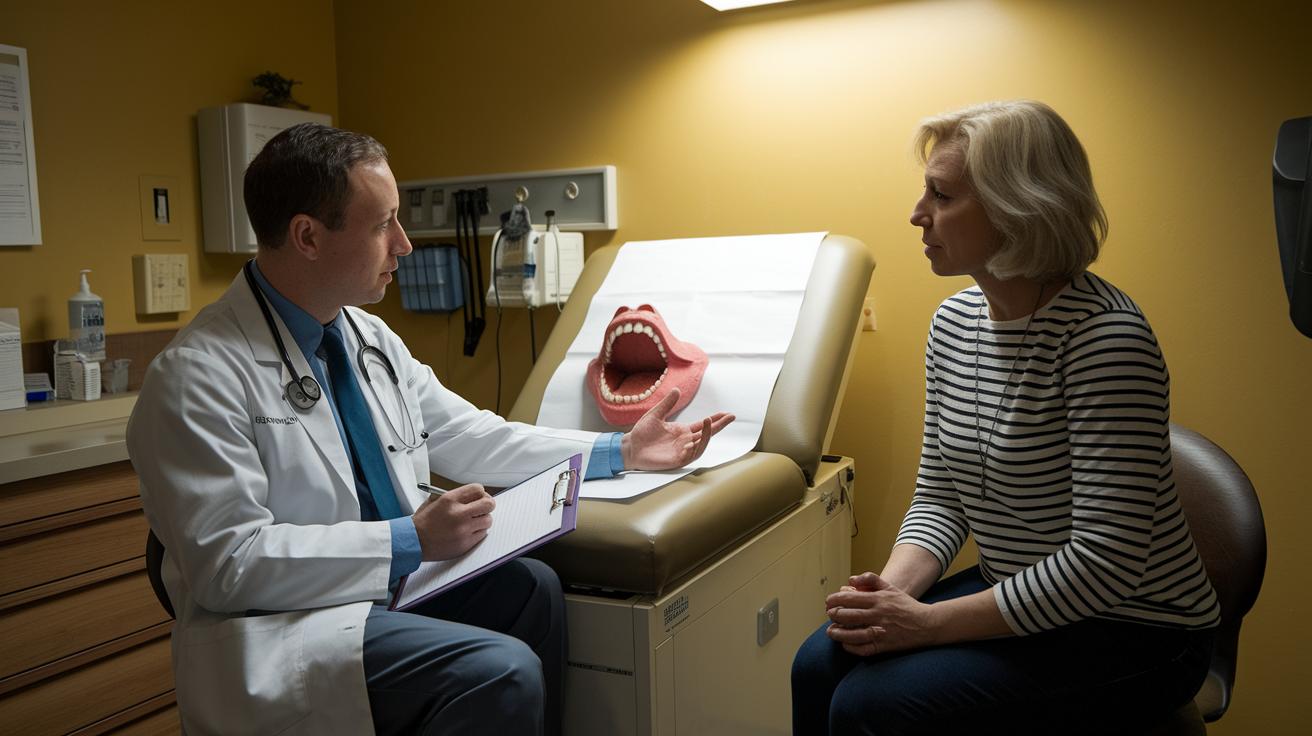
Your evaluation starts with a review of your medical history. Your clinician will ask when your swallowing issues began, if you’ve had past illnesses that might matter, and if you notice other signs like coughing or choking.
Next, a focused physical exam checks your lips, tongue, and jaw. This exam helps spot any weakness or uncoordinated movement that may affect how you swallow.
After that, imaging tests provide a look inside your throat. One common test is a videofluoroscopic swallowing study (VFSS) that creates a moving image of your swallow. This test is especially useful if there is concern that food or liquid might be entering your airway (when something goes into the windpipe instead of the esophagus). In other cases, your doctor may perform a Fiberoptic Endoscopic Evaluation of Swallowing (FEES) to directly view the throat without using much radiation.
| Test/Procedure | What It Assesses | When It’s Used |
|---|---|---|
| Oral Motor Exam | Strength and coordination of the lips, tongue, and jaw | Initial bedside screening |
| VFSS (Videofluoroscopy) | Real-time view of swallow mechanics | When there is concern about food/liquid entering the airway |
| FEES (Fiberoptic Endoscopic Evaluation) | Direct view of throat function and airway protection | When reducing radiation exposure is a priority |
This step-by-step approach helps your clinician decide whether your swallowing trouble is due to muscle weakness, nerve problems, or a structural issue. It guides an effective care plan to help you feel better.
Managing Difficulty Swallowing Symptom Snapshot: Next Steps
Quick Take: Changing your diet and eating habits may improve swallowing, but call emergency services if you experience choking, breathing trouble, or severe chest pain.
If you have any of these emergency signs, call emergency services now:
- Choking or inability to breathe
- Severe chest pain with swallowing
- Signs of food getting stuck and causing distress
Urgent: If your difficulty swallowing worsens quickly or you find it hard to get enough nutrients, seek same-day medical care.
Watch and self-manage:
- Eat soft foods like smooth soups and pureed vegetables.
- Drink plenty of water to keep your throat moist.
- Use small bites, chew slowly, and take pauses between bites.
- Sit up straight or lean slightly forward to help food go down safely.
Begin by changing your diet to ease swallowing. Try thick liquids and soft foods that move smoothly down your throat. Drinking enough water keeps your throat moist and helps food travel without getting stuck. For example, you might choose smooth soups and mashed vegetables because they feel easier to swallow. These steps can lower your risk of choking and help you get the nutrients you need.
During meals, use simple tricks to help you swallow. Take small bites and chew slowly so that food breaks down well. Sit up straight or lean forward a little to guide food safely. Pausing between bites gives your throat time to clear. This method can make eating more comfortable and reduce the risk of discomfort.
You might also try rehabilitation options made just for you. Outpatient speech therapy can teach you exercises to strengthen the muscles you use to chew and swallow. Your clinician might suggest specific exercises that help you coordinate each bite safely. If your symptoms do not improve over time, a specialist can talk with you about more treatment options or surgery if needed. These therapies are part of a plan to keep you nourished and feeling well.
Final Words
In the action above, we explained what difficulty swallowing means, its common causes, and the caution signs to watch for. We also walked through testing steps and shared actionable tips for immediate care. Each section aims to help you decide if symptoms need emergency care, same-day evaluation, or self-care. Keeping a detailed difficulty swallowing symptom snapshot can guide timely decisions and support your care journey. Stay focused, be proactive, and remember that practical guidance makes a difference every day.
FAQ
Q: Is difficulty swallowing a sign of cancer?
A: The difficulty swallowing issue can be a sign of cancer when it occurs with other red flags like unexplained weight loss or consistent chest pain. It is important to see a healthcare provider for evaluation.
Q: I feel like I can’t swallow my saliva.
A: The feeling of being unable to swallow your saliva may indicate dysphagia, a condition that affects normal swallowing and may need a medical review if the sensation becomes persistent.
Q: What are dysphagia causes?
A: The dysphagia causes include neurological events like strokes, structural blockages, motility problems, inflammation, neoplastic growths, muscular diseases, and post-surgical changes. Medical assessment is needed to identify the exact cause.
Q: It feels like I can’t swallow, but I can.
A: The sensation of struggling to swallow while still able to do so may point to mild dysphagia. Monitoring the symptoms and discussing them with a clinician can help determine the underlying issue.
Q: When should I be worried about trouble swallowing?
A: You should be worried when trouble swallowing becomes persistent or severe, especially if accompanied by weight loss, coughing during meals, or difficulty breathing. Seeking prompt medical guidance is advised.
Q: What are neurological dysphagia symptoms?
A: Neurological dysphagia symptoms may include weakened control of mouth and throat muscles, coughing or choking when swallowing, and a gurgly voice after meals, indicating potential issues with airway protection.
Q: What is difficulty in swallowing called?
A: Difficulty in swallowing is called dysphagia. This term refers to challenges in moving food or liquid from the mouth to the stomach and may signal various underlying health issues.
Q: Why might I have difficulty swallowing liquids but not solids?
A: Having trouble swallowing liquids but not solids may suggest issues with esophageal muscle control or motility disorders. A clinician can offer further tests to identify the exact cause.
Q: What are 5 signs of swallowing difficulty?
A: Five signs of swallowing difficulty include coughing during meals, feeling of food sticking, frequent throat clearing, a wet or gurgly voice after swallowing, and unexplained weight loss.
Q: What is the four finger test for dysphagia?
A: The four finger test for dysphagia uses the span of your four fingers to roughly measure neck dimensions which may indicate swelling or abnormal size; it is a basic screening tool and not a definitive test.
Q: What is a red flag for dysphagia?
A: A clear red flag for dysphagia is coughing or choking during meals along with symptoms like weight loss or dehydration. These signs warrant urgent medical attention.
Q: Why am I struggling to swallow all of a sudden?
A: Struggling to swallow suddenly could be due to an acute event such as an infection or stroke. It is important to get medical attention quickly if the symptoms worsen.