


Quick Take: Cluster headaches hit suddenly with sharp pain, often paired with a watery eye or stuffy nose. They come on fast and can feel overwhelming.
If you experience these signs:
- Intense head pain that wakes you up
- One eye that tears up or looks red
- A blocked or runny nose
Call your doctor if the pain gets worse or you notice any new, worrying symptoms.
What Are Cluster Headaches?
Cluster headaches are sudden, sharp headaches that strike without warning. They often show up with a tearful eye and a stuffy nose. These signs set them apart from other types of headaches. Knowing these clues helps you decide when to act.
How to Manage the Pain:
- Sit or lie down in a quiet, calm room.
- Use a cool cloth on your forehead or near your eye.
- Write down the start time and how strong the pain feels (mild, moderate, or severe).
- If the headache lasts longer than usual or you see other signs, contact your clinician fast.
Tracking your symptoms matters. Note the time, what you experienced, and any extra signs. This note can help your doctor plan the best care for you.
Stay calm. With clear steps and proper care, you can manage the pain and know when to get help.
Cluster Headache: Clear Facts for Relief
Quick Take: Cluster headaches are sudden, severe head pains that come in clusters. They may bring extra symptoms like tearing from one eye and a stuffy nose.
If you have any of these emergency signs, call emergency services now:
- Severe, one-sided head pain with eye watering or redness
- Sudden droopy eyelid or eye puffiness
- Intense nasal congestion during an attack
Cluster headaches are rare and affect about 0.1% of people. They hit you unexpectedly, yet tend to show up at the same time each day, often at night. The pain is usually sharp and focused around one eye or temple, and comes with clear signs like tearing, a red eye, or even a runny nose.
Each attack lasts between 15 and 180 minutes. Some people may have one attack every other day, while others experience up to 8 in one day. These bouts can continue for weeks or even months, followed by periods when you feel normal.
Doctors make the diagnosis from your history and by checking if your symptoms match established criteria (ICHD-3). Noticing triggers such as alcohol, strong odors, or changes in your sleep pattern can be important clues.
Keeping a simple diary can help. Note the time, duration, and what you were doing or exposed to when the pain started. This information can be very useful when discussing your symptoms with a clinician.
Differential Diagnosis: Cluster Headache vs Migraine and Tension Headache
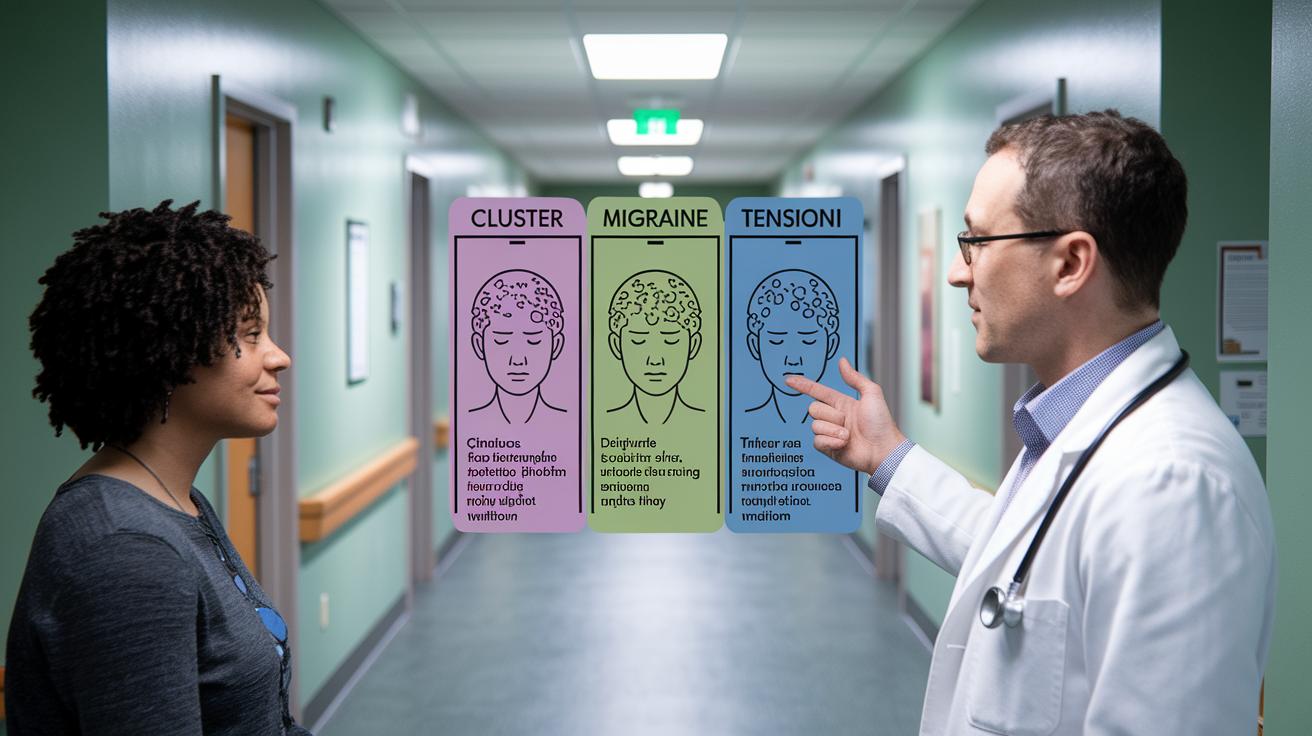
Quick take: Knowing the differences helps guide your care.
Cluster headaches are sharp, one-sided pains around your eye or temple that last 15–180 minutes. You may notice tearing, a stuffy nose, or a droopy eyelid at the same time. Migraines last 4–72 hours with a throbbing pain on one side of the head. They often come with sensitivity to light, nausea, and sometimes aura (visual changes). Tension headaches cause a steady, pressing pain on both sides. They can last from 30 minutes to 7 days and might include mild sensitivity to light or sound.
When you describe your headache, note how long it lasts, where it hurts, and any extra symptoms. Doctors need this info to decide the treatment. They may also order a brain scan if you have other neurological signs, like weakness or confusion, to rule out other causes.
| Headache Type | Duration | Pain Location | Extra Signs | Frequency |
|---|---|---|---|---|
| Cluster Headache | 15–180 min | One side (around the eye or temple) | Tearing, nasal congestion, droopy eyelid | 1–8× per day in clusters |
| Migraine | 4–72 hrs | One side, throbbing | Light sensitivity, nausea, aura (visual changes) | Episodic |
| Tension Headache | 30 min–7 days | Both sides, pressing | Sometimes slight light or sound sensitivity | Occasional or chronic |
A careful history and exam usually confirm the cause of your pain. If you develop new neurological signs, like weakness or confusion, let your doctor know right away. Accurate diagnosis helps ensure you get the right treatment during an attack.
Pathophysiology and Risk Factors of Cluster Headache
Cluster headache happens when a part of your brain called the trigeminal autonomic reflex is activated along with issues in the hypothalamus (the control center for many body functions). Brain scans show that the hypothalamus doesn’t work normally during an attack. Chemicals like CGRP (a peptide that affects blood flow) trigger inflammation and widen blood vessels. This leads to fast, one-sided head pain that comes in clear clusters. Simply put, certain brain areas set off a chain reaction that causes sharp, intense pain.
Men are about 2.5 times more likely to get these headaches, and they usually start when you’re between 20 and 40 years old. A family history can raise your risk, too. External factors such as alcohol, smoking, and strong smells may also spark an attack. Knowing how age, gender, genetics, and lifestyle play a role can help you take steps to prevent or lessen the pain.
Acute Treatment Options for Cluster Headache Attacks

When a cluster headache strikes, fast relief matters. Doctors often recommend breathing high-flow oxygen as the first step. You simply breathe 100% oxygen at 10–15 L/min through a non-rebreather mask. This method helps lessen the one-sided, intense pain in just a few minutes. Many people notice improvement quickly because this treatment is simple and safe.
Other quick fixes include using nasal sprays that deliver medicine right to the pain. Your doctor might suggest a sumatriptan nasal spray (20 mg) or a zolmitriptan nasal spray (5 mg) to ease pain in about 15 minutes. Sometimes, a 4% lidocaine nasal spray can stop an attack in progress. If nasal sprays don’t work well enough, a 6 mg injection of sumatriptan under the skin is an option to rescue you from the pain.
Keep in mind the possible side effects. For example, triptans can cause a fast heart rate (tachycardia) and some nasal sprays may irritate your nose. If you notice unusual changes or if your symptoms worsen, seek help right away. Check a trusted headache triage guide (https://thequickesttips.com?p=1463) for advice on when to get urgent care. And always talk with your doctor about the best treatment choice, especially if you have other health issues.
Preventive Treatments and Long-Term Management in Cluster Headache
Quick take: Preventive treatments like verapamil and a steroid taper can help lower the number and intensity of your cluster headaches.
Triage Box:
• Emergency: If you notice a very slow or irregular heartbeat, severe fainting, or other heart issues, call emergency services immediately.
• Urgent: If you experience major mood swings or rapid weight gain from steroids, contact your doctor today.
• Watch and Self-Manage: Keep a headache diary and follow your treatment plan as discussed with your clinician.
Verapamil, taken at doses up to 720 mg daily, is the top choice for stopping cluster headache attacks. This calcium blocker helps relax blood vessels and can decrease how often and how badly attacks hit you. When you stick to your treatment plan, you may see fewer headaches over time, letting you enjoy more normal days.
A short course of prednisone, taken over 10 to 14 days, is used as a bridge until verapamil fully works. This steroid helps keep attacks in check while waiting for verapamil to build its effect. If needed, your doctor might suggest other options such as lithium, topiramate, or small steroid injections near the base of the skull. Keep in mind that verapamil may slow your heartbeat and steroids can lead to mood changes and weight gain, so regular check-ins with your doctor are essential to adjust your treatment safely.
Managing cluster headaches over the long term goes beyond medications. Simple lifestyle changes can break the cycle of attacks. Keeping a headache diary (a record of times, triggers, and how well your treatments work) is very useful. This diary helps you and your doctor see patterns and adjust your care. Also, by learning to identify triggers, working with specialists, and considering chronic pain programs, you can build a more personalized plan that aims to reduce headache frequency and improve your overall quality of life.
Lifestyle and Home Care Strategies to Minimize Cluster Headache Episodes

Quick take: Simple home care steps can ease your cluster headache, but worsening pain or new symptoms need quick medical review.
Triage Box:
• Call emergency services now if you have sudden confusion, speech problems, or vision changes.
• Seek same-day care if your headache becomes much worse or you develop new, unusual signs.
• Otherwise, follow these home care tips and keep track of your symptoms.
At home, you can try non-drug ways to lessen your pain. Start by placing a cold compress on your temple. This step helps reduce swelling and calms sharp pain. Gently massage your temple and neck muscles to ease any tight spots that may trigger discomfort. Keeping a steady sleep schedule also helps regulate your body. When you sleep at the same time each night, you support your body’s rhythm, which can help prevent headache attacks. Drinking plenty of water during the day is key, and avoiding alcohol and tobacco during episodes may reduce triggers.
Stress can make headaches feel worse. Try simple mindfulness or muscle relaxation exercises to ease both your body and mind. Controlled breathing exercises can help slow your heart and calm you when a headache starts. Some people look at herbal supplements, but there isn’t strong evidence yet, so use them with caution. Remember, these tips help manage your symptoms, but if your headache pattern changes, the pain gets stronger, or you notice new signs, contact your clinician right away.
Emergency Warning Signs and When to Seek Immediate Medical Attention for Cluster Headache
A cluster headache can follow a set pattern. However, if you suddenly feel the worst headache ever along with any of these signs, it could mean something serious is happening:
- New weakness, numbness, or slurred speech (trouble talking clearly).
- Sudden loss of vision.
- Seizure-like episodes.
- Confusion or changes in awareness.
If your headache is not like your usual pattern or starts after age 50, it may point to a serious condition such as a stroke or an issue with your carotid artery (the main blood vessel in your neck). For more details, see the red flag checklist for persistent headaches here: https://spiritsocietyofpa.com?p=199.
If you notice any of these symptoms, please get emergency help right away.
Advances in Research and Emerging Therapies for Cluster Headache

New research into medicines is giving hope for treating cluster headaches. Early studies show that special antibodies blocking a protein called CGRP (a pain-linked protein) may shorten your headache cycle and lower how often attacks occur. In initial trials, these CGRP blockers also appear to ease the pain during an attack.
Some reports also indicate that small doses of psilocybin (a substance from certain mushrooms) might stop an attack before it takes hold. Although more studies are needed, this approach is showing promise for patients who haven’t found relief with current treatments.
Researchers are also testing devices that work by stimulating nerves. These non-drug options, such as vagus nerve stimulation (a method using a nerve that helps control many body functions) and occipital nerve stimulation (targeting nerves at the back of your head), seem to help calm pain signals and may shorten the length of an attack. Future studies will work to fine-tune these techniques and find the best ways to use them for managing cluster headaches.
Final Words
In the action, we've covered cluster headache basics, from spotting hallmark symptoms and understanding triggers to exploring treatment options and self-care tips. We examined the differences between cluster headache, migraine, and tension headache to help you know when to seek urgent care. We also broke down the current research and lifestyle strategies available to manage recurring attacks. Use these insights to track your symptoms and share clear details with your healthcare provider. Staying informed can guide your path toward safer, effective care and brighter days ahead.
FAQ
Q: What are effective treatment options for cluster headaches?
A: The question of effective treatment options for cluster headaches is answered by using high-flow oxygen therapy and triptan nasal sprays, such as sumatriptan and zolmitriptan, along with intranasal lidocaine. These treatments offer rapid pain relief when used as directed.
Q: Are cluster headaches dangerous or life threatening?
A: The question about whether cluster headaches are dangerous shows that while these headaches cause extremely severe pain, they are rarely life threatening. However, any significant change in pattern or the presence of new neurological symptoms should prompt immediate medical attention.
Q: What are the common symptoms of a cluster headache?
A: The question regarding cluster headache symptoms is addressed by noting excruciating unilateral orbital or temporal pain, tearing, red eye, nasal congestion, drooping eyelid, and episodes lasting 15–180 minutes that occur in clusters over weeks or months.
Q: What causes cluster headaches?
A: The question on what causes cluster headaches explains that attacks are linked to triggers like alcohol, strong odors, and sleep pattern changes, along with underlying activation of the trigeminal autonomic system and potential genetic factors.
Q: How do migraines differ from cluster headaches?
A: The question asking how migraines differ from cluster headaches indicates that cluster headaches last 15–180 minutes and often feature autonomic symptoms, whereas migraines last 4–72 hours, typically include throbbing pain with aura, light sensitivity, and nausea.
Q: How can you avoid cluster headaches?
A: The question on how to avoid cluster headaches suggests maintaining a consistent sleep schedule, avoiding known triggers like alcohol and strong odors, and managing stress to help reduce the frequency and severity of attacks.
Q: How is cluster headache pain rated on a pain scale?
A: The question about the cluster headache pain scale clarifies that the pain is frequently described as extremely severe, with many patients rating it among the highest levels of pain experienced, often debilitating in nature.
Q: Are cluster headaches considered the most painful condition?
A: The question regarding whether cluster headaches are the most painful condition shows that many patients and clinicians consider them among the most intense pain experiences, though individual pain tolerance can vary.