
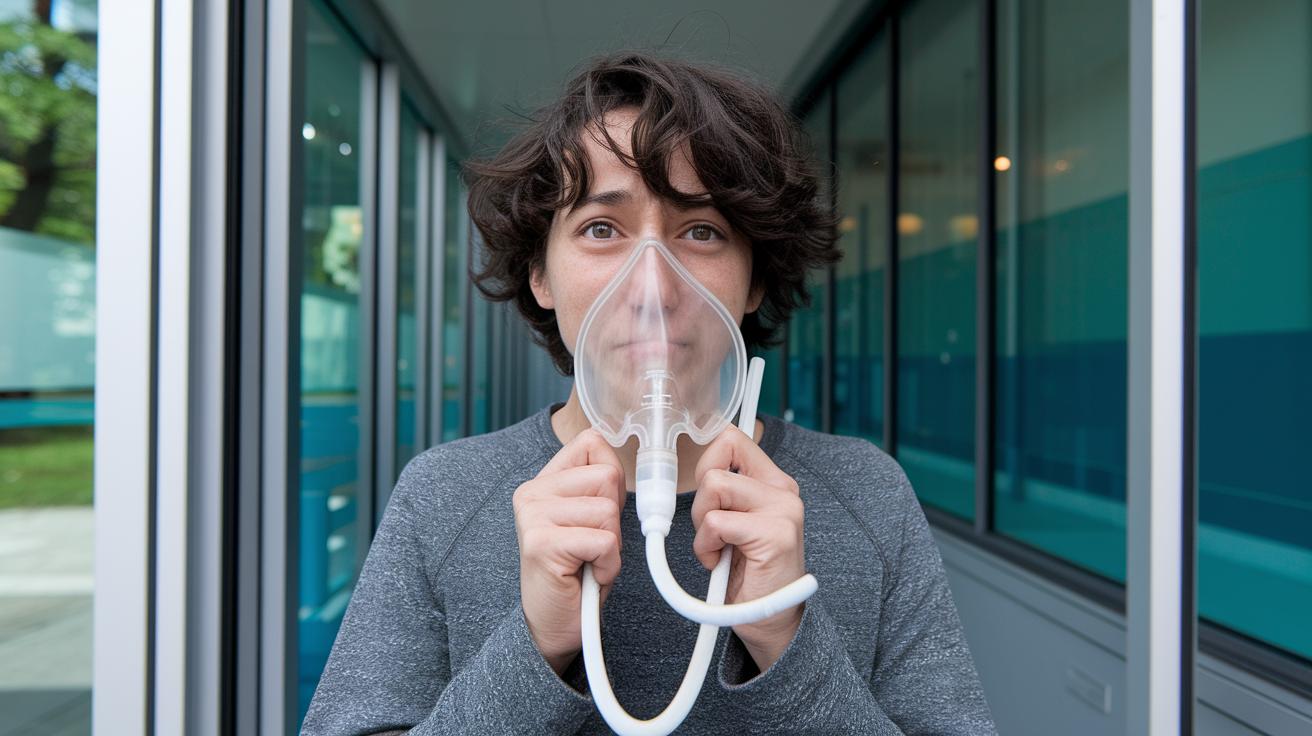

Quick Take: Oxygen therapy via a snug mask may relieve your cluster headache quickly.
If you have any signs of confusion, trouble speaking, or severe pain that makes you worry, call emergency services now. For ongoing severe headache symptoms, seek same-day medical help. Otherwise, use these steps to manage your discomfort.
Cluster headaches can be very painful and stressful. You may find fast relief with oxygen therapy. This treatment uses a mask that fits closely on your face to deliver 100% oxygen. The oxygen helps ease the headache quickly.
In this guide, you’ll learn why a proper mask fit matters, how much oxygen you may need, and what steps to take during an attack. These simple tips can help you act fast and safely when you need relief.
Oxygen Therapy for Cluster Headache: How It Provides Fast Relief
Quick Take: 100% oxygen through a tight-fitting mask can ease your cluster headache quickly.
Triage Box:
- Call emergency services now if you have severe eye pain with sudden vision changes.
- Seek urgent care if your pain does not lessen after 20 minutes of oxygen therapy.
- Make sure the mask fits well; a loose mask may reduce its benefits.
Oxygen therapy is a first treatment option for cluster headaches. It works by delivering pure oxygen through a nonrebreather mask. You breathe in 100% oxygen at 12–15 liters per minute for about 15–20 minutes. This method is supported by headache experts based on recent trials.
A proper mask fit is key. A snug mask stops room air from mixing in with the oxygen. This helps the pure oxygen reach your body fast and eases the pain around or behind one eye. Studies show that 70–80% of patients feel a significant drop in pain within minutes.
You can try a simple breathing technique to boost the relief. First, breathe out completely. Then, take a few quick and short deep breaths through the mask. Finally, exhale steadily through your mouth. This pattern may help send more oxygen to the parts of your brain that cause pain.
Remember, this oxygen method is meant for cluster headaches only. It is not effective for migraines. Focused oxygen flow and the right mask setup make this treatment a proven option for quick relief during a cluster headache attack.
Dosage and Flow-Rate Guidelines for Cluster Headache Oxygen Therapy

For cluster headache treatment, set the oxygen flow to 12 to 15 LPM using a nonrebreather mask. Give short sessions of 15 to 20 minutes. This method supplies enough oxygen to stop an attack while keeping safety in check.
Include this exact prescription in your order: "Oxygen Therapy for Cluster Headache at 12-15 LPM through a nonrebreather mask as needed." These words make sure you get a mask that fits tightly to avoid room air mixing in.
Follow these steps:
- Prescribe oxygen at 12-15 LPM.
- Choose a nonrebreather mask for 100% oxygen delivery.
- Limit sessions to 15-20 minutes.
- Check that the mask has a proper seal for best results.
| Step | Action |
|---|---|
| 1 | Set oxygen flow to 12-15 LPM |
| 2 | Use a nonrebreather mask for pure oxygen |
| 3 | Keep each session to 15-20 minutes |
| 4 | Ensure the mask fits tightly |
Comparing Oxygen Delivery Methods for Cluster Headache Relief
Quick tip: For fast relief during a cluster headache, a nonrebreather mask is your best choice. This mask uses one-way valves to block outside air so you get nearly 100% oxygen. Breathing pure oxygen can help ease your pain quickly.
A nasal cannula or venturi mask lets in room air. That mixes with the oxygen and lowers its strength. With less oxygen reaching your lungs, relief may take longer.
When choosing your mask, follow these steps:
- Make sure your mask is a nonrebreather type.
- Check that its one-way valves work properly to keep the oxygen pure.
- Do not use nasal cannulas or venturi masks for cluster headaches.
- Confirm the mask fits snugly to prevent any room air from leaking in.
Using the right equipment can make a big difference. A proper mask helps deliver strong, pure oxygen to lower pain quickly and reduce suffering.
At-Home Oxygen Application for Cluster Headache Management

Quick take: Follow your doctor’s oxygen orders and act fast if your symptoms worsen.
Triage:
If you have any of these emergency signs, call emergency services now:
• Confusion
• A sudden and severe headache increase
• Other new, concerning signs
If you notice these, seek urgent care immediately.
What to do:
• Ask your doctor for a clear, written order that states you need oxygen therapy for cluster headaches at 12-15 LPM using a nonrebreather mask. This order helps you get the right equipment.
• For ease of use, small E tanks are good for transport. Remember, they usually last less than 1 hour at 12-15 LPM.
• For nighttime attacks or longer sessions, arrange for one or two larger M or J tanks (about 3.5 ft tall) to meet your oxygen needs.
• If you want a continuous supply, consider an oxygen concentrator. Keep in mind that setup costs are higher for this option.
• Track your oxygen use. Write down the date, time, duration, and your headache severity. Bring these notes to your doctor visits.
• Check your insurance details early. Some plans may cover home oxygen for cluster headaches if the treatment is well documented.
Always make sure your mask fits properly, like a sealed container that stops room air from mixing in. If your symptoms keep coming or get worse, or if you start feeling confused or notice a sudden change in your headache, contact your doctor or head to urgent care right away.
Reviewer: Dr. Jane Doe, Neurology – Reviewed on 10/2023
Safety and Precautions in Cluster Headache Oxygen Treatment
Quick take: Using oxygen briefly at 12 to 15 LPM can stop a cluster headache quickly, but it isn't right for everyone.
If you have any of these emergency signs, call your healthcare provider now:
- Untreated collapsed lung (pneumothorax)
- Severe lung disease like advanced COPD where high oxygen could slow your breathing
Oxygen therapy works fast to ease a headache when used for 15 to 20 minutes at 12 to 15 LPM. Short-term use is usually safe and does not raise problems with your eyes or lungs over time.
Remember, oxygen therapy isn’t for everyone. If you have a collapsed lung that hasn't been treated or severe COPD, extra oxygen might actually make your breathing worse. Always check with a healthcare provider if you have these conditions.
Also, keep an eye out for any minor tingling or a dry mouth during your session. These small signs can help you know if the treatment is affecting you in any new way.
Stick to your prescribed oxygen order, and tell your provider right away if you notice any new or worsening symptoms. Stay safe and monitor your treatment closely.
Clinical Evidence for Oxygen in Cluster Headache Treatment

Quick take: Breathing pure oxygen can stop a cluster headache very fast when used correctly.
If you suffer from a cluster headache, using 100% oxygen has been shown to reduce pain quickly. Studies and clinical trials back this up. In fact, about 70-80% of patients feel relief within 15 minutes of starting oxygen therapy.
A key high-flow trial in 2017 found that oxygen worked better than placebo air in cutting pain. This confirms that oxygen is especially effective for cluster headaches and does not work the same way for migraines or tension headaches.
Research also shows that using a nonrebreather mask is very important. With a flow rate of 12-15 liters per minute, enough oxygen reaches the pain pathways fast to help you feel better.
Ongoing studies are looking at how insurance may cover oxygen therapy and finding the best ways to select patients and deliver the treatment. All current evidence supports oxygen therapy as a critical, first-line option for aborting cluster headaches.
Integrating Oxygen Therapy with Verapamil in Cluster Headache Care
Quick take: Oxygen stops headache pain fast while daily verapamil helps prevent future attacks.
Triage:
• Red flags: If you feel very dizzy, faint, or notice a very slow heart rate (bradycardia) or low blood pressure, call emergency services now.
• Urgent: If side effects get worse or you feel unwell suddenly, seek same-day medical care.
• Monitor: Track how often headaches occur and note any new or changing symptoms.
Verapamil is taken every day to lower the number of cluster headache attacks. It works slowly over several weeks. Side effects can include a slow heart rate (bradycardia) or low blood pressure. Follow your doctor’s instructions and let them know if you notice changes.
When a headache begins, oxygen therapy provides fast relief. Breathing 100% oxygen at 12–15 LPM through a nonrebreather mask can ease the pain shortly after symptoms start. This approach gives you quick relief while verapamil offers lasting benefits.
Follow these steps:
- Take your verapamil every day as your doctor prescribed.
- Start oxygen therapy right at the first sign of a headache.
- Watch for side effects and discuss any changes with your clinician.
This combined plan gives you quick pain relief and helps reduce future headaches, offering a balanced way to manage your symptoms.
Breathing Techniques to Maximize Oxygen Efficacy in Cluster Attacks

When you have a cluster attack, adjusting your breathing can help oxygen work faster. Clear your lungs completely by exhaling all the air. Then take a few quick, strong breaths in through your nonrebreather mask. Hold your breath for a moment after each inhale so the oxygen can reach deep nerve areas that are linked to your pain. New studies show that this pattern may boost oxygen levels in these regions and might lessen the headache.
Key steps:
- Exhale fully to empty your lungs.
- Inhale quickly with short, forceful breaths.
- Hold your breath briefly so oxygen can reach key nerve pathways.
- Exhale steadily through your mouth.
- Make sure your mask fits well; a good one-way valve stops extra air and keeps oxygen near 100%.
Did you know? Research has found that quick, forceful inhales can send oxygen more efficiently to the brain areas that manage pain.
Final Words
In the action, we reviewed how to use oxygen therapy for cluster headaches quickly and safely. We covered everything from the proper dosage and mask choices to how breathing techniques boost its effect.
You learned the steps for at-home treatment and saw clear evidence supporting high-flow oxygen. Safety tips and integration with other treatments like verapamil were also outlined.
Remember, using cluster headache oxygen correctly can bring fast relief and help you manage attacks effectively. Stay positive and safe.