
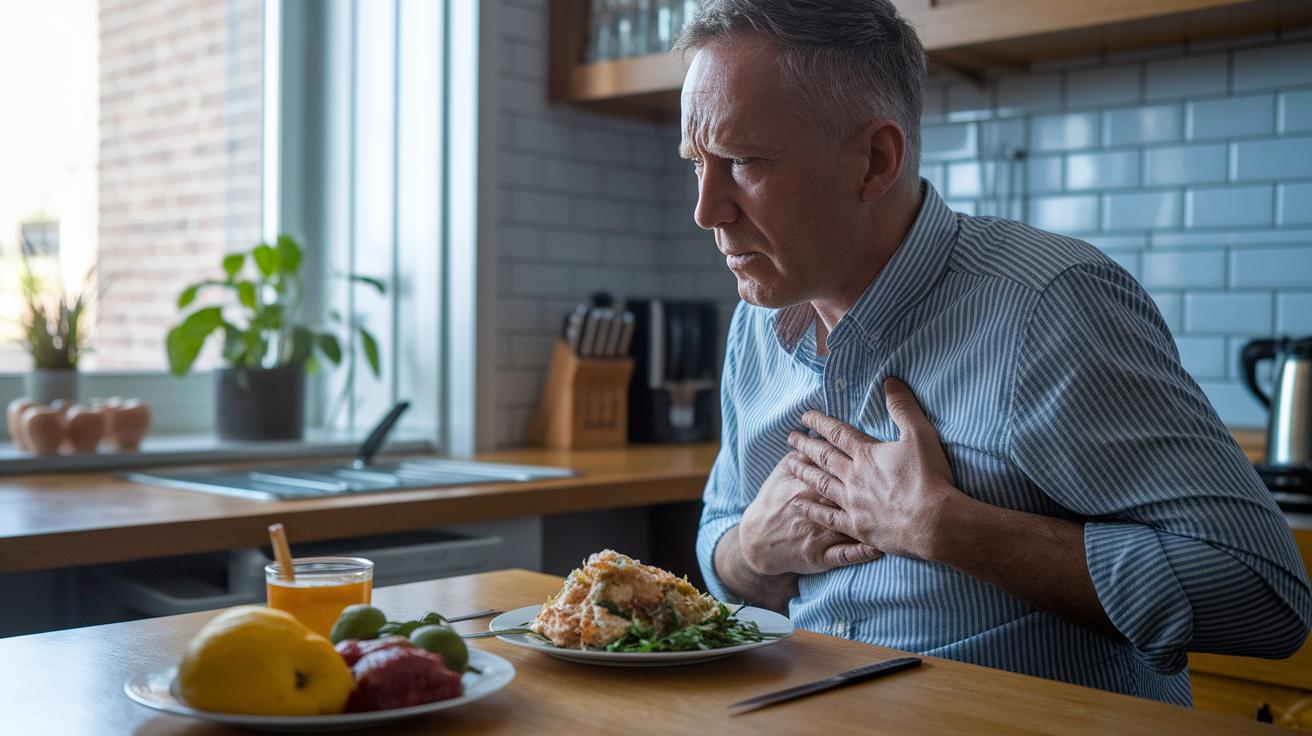

Quick Take: Chest pain after eating is often mild but can sometimes signal a more serious issue.
If you have these emergency signs, call emergency services now:
• Intense, sharp pain that spreads
• Trouble breathing, lightheadedness, or fainting
• Severe pain that does not ease or occurs with sweating
Most of the time, this pain is from common issues like acid reflux (stomach acid backing up) or simple heart strain after a heavy meal. However, it is important to know when to watch symptoms and when to act.
Here’s what might be happening:
• Acid reflux: Stomach acid escapes into your esophagus and causes a burning pain.
• Heart stress: A large or heavy meal can put extra pressure on your heart and lead to discomfort.
What to do:
- Notice how long the pain lasts and how strong it is. Write down if it is mild, moderate, or severe.
- Sit upright or take a slow walk after eating to help your digestion.
- If the pain worsens or you develop new symptoms like shortness of breath or dizziness, seek help right away.
This guide is here to help you decide when a post-meal ache is a normal reaction and when it might be a warning sign that needs medical attention.
Why Does Chest Pain After Eating Happen?
Quick take: Chest pain after a meal might be a simple digestion issue, but sometimes it signals something more serious.
If you have any of these emergency signs, call emergency services now:
- Pain that lasts more than a few minutes
- Shortness of breath or rapid breathing
- Pain spreading to your arms, neck, or jaw
- Sweating or feeling unusually weak
Common causes include:
- Acid reflux or GERD: Stomach acid comes back into your esophagus (the tube connecting your mouth and stomach), causing a burning or sharp pain behind your breastbone.
- Gallbladder stress: Eating fatty meals can make your gallbladder work too hard, leading to pain.
- Esophageal problems: Conditions like esophagitis (inflammation) or esophageal spasms (sudden muscle contractions) can cause a squeezing pain that feels like heart trouble.
- Peptic ulcers: Sores in the stomach or upper part of the small intestine may cause pain that moves upward after you eat.
- Heart issues (angina): Large meals might stress your heart, triggering a pressure-like pain that can come with shortness of breath, sweating, and pain in your arms, neck, or jaw.
If your pain is light and goes away quickly, it might be safe to watch and note your symptoms. But if the pain is strong, lasts several minutes, or you notice red flag signs like those listed above, please seek medical help right away.
Recognizing Warning Signs of Serious Chest Pain Post Meal
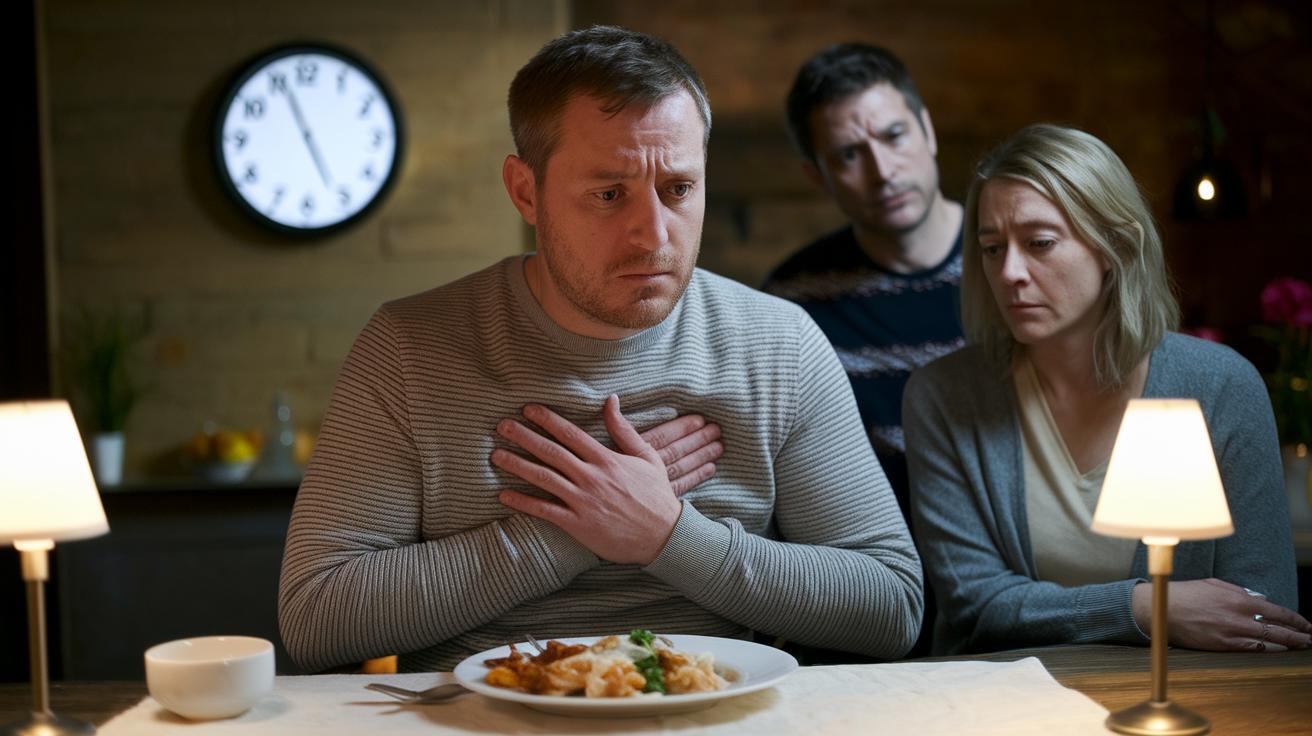
Quick take: Your heart might be under extra strain after eating, which can signal a serious issue.
If you feel any of these red flag symptoms, call 911 immediately:
- Chest pain lasting longer than 5 minutes or getting worse after a meal
- Shortness of breath or a racing heartbeat
- Feeling lightheaded or dizzy
- Nausea, heavy sweating, or pain that spreads to your shoulders, arms, neck, jaw, or back
These signs could mean your heart isn’t getting enough blood or oxygen. Sudden changes in your body can point to a heart attack or another dangerous condition. Don't wait, if you experience these symptoms, seek emergency care right away.
Differentiating Heartburn and Angina in Post-Meal Chest Pain
Quick take: Post-meal chest pain can be due to acid reflux or a heart issue. Check your symptoms and act fast if red flags appear.
If you have any of these emergency signs, call emergency services now:
- Severe chest pain that feels like heavy pressure
- Pain that spreads to your arms, neck, or jaw
- Shortness of breath, nausea, or sweating
If these signs are not present, here’s what you can consider:
Heartburn usually feels like a burning pain behind your breastbone. You might notice a sour or acidic taste in your mouth. It often gets worse when you lie down or bend over and usually gets better with antacids.
Angina, on the other hand, feels like tightness or pressure across your chest. It may start after a heavy meal or during physical activity. Angina can also bring on shortness of breath, nausea, or sweating, and the pain might spread to your shoulders, arms, neck, or jaw. Rest can help ease angina, but antacids usually do not work.
Pay attention to which symptoms you feel and what triggers them. Knowing these differences can help you decide if the pain is just heartburn or if you should get help for a heart issue.
How Healthcare Professionals Diagnose Chest Pain After Eating

Quick take: Chest pain after a meal can come from your digestive system or your heart.
If you experience chest pain with shortness of breath, sweating, or a heavy, lasting pressure, call emergency services now.
Doctors begin by checking your digestive system. They may do an endoscopy, which uses a tiny camera to view your esophagus (the tube from your throat to your stomach) and stomach for signs of acid damage. They also use esophageal pH monitoring. This test measures the acid levels in your esophagus to show if acid reflux (when stomach acid moves up into the esophagus) is causing irritation.
Next, they examine your heart to rule out problems. An electrocardiogram (ECG) records your heart’s electrical signals to look for irregular rhythms or signs of stress. Doctors might also perform a stress test to see how your heart handles extra work, especially if the pain comes with shortness of breath or sweating.
Finally, additional tests like ultrasounds and blood work round out the exam. An abdominal ultrasound checks your gallbladder and liver if fatty foods seem to trigger pain. Blood tests measure heart enzymes and look for signs of fever or inflammation. A chest X-ray can also help rule out lung issues like bronchitis.
By using these steps, healthcare professionals can decide if your chest pain is linked to acid reflux, heart problems, or another condition.
Lifestyle Adjustments to Prevent Chest Pain After Eating
Quick Take: Simple changes in meal size, food choices, and posture can ease post-meal chest pain.
If you notice any severe chest pain, shortness of breath, or pain spreading to your arms or jaw, call emergency services immediately.
Start by changing your meal plan. Instead of large, heavy meals, eat smaller portions more often. Choose foods that are lower in fat, spice, and acid. These tweaks help your stomach work more gently and reduce discomfort.
Next, be mindful of your posture after eating. Stay upright for at least 2 hours after meals. This keeps stomach acid from rising. At bedtime, try raising your head by 6 to 8 inches to help prevent acid from creeping up during sleep.
Also, cut back on carbonated drinks and caffeine. These changes support smoother digestion and ease chest pain after meals.
Practice these steps every day. Pair meal planning and proper posture with stress management techniques like deep breathing or meditation. Over time, these steady habits can lead to lasting relief and a happier, healthier digestive system.
Treatment Options for Chest Pain After Eating

Quick take: Mild chest pain after eating can often be managed with simple, readily available options. If your pain is strong or gets worse, see your doctor.
Over-the-counter remedies can offer fast relief. Try an antacid to neutralize stomach acid and ease the burning feeling. You can find these at most drugstores. Some combination pills also help by reducing acid production and soothing heartburn. These are best for mild or occasional symptoms.
If over-the-counter options aren’t enough, your doctor may prescribe medications. Options include H2 blockers (like ranitidine) and proton pump inhibitors, which lower the acid your stomach makes. They might also add a prokinetic agent to help your stomach empty faster and cut down on reflux. And if esophageal spasms are a factor, calcium channel blockers or nitrates can relax the muscles in your esophagus.
When chest pain after eating becomes frequent or severe, talk to your doctor. They will check for any underlying issues and suggest the right treatment. Often, combining medication with changes in how you eat and live is the best strategy to ease symptoms and prevent future discomfort.
Final Words
In the action, this guide broke down common causes behind chest pain after eating, from acid reflux to potential heart issues. We highlighted warning signs that call for urgent care and compared similar symptoms like heartburn versus angina. You also got clear tips on tests, lifestyle changes, and treatment to manage discomfort safely at home. Keep tracking your symptoms and enjoy peace of mind knowing you have actionable steps to guide you. Stay positive and proactive as you work with your healthcare team for reliable care for chest pain after eating.
FAQ
Chest pain after eating not heartburn
The chest pain after eating that isn’t typical heartburn might indicate other issues. It can result from esophageal spasms, gallbladder discomfort, or even heart-related causes, so monitoring your symptoms closely is wise.
Left side chest pain after eating
The left side chest pain after eating may be linked to acid reflux, digestive concerns, or rarely heart problems. Evaluating any other symptoms that occur with the pain can help determine if a doctor visit is needed.
How do I stop chest tightness after eating?
The chest tightness after eating can be eased by making dietary changes, such as eating smaller meals and avoiding trigger foods. Staying upright after meals and using over-the-counter remedies may also provide relief.
Where is the GERD chest pain located?
The GERD chest pain typically appears behind the breastbone when stomach acid irritates the esophagus. This discomfort often worsens when lying down or bending over and may improve with antacids.
What does stabbing chest pain after eating indicate?
The stabbing chest pain after eating might suggest conditions like esophageal spasms or peptic ulcers. Given its sharp nature, it warrants careful observation and consultation if the pain is severe or persistent.
What insights are shared about chest pain after eating on Reddit?
The chest pain after eating described on Reddit covers experiences like GERD and gallbladder issues. While these personal stories offer varied perspectives, professional advice is essential to rule out serious conditions.
Why might chest pain occur after eating during pregnancy?
The chest pain after eating during pregnancy is often due to acid reflux linked to hormonal changes. However, it’s important to rule out any heart or lung issues, so discussing symptoms with your healthcare provider is recommended.
Why does chest pain occur after eating and lying down?
The chest pain after eating and lying down is most commonly caused by acid reflux, as lying flat can allow stomach acid to irritate the esophagus. Adjusting your posture after meals may help reduce this discomfort.
Why does my chest hurt after I eat?
The chest hurt after you eat can be from several factors, including acid reflux, esophageal spasms, or gallbladder issues. Recognizing food triggers and modifying meal habits can often help lessen the pain.
When should I be worried about chest pain after eating?
You should be concerned if the chest pain lasts more than 5 minutes, worsens gradually, or is accompanied by shortness of breath, sweating, or pain spreading to the arms or jaw. In such cases, seeking urgent medical attention is critical.