


Quick take: Skin discoloration is usually caused by sun exposure, injury, or hormonal changes, and most often isn't dangerous, but watch for signs that need a clinician’s attention.
If you have any of these emergency signs, call emergency services now:
• Rapidly spreading discoloration
• New pain or swelling along with the color change
• Intense itching or burning
Common Causes:
Skin changes like different-colored patches on your arms can happen for simple reasons. Too much sun, minor injuries, or shifts in your hormones (chemicals that control body functions) can all create darker or lighter spots.
What to Do Now:
• Check your skin and note if the patches change quickly.
• Protect your skin by wearing sunscreen and covering up in strong sun.
• Jot down dates and details about any changes to share with your clinician.
• If the spots start to hurt, itch severely, or spread, reach out to a healthcare professional the same day.
Tracking Your Skin:
Write down when you notice changes and any accompanying symptoms, such as pain or itching. This record can help your clinician see what’s going on and decide if treatment is needed.
By keeping an eye on your skin and taking these simple steps, you turn uncertainty into understanding. Remember, most changes are harmless, but if something feels off, seek advice from a trusted healthcare provider.
Arm Skin Discoloration: Causes, Symptoms, and Solutions
Quick take: Arm skin discoloration is often due to sun exposure, injury, or hormone changes and is usually not serious.
Triage Box:
• If you notice that a patch grows fast, has uneven borders, or changes color suddenly, call emergency services now.
• If you feel pain, itching, or tenderness along with the discoloration, seek same-day care.
• If the changes continue for more than a few weeks or you are worried, contact your dermatologist.
Your arms can show darker or lighter patches compared to your normal skin tone. Darker spots, called hyperpigmentation, and lighter spots, called hypopigmentation, may appear if something changes your skin’s natural tone.
Sunlight is a common cause. Ultraviolet rays from the sun can boost melanin (skin pigment) production, causing patches to darken. Heat and bright light may also make these changes worse. Sometimes, skin injury from a rash, bite, or minor trauma can leave behind spots or patches.
Hormone changes also affect your skin. For example, during pregnancy there can be spikes in estrogen and progesterone. This may cause melasma, which creates uneven dark patches on your arms. Other conditions, like vitiligo, occur when the immune system attacks skin cells that make pigment, leaving white patches. A mild fungal infection called tinea versicolor can cause small, scaly spots that look lighter than normal skin.
Other factors such as aging, certain medicines, and even genetics may also lead to changes in skin color. While most causes are harmless, any quick or odd changes should be checked by your doctor. Tracking any changes with dates and notes can help your clinician understand the situation better.
To help protect your skin, use a broad-spectrum sunscreen with at least SPF 30 every day and wear clothes that shield your arms when you are outside.
Common Causes of Hyperpigmentation on Arm Skin

Dark patches on your arms can happen when different factors mix together. Sunlight is one big cause. The UV rays boost melanin (the substance that gives skin its color) production, which can lead to brown, tan, or blue-gray patches. Heat and bright light can make this worse, a pattern often seen with melasma on the arms. Even a little bit of sun every day adds up over time.
Your skin might also darken after an injury. If you get a cut, insect bite, or rash, the healing process can leave behind dark spots. This is called post-inflammatory pigment changes. Hormonal shifts, like during pregnancy when estrogen and progesterone change, can also trigger melasma with uneven dark patches.
As you age, these changes become more common. Years of sun exposure and natural aging can cause age spots. Recent studies show that using broad-spectrum sunscreen and protective creams early on can slow down the darkening process.
Recognizing Hypopigmentation and Light Spots on Arms
Quick take: White or light patches on your arms can come from different causes. Keep an eye on any quick changes or spreading of these spots.
If you see any of these signs, call your doctor:
- If spots suddenly increase in size or spread fast
- If the patches start to itch or flake noticeably
- If you spot changes in the shape or texture of the spots
Vitiligo is an autoimmune condition. This means your body’s defense turns on the pigment cells (melanocytes) and wipes them out. The result is smooth, white patches on your arms. Also, 15-25% of people with vitiligo have another autoimmune issue. Keep a record, for example: "On 03/15, the patch on my left arm grew and the edges looked less clear."
Tinea versicolor is a yeast infection. It can cause pale or tan, scaly spots on the arms and torso that may itch or flake. If these spots spread or change quickly, you should get checked by a doctor.
Sometimes, skin may lose its color after an episode of eczema, a minor injury, or a rash. This is called post-inflammatory hypopigmentation. It usually fades slowly over time.
Other white spots can show up without major symptoms. However, if you notice signs of a fungal infection or if the spots change a lot, it’s best to see a dermatologist.
| Date | Observation | Notable Change |
|---|---|---|
| MM/DD | Patch grew in size | Edges became blurred |
Red Flags in Arm Pigment Changes

Quick take: If a spot on your arm is new or changing, it could be a sign of melanoma, get it checked by your dermatologist without delay.
Triage Steps:
• Red flags: Look for spots that suddenly itch, hurt, ooze, bleed, or become scaly.
• Urgent concerns: Notice if a spot changes quickly in size, shape, color, or feel.
• Next steps: Write down the date and what you see, then share this with your doctor.
Keep a close watch on any spots on your arms. Changes like uneven shape or blurred edges might signal something serious like melanoma (a type of skin cancer). To help you check, use the ABCDE rule:
• A stands for Asymmetry – one side of the spot may look different from the other.
• B stands for Border irregularity – edges that look uneven or wavy.
• C stands for Color – more than one shade or any bright colors.
• D stands for Diameter – if the spot is larger than 6 mm (roughly the size of a pencil eraser), though some dangerous spots can be smaller.
• E stands for Evolving – any change in size, shape, color, or feel over time.
Also be alert for these warning signs:
• Sudden or more intense itching.
• Tenderness, pain, or unusual soreness.
• Oozing, bleeding, or skin flakiness that wasn’t there before.
• Rapid growth or sudden changes in the look of the spot.
Stage 1 melanoma usually shows up as a very thin spot (less than 1 mm thick) with a consistent color along its edge. Still, if you notice any new or changing spot on your arms, have it checked by a dermatologist right away. Recording the date and details of what you observe can help your doctor decide if you need a biopsy to rule out skin cancer. Stay alert and seek evaluation if anything seems off.
Home Remedies and Prevention for Uneven Arm Tone
Quick take: A steady routine with sunscreen, gentle exfoliation, and nourishing moisturizers can help brighten your skin over time.
Triage Box:
Red flags: If your skin becomes very red, painful, or irritated for more than 3 days, call your clinician now.
Urgent: If you see sudden allergic reactions or worsening spots, seek same-day medical advice.
Basic care: Keep up your routine and note any changes.
Regularly applying a broad-spectrum SPF 30 or higher sunscreen with physical blockers like zinc oxide or titanium dioxide shields your skin from harmful sun exposure. Wear sun-safe clothing and try to stay out of the sun between 10 AM and 4 PM. When Jamie added daily sunscreen, her arm tone began to even out in just a few months.
Gently exfoliating with alpha-hydroxy acids (natural acids that help remove dead skin) boosts cell turnover and smooths rough patches. Natural ingredients like turmeric or licorice extract can help lighten dark spots over time. Adding a light moisturizer with niacinamide (a form of vitamin B3 that brightens skin) or vitamin C can improve skin brightness and even tone. Cool compresses or aloe-based gels can ease any redness or irritation after minor injuries.
Keep your daily routine simple:
- Wash your arms gently in the morning and at night.
- Use sunscreen and moisturizer every day.
- Exfoliate 2-3 times per week to help renew your skin.
Tracking your progress by keeping a skin diary with dates and observations can help you adjust your routine to achieve a more even tone.
skin discoloration on arms: Embrace Radiant Confidence
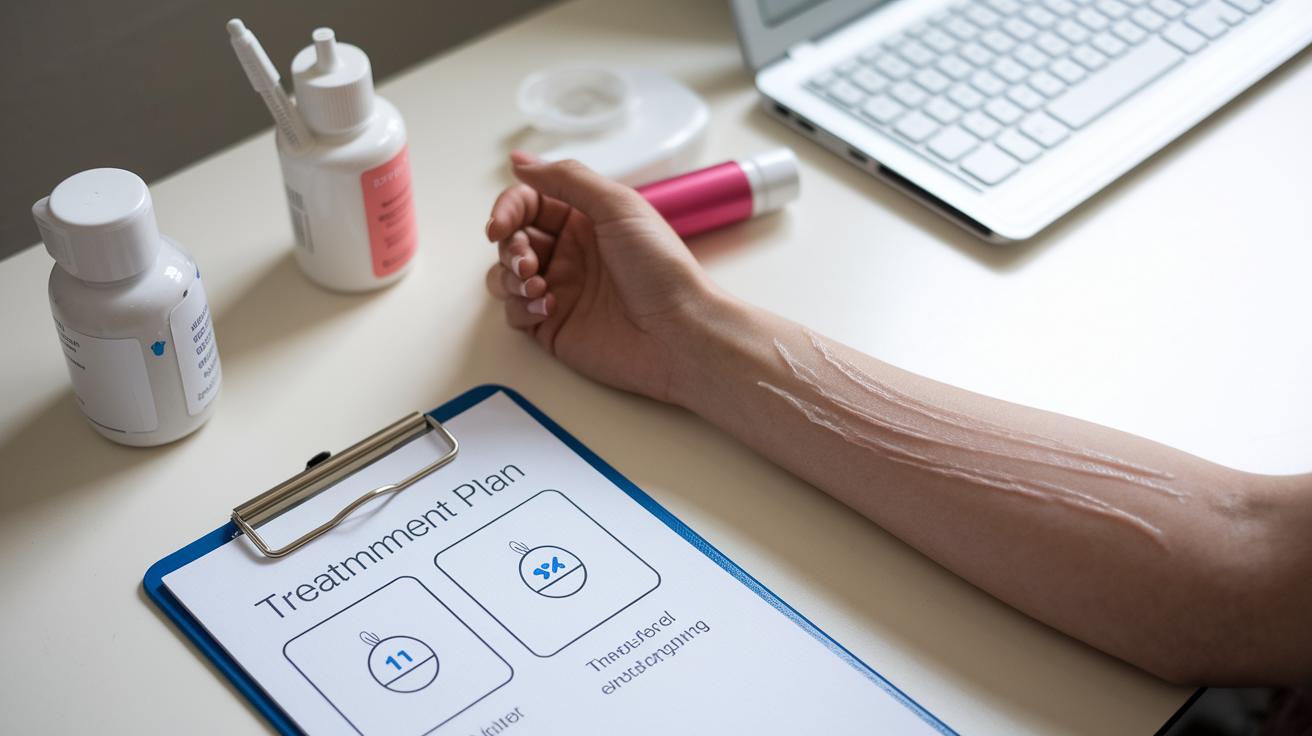
Quick Take: Professional treatments can help even out your arm tone when home care isn’t enough.
Triage Box:
If you notice severe irritation, swelling, or worsening dark patches, call your doctor immediately.
If you feel ongoing pain or discomfort lasting more than a few days, seek medical advice.
Monitor your skin changes and follow your dermatologist’s instructions.
When home remedies don’t improve uneven arm tone, your dermatologist may suggest prescription creams or gels such as hydroquinone (lightening cream), azelaic acid, or retinoids (medicines that speed up skin cell turnover). These treatments work by lowering melanin (skin pigment) production and gradually balancing your skin tone.
For more stubborn discoloration, in-office procedures might be the answer. Chemical peels with glycolic or salicylic acid remove the top layers of discolored skin to reveal a fresher look. Microdermabrasion and dermabrasion gently exfoliate, helping to fade dark areas over time. Laser and light treatments, including Q-switched lasers and intense pulsed light, target pigment clusters to smooth out your complexion.
These treatments can bring noticeable improvements, but they may cause temporary redness or irritation. Mild discomfort and sensitivity for a few days are common. Costs vary by procedure, and results depend on your skin type and the cause of the discoloration. Follow your dermatologist’s personalized plan to safely reach a brighter, more even tone.
Final Words
In the action, this article explained common causes of skin discoloration on arms and helped you recognize both darker patches and light spots. It covered red flags that warrant urgent evaluation and gave easy home remedies to try. It also touched on professional treatments for stubborn cases. Each part provided clear steps to help you decide if you need emergency care, same-day evaluation, or just some home care. Stay proactive and keep an eye on any changes. A clear plan puts you in control and helps foster healthy, confident skin.
FAQ
Brown patches on skin
The phrase “brown patches on skin” refers to common discoloration due to sun exposure, post-inflammatory changes, or aging. Keep an eye on any new or spreading patches and consult a clinician if concerned.
Skin discoloration on body
The mention of “skin discoloration on body” covers uneven pigmentation changes that result from sun damage, hormonal shifts, or medical conditions. Persistent changes should be checked by a provider.
Types of skin discoloration
The query “types of skin discoloration” includes both hyperpigmentation (darker areas) and hypopigmentation (lighter spots) arising from factors like sun exposure, inflammation, or autoimmune issues.
Skin discoloration on face
The inquiry “skin discoloration on face” is often linked to melasma, sun damage, or post-inflammatory changes. Seeing a clinician can help you determine the right treatment and care.
My skin is getting darker for no reason
The statement “my skin is getting darker for no reason” suggests changes from hormonal shifts, sun exposure, or post-inflammation. Monitor the progression and consult a health provider if you notice significant changes.
White discoloration on skin
The term “white discoloration on skin” generally indicates hypopigmentation conditions like vitiligo or tinea versicolor. These conditions cause lighter patches, and a clinician should evaluate ongoing changes.
Brown spots suddenly appearing on skin
The observation “brown spots suddenly appearing on skin” could point to an increase in hyperpigmentation from sun exposure, inflammation, or hormonal factors. It’s wise to have them checked if they change quickly.
Skin discoloration on hands
The mention “skin discoloration on hands” often arises from similar causes seen elsewhere on the body such as sun exposure or inflammation. Persistent or worsening spots should be evaluated by a healthcare provider.
Why am I getting discoloration on my arms?
The question “why am I getting discoloration on my arms?” brings up triggers like sun damage, post-inflammatory changes, melasma, or medication effects. Tracking these changes and consulting a clinician helps tailor care.
When to worry about skin discoloration?
The inquiry “when to worry about skin discoloration” means you should seek medical advice if spots change size, shape, color, or come with symptoms like itching or bleeding, which could indicate a serious condition.
What autoimmune disease causes skin discoloration?
The question “what autoimmune disease causes skin discoloration” commonly refers to vitiligo, where the immune system attacks pigment cells, causing white patches. A proper diagnosis from a healthcare provider is crucial.
What does melasma look like on your arms?
The question “what does melasma look like on your arms” describes melasma as irregular brown patches often triggered by hormone shifts. A clinician can help confirm if your skin changes match this condition.