
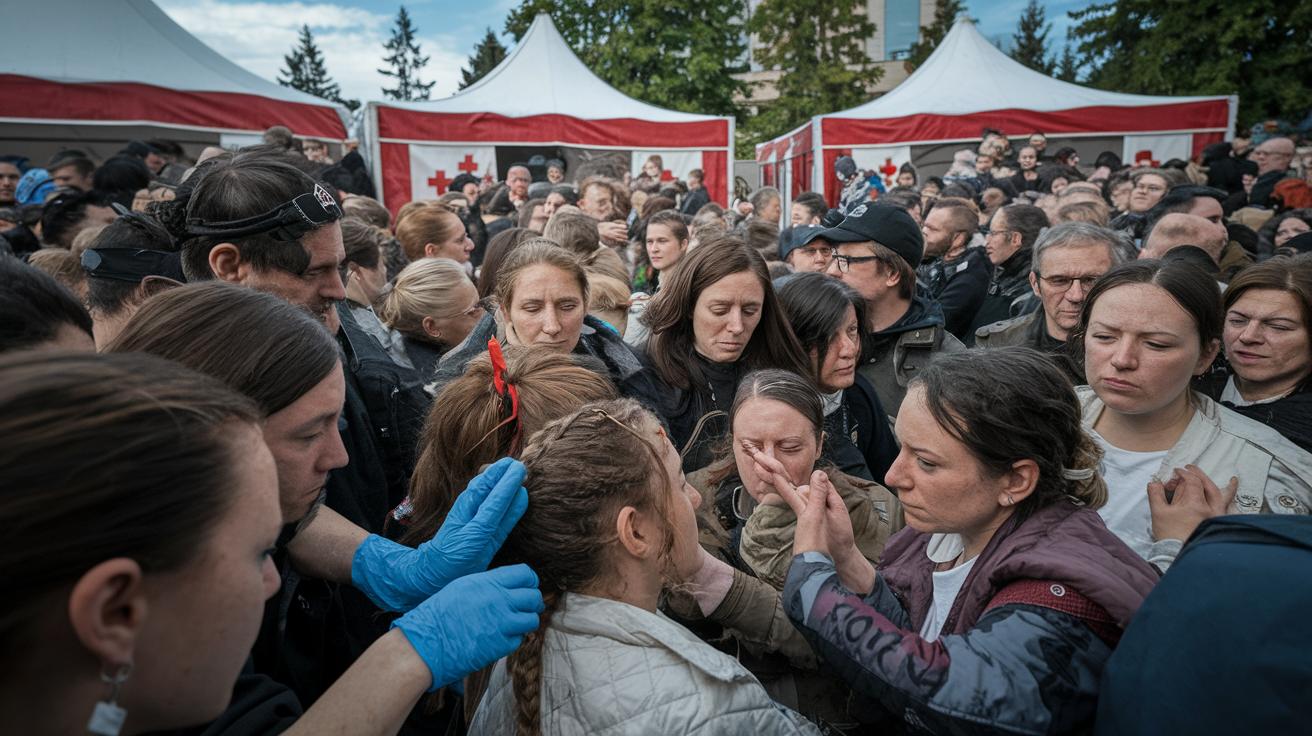

Quick take: Fast triage can turn crisis into life-saving action.
Triage box:
• Red flags: Uncontrolled bleeding, trouble breathing, unresponsiveness.
• Urgent: Call emergency services if you see these signs.
• Monitor: Follow emergency responders’ directions closely.
In major emergencies, every second counts. Emergency teams use a simple color tag system to decide who needs help right away and who can wait. This clear method saves time and vital resources. In this post, we break down the basics of mass casualty triage and show you how swift, clear action can save lives when it matters most.
Critical Principles of Triage in Mass Casualty Incidents
Quick take: In a mass casualty event, you must quickly sort patients to use limited resources for the best overall survival.
When many people are hurt at once, normal emergency care becomes overwhelmed. Instead of treating every individual as usual, responders work to save as many lives as possible by sorting patients based on injury severity, chance of recovery, and available care.
For example, a patient with a serious but treatable injury gets marked for immediate help. Someone with minor wounds may wait for treatment. Fast and flexible decisions are essential in these situations.
Teams often use a color system for clarity:
- Red: Needs urgent care.
- Yellow: Serious injury that can wait a short time.
- Green: Minor injuries.
Every tag should be visible and standard. Quick recognition helps save time and lives.
Hospital resources, such as operating rooms, radiology suites, ventilators, blood supplies, emergency space, and imaging machines, are precious in these moments. Smart allocation of these assets means treating the most critical injuries first, which helps improve survival outcomes for everyone.
Triage in these incidents is not just quick sorting. It is smart resource management that boosts the chances for the most people to survive.
Color-Coding and Category Strategies for Triage in Mass Casualty Management
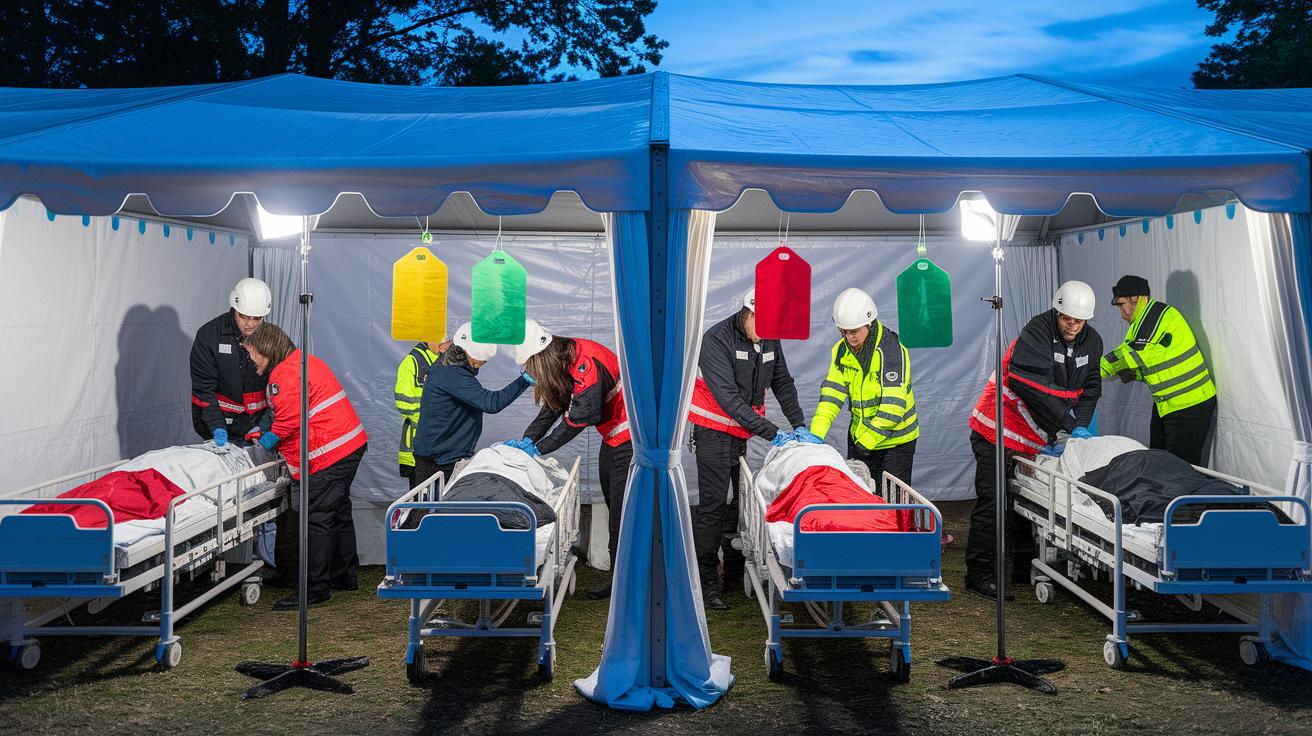
When lots of people are hurt, sorting care quickly can mean the difference between life and death. A simple color tag system helps responders decide who needs help first.
• Red means life-threatening injuries that require immediate treatment.
• Yellow covers serious injuries where care can wait a short time.
• Green is for minor injuries; those patients are stable and can move on their own.
• Black labels patients who are either expected to pass away or are already deceased.
Each tag is clear and must be easy to see. As a patient’s condition changes or care resources shift, responders update the tags so that the most urgent issues get handled first. This fast, flexible approach helps save lives even in the midst of chaos.
triage in mass casualty: Swift priorities save lives
Quick take: In mass casualty events, using the SALT method helps first responders quickly find patients who need immediate, lifesaving care.
If you notice these emergency signs, call emergency services now:
- Severe trouble breathing
- Unresponsiveness or major blood loss
- Any sign of life-threatening injury
Urgent steps:
- Sort all patients quickly.
- Assess each one’s condition.
- Perform lifesaving actions right on the scene.
- Plan fast for treatment and transport.
What is SALT?
SALT stands for Sort, Assess, Lifesaving Interventions, and Treatment/Transport. It works best when five or more patients are injured. Unlike the older START system, which checked only if a person was awake, breathing, and had a pulse, SALT adds a step for lifesaving treatments. This extra work helps responders decide who needs help immediately and who can wait.
For example, a paramedic might see a patient who is struggling to breathe. Instead of just tagging the patient, the responder would first help them breathe. After the 2017 Las Vegas shooting, some victims even went to the hospital on their own. Using SALT, responders could tag these patients at the hospital entrance so they got urgent care while others were still in the field.
Key benefits:
| What It Does | Why It Helps |
|---|---|
| Integrates lifesaving actions during field triage | Ensures the most critical patients get help first |
| Uses broad criteria to judge injury severity | Leads to better, more accurate sorting |
| Sends early alerts to hospitals | Helps hospitals prepare for incoming patients |
In short, SALT’s expanded approach gives first responders a clear, practical way to save lives in chaotic situations. It not only speeds up care in the field but also helps hospitals get ready to treat a surge of patients quickly.
Reviewed by: Clinical Triage Team | Last reviewed: May 08, 2021
Primary On-Scene Triage Processes for Mass Casualty Incidents
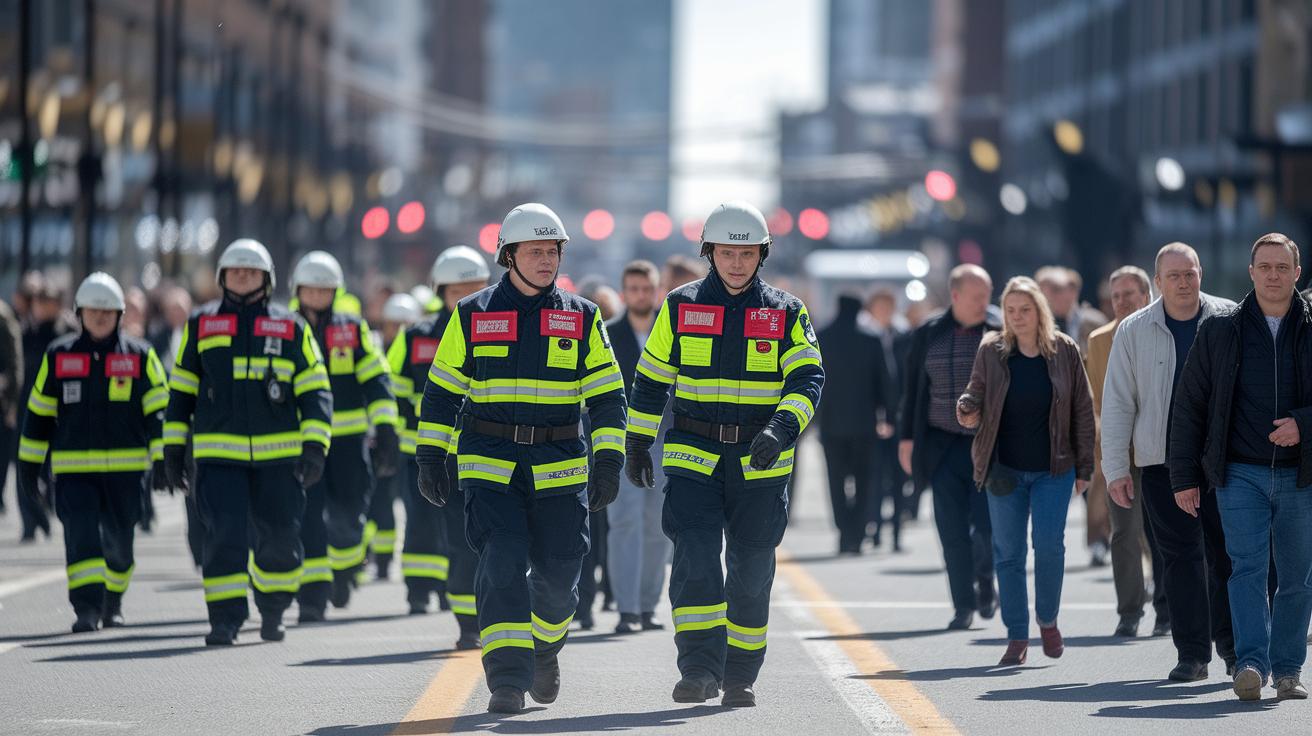
Quick take: Responders sort patients fast so they can focus on those in greatest danger.
When a major incident happens, first responders work quickly. They check each patient in about 30 seconds to see if they can walk on their own (the walking wounded). This simple step helps them keep the flow steady.
Rapid Initial Sorting:
- Look to see if the patient can walk.
- Quickly check breathing, pulse, and if they are awake.
- Mark anyone with life-threatening signs (using red tags) to get immediate care.
Once this fast sort is done, responders come back for a more detailed check. Later, tests like CT scans or portable x-rays are used so that the quick initial process still runs smoothly.
For example, in less than 30 seconds per person, responders move past those who can walk to focus on patients showing severe signs, like very low blood pressure. This saves precious time and gets critical patients help fast.
Integrating Mass Casualty Triage into Hospital Emergency Response Plans
Quick take: Hospitals need to connect field triage alerts quickly to key hospital units so patients get life-saving care fast.
If you see these emergency red flags, call emergency services now:
- When a patient shows signs of severe injury (for example, uncontrolled bleeding)
- When a patient is unresponsive or has trouble breathing
- When critical care resources are low
Here’s what hospitals do:
- They share field tag details immediately with the emergency and critical care teams. These tags (labels from first responders) tell staff what care each patient needs.
- They set aside operating rooms and prepare radiology. Radiology scans are kept to those that show life-threatening issues only.
- They make a quick triage station at the hospital entrance for patients arriving on their own. This station helps check each person fast before moving them into treatment areas.
- They limit detailed imaging to cases that clearly need life-saving decisions. This speeds up care and keeps resources ready for the most urgent patients.
Clear and fast communication between first responders and hospital teams means resources are ready before patients arrive. With these steps, hospitals can quickly focus on those who need help the most, which improves care and saves lives during mass casualty events.
Training and Technological Tools for Effective Mass Casualty Triage
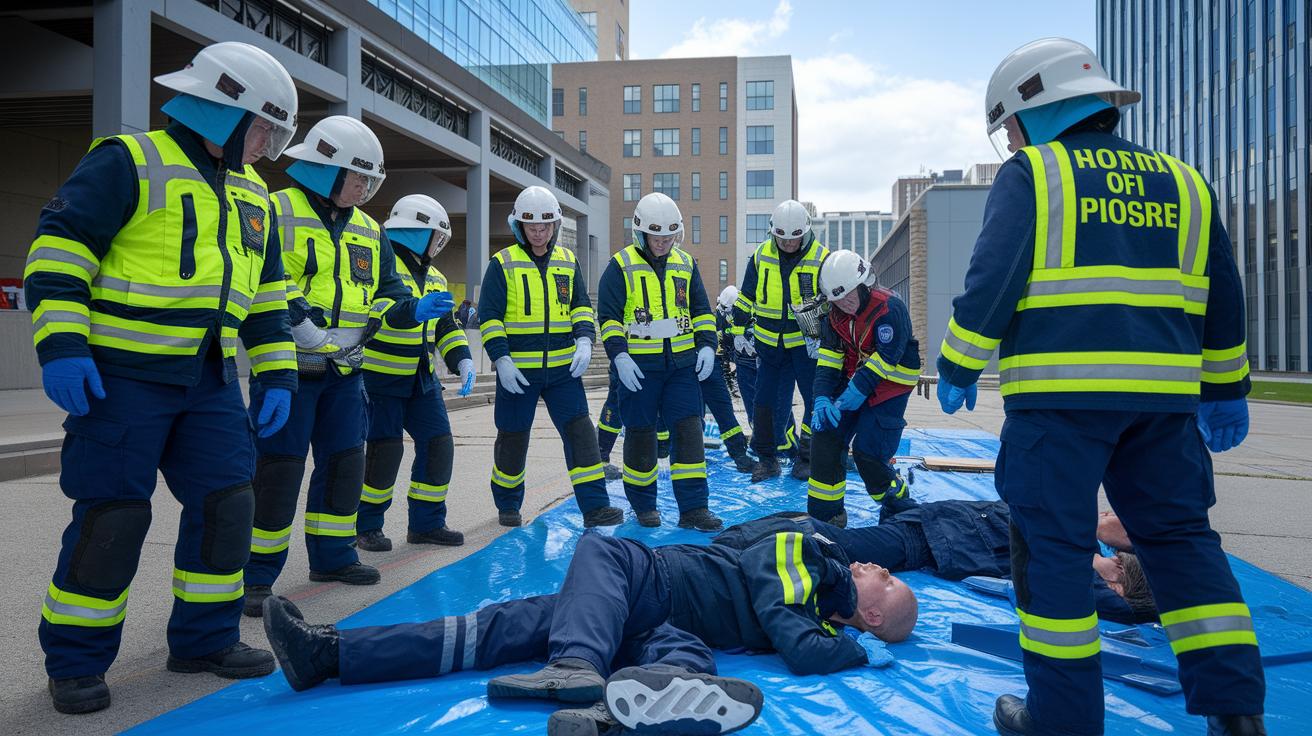
Quick take: These training sessions prepare you to act fast and safely when every second counts.
Regular training drills help build life-saving skills for mass casualty events. You learn through scenario-based exercises with multiple agencies. These drills let you practice sorting patients quickly and safely when stress is high.
Tabletop exercises offer a calm setting for practice, while full-scale simulation drills mimic real emergencies so every responder knows their role. This practice builds confidence and clear decision-making.
Digital tools also support these efforts. Smart triage apps use clear algorithms and digital flowcharts to update patient tags in real time. This ensures that key information moves smoothly from the field to nearby hospitals.
Hospital protocols are a major part of training too. You learn how to pass on important data so that emergency departments can set up operating rooms, radiology suites, and critical care beds well before patients arrive.
Key training components include:
• Scenario-based triage drills
• Full-scale simulation exercises
• Use of digital flowcharts and triage apps
• Strong hospital triage protocols
These focused efforts ensure that every team member is ready to make quick, precise decisions during an emergency.
Case Studies and Challenges in Triage Accuracy for Mass Casualty Events
Quick take: Mass casualty events show how stress and high patient volume can lead to triage errors.
If any of these emergency signs are present, act now. Red flags include severe delays in imaging, dangerous mis-prioritizations due to stress, and confusion from self-presenting victims.
Real events like Columbine (1999), the 9/11 attacks (2001), anthrax mailings, and the 2017 Las Vegas shooting reveal real gaps in how patients are quickly sorted for care. At Columbine, responders found that mental readiness and flexible plans were crucial when many victims need help at once.
During 9/11, hospitals faced a surge of patients. Steps such as CT scans (advanced imaging that creates detailed pictures) slowed decisions when every second mattered. The anthrax mailings show that the situation can keep changing after the first event, so accurate checks are needed even later.
In the 2017 Las Vegas shooting, patients arriving on their own led to a mix-up at hospital entrances. This meant that some of those who needed urgent care did not get it fast enough.
Common issues from these events include:
- Imaging delays that slow down life-saving choices.
- Stress causing mistakes in how patients are tagged.
- Trouble handling patients who come in without proper field triage data.
Post-event reviews urge us to update triage plans, run regular training drills, and ensure clear communication between agencies. These improvements can help make sure that each patient gets the right care as quickly as possible.
Final Words
In the action, we covered how rapid, color-coded workflows sort patients in mass casualty situations. We broke down how the SALT and START methods guide responders and how field data integrates with hospital resources. You learned about the importance of dynamic training and real-world challenges that inform current practices.
Our insights help you understand the critical role of triage in mass casualty to keep people safe. Stay informed and ready, you’re making a difference every step of the way.
FAQ
How is triage done in a mass casualty incident?
Mass casualty triage is done by quickly assessing patients’ injury severity—using methods that check mental status, breathing, and circulation—and then grouping them based on who needs immediate care versus delayed treatment.
What are the 5 levels of triage?
The 5 levels of triage classify patients from immediate to non-urgent cases based on injury severity, though in mass casualty events, many systems use simplified schemes like color codes for rapid decision-making.
What are the 5 S’s of triage?
The 5 S’s of triage refer to key steps such as Sort, Scene, Safety, Speed, and Support, which are used in some models to quickly manage and prioritize patients during emergencies.
What are the four categories of triage in a mass casualty situation?
The four categories include red for patients with life-threatening injuries, yellow for those requiring delayed treatment, green for minor injuries (walking wounded), and black for expectant or deceased patients.
What are some mass casualty triage examples?
Mass casualty triage examples include using color-coded tag systems at events like major accidents or shootings, where responders quickly assign tags based on patients’ conditions to optimize care.
What do mass casualty triage colors mean?
Mass casualty triage colors represent patient priority: red signals immediate, life-threatening injuries; yellow means delayed treatment is acceptable; green covers minor injuries; black indicates non-survivable or deceased status.
What is a mass casualty triage PPT?
A mass casualty triage PPT refers to a PowerPoint presentation that outlines triage protocols, color-coded systems, and best practices used by emergency teams in mass casualty scenarios.
What do emergency triage journals in mass casualty incidents cover?
Emergency triage journals in mass casualty incidents cover research, case studies, and reviews of triage methods to help improve response strategies and patient outcomes during disasters.
What is the difference between SALT and START triage methods in mass casualty response?
SALT triage uses a broader approach—Sort, Assess, Lifesaving Interventions, and Treatment/Transport—while START triage focuses quickly on breathing, circulation, and mental status to sort patients rapidly.
What do triage in disaster management PDFs provide?
Triage in disaster management PDFs provide detailed protocols and guidelines for emergency responders, outlining how to sort and treat patients efficiently during large-scale incidents.