


Quick take: Chest discomfort can come from your heart, acid reflux, or anxiety.
If you have severe chest pain, trouble breathing, or pain that spreads to your arm or jaw, call emergency services immediately.
Have you ever felt a tight or burning pain in your chest and wondered what it means? It can be hard to tell if the pain is coming from your heart or from something like acid reflux (a burning feeling from stomach acid) or anxiety (feeling nervous or on edge). In this guide, we explain the differences so you can check your symptoms and decide what to do next. Knowing what your body is telling you can help you act quickly and safely.
Chest Discomfort Causes: Cardiac Versus Non-Cardiac
Quick take: Chest discomfort can come from your heart or other body parts. Check your symptoms and act fast if red flags are present.
Triage Box:
• If you feel squeezing chest pain that spreads to your left arm or jaw, call emergency services now.
• If you experience nausea, unusual fatigue, or back pain along with chest pressure, especially in women, seek immediate help.
• If your pain is burning behind the breastbone or sharp and worsens with movement, consider getting same-day medical attention.
• If anxiety brings on tightness in your chest and rapid breathing, monitor your symptoms and follow up with your clinician.
Heart-related chest issues, such as a heart attack, usually feel like heavy pressure or squeezing in the chest. This pain may move to your left arm or jaw. Women may also notice symptoms like nausea, tiredness, or back pain. These signs need urgent evaluation because early care can be lifesaving.
Chest discomfort not linked to your heart can stem from other areas. For example, acid reflux (when stomach acid flows back into your esophagus) can give you a burning pain behind the breastbone. Pain from musculoskeletal causes, like costochondritis (inflammation around the ribs), is sharp and tends to get worse with movement. Anxiety can also create feelings of chest tightness and quick breathing. Studies show that nearly one-third of people with chest pain do not have a heart problem.
Quick risk evaluation is key. Knowing the differences between heart-related and non-heart-related pain helps decide if you need tests like an ECG (a test that records heart rhythm) or a chest x-ray. Acting fast helps avoid misdiagnosis and ensures that serious issues get the prompt care they need.
Cardiac Causes of Chest Discomfort
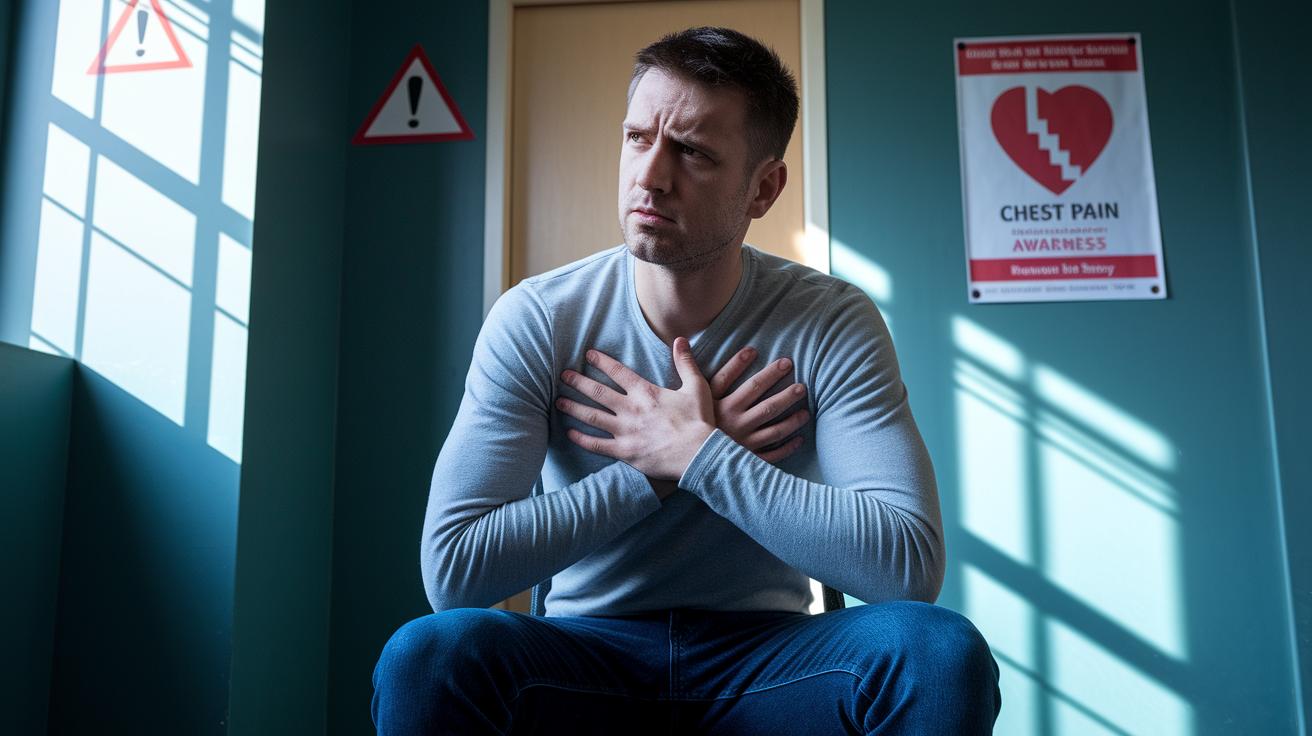
Quick take: Severe chest pain may signal a heart problem. If you feel crushing pain, pain that spreads to your left arm or jaw, or experience nausea or fainting, act now.
Triage Box:
• Red flags: Call emergency services now if you experience crushing chest pain, pain spreading to the left arm or jaw, or sudden fainting.
• Urgent concerns: Seek same-day medical care if even small changes in activity bring on chest pain while at rest.
• Monitor: If your symptoms are milder, record their details and follow up with your clinician if they worsen.
Chest pain from your heart needs fast attention. You might feel a heavy, squeezing pain that lasts a long time and may travel to your left arm or jaw. Women sometimes feel nausea, back pain, or fatigue instead of the classic pressure.
A full-blown heart attack (acute myocardial infarction), where blood flow to part of your heart stops, is a serious risk. Unstable angina is another condition, causing pain at rest even with small activity changes, which shows your heart is not getting enough oxygen. Both conditions need urgent care.
Other heart problems can cause chest discomfort too. A tear in your main artery (aortic dissection) leads to sudden and very intense pain. A thickened heart muscle (hypertrophic cardiomyopathy) forces your heart to work harder, which may cause discomfort. Irregular heartbeats (arrhythmias) can also make you feel lightheaded or even faint.
Doctors use quick tests to check these issues. An ECG (a test that records your heart's rhythm) can show blockages or irregular heartbeats. Blood tests for proteins released by damaged heart cells and nuclear stress tests (which check blood flow during mild exertion) help guide treatment and can be lifesaving.
Non-Cardiac Triggers of Chest Discomfort
Chest discomfort can come from many causes that are not related to the heart. Often, stomach issues are to blame. For example, acid reflux (GERD) makes your chest burn behind the breastbone. An esophageal spasm (a sudden tightening in the tube that moves food to your stomach) can give you a sharp pain that feels like heart pain. You might notice a burning feeling after a heavy meal or a sudden sharp pain from an esophageal spasm.
Muscle and bone problems can also cause chest pain. Costochondritis, which is inflammation of the rib cartilage, makes one spot very tender. This pain gets worse when you move, cough, or lift heavy items.
Lung issues should not be ignored. A pulmonary embolism (a blood clot blocking a lung artery) often causes sudden pain that worsens with deep breaths and makes you short of breath. Many people describe this pain as feeling like pressure on the chest when breathing. More details can be found at this link.
Anxiety can cause chest discomfort too. When you feel anxious, you may experience chest tightness, a fast heartbeat (palpitations), and quicker or deeper breaths. Although these symptoms can be unsettling, they usually point to a non-heart issue.
A focused history and physical exam are essential to tell these non-cardiac causes apart from heart-related problems.
Symptom Comparison of Cardiac and Non-Cardiac Chest Discomfort

Chest discomfort can be hard to understand. It may be confusing to know if it is from your heart or another cause. Here, we compare key traits of heart-related pain and non-heart pain. Heart pain usually builds slowly, lasts 20 minutes or more, and feels like pressure or squeezing. Non-heart pain is more often sharp or burning and usually comes and goes in seconds or minutes. It can change with your breathing, how you sit, or when you eat.
| Feature | Cardiac Chest Pain | Non-Cardiac Chest Pain |
|---|---|---|
| Onset | Builds slowly with activity | Starts suddenly and ends quickly |
| Quality | Feels like pressure or squeezing | Feels sharp or burning |
| Location | Center of the chest, can spread to the arm or jaw | Usually in one spot |
| Duration | Lasts 20 minutes or more | Lasts seconds to minutes |
| Triggers | Worsens with stress or exertion | Changes with breathing, posture, or meals |
Diagnostic Evaluation for Chest Discomfort
An ECG is done first. It records your heart's electrical signals to check if any areas are not getting enough blood. If the ECG shows odd patterns, your doctor may suspect low blood flow (ischemia).
Echocardiography uses sound waves to make pictures of your heart. This test looks for problems such as thick heart walls or valves that do not work correctly. Many patients are surprised by how much detail an ultrasound of their heart can show.
Nuclear stress tests and PET/CT scans check how well your heart pumps blood when you exercise or your heart is under stress. These tests help find areas that are not working well during physical activity, which is important in deciding your treatment.
Blood tests play a key role too. They measure markers like troponin and CK-MB to check for damage to the heart muscle. High troponin levels can indicate a heart attack, meaning that urgent care is needed.
Chest x-rays are used to rule out lung causes such as pneumonia or a collapsed lung. Other tests, like upper endoscopy and pH monitoring, are used to detect esophageal problems such as acid reflux. These tests can help show that chest pain might be caused by something other than a heart problem.
Together, these tests help your doctor decide if your chest discomfort is due to a heart condition or another issue. The results guide the next steps, whether that means emergency treatment or careful follow-up.
When to Seek Immediate Medical Care for Chest Discomfort

If you feel a crushing chest pain that also spreads to your left arm or jaw, call 911 right away. Watch for heavy pressure, sudden trouble breathing, cold sweat (extra wetness from your skin), or fainting (passing out). These could be signs of a heart attack and every minute is important.
While help is on the way, sit or lie down. Write down the time your pain started and notice if the pain gets stronger or changes. Ask someone nearby to stay with you and be ready to share details like when the pain began, how bad it is, and if new symptoms appear.
Remember, in a heart attack the goal is to start treatment (restoring blood flow in a blocked artery) within 90 minutes of arriving at the hospital. If you are not sure about your symptoms, you can use guides like our emergency triage flowchart for chest pain for advice.
- Call emergency services now if you notice any of these high-risk signs.
- Stay calm and keep track of your symptoms.
- Tell the doctor when the pain started, how long it lasts, and if it gets worse with movement or stress.
Managing and Preventing Chest Discomfort
Quick take: Chest discomfort can have various causes. If you experience severe pain or trouble breathing, call emergency services immediately.
If you have chest pain that may be heart-related, your doctor might prescribe medications such as nitroglycerin, beta blockers, or calcium channel blockers. These medicines help open your blood vessels fast to ease the pain and lower your risk of complications.
If your chest discomfort is not from your heart, treatment usually targets the source. For example, a proton pump inhibitor can reduce acid reflux (acid coming up from the stomach), while NSAIDs can ease pain from costochondritis (inflammation of the chest wall) by reducing swelling.
Lifestyle choices matter too. Eating a low-sodium diet and choosing foods that help control cholesterol can ease stress on your heart. Regular aerobic exercise can strengthen your heart and boost your overall health. Quitting smoking is key to reducing risks of both heart-related and other types of chest pain. Reducing stress with guided breathing exercises or mindfulness can also help when anxiety makes your chest feel tight. Some people also get relief from alternative treatments like acupuncture.
Preventive care is important. Keep a diary of your symptoms and share it with your clinician. Making small changes each day can help prevent chest pain and support long-term heart health.
By doing these self-care steps and seeing your doctor regularly, you can manage your symptoms better and lower the risk of future discomfort. Write down your activities and any changes in your symptoms so you have clear information to discuss during your appointments.
Final Words
In the action, we compared possible reasons behind chest discomfort. We explained both heart-related and non-heart origins, pointed out red flags, and offered clear next steps for your care. This guide gave practical tips on managing symptoms and planning your doctor visit. By understanding what causes chest discomfort (cardiac vs non-cardiac), you can make quick, safe decisions when symptoms arise. Keep tracking your signs and seek help when needed. Stay positive and be proactive about your health.