
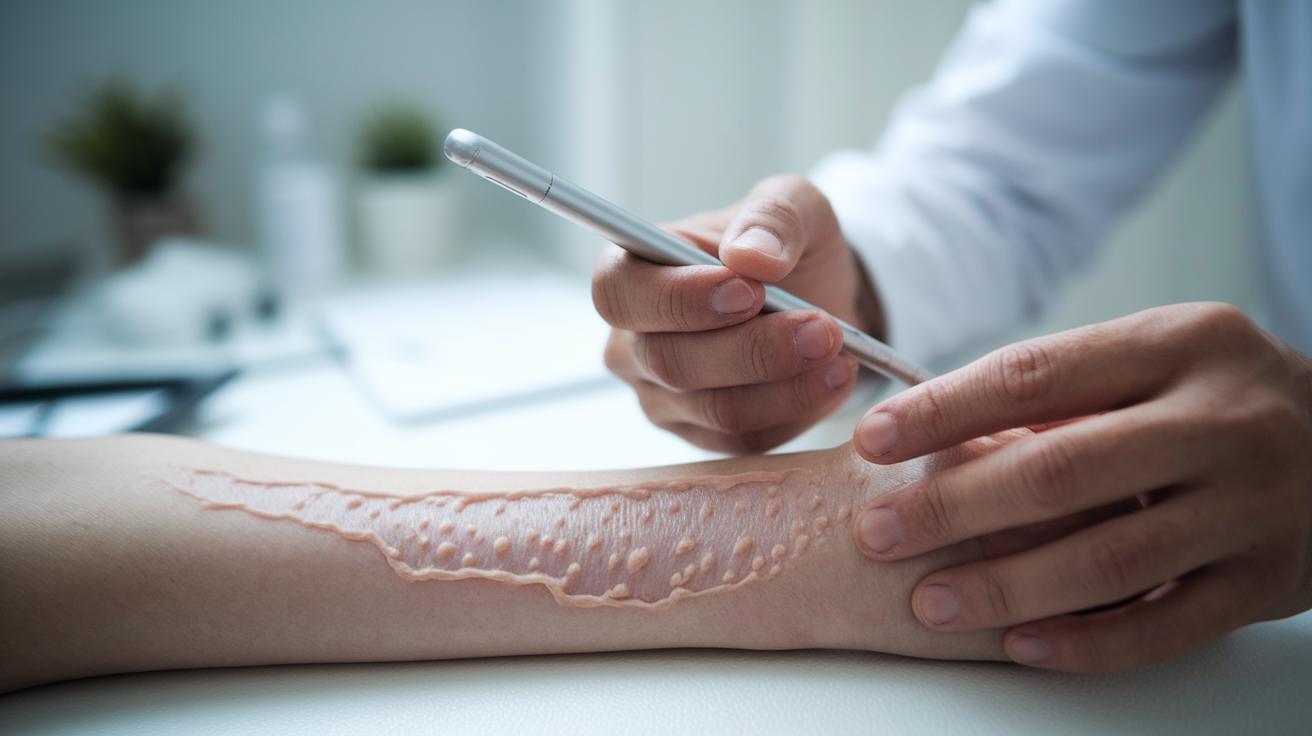

Quick take: Changes in your skin may signal a need to see your healthcare provider.
If you notice a spot that looks unusual, it might be an early sign of a problem. Learn the ABCDEs of skin checks (Asymmetry, Border, Color, Diameter, Evolving) to know what to watch for. Look for spots with uneven shape, jagged edges, multiple colors, or a diameter over 6 mm. Also, take note if the spot changes over time. If you see any of these signs, call your healthcare provider. Recognizing these changes helps you stay in charge of your skin health.
how to identify abnormal skin lesions: feel confident
Quick take: If a skin spot looks off, check it carefully using the ABCDEs and act if any warning signs appear.
If you notice any of these red flags, call your healthcare provider:
- One half does not match the other (asymmetry).
- Edges that are jagged or uneven.
- Different shades like tan, brown, or red mixed together.
- A spot larger than 6 mm (about the size of a pencil eraser).
- Changes in size, shape, or texture over time.
Most skin cancers fall into two groups. Basal cell carcinoma (about 70% of cases) grows slowly over months or years. Squamous cell carcinoma (around 30%) may develop in weeks or months and spread faster, especially on the face in older people. Melanoma is less common but very dangerous. Its nodular form may grow quickly and should be taken seriously.
Also, watch common moles, irregular moles (dysplastic naevi), flat scaly patches (solar keratoses) seen in people with heavy sun exposure, and benign spots like seborrhoeic keratoses that often appear by age 60.
Here’s what you can do at home:
- Check for sores that bleed, itch, or don’t heal.
- Compare any new or changing spots to others on your skin.
- Write down any changes in size, shape, or color.
It sounds stressful to check your skin, but staying aware can help you act quickly. If something doesn’t match the ABCDE guidelines, speak with your healthcare provider soon.
Comparing Normal Moles and Atypical Skin Lesion Features
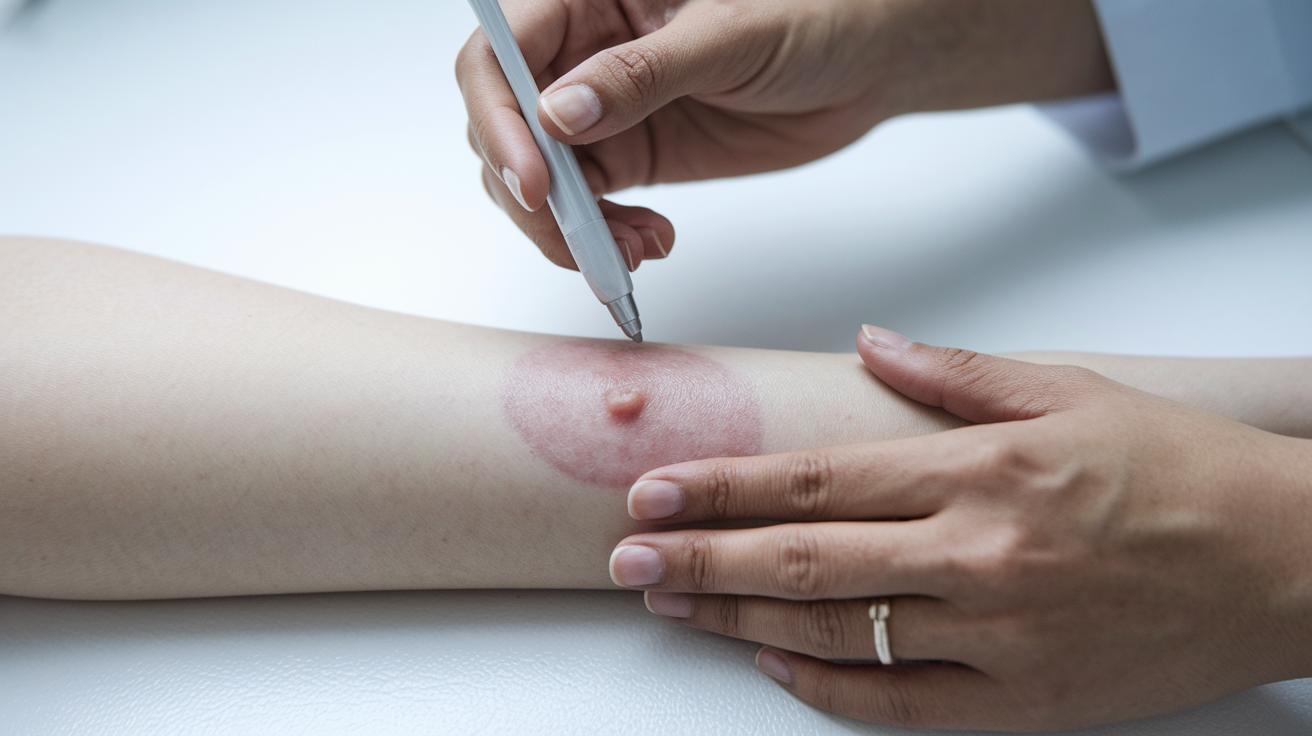
Quick take: Normal moles are usually small, even, and stable, while atypical lesions can change and should be checked by a professional.
If you notice any of these red flags, call your clinician:
• Uneven shape or asymmetry
• Jagged or irregular borders
• Multiple colors or uneven shading
• A diameter larger than 6 mm or growing size
• New symptoms such as itching, bleeding, or changes in texture
Normal moles follow a simple rule: they are symmetric with smooth, even borders, have one uniform color (usually light-to-dark brown), are less than 6 mm in size, and stay the same over time. In contrast, atypical lesions tend to be uneven in shape, have irregular or notched borders, show different shades (tan, brown, black, red), and are often larger than 6 mm or are growing. They may also change in appearance or feel, such as starting to itch or bleed.
Below is an HTML table that summarizes these features and gives a quick tip on what you should do:
| Feature | Normal Mole | Atypical Lesion |
|---|---|---|
| Symmetry | Even and mirrored | Uneven and asymmetrical |
| Border | Smooth and regular | Jagged or notched |
| Color | Uniform shade | Mixed colors |
| Diameter | Under 6 mm | Over 6 mm or growing |
| Evolution | No change over time | Changes in size, shape, or texture |
| Management Tip | Monitor routinely | Get evaluated if changes occur |
Performing Self-Examination Techniques for Skin Lesions
Quick take: Check your skin every month to catch changes early. If you notice any spots that bleed, itch, or change quickly, see your doctor right away.
If you have any of these signs, call emergency services now:
• Bleeding or painful spots
• Rapid changes in size or color
• New spots that look very different from others
Every month, stand in a well-lit room to inspect your entire body. Use both a hand mirror and a full-length mirror to see spots on your scalp, back, and feet. This careful look helps make sure you don’t miss anything.
For each spot you want to watch, take a clear photo every 4 weeks. Put a ruler or coin next to the spot to give a sense of its size. This practice helps you see any changes in the spot’s size or appearance.
Write down what you see in a simple log. Record the date, where the spot is, its size (in millimeters), color, border, and texture. Also note if it starts to itch or bleed. For example, write: "4/10: Spot on left shoulder; 5 mm; uneven edges; mix of light and dark brown; slight itch today." This note can be very useful when talking with your healthcare provider during checkups.
Using these steps makes it easier to track changes. Even small changes can be important warning signs. Keep checking regularly, and if something seems off, it’s best to have a doctor look at it.
Advanced Diagnostic Methods for Abnormal Skin Lesions and Referral Guidelines
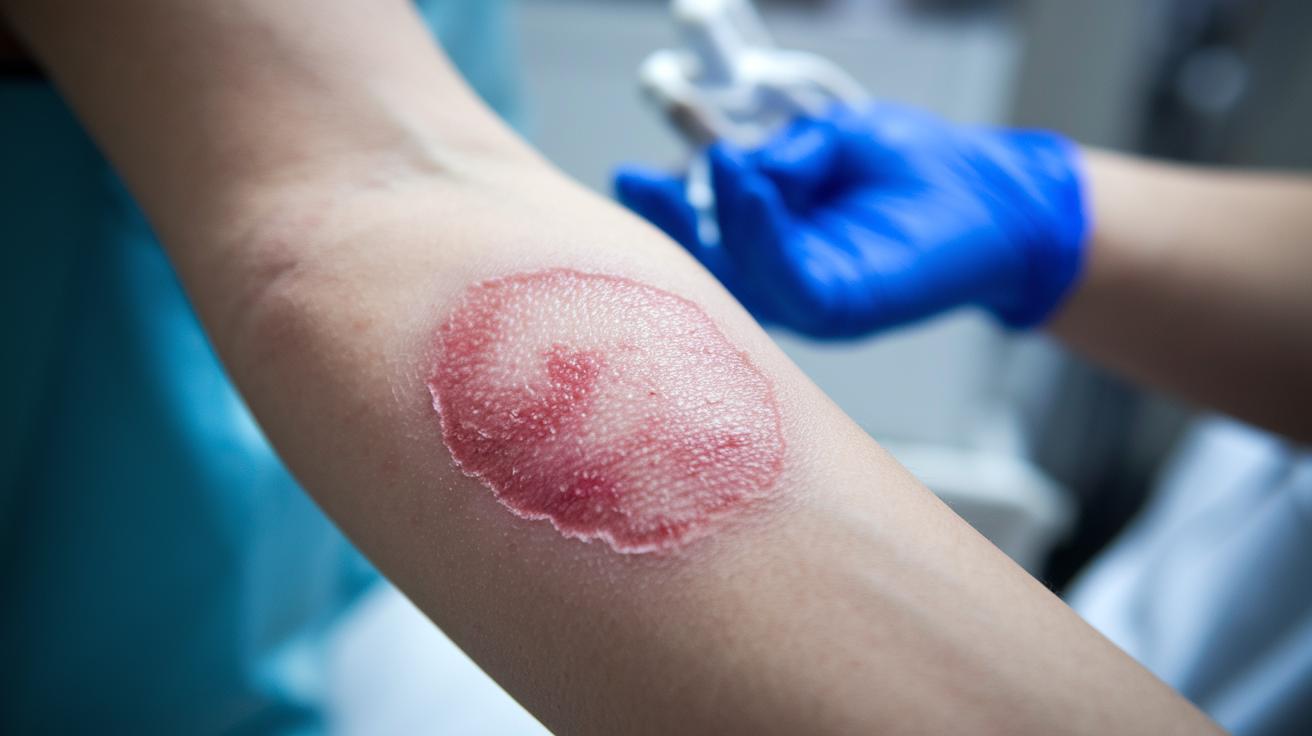
Quick take: If you notice a spot with uneven shape, jagged edges, many colors, a size over 6 mm, or changes over time, or if it starts bleeding, forms a sore, or won’t heal, get checked by a doctor.
If you see any of these red signals, call your healthcare provider right away.
A dermatoscopic exam is a special tool that helps your doctor see patterns and details not visible to the naked eye. This test can boost the accuracy of diagnosis by 10-30%.
If the exam makes the spot look concerning, your doctor might suggest a biopsy. There are a few ways to do this:
- Shave biopsy for lesions near the surface.
- Punch biopsy to remove a small, full-thickness piece.
- Excisional biopsy to take out the entire lesion.
These tests help decide if the spot is harmless or if it might be skin cancer. If it is found to be precancerous, treatments like freezing with liquid nitrogen (cryotherapy) or applying creams (like 5-FU or imiquimod) may be used.
Before your appointment, bring your self-check journal or any photos you’ve taken. Noting details such as size, color, and any changes can help your clinician decide on further tests or treatment.
Risk Factors and Prevention Strategies for Abnormal Skin Lesions
Quick Take: Your skin and sun habits can put you at risk. Protect your skin every day.
If you notice a new spot that changes in size, color, or texture, call your doctor right away.
Your skin type matters. Fair skin has less natural pigment, which means you get less protection from the sun. A family history of melanoma (a type of skin cancer) or past blistering sunburns increases your risk even more. Being over 50 or having lots of sun exposure over the years also makes abnormal lesions more worrisome.
Here’s how you can protect your skin:
• Use a broad-spectrum SPF 30+ sunscreen every day.
• Wear UPF (sun protection factor) clothing and a wide-brim hat when you’re outside.
• Stay in the shade or avoid the sun between 10 AM and 4 PM when its rays are strongest.
• Say no to tanning beds because they expose you to harmful UV light.
• Schedule yearly dermatologist screenings to catch any changes early.
By keeping track of these risk factors and following a smart sun-care routine, you can feel more in control of your skin health and quickly address any unexpected changes.
Monitoring and Follow-Up for Abnormal Skin Lesion Progression

Quick take: Use a dated photo diary and measurements to track skin lesions; call your provider if changes speed up.
Keep a photo diary with a ruler and date on each picture. Check your photos regularly. Look for changes that stick over 2 checks or grow quickly. For example, if a lesion gets noticeably larger in 1 month, it’s a sign to call your provider.
Focus on long-term tracking with these steps:
- Measure the lesion and note changes in size and surface (like bumps, rough spots, or crusts).
- Update your photo diary every 2 months to see trends.
- If a lesion grows more than 20% in 2 to 4 months, set up an appointment with your provider.
| Observed Change | Recommended Action |
|---|---|
| Lesion steadily increasing over 2 checks | Call your provider |
| New rough texture or crust appearing | Seek same-day medical advice |
If you see the edge of a lesion become uneven with month-to-month growth, write down these changes and call your provider right away.
Emerging Technologies in Abnormal Skin Lesion Detection
Quick take: New tech like smartphone apps, advanced imaging, and teledermatology tools offer fast, helpful insights about abnormal skin spots. These tools give you an early alert to see your doctor when something looks off.
Smartphone apps use artificial intelligence (AI, a type of computer program that learns to see patterns) and large image databases to check your skin. You simply snap a photo of a spot and get a risk score in minutes. These apps are about 80 to 90% sensitive, which means they catch most signs that need more attention. Remember, this is only a first look.
New imaging methods also help. Reflectance confocal microscopy (a noninvasive tool that shows deep skin details) and multispectral imaging give doctors clear maps of different skin layers. This helps them spot subtle changes that might be missed by the naked eye.
Another tool is UV photography. It shows pigment under your skin that you cannot see normally. This extra view boosts the accuracy of skin checks and gives you another reason to ask for a follow-up if needed.
Teledermatology has changed how you get skin care too. With secure digital platforms, you can upload photos of your spots and receive expert feedback in 24 to 48 hours. This makes it easier for you to get a quick review even if you live far from a clinic. These services bridge the gap between monitoring your skin at home and seeing a doctor in person.
By combining innovative devices with regular exams, you get more information to share with your healthcare provider. This technology is a valuable part of your skin health toolkit. It helps you notice changes early so you can act quickly when it matters most.
Final Words
In the action, this guide walked you through key warning signs and self-check methods, compared normal moles with atypical lesions, and outlined when to seek professional help. We reviewed home testing steps, smart document tips, and even emerging tech tools to support early detection. Keeping regular records and observing changes can boost your confidence and safety. These clear steps empower you to know how to identify abnormal skin lesions and stay on top of your skin health.
FAQ
What are skin lesions pictures?
Skin lesions pictures show various images of skin marks, offering a visual guide to help you compare normal skin appearance with abnormal changes.
What is a types of skin lesions chart?
A types of skin lesions chart organizes different lesion forms into categories, making it easier for you to quickly recognize and compare various skin abnormalities.
What do benign skin lesions pictures show?
Benign skin lesions pictures display noncancerous skin marks that usually have smooth, uniform features, helping you distinguish them from suspicious lesions.
What is a plaque skin lesion?
A plaque skin lesion is a raised, flat-topped area that often appears red or scaly, and it may be linked to conditions like psoriasis or eczema.
What are secondary skin lesions?
Secondary skin lesions are changes that develop from an original lesion, such as crusting or ulceration, and they can indicate infection or irritation that should be monitored.
What is a crust skin lesion?
A crust skin lesion features a hardened, scab-like surface that forms after an injury or infection, showing how your skin is healing or responding to irritation.
How do primary and secondary skin lesions differ?
Primary and secondary skin lesions differ as primary lesions are the initial marks on the skin, while secondary lesions develop later from changes or complications in the original mark.
What are skin lesions on face images?
Skin lesions on face images provide examples of both normal and abnormal marks on the face, helping you assess unusual features or any changes that might need further attention.
How do you identify suspicious skin lesions?
Suspicious skin lesions are identified by features such as asymmetry, uneven borders, different colors, size larger than 6 mm, or changes over time, which may require a professional check.
How can I identify different skin lesions?
You identify different skin lesions by comparing their shape, color, size, texture, and any changes, using criteria like the ABCDE guidelines to spot warning signs early.
When should I worry about skin lesions?
You should worry if a skin lesion changes in size, shape, color, or texture, or shows signs like bleeding or itching, as these may indicate the need for medical evaluation.
What do cancerous skin lesions look like?
Cancerous skin lesions typically appear irregular, asymmetrical, and multicolored; they may be larger than 6 mm and often show signs such as bleeding or slow healing.