
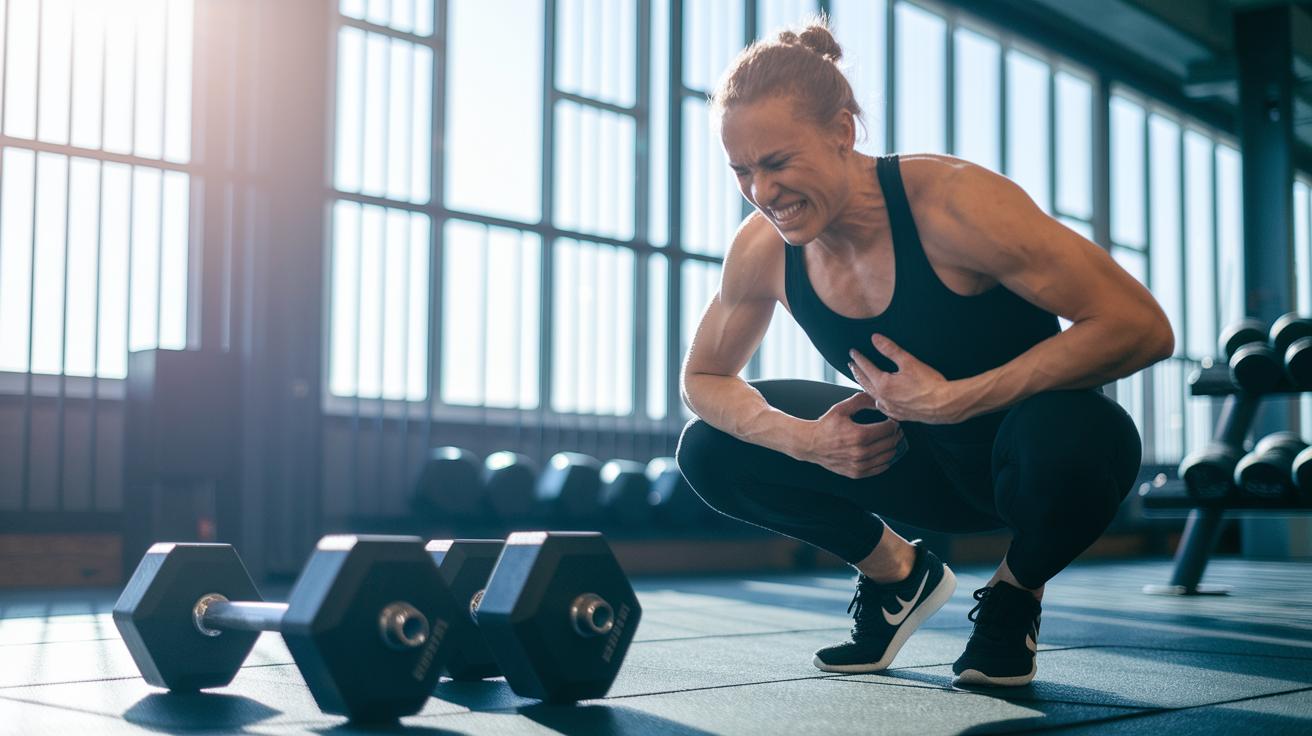

Quick take: Sharp stomach pain after a workout may mean your muscles are overworked or you need more water.
If you have any of these emergency signs, call emergency services now:
• Severe pain that won’t go away
• Dizziness or fainting
• Vomiting blood
If your pain is very bad or lasts more than 3 hours, get urgent care. Otherwise, track your symptoms and follow these home-care steps:
• Rest until the pain improves.
• Drink water slowly to stay hydrated.
• Try gentle stretching when you feel ready.
Stomach cramps during exercise happen when your abs work too hard or you don’t drink enough water. Your body is sending you a clear message to take a break. Keep an eye on your symptoms. If the pain worsens or you have any red flags, seek care immediately.
Understanding your body is key to adjusting your workout and staying pain-free. Stay safe and listen to your body’s signals.
Understanding Stomach Cramps After a Workout
Quick take: Overworking your abs can lead to sudden, painful cramps.
Triage Box:
If you notice any of these signs, seek medical help immediately:
- Severe, unrelenting pain
- Nausea or vomiting
- Fever or chills
- Cramps lasting more than 3 days
Stomach cramps happen when you push your body too hard. Your abdominal muscles (the muscles in your belly) may spasm if they are overworked. This is your body’s way of saying it needs a break. Tight, knotted muscles cause a sharp, uncomfortable pain in your midriff.
Common triggers include:
- Not drinking enough water (dehydration), which reduces blood flow and muscle efficiency.
- Blood moving away from your stomach (blood shift) to fuel working muscles.
- High levels of stress hormones (like cortisol), which can increase muscle tension.
- Muscle fatigue from repetitive or very hard exercise.
- Existing digestive issues that lower muscle endurance.
These causes are signals to slow down. To help prevent cramps, drink plenty of water and eat a good meal or snack before your workout. Adjust your routine, pace yourself, and pay attention to your body. This way, you can avoid painful cramps and bounce back stronger every time you hit the gym.
Key Workout Triggers for Core Strain and Abdominal Discomfort

Quick Take: Certain exercises and habits can quickly upset your stomach, so pay attention to your body.
Triage:
- Emergency: If you experience sudden, severe pain or feel faint, call emergency services now.
- Urgent: If you have cramps accompanied by chest pain or shortness of breath, seek same-day medical care.
- Self-care: For mild discomfort, rest, hydrate, and adjust your workout routine.
High-Impact Movements
High-impact exercises like jumping, running, or doing crunches can jar your digestive tract. These quick, forceful moves may lead to side stitches (sudden side pain) or gas buildup. They put stress on your core muscles and nearby organs, causing your tummy to cramp during or right after your workout.
Stimulant Effects
Caffeine and pre-workout mixes on an empty stomach can upset your gut. These stimulants raise your heart rate and speed up digestion, which may result in cramps or discomfort. Without food in your system, these effects can become more noticeable, turning a boost into abdominal strain.
Underlying Digestive Conditions
If you already deal with digestive issues like IBS (irritable bowel syndrome) or acid reflux (heartburn), exercise can make your stomach even more sensitive. When you work out, your gut may respond to the movement with sharp or persistent cramps. Managing these conditions can help reduce the risk of damaging abdominal pain.
Improper Meal Timing
Eating a big meal too soon before exercising can cause indigestion and cramps. Your body uses blood for both digestion and muscle work, so eating just before your workout may slow digestion and lead to gas and painful cramps. This makes it harder for you to recover and feel strong afterward.
Differentiating Exercise-Induced Stomach Cramps from Other Abdominal Pain
Quick Take: A sharp pain near your ribs during exercise is often a side stitch, but deeper, knotted pain with bloating or nausea after exercise may be a muscle spasm that needs more care.
Triage Box:
• Call emergency services if the pain is very severe or you feel faint.
• Seek same-day care if the pain does not improve or lasts over 24 hours.
• Monitor your symptoms and slow down if you experience minor pain during exercise.
A side stitch happens just below your ribs while you exercise. It feels sharp and quick. This pain happens when the diaphragm (the muscle that helps you breathe) shifts or gets irritated from rapid breathing. Slowing down and taking deep breaths can help ease this pain.
Muscle spasms in the abdominal wall feel different. They are deeper, tighter, and may feel like a knot in your tummy. These cramps often show up after a hard workout. You might also experience bloating or nausea. If the pain sticks around for more than 24 hours, it may be a sign of a more serious issue, and you should seek advice from a clinician.
| Pain Type | Location | Typical Onset | Key Symptoms |
|---|---|---|---|
| Side Stitch | Just below the ribs | During exercise | Sharp, quick pain |
| Muscle Spasm | Abdominal wall | After exercise | Deep, knotted pain with possible bloating and nausea |
| Visceral Cramp | Internal organs | During or after exercise | Bloating, nausea |
| Strain Pain | Localized core area | Post high-intensity movement | Tender, localized discomfort |
Preventing Stomach Cramps During and After Exercise

Quick take: Keeping cramps at bay is all about steady hydration, smart eating, and proper warm-up and cool-down routines.
-
Stay hydrated.
Drink water steadily throughout your day and take small sips during your workout. Steady fluids help maintain blood volume and lower dehydration risk, which often triggers cramps. -
Eat wisely before working out.
Enjoy a light meal or snack about 90–120 minutes before exercising. This balanced food gives you the energy you need without overloading your stomach, which can slow digestion and strain your core. -
Warm up your core.
Spend 5–10 minutes doing gentle exercises that activate your stomach muscles. A good warm-up prepares your muscles for the work ahead and can lessen the chance of cramps. -
Cool down properly.
After your workout, take around 5 minutes to stretch. These gentle stretches ease muscle tension and boost circulation, helping your body transition smoothly from exercise to rest. -
Balance your electrolytes.
After exercising, add foods rich in sodium and potassium to your diet. These minerals support proper muscle function and help prevent cramps.
Following these simple steps can make your workouts more comfortable and keep you moving at your best.
Quick At-Home Remedies for Post-Training Belly Ache
After a hard workout, you might feel a belly ache from muscle strain or cramps. Try these simple remedies to help you feel better:
-
Warm compress: Place a warm compress on your belly for 5-10 minutes right after exercising. This helps boost blood flow and soothes tense muscles so you can recover faster.
-
Abdominal massage: Gently massage your stomach in circular motions. This helps relax tight muscles and improves circulation, easing the ache.
-
Peppermint tea or electrolyte drink: Sip a cup of peppermint tea or drink an electrolyte solution. These liquids calm your stomach and replace lost fluids and minerals, which can lessen cramps and speed up recovery.
-
Light walking: Take a slow, short walk after your workout. This simple move encourages circulation and gently stretches your core muscles, reducing stiffness and discomfort.
Targeted Stretches and Exercises to Alleviate Core Muscle Spasms

Cat-Camel Stretch
Begin on all fours with your hands right under your shoulders and your knees below your hips. Slowly arch your back upward like a startled cat. Hold the arch for 20 seconds. Then let your belly drop toward the floor while you gently lift your head and tailbone. This smooth, steady movement helps ease tension in your core and works your deep abdominal muscles.
Kneeling Hip Flexor Stretch
Kneel on one knee with your other foot flat in front so both knees form a 90-degree angle. Lean your upper body forward until you feel a stretch along the front of your hip and lower belly. Keep your back straight throughout. Hold this position for 30 seconds on each side. This stretch not only relieves tightness but also helps balance the muscles in your midsection.
Supine Spinal Twist
Lie on your back with your arms stretched out at your sides. Cross one leg over the other and gently turn your lower body so your knee approaches the opposite side. Press your shoulder into the floor to deepen the twist. Hold for 20 seconds on each side. This twist improves your spine’s mobility and eases tightness in your abdominal area.
Child’s Pose
Kneel on the floor, sit back onto your heels, and slowly let your chest drop toward the mat. Extend your arms in front of you, and allow your knees to spread slightly. Focus on slow, deep breaths while you hold the pose for 30 seconds. This gentle position relaxes your core and can help reduce muscle spasms.
If you experience sharp pain or discomfort while doing any of these stretches, stop and consider getting guidance from a health professional. Enjoy these stretches to help ease tension and boost core comfort.
When to Seek Help for Persistent Stomach Cramps After Workouts
Quick take: If your stomach cramps last over 48 hours or get worse, you need to see a doctor.
If your cramps continue beyond 48 hours or start to hurt more, it might mean your muscles are dealing with more than just a simple workout after-effect. This kind of persistent pain might point to conditions like a hernia or a flare-up of IBS (irritable bowel syndrome).
Pay close attention if these cramps come with other worrying signs. Keep a simple pain log where you note the time the pain started, how strong it is, and any extra symptoms. This record can help your doctor see if the pain is part of a pattern or if it is just a one-time event.
Call emergency services or seek urgent care if you experience any of these red flags:
- Fever with your cramps
- Ongoing vomiting
- Blood in your stool
- Unplanned weight loss
- Trouble passing gas
- Cramps that steadily grow worse
Keep track of your symptoms and check in with a professional if these signs continue.
Final Words
In the action, this guide explained key reasons behind stomach cramps after workout, from muscle spasms to dehydration and stress responses. It broke down common triggers and offered simple home-care remedies and stretches. You got clear instructions on preventing and tracking abdominal discomfort, plus steps to know when to seek help. Keep monitoring your symptoms and taking proactive steps to ease discomfort. Stay active and positive as you work toward better exercise experiences and overall wellness.