


Quick Take: This simple guide helps you choose the right care fast.
If you have any severe symptoms like trouble breathing, chest pain, or sudden weakness, call emergency services now.
When you feel unwell, deciding what to do next can be confusing. This interactive tool asks a few easy questions to point you in the right direction. Nearly 74% of people feel unsure about where to get care. That’s why this guide breaks down symptoms into clear steps. It helps you decide if you should try home care, see your doctor, or seek urgent help. Expert advice backs every step so you can act quickly and safely.
Getting Started with an Interactive Triage Flowchart for Health Symptoms
Quick take: This tool asks you simple questions to help decide if you need home care, a doctor’s visit, or emergency help.
This digital guide walks you through easy steps to check your symptoms. Nearly 74% of people feel unsure about which care setting to choose when they don’t feel well. With this tool, you answer a few focused questions that point you toward the right level of care quickly and clearly.
It changes its questions based on your answers, so you get advice that fits your situation. The flowchart breaks down long lists of symptoms into short, clear steps. This helps ease your worry when you feel unwell and makes it easy to know when to act on red flags like severe pain or sudden changes.
The tool comes in different formats, including online virtual checkers that meet strict safety standards (MDR Class IIb certification ensures its quality). It works with your health plan, telemedicine service, or public health system. Backed by solid evidence and expert input, it gives you quick, easy-to-follow advice when you need it most.
Key Features of a User-Friendly Medical Flowchart

This digital tool helps you quickly check your symptoms and learn what might be causing them. It asks you a few simple questions and then shows a list of possible conditions so you can decide your next step.
- Complete a short symptom interview
- See a list of possible conditions based on your answers
- Read easy-to-understand patient education articles
- Book appointments right from the tool
- Instantly send your information to your doctor’s office
- Use many input methods (text, body diagram selection, multiple-choice, or a voice chatbot)
This flexible platform works in many settings, such as health plans, public health services, and telemedicine. It cuts down on waiting time and gives you clear guidance fast. Built to strict safety standards, the flowchart is user-friendly and secure, making it easy for anyone, from those with minor concerns at home to people needing urgent advice, to get the help they need.
Understanding Conditional Branching in Clinical Care Decision Tools
These interactive tools change what they ask you based on your answers. They don't use a fixed list of questions. Instead, they adjust the flow by checking how strong your symptoms are. For example, if you report sudden chest pain with shortness of breath, the tool directs you to seek emergency care right away. If your issues feel milder, it suggests self-care or a regular doctor visit. This approach helps make each question match your situation, so you get the right care quickly and without confusion.
The system is built on solid research and has been reviewed by clinicians, engineers, and AI experts. It constantly adapts to your answers to pick the best next question or action. Each step is designed to recognize your symptoms and decide whether you need home care, a primary care appointment, or urgent help. Using this method, the tool not only works faster but also builds trust with clear, step-by-step guidance that puts your safety first.
Identifying Medical Urgency with an Emergency Flowchart for Conditions
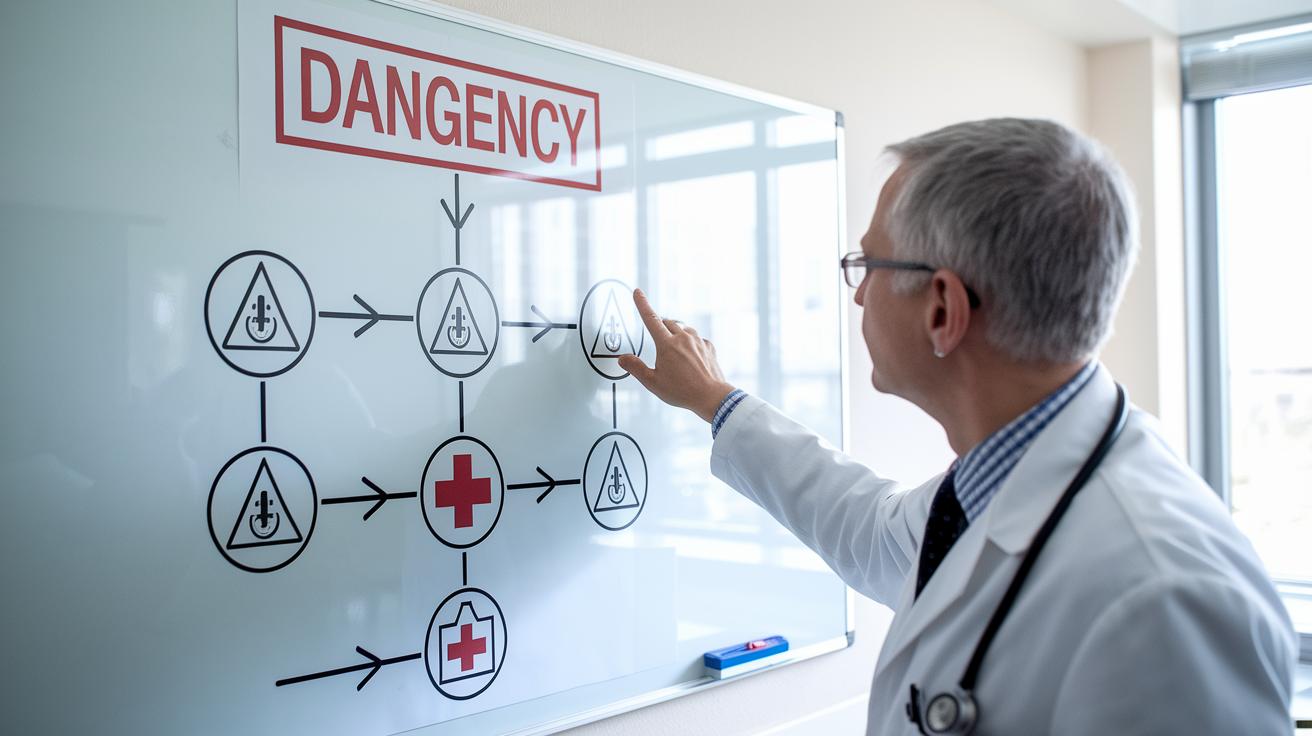
Quick take: This flowchart helps you spot danger signs fast so you can act immediately.
If you have any of these emergency signs, call emergency services now:
- Severe chest pain with difficulty breathing or heavy sweating
- Sudden weakness or numbness on one side of your body
- Injuries from weapons, deep cuts, or heavy bleeding
- Changes in mental state or unresponsiveness
This tool follows strict safety rules. It is reviewed by experts and meets certified standards. So if you experience intense chest pain with sweating, call 911 or go to the nearest emergency room right away.
Next Steps: Integrating the Interactive Evaluation Pathway into Healthcare
This new tool helps health plans, public health systems, providers, and telemedicine services cut down on paperwork and quickly direct patients to care. It lets you book appointments within the system and sends patient data straight to clinics, making care faster and simpler. It also supports remote evaluations with an online guide that points patients to the right level of care. The design is based on a strong team effort between clinicians, software, and AI. It even has an MDR Class IIb safety certification to back its quality. This means care is delivered faster while keeping the system efficient.
Using this pathway does come with challenges. You need to ensure that the tool accurately picks up symptoms, manage legal and ethical duties, and build trust with users. It’s also important to address issues for people with limited digital access. To get started, arrange proper training, run pilot tests, and then keep a close eye on its performance. By making this pathway part of everyday practice, your system can direct patients better and smoothly add remote evaluations to modern healthcare delivery.
Final Words
In the action, this article walked you through a quick, step-by-step guide on how an interactive triage flowchart for health symptoms can help sort out care needs fast. It covered the flowchart's key features, conditional branching for tailored guidance, and how red-flag symptoms are flagged for emergency care.
Breaking down the process in clear, bite-size steps makes it easier to know what to track and when to act. This practical approach helps you take control of your health decisions and confidently share focused details with your care team. Enjoy the peace of mind that clear, trusted advice brings.
FAQ
What is a triage chart example?
The triage chart example shows a step-by-step method for assessing patient symptoms, helping staff quickly decide between emergency, urgent, or self-care based on how severe the signs are.
How can I find a triage chart PDF?
The triage chart PDF is a downloadable file that outlines symptom evaluation steps, offering a clear visual guide for healthcare providers or staff to determine the level of care needed.
What is a telephone triage flowchart?
The telephone triage flowchart lays out decision points for nurses or call center staff to assess symptoms over the phone, ensuring patients are directed to the proper care setting based on urgency.
What does an emergency triage chart include?
The emergency triage chart includes red-flag signs and clear instructions for immediate actions, such as calling emergency services when symptoms indicate a critical situation.
Are there telephone triage protocols for nurses in PDF?
The telephone triage protocols for nurses in PDF provide a structured guideline that standardizes phone assessments, ensuring safe and efficient evaluations of patient symptoms and appropriate care redirection.
What are the symptoms of urgent triage?
The symptoms of urgent triage include moderate to severe signs like trouble breathing or significant discomfort that prompt the need for a same-day medical evaluation to prevent further complications.
What are semi urgent triage examples?
The semi urgent triage examples describe cases where symptoms are concerning but not immediately life-threatening, guiding caregivers on timely assessments and follow-ups without needing an emergency response.
What is the triage protocol for non clinical staff?
The triage protocol for non clinical staff offers simple, clear guidelines to identify red-flag symptoms, enabling non-clinical personnel to help direct patients to the proper level of care safely.