
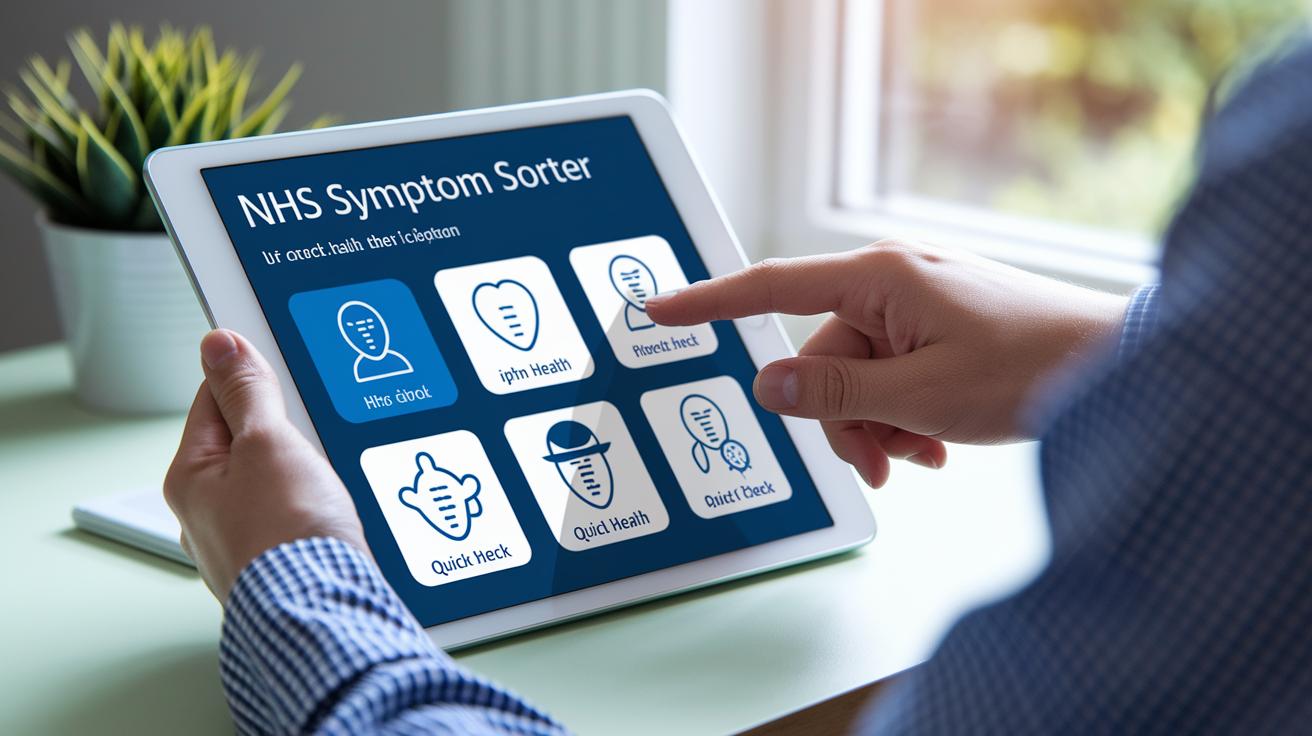

Quick take: The NHS Symptom Sorter helps you quickly decide whether to manage at home or seek care right away.
If you're not sure about your symptoms, this easy tool guides you to the right choice. It sorts your symptoms by urgency so you know your next steps in minutes. Millions use it each year, and your brief health check could lead you to the right support fast.
Accessing the NHS Symptom Sorter for Self-Assessment
Quick take: This online tool helps you check symptoms fast – and if you have any emergency signs, call for help immediately.
If you have any of these emergency signs, call emergency services now:
- Severe chest pain
- Trouble breathing
- Loss of consciousness
The NHS Symptom Sorter is a digital health check that compares your symptoms to possible health issues. It is available on the NHS website and through the NHS App on your phone. When you open the app, you may need to sign in with your NHS login or set up a free account to keep your information safe.
Millions of people use this tool every year to quickly understand their symptoms and get clear advice. After you start, you will be asked for simple details such as your age, gender, and location, along with the signs and symptoms you are experiencing. Begin with the symptom that worries you the most. The computer system then sorts your input by body systems and how serious your symptoms are, giving you a list of possible conditions.
This step-by-step approach helps you decide if you can care for yourself at home or if you need professional help right away.
Inputting and Refining Your Symptoms in the NHS Symptom Sorter

Quick take: Start with your worst symptom to help the tool guide you quickly and safely.
Triage Box:
- If you have severe chest pain, trouble breathing, or any emergency signs, call emergency services now.
- If your condition worsens suddenly, seek urgent care.
- For mild symptoms, follow the steps below.
Begin by entering the symptom that bothers you most. Pick the one that feels the worst right now. For example, if you are having sharp chest pain, type that first. This helps the system understand the most urgent issue and sorts your details by body system and urgency.
Next, describe your symptom with clear medical words. Instead of saying “tummy ache,” use “abdominal pain.” Using the right terms lets the tool match your symptoms with possible conditions, just like a doctor would during an exam.
After you enter your main symptom, the tool will ask follow-up questions. These ask about how long you have had the pain, how strong it is, and if there are any extra symptoms. Answer each question so the system can organize your details by body system and severity. This step-by-step process builds a clearer picture of your health, ensuring that every detail helps make a better evaluation.
Scope of Conditions Covered by the NHS Symptom Sorter
Quick take: This tool looks at many body systems to show you what might be causing your symptoms and when to get help.
If you have any of these emergency signs, call emergency services now:
- Severe difficulty breathing or chest tightness
- High fever with confusion or signs of sepsis (a serious infection)
- Sudden, sharp, or worsening pain
The NHS Symptom Sorter checks many parts of your body. It reviews physical issues like allergies, headaches, and numbness. It also looks at chest and lung problems such as shortness of breath and tightness, as well as digestive issues like stomach pain and indigestion. It is built to pick up the key signals of your discomfort and point you to possible causes.
The tool goes further by considering how your daily habits may affect you. It covers healthy eating and maintaining a good weight. It even looks at mental health topics such as anxiety, stress, and mood changes. This broad view helps you see how lifestyle can connect with physical signs.
It also alerts you to serious concerns like sepsis and cancer by providing clear steps if urgent care is needed. The tool is designed with special pathways for children, adults, seniors, and for both men and women. This focused design means it takes into account different ages and health needs, serving as a helpful first check before you speak with your healthcare professional.
Interpreting NHS Symptom Sorter Results and Next Steps
After you enter your details, this tool shows a list of possible conditions. The list orders conditions by how likely they are. Higher-ranked conditions may need more immediate attention. Each condition comes with a confidence marker, so you can see which ones are more likely. Remember, this tool is here to guide you, it does not give a formal diagnosis.
Based on your results, the tool gives clear advice on what to do next. If your symptoms are mild, you might be told to manage them at home with self-care. However, if your results show red flag symptoms or a higher risk, you are advised to contact your GP, call NHS 111, or even call emergency services if needed.
You may also have options to book a GP appointment, get an NHS 111 referral, or see detailed instructions for emergency care. This self-assessment tool connects you to the right resources so you can take the next step quickly and safely.
Disclaimers, Limitations, and Emergency Red Flags in the NHS Symptom Sorter
The NHS tool gives general health information using a computer program. It only works right about 60% of the time. This tool is just a guide and does not replace a face-to-face checkup with a clinician. If you rely only on this information, you might miss something serious. Always check with a qualified professional if you are unsure.
If you have any serious symptoms, call emergency services right away. Here are some warning signs you should never ignore:
- Chest pain or pressure
- Trouble breathing or very fast breathing
- Sudden weakness, slurred speech, or numbness on one side of your body
- A high fever with a rash or a stiff neck
- Bleeding that won’t stop or a bad injury
- Severe, constant stomach pain
NHS Digital Health Tools and Resources Linked from the Symptom Sorter

This NHS tool does more than just let you check symptoms. It gives you many resources to help you understand your health better. You can use simple calculators to check your BMI (body mass index, a weight measure) and your BMR (basal metabolic rate, a measure of energy use) and even track your sleep debt (lost sleep hours). If you want to dig deeper into your symptoms, there are quizzes and tools to help you figure things out. You’ll also find trusted fact sheets, clear videos, and real patient stories that cover all parts of your health. Even if you need more guidance after checking your symptoms, this system helps you learn about your health and what to do next.
Once you’ve reviewed your symptoms, the tool works as a digital guide. It connects you with real services so you can book a GP appointment or order repeat prescriptions. It also helps you find doctors and clinics listed with the Care Quality Commission so you get the care you need. This clear setup makes it easier for you to move smoothly from checking your symptoms to getting professional care.
Final Words
In the action, you learned how to access the NHS Symptom Sorter and record clear symptom details like age, signs, and precise terms. The guide showed you how results rank potential conditions while offering next steps, including self-care, GP appointments, or urgent referral options. You also saw when to act immediately for red flags and how to use extra digital health tools for more support. Using the symptom sorter nhs can help you make quick, informed decisions to care for your health. Stay proactive and take care.
FAQ
What is the free NHS symptom checker?
The free NHS symptom checker is a digital tool where you enter your age, gender, location, and symptoms to receive a list of possible conditions and tailored advice on next steps.
How does the NHS symptom checker work?
The NHS symptom checker works by asking for your symptoms and basic details, then using a computerized algorithm to match your information with potential conditions and guide you on care.
What is the best symptom checker in the UK?
The NHS symptom checker is considered one of the best in the UK because it provides evidence-based guidance, integrates with urgent care services, and offers a comprehensive digital health assessment.
How do doctors feel about symptom checkers?
Many doctors consider symptom checkers useful as an initial guide; they see them as a supplement to, not a substitute for, professional diagnosis and medical consultations.
Are there multiple symptom checkers available in the UK?
The UK offers several symptom checkers, including the NHS tool, NHS 111 service, and options in Scotland, providing accessible self-assessment resources for various health concerns.
What is the NHS 111 symptom checker?
The NHS 111 symptom checker is a service that directs you to the appropriate level of care for urgent symptoms, linking you with emergency advice and urgent services when needed.
How does the NHS symptom checker body map work?
The NHS symptom checker body map lets you visually select an area of concern on a digital image, helping narrow down potential conditions based on where you feel discomfort.
What do NHS symptoms mean in digital assessments?
NHS digital assessments use common, clear symptom descriptions to match your input with possible causes, ensuring you receive guidance that is straightforward and easy to understand.
Is access to NHS digital symptom checkers free?
Access to NHS digital symptom checkers is free, available online through the NHS website and NHS App, allowing you to self-assess your symptoms without any cost.