
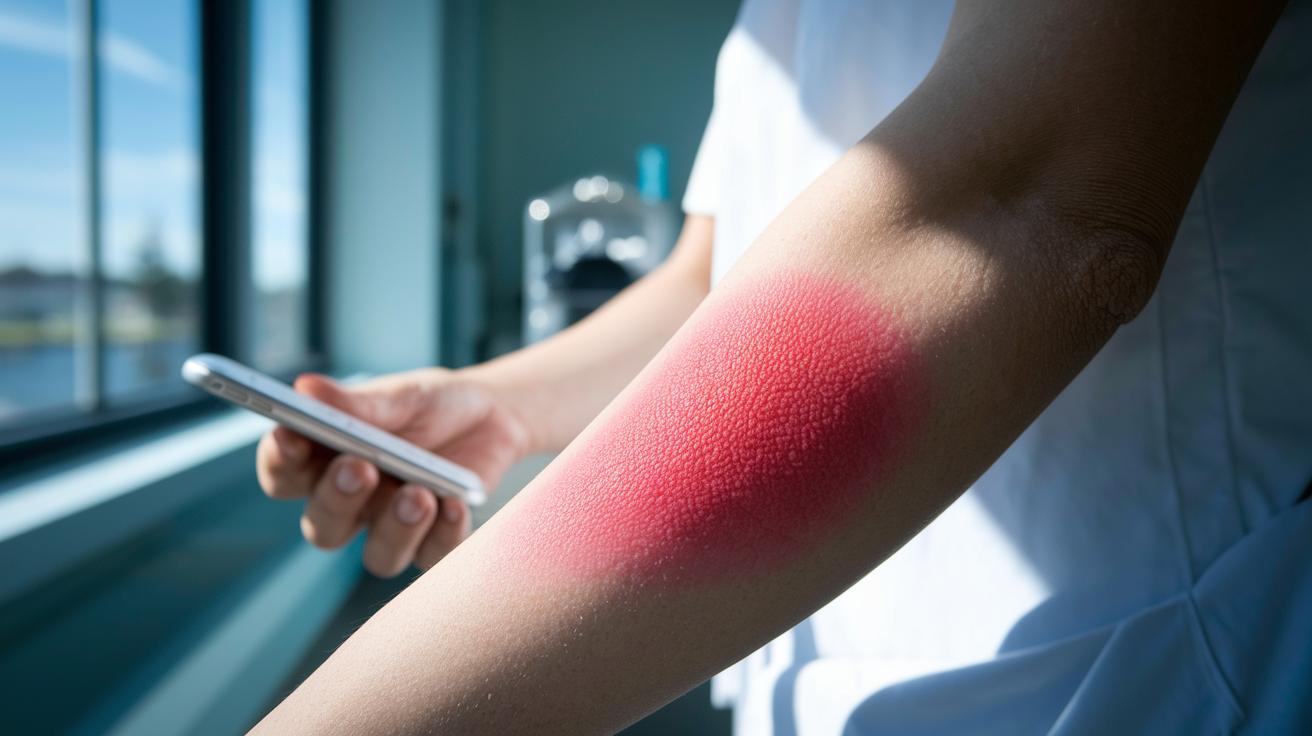

Quick take: A rash might be simple, or it could signal a more serious problem.
If you have any of these signs, seek help immediately:
• Severe pain from the rash
• Rash that spreads quickly
• Difficulty breathing or shortness of breath
Most rashes are caused by mild allergies or infections. However, some rashes may point to an underlying issue that needs prompt care.
Here’s what you can do:
- Check if the rash develops sharp pain, spreads fast, or affects your breathing.
- Write down the time it started and any changes you notice.
- If any red flags appear, call emergency services or contact your clinician right away.
Watching your skin closely is important. Acting fast when you see these signs helps keep you safe.
Rash Symptom Snapshot: Bright Signs Ahead
Quick take: A rash can be a simple skin reaction but sometimes signals a more serious problem.
If you have any of these emergency signs, call emergency services now:
- Severe pain, swelling, or fever
- Rash that spreads rapidly or blisters excessively
- Trouble breathing or swelling around the face
Urgent care: Seek same-day help if you notice any of these signs:
- Rash with significant discomfort or confusion
- Intensifying skin pain or oozing blisters
Watch and self-manage: If none of the above occur, try these steps:
- Keep the rash area clean and dry
- Use gentle, over-the-counter creams for irritation
- Monitor the rash for any changes in size, color, or feel
A rash is a change in your skin. It might show as red spots, blisters, scaly patches, or something else. The rash may dry up or ooze when scratched. These signs help you compare what you see to common rashes.
Rashes can be triggered by many things. They may be due to an allergic reaction to foods, fabrics, or chemicals. Sometimes, medications cause a reaction days or even weeks later. Infections from bacteria, viruses, fungi, or parasites can cause rashes too. Autoimmune conditions (when your body mistakenly attacks healthy cells) may also be the culprit. Notice if your skin feels itchy, swollen, painful, or dry. Your body might be reacting to one of these triggers.
Rashes can be mild or signal a more serious condition. Many simple rashes need only basic home care, such as a soothing cream. Other rashes might hint at an infection or a systemic issue that calls for prompt medical advice. Keep track of any changes in your rash and check with your clinician if it worsens or fails to improve.
Visual Classification Framework for Rash Symptom Snapshot
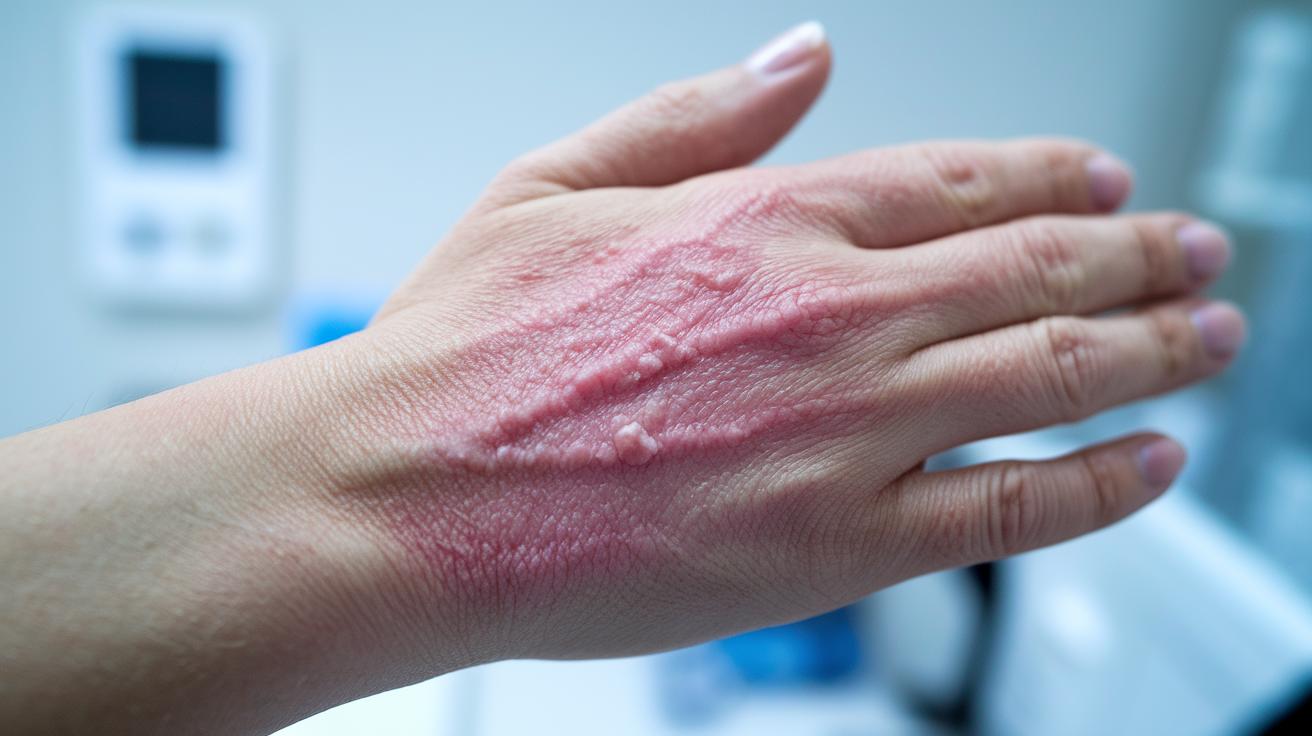
Quick take: Compare your rash’s look with common patterns to help guide your next steps.
This guide shows you simple visual signs to check. Look to see if your rash is flat or raised and note any clear borders. These details can give you clues about the cause.
- Ringworm: Round patches with a red, swollen edge and a clear center.
- Poison ivy rash: Red, itchy streaks with tiny black dots (from oxidized oil).
- Chickenpox/Herpes zoster: Groups of small, fluid-filled blisters (like dew drops) that start from red bumps.
- Tick bite reaction: A bull’s-eye pattern with a clear middle and an expanding red ring.
- Psoriasis: Thick, raised patches with silver, scaly flakes, often on elbows, knees, or the scalp.
- Urticaria: Sudden, hive-like bumps that change shape quickly.
Match what you see with these patterns. When you notice specific features, like a distinct border or blister type, you can explain your symptoms more clearly to your clinician or decide on simple self-care. Quick visual checks are a practical first step in handling skin changes.
Common Triggers and Body Analysis Procedure in Rash Symptom Snapshot
You might notice that foods, latex, nickel, or fragrances can set off an allergic skin reaction. These allergens often cause contact dermatitis (a rash from direct skin contact) or hives (raised, itchy bumps). Chemicals in cosmetics and cleaning products can hurt your skin too, leaving it red, itchy, or even blistered. Natural allergens like poison ivy or oak can produce a rash with streaks or small clusters of blisters. Keep track of when and where you come in contact with these triggers.
Infections can also change your skin. For example, candidiasis (a yeast infection) often shows as a red, wet rash in skin folds. Bacterial cellulitis can cause a spreading red area with pain. Autoimmune conditions like lupus or psoriasis may show up as a butterfly rash on your face or silvery, flaky patches on your elbows or knees. These signs can be quite clear but may also overlap with other causes, so recalling your recent exposures and overall health helps narrow things down.
Here are a few steps to help you figure out what might be causing your rash:
- Think about any new foods, products, or outdoor exposures.
- Check if you started any new medications in the past few days or weeks; some drugs can cause a spotted, itchy rash.
- Look at the areas of your skin that touched potential allergens or chemicals.
- Note the exact time when your symptoms first appeared.
By writing down these details, you and your clinician can work together to understand the cause of your rash better.
When to Seek Medical Attention in Rash Symptom Snapshot

Quick take: Some rash signs require immediate action.
Triage Box:
If you have any of these emergency signs, call 911 or go to the nearest emergency room:
• High fever
• Rash that quickly spreads
• Severe pain
• Bleeding, blistering, or fluid loss
• Difficulty breathing
• Swelling in your face or throat
• A sudden drop in blood pressure
If your rash lasts more than a few days or comes with joint pain and fatigue, get checked by a doctor right away.
At the hospital, clinicians will review your vital signs. They check your heart rate, blood pressure, temperature, and oxygen levels. Blood tests can reveal signs of infection, and imaging tests might be used to see how far the rash has spread. For example, a technician might explain that your blood pressure readings helped support their evaluation.
Home Care and Management Guidelines for Rash Symptom Snapshot
Quick take: Most mild rashes can be managed safely at home with basic care.
If you have any of these warning signs, call emergency services now:
• The rash spreads quickly or covers a large area
• You develop a high fever or severe pain
• There is swelling, pus, or increasing redness
For mild symptoms, start with over-the-counter medicines. You can take ibuprofen or acetaminophen for pain. If your rash itches, an antihistamine or a cream like topical corticosteroid (a medicine to reduce inflammation) may help. Sometimes, just a thin layer of cream can lessen redness and itching.
Soothe your skin with cool compresses. Gently dab moisture away from the rash. Use fragrance-free moisturizers or calamine lotion to calm the irritation and help the rash dry up. Keep the area clean and try not to scratch because scratching can hurt your skin further. Loose cotton clothing also helps by reducing friction and keeping the skin cool.
Watch your rash closely. Check for changes in pain, size, or signs like more redness or fluid. If the rash gets worse, looks infected, or does not improve within a few days, stop the home care steps and call a dermatologist. It may help to keep a simple log of your symptoms by noting the date, time, what you felt, and any changes.
Differential Diagnosis Criteria for Rash Symptom Snapshot
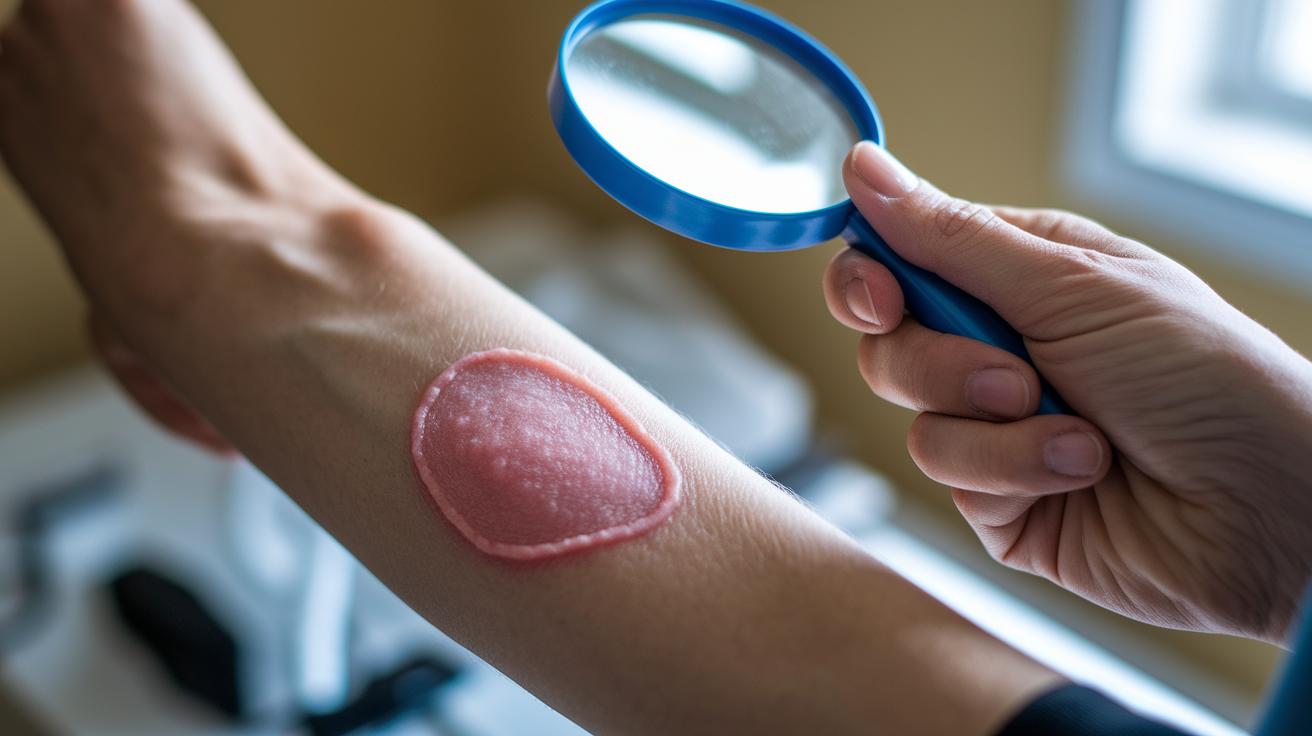
Quick Take: Examine your rash closely. Look at its shape, borders, spread, and any signs of scaling or blisters.
Triage Box:
- If you have a fever over 102°F, severe joint pain, or your rash spreads quickly, call emergency services now.
- If your rash shows sudden blistering or intense pain, seek same-day medical care.
- Otherwise, monitor your symptoms and get in touch with your healthcare provider if things worsen.
Begin by checking your rash for key features. Notice the shape of the spots, how clear the edges are, and if the rash covers a small or large skin area. Look for signs like scaling (flaky skin) or blistering (small pockets of fluid). Also, ask yourself if you have a fever or joint pain.
Next, compare similar rashes to figure out what might be causing it:
- Eczema and contact dermatitis both can cause red, itchy skin. Contact dermatitis usually has sharper, clear edges and is linked to an allergen, while eczema tends to be more diffused.
- Psoriasis shows thick plaques with silvery scales, unlike ringworm, which has raised, round patches with a clear center.
- Hives appear as quick, raised bumps that fade fast. Drug rashes, on the other hand, are persistent, speckled, and often cover large areas.
If the differences are not clear, note down any changes you see. Record when the rash started, any changes in its shape or size, and any new exposures or medications. This detailed information will help your healthcare professional decide if further tests are needed.
Final Words
In the action, we reviewed what a rash looks like and the many possible causes, from allergic reactions and infections to medication triggers. We broke down visual cues with a clear classification framework and outlined what to watch for in your rash symptom snapshot.
We also explored home care tips, red flags that need urgent care, and simple tracking ideas to share with a clinician. Keep monitoring your symptoms and take positive steps toward clear guidance and safe care.
FAQ
What do pictures of skin rashes, including those on adults, legs, and from NHS sources show?
The pictures of skin rashes show varied skin changes such as red spots, blisters, and scaly patches. They help compare different types of rashes seen in adults, on legs, or documented by trusted sources like the NHS.
When should I worry about a rash in adults?
The timing to worry about a rash in adults is when it spreads rapidly, becomes painful, or is combined with fever or other systemic symptoms. These signs suggest you should seek prompt medical evaluation.
Where can I find a list of skin diseases with pictures?
The list of skin diseases with pictures is available on trusted medical and health websites. Such lists offer visual guides that help you compare your symptoms with common conditions.
What causes skin rashes that itch?
The causes for skin rashes that itch include allergic reactions, irritants, infections, medications, or autoimmune responses. These factors can lead to conditions like contact dermatitis or hives, which often cause intense itching.
How do you identify a rash from a photo?
The identification of a rash from a photo involves examining the lesion’s color, shape, and distribution. A clear image allows you to compare these features to common clinical presentations for a rough assessment.
Is there an app to scan a rash?
The availability of an app to scan a rash means some smartphone apps use image recognition to analyze skin conditions. While they may provide helpful insights, they should never replace a clinician’s advice.
What does a photosensitivity rash look like?
The appearance of a photosensitivity rash is usually red and inflamed, often appearing on areas exposed to sun. It may also present with blistering or scaling, indicating a reaction triggered by sunlight.