


Quick take: Your stool can give you clear signals about your gut health.
Have you ever wondered if your bowel movements might be sending you a hidden message? The shape, color, and frequency of your stool are simple clues that tell you how well your gut is working. One useful tool is the Bristol Stool Chart, which sorts stool into 7 different types. Other charts help you track color changes, how often you go, and whether your stool sinks or floats. Each of these charts offers easy insights into your hydration, digestion, and overall health. Use these tools to keep an eye on your gut and take action if something doesn’t seem right.
bowel movement chart types: Clear, Simple Insights
Different charts help you see what’s happening in your gut. The Bristol Stool Chart sorts stool into 7 types by how firm or loose it is. Hard, separate lumps or a lumpy sausage shape may mean constipation. Smooth, soft, or well-formed stools usually show good hydration and transit time.
Another chart looks at stool color. Brown is normal because of bile. But if you see green, yellow, black, red, or pale stool, it could mean your food is moving too fast, your body isn’t absorbing properly, or there might be bleeding.
A frequency chart shows that having about 3 bowel movements per day up to 3 per week is typical. If you notice a change in how often you go, especially with changes in color or consistency, it might be a sign of an imbalance.
The buoyancy chart checks if stool floats or sinks. Floating stool might point to malabsorption, while sinking is usually normal. Taken together, these charts give you clear, simple clues about your gut health.
Bristol Stool Chart Consistency Types
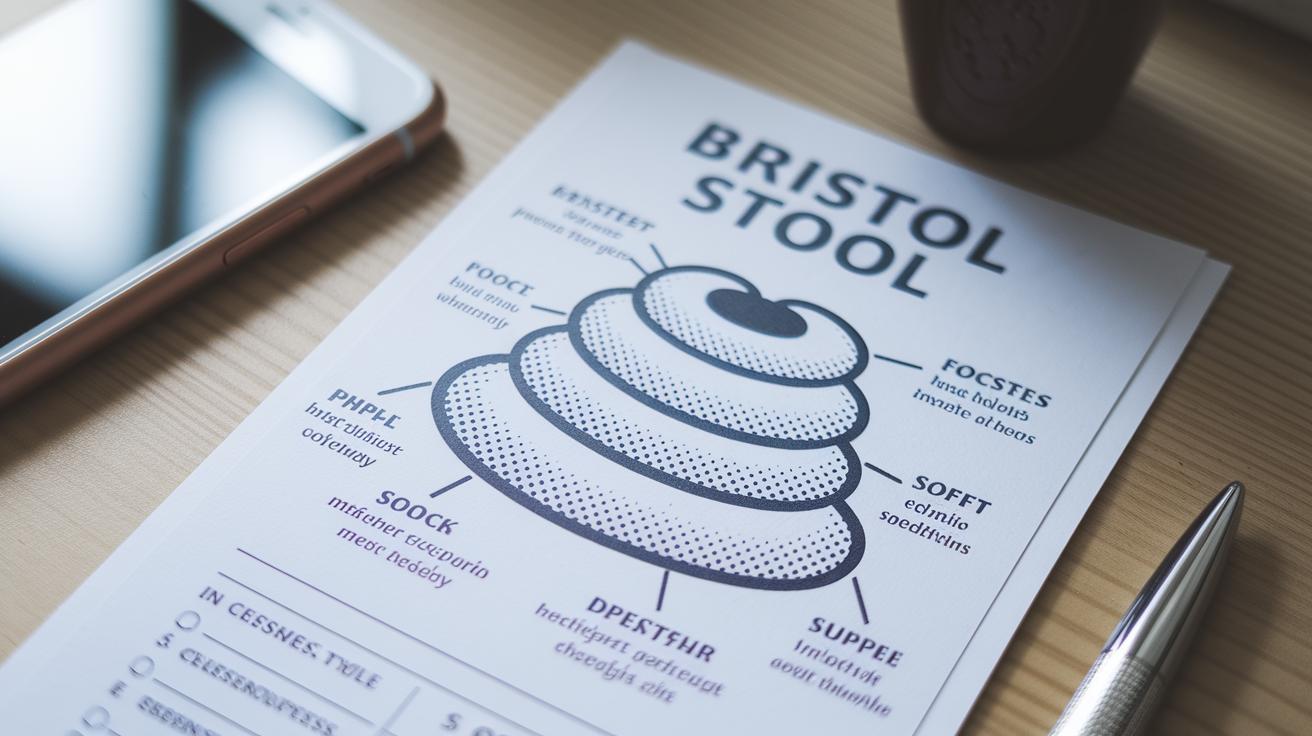
Quick take: Your stool type can give you clues about your digestion and hydration.
The Bristol Stool Chart was created in 1997 by Ken Heaton and Stephen Lewis. It sorts poop into seven types so that you and your doctor can spot changes in your digestive health. Each type shows different poop shapes that relate to how well your colon is working, especially with water balance.
Type 1 shows separate hard lumps. This means you might be very constipated. Your colon could be pulling too much water out of your stool. Try to drink more water and add fiber to your diet.
Type 2 looks like a lumpy sausage. This form also suggests mild constipation, often from not drinking enough water or eating too little fiber.
Type 3 is like a sausage with cracks. It is almost normal. If you see this, you might benefit from a little extra water.
Type 4 is the ideal stool. It is smooth and soft, shaped like a snake. This form shows that you are well-hydrated and eating a balanced amount of fiber.
Type 5 appears as soft blobs with clear edges. This can signal mild diarrhea, meaning food is moving a bit too quickly through your colon. Often this is due to diet changes or stress.
Type 6 is made up of mushy pieces. It indicates moderate diarrhea. This can happen with a temporary upset stomach or an imbalance in your gut.
Type 7 is completely watery. This severe form of diarrhea means food is moving very fast through your colon and may point to dehydration, an infection, or problems with absorbing nutrients.
Think of it like biting into a firm apple compared to a soft, mushy one. That difference shows how Type 4 and Type 6 stools signal very different digestive conditions.
| Type | Appearance | Implications |
|---|---|---|
| Type 1 | Hard lumps | Severe constipation |
| Type 2 | Lumpy sausage | Mild constipation |
| Type 3 | Sausage with cracks | Borderline normal |
| Type 4 | Smooth, soft snake | Ideal stool form |
| Type 5 | Soft blobs | Mild diarrhea |
| Type 6 | Mushy pieces | Moderate diarrhea |
| Type 7 | Watery liquid | Severe diarrhea |
Stool Color Guide Chart for Digestive Health
Quick take: Changes in stool color can signal a need to check in with your healthcare provider.
Triage guidelines:
- Call emergency services now if you experience severe pain, dizziness, or fainting along with unusual stool colors.
- Seek same-day medical help if you notice red or black stool with other worrisome symptoms.
- Monitor your stool color and contact your provider if changes persist.
Normal stool is usually brown because of bile (a fluid that helps digest food). When the color changes, it can mean something in your digestion isn’t working as it should.
• Green stool can happen when food moves quickly through your gut or after eating lots of leafy greens. A one-time green color after a salad can be normal. But if it continues, it might mean your gut is working too fast.
• Yellow stool may point to fat not being absorbed well (fat malabsorption). This can occur with conditions like celiac disease or pancreatic problems. It often looks bright and buttery.
• Black stool might result from taking iron supplements or from bleeding in the upper digestive tract. It typically looks like coffee grounds. This is a sign you should get checked by your provider.
• Red stool can come from eating foods with red coloring, such as beets or tomatoes. It may also indicate bleeding in the lower digestive tract.
• Pale or clay-colored stool suggests that bile isn’t flowing properly, which might be due to a blockage in the bile duct.
This guide is a simple tool to help you and your doctor spot signs of issues with digestion or nutrient absorption. If you notice any of these changes and feel worried, reach out to your healthcare provider for advice.
Frequency Chart: Tracking Bowel Movement Regularity

Quick take: Your bathroom habits can reveal how well your diet and hydration are working for you.
If you notice hard, lumpy stools (Bristol type 1-2) or very soft, watery stools (Bristol type 6-7) along with changes in your routine, contact your clinician right away.
Record key details every time you go:
- Date and time (for example, April 2 at 9 AM)
- Stool appearance (for example, Type 1 means hard lumps)
- Any changes in diet or water intake (for example, low water the day before)
A normal pattern is between 3 bowel movements per day and 3 per week. Shifts outside this range may mean you need small changes in your diet or hydration.
Try these steps:
- Eat more fiber by adding fruits, vegetables, and whole grains.
- Drink extra water, especially in warm weather or after exercise.
- Use a smartphone app or a digital journal to log your entries and look for patterns.
Small lifestyle changes can make a noticeable difference in your bowel regularity. Keeping a detailed record helps you see trends and decide when to seek further advice.
Buoyancy and Additional Observation Chart
Quick take: Changes in how your stool floats can signal issues with fat absorption.
If you see stool that always floats, speak with your provider.
Red Flag Checklist:
• Call emergency services if you notice severe pain, blood, or strong sickness signs.
• Ask your provider if floating stool continues for several days.
Your stool can tell you a lot about your body's digestion. Floating stool might mean your body is not absorbing fat well (fat malabsorption) or you have steatorrhea (too much fat in the stool). Sinking stool is usually normal. Still, if floating stool happens time after time, it is best to get checked.
Watch for these extra details:
• Mucus in your stool can point to inflammation or infection.
• A strong or odd smell may show changes in gut bacteria.
• Visible undigested food could mean your enzymes are not breaking food down properly.
Keep a record of your observations:
• Note whether your stool floats or sinks.
• Write down if mucus or undigested food is present.
• Record any unusual or strong odors.
| Observation | Possible Indication | Action |
|---|---|---|
| Floating stool | Fat malabsorption or steatorrhea | Consult your provider |
| Mucus present | Inflammation or infection | Monitor and report changes |
| Undigested food | Possible enzyme deficiency | Seek evaluation |
How to Use Bowel Movement Charts for Monitoring Digestive Health

Quick take: Keeping a simple daily or weekly log of your bowel movements helps you notice changes and decide if you need to talk with a doctor.
If you have any warning signs like several days of very hard stools (Type 1 or 2) or very loose stools (Type 6 or 7), or if your stool keeps floating, call your provider soon.
Here’s how to start:
- Write down the date and time (for example, April 2 at 9 AM).
- Check your stool type using the Bristol Stool Chart (a guide that shows different forms of stool). Note if your stool is more like Type 1/2 (suggesting constipation) or Type 6/7 (indicating loose consistency).
- Record the stool color. Brown is normal, but unusual colors such as green, yellow, or other shades may need extra attention.
- Note how often you go. A typical pattern is between 3 times per day and 3 times per week.
Keep an eye on your records. Regular signs of constipation or diarrhea, or changes like stool that floats a lot, could point to issues such as irritable bowel syndrome, infection, or trouble absorbing nutrients.
Review your notes with a step-by-step symptom diary guide and check out more on how your digestive system works by following these trusted resources:
Step-by-step guide to keeping a symptom diary
How does the digestive system work
Monitor these details regularly. If your notes show persistent changes, make an appointment with your provider to discuss what you’ve observed.
Final Words
In the action, you’ve learned how to check stool consistency, color, frequency, and buoyancy for a complete digestive picture. The guide covered tools like the Bristol Stool Chart, a color guide, frequency norms, and buoyancy observations. Each chart helps signal changes that could need a clinician’s review. Using these bowel movement chart types, you can track trends and spot early warnings with confidence. Keep monitoring your symptoms, and stay positive as you take simple steps to protect your gut health.
FAQ
How can I access a bowel movement chart PDF or free printable bowel movement chart?
A bowel movement chart PDF provides a ready-to-use template to record stool form, color, frequency, and buoyancy. Free printables help you track digestive health trends at home.
What do unhealthy stools pictures indicate about digestive health?
Unhealthy stools pictures show abnormal appearances such as hard lumps, watery consistency, or unusual colors. These visuals can signal digestive issues that might need prompt evaluation.
How is a bowel movement chart used for elderly care?
A bowel movement chart for the elderly records changes in stool form, color, and regularity. It helps caregivers monitor digestive health and identify early signs of potential concerns.
What is Type 6 stool, what causes it, and when should I worry?
Type 6 stool, described as mushy pieces, indicates moderate diarrhea. It may result from infections, dietary changes, or chronic issues; persistent symptoms for months should prompt a clinician review.
What is Type 5 stool and what does it mean about my digestion?
Type 5 stool features soft blobs with distinct edges, suggesting a loose stool pattern that may be linked to mild diarrhea or a minor digestive upset.
What is the 3 to 3 poop rule?
The 3 to 3 poop rule means that having between 3 bowel movements per day and 3 per week is considered normal. Falling outside this range with abnormal consistency may indicate an issue.
What is stage 4 poop according to the Bristol Stool Chart?
Stage 4 poop refers to a smooth, soft, snake-like stool that is regarded as the ideal form, reflecting healthy digestion and good colon transit time.
What is a red flag for bowel movements that requires medical attention?
Red flags include persistent hard lumps, watery diarrhea, unusual colors, or visible blood in the stool. These signs warrant an evaluation by a healthcare professional.
viagra generic doses
viagra generic doses
wegovy sémaglutide prix
wegovy sémaglutide prix
topamax uses webmd
topamax uses webmd
metronidazole cat how long
metronidazole cat how long
acyclovir stada cold sores cream
acyclovir stada cold sores cream
minoxidil kirkland liquid
minoxidil kirkland liquid
bupropion induced constipation
bupropion induced constipation
ketoconazole for skin health
ketoconazole for skin health
sildenafil PDE5 selectivity
sildenafil PDE5 selectivity
vardenafil cautionary overview
vardenafil cautionary overview
augmentin vs amoxicillin suspension
augmentin vs amoxicillin suspension
bronchitis overview
bronchitis overview
otitis media health information
otitis media health information
Food and Drug Absorption
Food and Drug Absorption
PK Concepts Reference
PK Concepts Reference
how PDE5 inhibitors such as sildenafil work
how PDE5 inhibitors such as sildenafil work
guide to obtaining tadalafil online
guide to obtaining tadalafil online