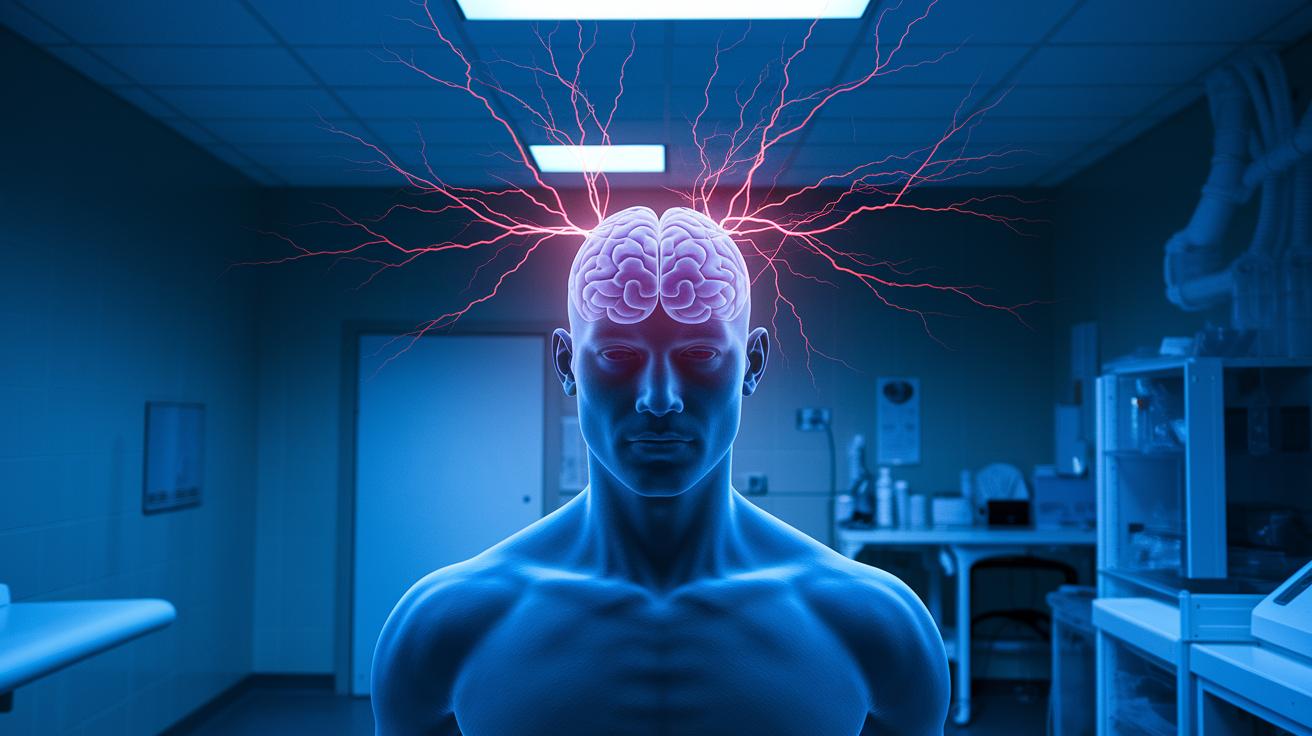
Quick take: Cluster headaches hit fast with one-sided, sharp pain that may come with watery eyes and a runny nose.
If you have any of these emergency signs, call emergency services now:
• Sudden confusion or trouble speaking
• New vision changes or loss
• Weakness on one side of your body
If these signs aren’t present but the headache feels different than usual, seek same-day care.
Cluster headaches cause sudden, intense pain on one side of your head. The pain feels like a lightning bolt, coming on quickly and powerfully. You might also notice symptoms like watery eyes and a runny nose. This happens when the blood vessels in your head change size very fast, sending strong nerve signals that make the pain worse.
In this article, we explain the steps behind these headaches. We break down the process in plain language so you can better understand what sparks that severe, one-sided pain and what's happening inside your head.
What causes cluster headache: Clear Clues
Quick take: Cluster headaches cause intense, one-sided head pain with clear signs like tearing and a runny nose.
Triage:
• Call emergency services now if you experience sudden vision loss, confusion, or stroke-like symptoms.
• If your pain becomes unbearable or you develop new symptoms, seek same-day medical help.
• Otherwise, monitor your headache pattern and follow up with your doctor if attacks grow more frequent or severe.
Cluster headaches give you extremely sharp, one-sided pain that can feel like a sudden gunshot or severe kidney stone pain. Attacks usually last from 15 to 180 minutes and can strike 1 to 8 times a day, often at the same time each day.
These headaches start when blood vessels in your head change size fast. This change wakes up a nerve system (known as the trigeminovascular system) that sends strong pain signals. At the same time, the trigeminal-autonomic reflex (a linked process) activates the parasympathetic network. This causes clear signs such as tearing, nasal congestion, and eyelid swelling. You might even feel very restless, as if your body is urging you to move.
Key characteristics:
- One-sided, excruciating pain
- Attack duration: 15–180 minutes
- Occurs 1–8 times per day, usually at the same hour
- Signs on the same side of the head: tearing, nasal congestion, eyelid swelling
- A strong urge to move during episodes
Imagine feeling pain so strong that you can’t sit still and feel forced to pace around as if every nerve in your face is screaming.
Hypothalamus and Circadian Rhythms in Cluster Headache

Quick take: Cluster headaches often follow a strict daily pattern because a misfiring internal clock in your brain sets off a chain reaction that causes pain and other clear signs.
Triage Box:
- Red flags: If you experience sudden, extreme pain with vision changes, weakness, or confusion, call emergency services immediately.
- Urgent: If your headaches worsen or you develop new symptoms, seek same-day care.
- Monitor: Track the timing, severity, and associated symptoms of your headache attacks.
Brain scans show that cluster headaches start with a burst of activity in the hypothalamus (the part of your brain that acts like an internal clock). This out-of-sync signal then triggers the trigeminal nerve (a nerve that carries pain signals) to send quick pain messages, leading to symptoms such as tearing, a stuffy nose, and a puffy eyelid. Many people observe that their headaches occur at almost the same time each day.
The hypothalamus controls not only your sleep cycles but also how you feel pain. When it isn’t working right, it can set off a series of signals along the trigeminal nerve, which produces the sharp, one-sided pain typical of cluster headaches. This regularity in attack timing is directly related to your natural daily rhythms.
Key points:
- Problems in the hypothalamus can start pain and other symptoms.
- Headaches often strike at a consistent time each day.
- A misfiring internal clock explains the predictable pattern of these attacks.
These observations help explain why cluster headaches occur with such clockwork precision.
Neurovascular and Trigeminovascular Contributions to Cluster Headache
Quick take: Cluster headaches happen when head blood vessels change size very quickly due to sudden shifts in chemical signals and nerve reactions.
Recent studies show that these headaches start when blood vessels in the head quickly narrow and then widen. Problems with serotonin (a chemical that helps control blood vessel size) cause these fast changes. Researchers say that this shift in serotonin and its receptors happens more sharply in cluster headaches than in migraines, where changes develop more slowly. One study even found that unusual receptor sensitivity triggers a quick tightening and then a sudden widening of the vessels.
Trigeminovascular System
New imaging tests show that the trigeminovascular system plays a big role in cluster headaches. This system involves the ophthalmic branch of the trigeminal nerve (a nerve near your eye). When your head’s blood vessels change suddenly, this nerve lights up quickly. Think of it like an overly sensitive alarm: a small trigger sets off a very strong pain signal that rushes to your brain.
Trigeminal-Autonomic Reflex
Studies also find that the trigeminal-autonomic reflex is key to the eye and facial signs seen with cluster headaches. When the trigeminal nerve is activated, it links with parts of your nervous system that control tear production, nasal congestion, and even slight facial flushing. This connection explains why you might have tearing, a stuffy nose, or a swollen eyelid on the same side as the pain. Although similar reflexes can happen with other headaches, the quick start and steady intensity of these signs make cluster headaches unique.
Environmental and Lifestyle Influences on Cluster Headache

Studies show that outside factors can start or worsen cluster headaches. One main trigger is an imbalance in serotonin (a brain chemical that helps control blood vessels). When your serotonin level is off, your brain sends strong signals that may start an attack.
Drinking alcohol is a common trigger. Even a small drink can lead to a full-blown attack in those who are sensitive. Imagine taking a sip and then feeling sudden, intense pain.
Stress and sudden changes in your routine can also make an attack more likely. When stress spikes or your day shifts unexpectedly, your brain can become extra sensitive to pain signals. This means that everyday stress can quickly turn into a painful episode.
Other factors, like changes in sleep patterns or shifts in the weather, might also play a part. Research is still exploring how much these factors contribute. Keeping a simple log of your habits and headaches may help you spot your personal triggers.
Key points:
- Serotonin imbalance triggers strong pain signals.
- Alcohol can cause a headache attack very quickly.
- Stress and routine changes lower your tolerance for pain.
Genetic Predispositions and Hormonal Influences in Cluster Headache
If someone in your immediate family, like a parent, sibling, or child, has experienced cluster headaches, you may be at a higher risk. Research shows that these headaches can run in families. This genetic link does not mean you will definitely get them, but it does raise your chances.
Hormone changes can also play a role in how often and how badly you experience these headaches. Many people notice that their headache patterns change with shifts in their hormones. For instance, you might have more headaches during your menstrual cycle or while pregnant. These changes can affect how blood flows and how pain signals travel around the eye, which may trigger sudden, intense pain in that area.
To better understand your triggers, try keeping a simple log of your symptoms. Consider the following steps:
- Write down the date and time of each headache.
- Note how severe the pain is (mild, moderate, or severe).
- Record any changes in your hormone cycle.
Sharing this information with your doctor can help tailor your treatment plan to your needs.
Distinguishing Cluster Headache from Other Headache Disorders

Cluster headaches and migraines are different in clear ways. Cluster headache pain is usually felt on one side near your eye. It lasts for 15 to 180 minutes and can come in clusters over days or weeks. In contrast, migraines last much longer, from 4 to 72 hours, and come with extra symptoms.
With a cluster headache, you may notice clear signs such as tearing and a blocked or runny nose on the same side as the pain. These signals happen every time during an attack. Migraines rarely show these signs. Instead, migraines often make you sensitive to light and sound and may also cause nausea.
Another difference is the pattern of the attacks. Cluster headaches tend to occur regularly, almost every day for a few weeks at a time. Migraines come unpredictably and may vary in how often they occur. During a cluster headache, many people feel restless or need to move around. With a migraine, you might feel like lying down in a quiet, dark place.
Key differences:
| Feature | Cluster Headache | Migraine |
|---|---|---|
| Duration | 15 – 180 minutes | 4 – 72 hours |
| Autonomic Signs | Tearing, nasal congestion | Rarely seen |
| Associated Symptoms | Restlessness | Light/sound sensitivity, nausea |
| Attack Pattern | Regular clusters | Unpredictable episodes |
Diagnostic Criteria and Evaluation of Cluster Headache
Quick take: Cluster headaches cause short, one-sided eye area pain along with symptoms like tearing and a stuffy nose.
Triage Box:
• Red flags: If you suddenly have a very severe headache with new signs such as confusion, weakness, or numbness, call emergency services now.
• Urgent: If you notice a strong pattern of one-sided pain with watery eyes and swelling that gets worse over time, seek same-day medical care.
• Monitor: If your symptoms match the common pattern below, track them and discuss with your doctor at your next visit.
Doctors use clear guidelines from ICHD-3 to decide if you have a cluster headache. You must have at least 5 attacks of pain on one side around your eye. Each attack lasts 15 to 180 minutes and comes with signs like a watery eye, a stuffy nose, or a swollen eyelid. You might also feel restless and find it hard to sit still. This helps your doctor know that your headache is a primary one, not caused by another problem.
When you see your doctor, they will ask about:
• How often your headaches happen
• How long each attack lasts
• Which side of the head hurts and what other signs you show
For example, if you get 3 clear attacks in 24 hours, each lasting about 30 minutes with a red, watering eye, that strongly suggests a cluster headache. Often, an MRI is done to rule out other issues and make sure the symptoms are not caused by another condition.
Advances in Understanding Cluster Headache Etiology
Quick take: New treatments are aiming to block key proteins and calm overactive nerves to help stop cluster headaches faster. If you have these severe headaches, follow up with your doctor. Researchers are now testing drugs that block the protein CGRP (calcitonin gene-related peptide). This protein can widen blood vessels and trigger sharp head pain. The goal is to lower both how often the headaches occur and how severe they are. Scientists are also exploring neuromodulation techniques. This means sending gentle electrical signals to slow down overactive nerve pathways. In simple terms, this approach aims to cool off sudden nerve surges that lead to heavy pain. Early studies have found that psilocybin, a substance found in some mushrooms, might stop a headache quickly. People in these tests felt relief fast, which hints that psilocybin could be a quick option against these painful attacks. These innovations mark a new chapter in our understanding of cluster headaches. As more research is done, we hope to see treatments that directly target the root causes of these severe head pains. Final WordsIn the action, we dissected the biological steps behind cluster headache. We explained the brain’s clock misfire, nerve and vessel interplay, and lifestyle triggers. We also set out clear ways to tell this condition apart from other headaches. All of these points help answer what causes cluster headache, giving you a sharper view on when to seek care. Keep tracking your symptoms and note any red flags. Stay calm and know that ongoing research is paving the way for better treatments. FAQIs cluster headache dangerous?The question about cluster headache being dangerous means while the pain is intense and disabling, these headaches are not typically life-threatening. They do require medical evaluation to manage symptoms safely. What causes cluster headaches everyday?The question on what causes cluster headaches every day points to a dysfunction in the hypothalamus (brain’s clock) along with triggers like stress and alcohol, which can make attacks occur in a cyclic pattern. Cluster headache treatmentThe question on cluster headache treatment highlights options such as oxygen therapy, fast-acting medications, and preventive drugs. Treatment plans are tailored with a clinician to reduce attack frequency and severity. What causes cluster headaches in women?The question about causes in women indicates that hormonal fluctuations, along with genetic factors and lifestyle triggers, can contribute to the development of cluster headaches in women similarly to men. Can cluster headaches kill you?The question of whether cluster headaches can kill you shows that despite the severe pain, cluster headaches themselves are not fatal. They do require prompt treatment to ease symptoms and improve quality of life. How long does a cluster headache last?The question on duration shows cluster headaches typically last between 15 and 180 minutes per episode, with multiple attacks possibly occurring daily during a cluster period. Cluster headache symptomsThe question about cluster headache symptoms means the pain is usually one-sided around the eye, accompanied by tearing, nasal congestion, eyelid swelling, and a sense of restlessness during an attack. Cluster headache tabletThe question regarding a cluster headache tablet refers to medications like sumatriptan that are taken orally for rapid pain relief. A clinician can help choose the right tablet and dosage for your needs. What triggers cluster headaches?The question on triggers explains that factors such as alcohol intake, stress, and disrupted sleep can provoke cluster headaches by activating brain pathways that cause the intense pain and autonomic symptoms. How to stop a cluster headache?The question on how to stop a cluster headache suggests that rapid relief may be obtained with oxygen therapy or fast-acting medications like triptans, and following a guided treatment plan is key to managing attacks. Who usually gets cluster headaches?The question of who usually gets cluster headaches indicates that these headaches most often affect men in early adulthood, though family history and individual lifestyle factors also play roles in susceptibility. What can be mistaken for cluster headache?The question about what can be mistaken for cluster headache means other conditions like migraines or sinus infections may share similar symptoms, but cluster headaches are distinguished by their short, recurring episodes and clear autonomic signs. Subscribe Today GET EXCLUSIVE FULL ACCESS TO PREMIUM CONTENT SUPPORT NONPROFIT JOURNALISM EXPERT ANALYSIS OF AND EMERGING TRENDS IN CHILD WELFARE AND JUVENILE JUSTICE TOPICAL VIDEO WEBINARS Get unlimited access to our EXCLUSIVE Content and our archive of subscriber stories. Latest article |
|---|