
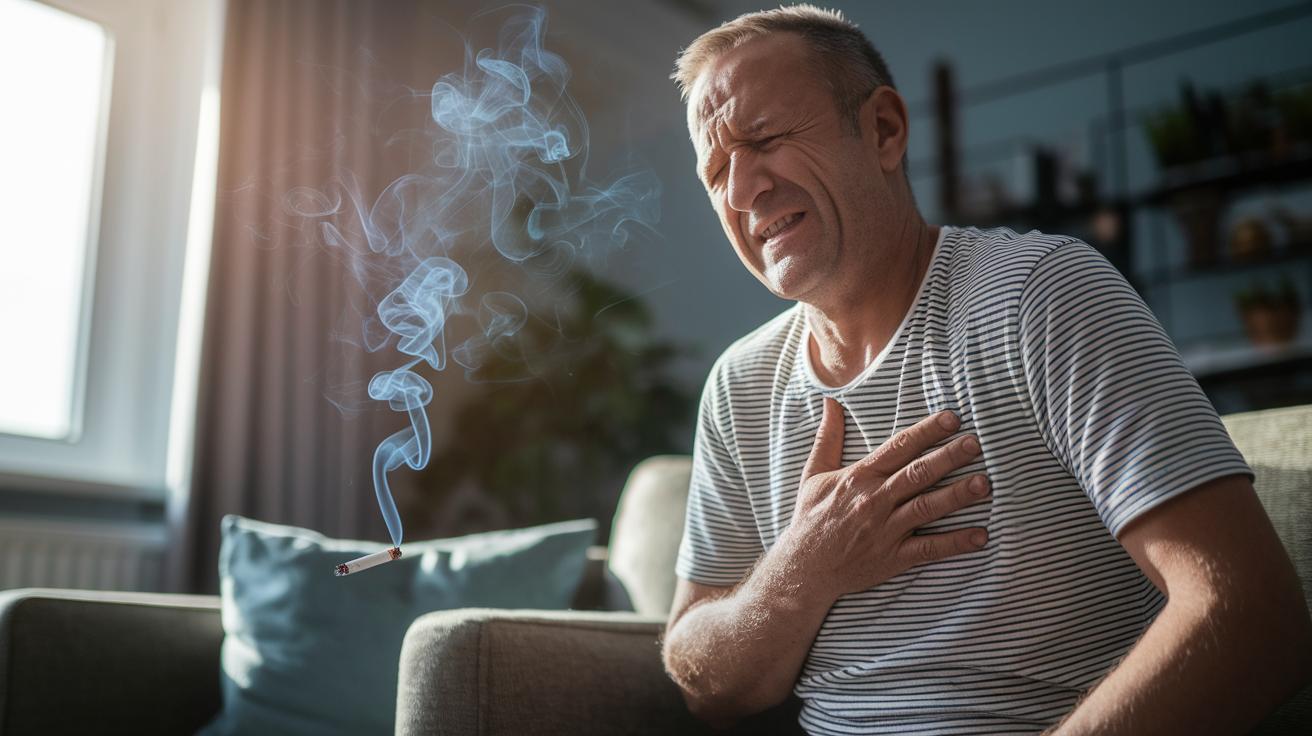

Quick Take: Smoking can irritate your lungs and heart, causing chest pain that you shouldn’t ignore.
Triage Box:
• If you have sudden, severe chest pain or difficulty breathing, call emergency services now.
• If the pain is moderate and lasts more than a short while, seek same-day medical attention.
• If the discomfort is mild and you feel steady, monitor your condition and consider speaking with your clinician soon.
Smoking exposes your lungs to harmful irritants that can also narrow the small arteries feeding your heart. With each cigarette, these irritants can trigger signals that show up as a tight, painful feeling in your chest. It might feel like your chest is locked in a grip, urging you to take better care of your body.
This guide explains how smoking can lead to chest discomfort and offers clear, simple steps to help you move toward better health. We want you to understand what’s happening in your body and know when to get help, so you can take action early and avoid further harm.
Why Smoking Triggers Chest Discomfort
Quick Take: Smoking irritates your lungs, narrows your blood vessels, and tenses your chest muscles, leading to discomfort.
Triage Box:
- If you have severe chest pain, trouble breathing, or feel faint, call emergency services immediately.
- If the pain gets worse with activity, seek urgent care.
- For mild discomfort, keep an eye on your symptoms and talk to your clinician if things don’t improve.
When you smoke, the harmful chemicals in cigarette smoke irritate the soft lining of your lungs. This irritation causes the lung tissues to swell, making your chest feel tight and achy, much like a small scrape on your skin that hurts until it heals.
At the same time, these chemicals make your blood vessels become narrower. With less space in your vessels, less oxygen reaches your heart and muscles. This drop in oxygen can leave you feeling tired and uncomfortable, similar to traffic slowing on a narrow road.
Nicotine, the active ingredient in cigarettes, also makes the muscles in your chest tighten. This added tension can create a pressing or sharp pain, worsening the feeling of tightness. Even smoking just a few cigarettes can boost your risk of heart issues by increasing chest muscle tension over time.
Together, lung irritation, narrowed blood vessels, and muscle tightness lead to the chest discomfort you feel. Your body sends these warning signals to show that it’s under stress. Understanding these triggers can help you recognize the signs and take action toward better health.
Common Causes of Cigarette‐Associated Chest Pain

When you feel chest pain after smoking, several causes might be involved. This pain can come from different parts of your body, and sometimes they overlap. That’s why getting a clear check by a doctor is important.
Here are five common reasons for this pain:
- Heart issues: Smoking can build up plaque in your arteries (narrowing the blood vessels), reducing oxygen to your heart. It can also cause inflammation around the heart (pericarditis) or trigger early signs of a heart attack.
- Respiratory problems: Smoke chemicals can inflame your lungs, leading to conditions like COPD (chronic obstructive pulmonary disease), chronic bronchitis, or asthma. These may bring coughing and a feeling of pressure.
- Gastrointestinal triggers: Chemicals from cigarettes can relax the valve between your stomach and esophagus. This may allow stomach acid to come up, causing a burning pain in your chest.
- Musculoskeletal strain: Repeated coughing from smoking and nicotine’s effect on your muscles can strain the chest wall. This sometimes leads to sharp, piercing pain.
- Anxiety responses: Stress and nicotine cravings can make your chest feel tight, even if there is no structural problem, and this pain can look like other types.
Because these issues can share similar signs, it is key to have your chest discomfort checked by a doctor to find the exact cause and get the right treatment.
Differentiating Heart‐Related vs Smoke‐Induced Chest Pain
Quick take: Chest pain can stem from heart problems or from smoke exposure. If you feel crushing pain with signs like sweating, nausea, or trouble breathing, call emergency services now.
When your pain strikes suddenly with a crushing or burning feel, it may mean your heart or blood vessels are not getting enough oxygen. The pain might spread to your jaw or arm and can come with extra signs like sweating, nausea, or severe shortness of breath. These warning signals mean you should seek urgent help.
On the other hand, pain linked to smoke usually feels dull and stays in the center of your chest. This discomfort builds slowly after you inhale smoke, such as from a cigarette. It does not spread and seldom comes with dangerous signs. Instead, you may simply feel a steady pressure in your chest, which means the smoke is irritating your body. Even though this pain is not as alarming as heart-related pain, you should still watch your symptoms and follow up if they worsen.
| Feature | Heart-Related Pain | Smoke-Induced Tightness |
|---|---|---|
| Onset | Starts suddenly, either at rest or during activity | Grows slowly, usually after inhaling smoke |
| Quality | Crushing or burning; may spread to other areas | Dull and centered in the chest |
| Warning Signs | Sweating, nausea, and severe breathlessness | Steady pressure without other serious symptoms |
Respiratory Conditions Driving Smoke‐Triggered Chest Discomfort

Quick take: Smoke can damage your lungs and cause tightness in your chest.
Triage Box:
If you have any of these emergency signs, call emergency services now:
- Trouble breathing or very shortness of breath.
- Sharp chest pain that worsens quickly.
- Inability to speak clearly or severe wheezing.
If you do not have these signs, take these steps: - Avoid areas with smoke.
- Monitor your breathing and chest pain.
- Contact your doctor if symptoms do not improve.
Long-term exposure to smoke can lead to lasting lung problems such as COPD (chronic obstructive pulmonary disease) and chronic bronchitis. Smoke irritates your airways, making them swell and narrow. Over time, harmful particles damage the tiny hair-like structures called cilia (small hairs that clear mucus). When these cilia do not work properly, mucus builds up, causing a recurring cough and chest tightness. This constant inflammation can result in a persistent chest ache that may get worse with continued smoke exposure.
For people with asthma, cigarette smoke may trigger an attack. If you have asthma, inhaling smoke can lead to sudden wheezing and a feeling of pressure in the chest. The smoke sets off an immediate inflammatory response, making your airways very sensitive and causing muscle spasms. These spasms limit airflow and add to your discomfort. Over time, repeated asthma attacks can leave you with more severe or lingering symptoms even when you are not having an acute episode.
- Mucus-heavy cough with morning chest tightness
- Sudden wheezing and a heavy feeling in the chest after smoke exposure
- Rapid, shallow breathing and tired lungs following heavy smoke
Gastrointestinal Effects: Acid Reflux and Esophageal Irritation
Quick take: Smoking raises stomach acid and weakens the valve that stops acid from coming up, which can lead to burning chest pain.
Triage:
• If you have severe, unrelenting chest pain, call emergency services now.
• If you find it very hard to swallow or notice sudden, sharp pain, seek urgent care.
• If your symptoms worsen or become more frequent, see your doctor as soon as possible.
Cigarette smoke makes your stomach work harder. Nicotine relaxes the lower esophageal sphincter (the muscle that usually stops acid from rising into your throat). This lets acid from your stomach flow back into your esophagus, causing heartburn and chest pain. Over time, repeated acid reflux can feel similar to heart pain, which can be confusing and worrisome.
Smoking may also trigger other signs that affect your gut. Look out for:
• A constant burning feeling in your chest or throat
• A sour, acidic taste in your mouth
• Food or liquid coming back up unexpectedly
• Pain or discomfort when swallowing
Seeing these signs means smoking is not only affecting your lungs and heart but also irritating your digestive system. Noticing these effects is an important step toward taking care of your health.
chest discomfort after smoking: Embrace Better Health
Quick take: Chest pain after smoking can signal serious heart or lung issues.
If you have any of these emergency signs, call emergency services now:
- Crushing pain lasting more than a few minutes or pain that spreads to your arm or jaw
- Sudden, severe shortness of breath
- Dizziness or feeling unsteady
- Heavy sweating not caused by exercise
- Nausea along with chest pain
- Fainting or nearly passing out
If your symptoms do not fit these red flags but you still feel unwell, seek same-day care with a trusted doctor.
Smoking can irritate the heart and lungs, making you more likely to experience chest discomfort. Write down when your pain starts, what it feels like, and any other symptoms you notice. Share these details at your medical visit.
Your health is important. Always act quickly if you have these warning signs.
Home Remedies and Self‐Care for Post‐Smoke Chest Discomfort
Quick Take: If you have mild chest discomfort after smoking, you can try these self-help steps right away.
Triage:
• Red flags (call emergency services now): Severe or crushing chest pain, pain that spreads to your arm, neck, or jaw, trouble breathing, or fainting.
• Urgent (seek same-day care): Pain that worsens or does not improve soon, or new symptoms like dizziness.
• Self-care (monitor and treat): Mild, short-lived discomfort.
Self-Care Steps:
• Take an over-the-counter anti-inflammatory like ibuprofen to help calm irritation.
• Do deep breathing exercises to ease that feeling of tightness.
• Try gentle chest stretches to relax sore muscles.
• Apply a warm compress to your chest to soothe aching muscles and improve blood flow.
• Drink plenty of water and use a humidifier to help clear irritants from your lungs.
• Go for short, brisk walks to boost blood flow and reduce stress-related tightness.
• Rest when you feel tired so your body can recover.
These home remedies can offer practical relief for mild chest discomfort after smoking. Keep a close eye on your symptoms, and if your pain lasts or gets worse, make sure to talk with your clinician.
Preventive Strategies to Minimize Chest Discomfort from Smoking

Quick take: Smoking irritates your chest, but cutting back can ease discomfort and help you breathe easier.
Triage Box
• Call emergency services now if you have severe chest pain, trouble breathing, or feel faint.
• Seek same-day care if your chest discomfort worsens or you develop new symptoms.
• For mild discomfort, reduce smoking and improve air quality at home while you monitor your symptoms.
Cutting down on smoking can lower chest inflammation and ease strain on your blood vessels. By breathing in fewer toxic chemicals, your body gets a better chance to heal, which may reduce chest discomfort and improve breathing.
Your environment also matters. Avoiding secondhand smoke and keeping your indoor air clean can further protect your lungs. Open windows for fresh air, use air purifiers, and keep your space free of pollutants to lessen irritation.
Consider these simple steps for better lung health:
- Eat more fruits, vegetables, and foods high in omega-3 (healthy fats).
- Improve indoor air with filters, proper ventilation, and air purifiers.
Final Words
In the action, we've covered how smoking irritates your lungs, tightens chest muscles, and stresses your heart. You learned to spot warning signs and take actionable steps, such as using home care remedies and tracking symptoms. We also talked about preventive changes that can ease chest discomfort after smoking. Stay aware of red flags and don't hesitate to seek urgent care when needed. Keep focusing on safe, practical care, and remember that every step you take improves your health.
FAQ
What can I do for chest pain after smoking and why does it occur?
The chest pain you experience after smoking happens because tobacco smoke irritates your lungs, narrows blood vessels, and tightens chest muscles. Home remedies include deep breathing, warm compresses, hydration, and over-the-counter anti-inflammatory medications like ibuprofen.
Which medicines may help relieve chest pain caused by smoking?
The smoking chest pain can be eased using over-the-counter pain relievers such as ibuprofen. These reduce inflammation and ease muscle tension, but follow dosage instructions and consult a clinician if the pain persists.
What does cardiac chest pain feel like?
The cardiac chest pain typically feels crushing and heavy, and it may radiate to your jaw or arm, often with sweating, nausea, or shortness of breath. Seek emergency care if these symptoms appear.
How can I reduce chest pain after quitting smoking?
The chest pain after quitting smoking can lessen with time. Using breathing exercises, gentle stretches, and regular movement can help, but if the pain continues or worsens, please seek medical attention.