
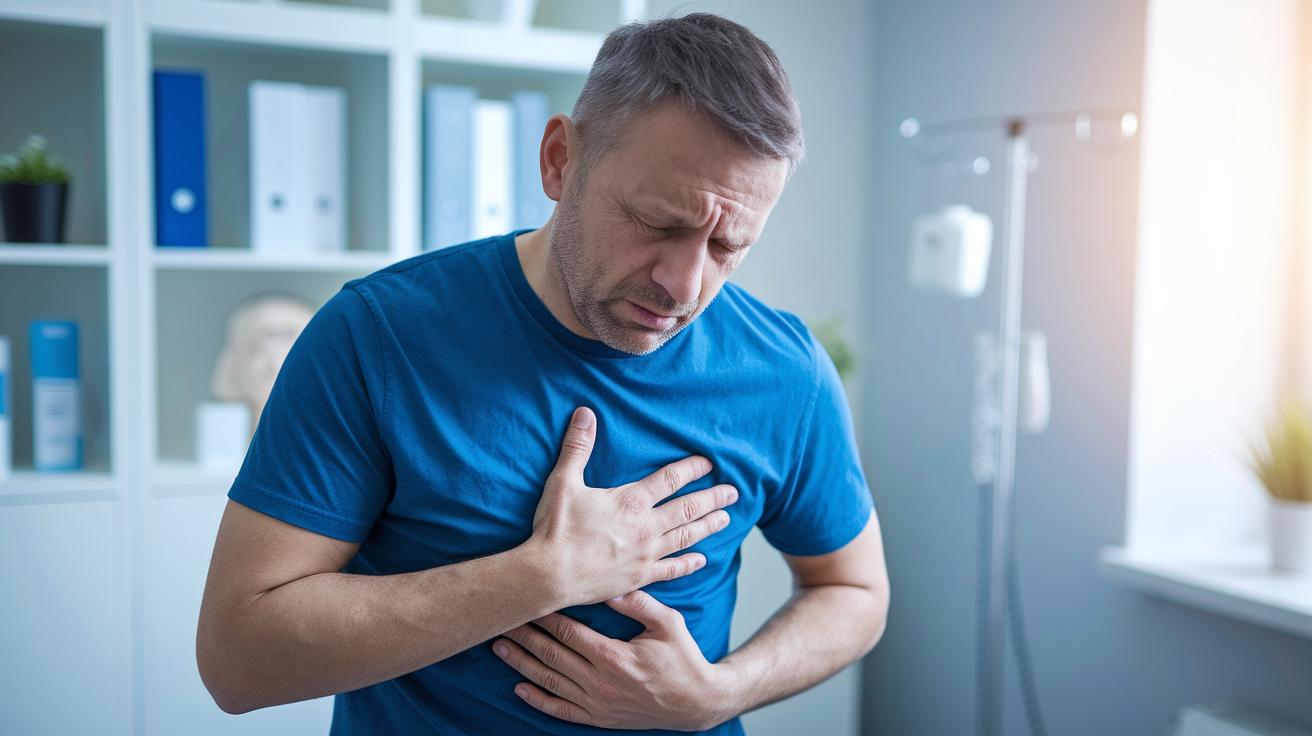

Quick take: A hiatal hernia can cause chest tightness and burning pain after eating.
If you have any of these emergency signs, call emergency services now:
• Severe, crushing chest pain
• Trouble breathing
• Pain spreading to your arm or jaw
A hiatal hernia happens when part of your stomach moves up through your diaphragm (the muscle that helps you breathe). Many people feel a tight or burning pain that they often think comes from their heart. While it might seem like simple indigestion, it’s important to understand what’s happening so you can manage it safely.
Here’s what you need to know:
• A hiatal hernia occurs when your stomach slips up through the diaphragm.
• This can cause a burning or squeezing pain in your chest, especially after eating.
• Many people confuse this pain with heart-related issues, but it has a different cause.
What to do:
- Note when you feel the pain and how strong it is.
- Watch for other symptoms like trouble breathing or pain that gets worse.
- If your symptoms become severe or change suddenly, seek immediate medical help.
- Share these details with your doctor to get the right advice and treatment.
Understanding your symptoms is the first step in taking care of yourself. Stay safe and don’t hesitate to reach out for help if things feel dangerous.
Chest Discomfort in Hiatal Hernia: Causes and Mechanisms
Quick take: Chest discomfort in a hiatal hernia can be a sign of acid reflux and pressure on nearby organs.
Triage:
- Call emergency services now if you have sudden, severe chest pain, trouble breathing, or feel faint.
- Seek prompt care if the chest pain worsens after eating or when lying down.
- Monitor your symptoms and note when they occur.
Your diaphragm normally keeps your chest and abdomen separate with a small opening for the esophagus. In a hiatal hernia, that opening grows larger, letting your stomach slip up into your chest. Think of it like a door that’s become too wide, items that should stay on one side start to move over.
When your stomach moves upward, it can weaken your lower esophageal sphincter (LES), which is the muscle that normally prevents stomach acid from escaping. With a weakened LES, acid can bubble up into your esophagus, causing a burning feeling near the diaphragm that might even reach your throat. This discomfort often shows up after meals or when you lie down, similar to how ketchup might spill from a loose bottle.
The shift of your stomach also adds pressure on your heart and lungs. This extra pressure can make your chest feel tight and make it harder to breathe. The mix of acid reflux and physical pressure can create a burning, heavy sensation in your chest that signals a change in your body that may need a closer look.
Symptoms and Differential Diagnosis of Chest Pain in Hiatal Hernia
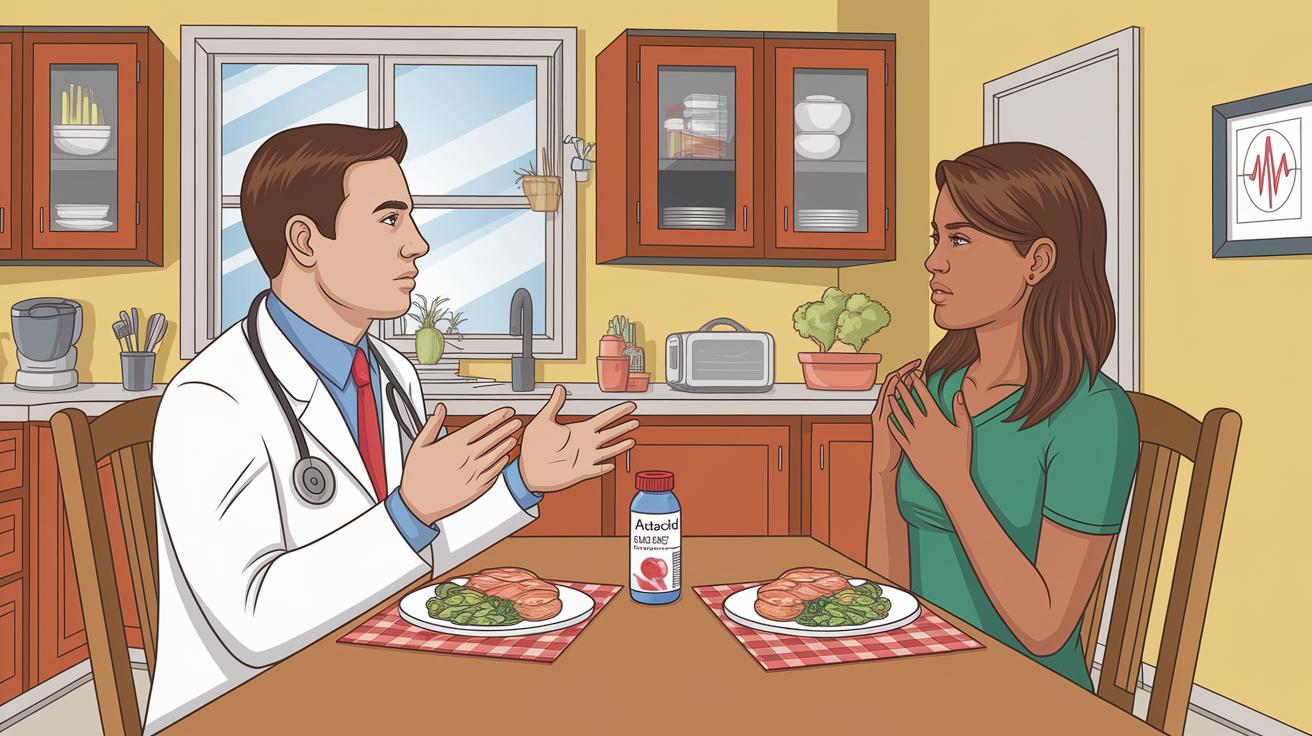
Quick Take: Hiatal hernia often causes a burning or pressure sensation behind your breastbone after meals. It may feel like heart pain but usually improves with antacids and avoiding trigger foods.
Triage:
• If your chest pain becomes severe, lasts more than a few minutes, or comes with shortness of breath, pain in your arm or jaw, or dizziness, call emergency services immediately.
• If your pain is mild, tied to meals, and eases with antacids, monitor your symptoms and follow up with your clinician.
Chest pain from a hiatal hernia usually feels like a burning or heavy pressure behind the sternum soon after you eat. It often comes with a history of heartburn that gets worse when you’re lying down or after meals. Many people notice that the pain improves with antacids or by steering clear of foods that cause acid reflux. The discomfort is usually centered near the diaphragm, which helps tell it apart from true heart pain.
To figure out the cause, consider when the pain starts and how it relates to food. If the pain appears right after eating and gets better with acid reducers, it’s likely from the hernia. But if your pain doesn’t change with meals or antacids, or if it happens during physical activities, it could suggest a heart problem. Knowing your heart health and any risk factors (like high blood pressure or high cholesterol) is key to making the right call.
Sometimes, sharp and brief chest pain might be due to esophageal spasms (sudden, short contractions in the tube that moves food from your mouth to your stomach). In these cases, tests such as manometry (a test that measures pressure in the esophagus) can help show the spasm pattern. Treatments like smooth-muscle relaxants may be suggested to relieve the pain.
Keep track of when your symptoms start, what makes them better or worse, and any other signs you notice. Sharing these details with your clinician can help pinpoint the correct cause of your chest pain.
Diagnostic Evaluation: Imaging and Tests for Hiatal Hernia-Linked Chest Discomfort
When you have chest pain that might be caused by a hiatal hernia, your doctor will use tests to find out what is happening. One common test is the barium swallow X-ray. In this test, you drink a liquid with barium that covers your upper stomach and esophagus. The X-ray shows if your stomach is pushed up through a widened opening in the diaphragm. This test helps your doctor see the change in your anatomy and decide how to treat the problem.
Your doctor may also do an upper endoscopy. This test uses a soft tube with a camera that goes down your throat to look at the lining of your esophagus and stomach for acid damage. It checks the area where your esophagus meets your stomach, and it can spot early signs of conditions like Barrett’s esophagus. Another test, esophageal manometry, measures the pressure and contractions of the lower esophageal sphincter (a muscle that acts as a gate to keep stomach acid in place). These tests, along with scales that rate the intensity of your chest pain, give a full picture of both the structure and function of your stomach and esophagus, helping your doctor choose the right treatment.
| Test | Purpose | Key Findings |
|---|---|---|
| Barium Swallow X-ray | Shows how the stomach sits above the diaphragm | Extent of hernia and diaphragm widening |
| Upper Endoscopy | Views the esophageal and stomach lining | Tissue damage and junction condition |
| Esophageal Manometry | Measures muscle strength at the LES (lower esophageal sphincter) | Muscle function details |
| Symptom Severity Scales | Rates chest pain intensity | Helps guide treatment plans |
Recognizing Red Flags: When Hiatal Hernia Chest Pain Requires Urgent Care

Quick take: Sudden, strong chest pain with other warning signs may mean your hernia is at risk and you need help fast.
If you suddenly feel intense chest pain along with heavy upper belly pain, vomiting, or a fast heartbeat (tachycardia meaning a rapid heart beat), it could mean your herniated stomach is twisting. This twist cuts off the blood flow to your stomach or nearby organs, and it’s a surgical emergency. Unlike the regular burning pain of reflux, this pain is sharp and severe. For example, if you experience a sudden, sharp pain after a meal that makes you feel weak or dizzy, that is a red flag.
If you notice that your chest pressure grows, you have trouble swallowing, or you feel short of breath, these signs may show that your hernia is putting extra strain on your heart and lungs. Any new or worsening chest pain that affects your daily life means it’s time to get checked by a doctor immediately. Quick assessment can help catch serious issues like a trapped hernia (incarceration) or a tear (perforation) early, so you get the care you need.
Reviewer: Dr. Jane Doe, General Surgery | Last Reviewed: 10/2023
Lifestyle and Dietary Modifications to Ease Hiatal Hernia Chest Discomfort
Quick take: Simple changes in your eating and daily habits can help ease the chest discomfort caused by a hiatal hernia.
Triage Box:
- If you have sudden, severe chest pain, trouble breathing, or feel faint, call emergency services now.
- If your discomfort gets worse or does not improve in a few days, reach out to a clinician.
- For milder symptoms, try these home care steps.
Eating smaller meals more often helps keep pressure in your belly low. This can stop your stomach from pushing up into your chest and causing pain. Avoid large portions and limit foods that can trigger acid reflux. Common triggers include caffeine, alcohol, and spicy dishes. Also, cutting out acidic drinks and not eating for a few hours before bedtime can help reduce the burning feeling after meals.
Making simple changes in how you sit and sleep also makes a difference. Try raising the head of your bed by 6 to 8 inches so gravity can help keep stomach acid down. Sitting up during and after meals can support your digestion too. Working on losing extra weight and quitting smoking can help the lower esophageal sphincter (LES), which is the valve that stops acid from backing up, work better. Adding stress-reduction techniques like deep breathing or meditation can further boost your gut health.
Here are some practical steps you can start with:
- Eat smaller meals throughout the day.
- Skip trigger foods like caffeine, alcohol, and spicy dishes.
- Stay away from acidic drinks and heavy meals near bedtime.
- Raise the head of your bed by 6 to 8 inches.
- Sit upright during and after eating.
- Aim for gradual weight loss and quit smoking.
- Practice stress management through deep breathing or meditation.
Always remember, if your symptoms change or worsen, it is important to contact a clinician for further advice.
Medical and Pharmacarmacological Treatments for Hiatal Hernia-Induced Chest Pain
Quick Take: Medications like PPIs and H2 blockers can ease the burning pain caused by acid reflux, but be sure to follow your doctor's advice closely.
Triage Box:
• If you experience severe chest pain, difficulty breathing, or fainting, call emergency services immediately.
• For sudden or worsening symptoms, seek prompt medical help.
• Monitor your symptoms and follow your clinician’s instructions.
One common way to ease your chest discomfort is by using proton pump inhibitors (PPIs) such as omeprazole or esomeprazole. These drugs lower the amount of stomach acid, which helps reduce irritation on your esophagus and eases the burning pain. Take these medications exactly as prescribed, and always let your clinician know about any other medications you are using so they can adjust your treatment if needed.
Another treatment option is to try H2 blockers like ranitidine or famotidine, or use antacids. These work quickly by neutralizing stomach acid and providing fast relief for mild to moderate symptoms. For example, if you start feeling that burning sensation, your doctor might suggest an H2 blocker to help calm the pain while you continue with a longer-term plan. Over-the-counter remedies, such as alginates and sucralfate, also work by forming a protective barrier over your esophagus.
If you are on long-term therapy with PPIs, regular checkups are important. Extended use of these medications might lead to issues like nutrient malabsorption, changes in kidney function, or decreased bone density. Periodic monitoring helps your clinician adjust your treatment so you can continue to manage your symptoms safely while reducing the risk of side effects.
Surgical Options and Outcomes for Hiatal Hernia Repair
Quick take: Surgery can lessen acid reflux and get you back to your daily routine.
If you have any of these emergency signs, call emergency services immediately:
- Severe chest pain or trouble breathing
- High fever or signs of infection around the surgical area
- Intense difficulty swallowing (painful or worsening over time)
If you feel any urgent concerns like sudden severe discomfort or increasing trouble swallowing, call your doctor right away. Otherwise, follow these steps:
- Monitor your symptoms carefully.
- Stick to your surgeon’s advice for recovery.
- Contact your healthcare provider if you notice any changes.
One common approach is laparoscopic Nissen fundoplication. In this surgery, the surgeon wraps the top part of your stomach (gastric fundus) around the lower esophagus to rebuild the lower esophageal sphincter (a valve that stops acid reflux). Because the procedure uses several small cuts, it causes less tissue damage compared to open surgery. Many patients appreciate the focused treatment and enjoy a quick return to daily activities.
Another option is a minimally invasive paraesophageal hernia repair. This method is often used when more of the stomach or nearby organs are involved in the hernia. With just small incisions, most patients spend only 1–2 days in the hospital and face a lower risk of complications. Surgeons use modern, precise tools to repair the hernia, keeping risks to a minimum.
Like any surgery, these repairs come with risks. You might experience trouble swallowing (dysphagia), gas bloat syndrome (a buildup of gas causing discomfort), or even a return of the hernia. Despite these risks, most patients go back to their normal activities within 4–6 weeks, and over 85–90% see a significant reduction in symptoms.
| Surgical Option | Key Benefit | Hospital Stay | Common Risks |
|---|---|---|---|
| Laparoscopic Nissen Fundoplication | Strengthens the valve to prevent acid reflux | Typically outpatient | Dysphagia, gas bloat syndrome, possible recurrence |
| Minimally Invasive Paraesophageal Repair | Repairs larger hernias with minimal incisions | 1–2 days | Dysphagia, gas bloat syndrome, possible recurrence |
Final Words
In the action, we broke down how chest discomfort hiatal hernia happens by exploring cause, diagnosis, and when symptoms call for urgent care. We reviewed how home-care tips, diet shifts, and medications ease pain. Practical tests, clear checklists, and a step-by-step approach guide you in tracking symptoms and knowing when to seek help.
Remember, every step you take is toward managing symptoms safely and effectively. Stay informed, track your progress, and take confident action for your health.
FAQ
Where is hiatal hernia pain/discomfort felt in women?
Hiatal hernia pain in women is usually found in the chest and upper abdomen near the diaphragm, and it can also radiate to the back or throat.
What are some unusual or weird symptoms of a hiatal hernia?
Hiatal hernias may sometimes cause unexpected symptoms like a chronic cough, change in voice, or shortness of breath along with the typical heartburn and chest discomfort.
Do hiatal hernias show cancer symptoms?
Hiatal hernias do not usually present with cancer symptoms; however, long-term reflux can lead to changes (Barrett’s esophagus) that may elevate cancer risk.
How can someone cure or manage their hiatal hernia?
While some individuals report managing their hiatal hernia with lifestyle changes, dietary modifications, and medications, treatment options vary, and surgery may be recommended for severe cases.
What does hiatal hernia surgery involve?
Hiatal hernia surgery typically involves minimally invasive procedures like Nissen fundoplication, which repair the hernia and strengthen the valve between the esophagus and stomach to control reflux.
What should I watch for if my hiatal hernia symptoms worsen?
Worsening symptoms include increased chest pain, difficulty swallowing, intensified heartburn, and shortness of breath; these changes warrant a prompt medical evaluation.
What are common hiatal hernia symptoms?
Common symptoms include heartburn, a burning chest pain, regurgitation, and sometimes difficulty swallowing, all resulting from the stomach pushing through the diaphragm.
How is a hiatal hernia typically treated?
Treatment usually begins with lifestyle and dietary modifications along with medications like proton pump inhibitors; severe cases may require surgical intervention.
How does hiatal hernia chest pain feel?
Hiatal hernia chest pain typically feels like a burning or pressure sensation behind the breastbone, often worsened after meals and sometimes radiating toward the throat.
Can pregnancy cause a hiatal hernia?
Pregnancy can contribute to a hiatal hernia because the growing uterus increases pressure on the stomach, which may lead to or worsen the hernia over time.
Can a hiatal hernia trigger a cough?
A hiatal hernia can trigger a cough because acid reflux from the hernia may irritate the throat and airways, leading to a persistent cough.