Quick Take: Sudden, sharp side or back pain may signal kidney stones. Act fast if you experience red flags.
If you have any of these emergency signs, call emergency services now:
• Severe pain that won’t ease
• High fever with chills
• Inability to keep fluids down (persistent vomiting)
• Severe pain with blood clots in urine
Most kidney stones cause sharp pain, nausea, and sometimes blood in your urine. These small, hard clumps form in your kidneys and can hurt a lot. It might feel worse than a simple muscle cramp. Recognizing these symptoms early can help you stop the problem from getting bigger.
Here’s what you can do now:
- Note down when your pain started and how fast it grows.
- Record any changes like fever, nausea, or blood in the urine.
- If symptoms worsen or you notice red flags, call your doctor immediately.
Remember, early action can keep you from facing more serious issues. Stay safe and monitor your symptoms closely.
Primary Symptoms to Identify in Kidney Stones
Quick take: Kidney stones can cause sudden, sharp pain along with changes in your urine. Monitor your symptoms closely.
If you have any of these emergency signs, call emergency services now:
- Severe, constant pain that doesn’t ease
- Noticeable blood in your urine (red or pink tint)
- Persistent nausea with vomiting
Kidney stones are hard clumps of minerals, usually made of calcium and salts. They form in your kidneys and can cause very sharp, wave-like pain, some even say it feels like childbirth. As a stone moves through your urinary tract, the pain can hit suddenly and forcefully.
Other signs to watch for include:
- Blood in urine (either visible or detected in tests)
- A strong need to urinate often or suddenly
- Nausea and vomiting that leave you feeling very sick
- Pain that spreads to your groin or lower belly
- Restlessness when it’s hard to find a comfortable spot
Keep track of these symptoms and note any changes. Early detection and prompt care can help prevent more serious problems.
Kidney Stone Pain Patterns and Intensity

Quick take: Kidney stone pain comes in sharp, sudden bursts that change as the stone shifts.
If you have any of these red flags, call emergency services now:
- Pain that becomes unbearable and does not ease
- Fever or chills along with the pain
- Inability to pass urine or blood in your urine
Often, kidney stone pain hits in waves that last about 20–60 minutes. You might feel a sharp, intense pain that builds quickly and then fades away. These waves can leave you feeling overwhelmed and drained as the stone moves along your urinary tract.
The pain usually starts on your side or lower back and can radiate toward your groin. As the stone moves, the pain jumps to different areas. On a physical exam, a tender spot is often found along the flank, which tells you the stone is still moving.
Pain levels can change based on the stone’s size and any muscle spasms in the ureter (the tube that carries urine). Many describe it as a piercing, intense pain, while others compare it to severe cramps like those experienced during childbirth. Everyone’s experience is different, so pay close attention to any unusual spikes or lasting changes and share these details with your healthcare provider.
Symptom Progression Timeline for Kidney Stones
Quick take: Kidney stone pain can start suddenly or slowly and may come in waves.
If you have any of these emergency signs, call emergency services now:
- Severe, unrelenting pain
- Pain accompanied by fever or chills
- Persistent vomiting
- Noticeable blood in your urine
Kidney stone symptoms vary a lot from one person to another. Sometimes, you feel a strong pain right away. Other times, the discomfort builds slowly over a few days. Once the pain strikes, it can last from 1 week to more than 1 month. Often, the stone stays in place and blocks urine flow from time to time. This makes the pain go up and down.
There may be times when the pain eases, and you feel almost normal. Don’t be fooled by these breaks. They can mean the stone is stuck for a while. Then, suddenly, the stone may move. When it shifts into the ureter (a small tube that carries urine from the kidney to the bladder), you could feel a new, sharp pain that interrupts the calm.
Watch for signals that the stone is moving. Increasing pain in your lower belly and the appearance of blood in your urine are clear signs. Noticing these changes early helps you keep track of your condition and decide when to seek medical care.
Key Diagnostic Indicators for Kidney Stones
Quick take: Lab tests and scans help us spot kidney stones and decide what to do next.
If you have any of these emergency signs, call emergency services now:
• Severe, unrelenting pain
• Fever with shaking chills
• Constant vomiting or trouble keeping fluids down
Urgent: If your pain spikes quickly or you notice a lot of blood in your urine along with these symptoms, seek help today.
Watch and self-manage: If your pain is mild and lasts only a few days, stay hydrated and note any changes.
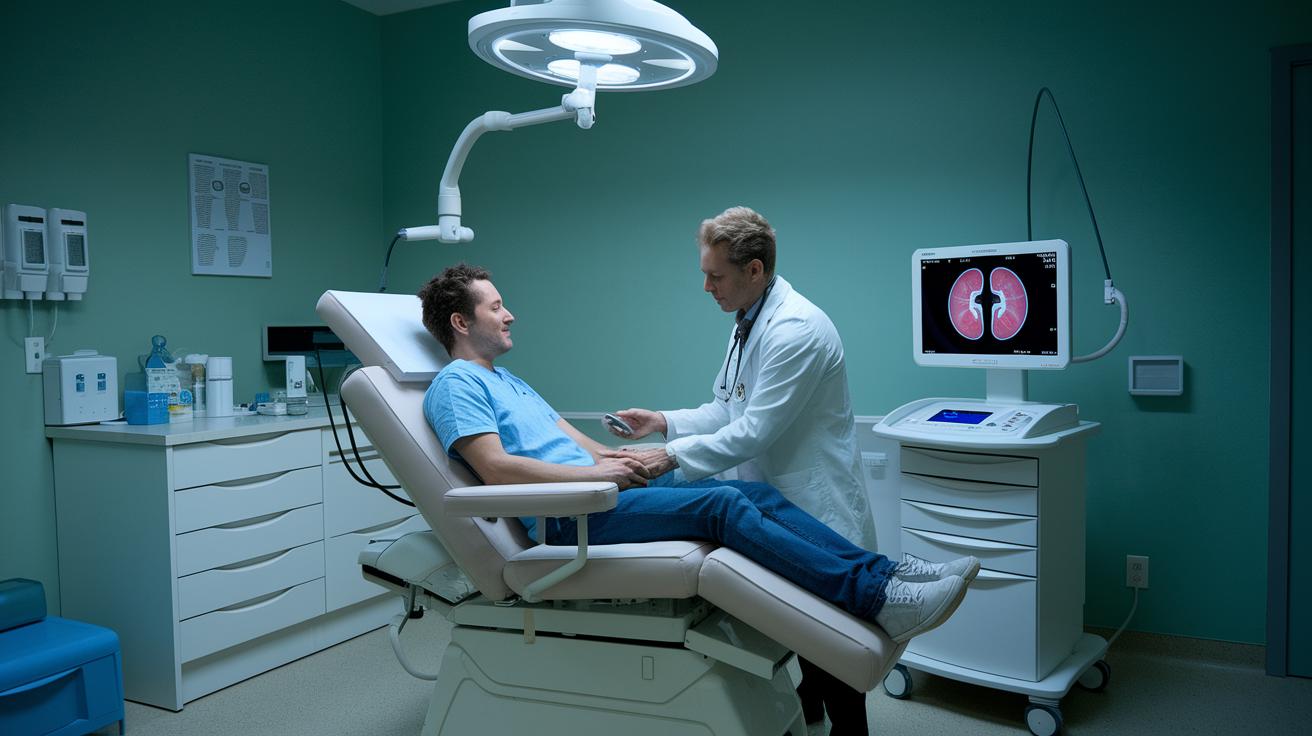
When kidney stones are suspected, we use a mix of simple tests and scans to learn more. These tests check your urine and blood and use imaging to reveal the stone’s size and location.
Laboratory Tests
A urine test (urinalysis) is usually the first step. It looks for small amounts of blood and crystals that hint at kidney stones. A blood test measures markers like creatinine (a waste product) and calcium. High levels here can show that the stones are affecting your kidneys or point to other conditions that cause stones.
Imaging Tests
Scans are key to confirming kidney stones. A CT scan without contrast is very effective. It can spot stones bigger than 1 mm with almost 95% accuracy and shows clear details on the stone’s size and location. An ultrasound can find stones over 5 mm and check for kidney swelling from urine buildup (hydronephrosis). MRI is less used and usually reserved for special cases. Your symptoms and medical history help decide which scan to use.
| Test | What It Shows |
|---|---|
| Urinalysis | Blood and crystals in your
Urgent Warning Signs in Kidney Stone CareQuick take: If you have kidney stone pain that doesn’t improve with ibuprofen or if you develop a fever over 101°F, this could mean your condition is getting worse. Kidney stone pain usually feels sharp and steady, but if your usual pain relievers (like ibuprofen) don’t help and your fever climbs above 101°F, this signals that regular pain management might not be working. Also watch for signs like a fast heartbeat (rapid heart rate) or severe weakness, which can point to an infection soon taking hold. If you see any of these signs, don’t wait: For more details, you can check the red flag checklist for severe abdominal pain here: https://spiritsocietyofpa.com?p=297 At-Home Care Strategies for Kidney Stone Symptoms
Quick take: Drinking lots of water and managing pain can help small stones pass, but severe symptoms need prompt care. Triage Box: Drink plenty of water. Aim for 2–3 L (about 8–12 cups) each day. Sipping throughout the day thins your urine, which may help small stones move along. For pain relief, take NSAIDs (like ibuprofen) following the dosing directions. You can also apply a heat pack to your side to help relax tight muscles as the stone shifts. Avoid heavy activity when pain is acute to prevent making it worse. A few simple diet changes and rest can support your recovery. Cut back on foods high in oxalate (such as spinach and nuts) and choose a low-sodium diet to reduce kidney strain. Stick with lighter meals if nausea is an issue, and allow yourself plenty of time to rest. Gradually return to normal activity as you start to feel better. Prevention and Recurrence in Kidney Stone Symptom ProfileQuick take: Small changes in your diet and lots of water can cut your kidney stone risk in half. If you have any of these emergency signs, call emergency services now:
If you notice these, get help right away. Otherwise, follow these steps: • Adjust your diet. Cut down on salt and limit red meat and other animal proteins. If you have calcium oxalate stones (the most common type, formed when calcium binds with oxalate), you might need to tweak your calcium intake. • Drink at least 2 L of water daily. Staying well hydrated makes your urine thinner, which helps stones pass more easily. • Check your urine’s pH. Aim for a level between 6.0 and 6.5. This helps you know if your diet is working for you. • See your doctor regularly. They may use an ultrasound to catch any new stones early and update your care plan as needed. These simple, evidence-based steps can help you prevent kidney stones from coming back. Stay proactive and keep track of any changes in your symptoms. Final WordsIn the action, we walked through how to spot kidney stone symptoms and manage the discomfort. We outlined primary signs such as severe flank pain, blood in the urine, and nausea. We also examined pain shifts, key testing indicators, and urgent warning signs that require swift help. Home-care tips like hydration and pain relief were shared, along with ideas on how to prevent recurring issues. Keeping track of your kidney stone symptom profile helps you stay safe and confident in your care. FAQWhat are the symptoms of kidney stones in women and men?The kidney stones symptoms in women and men typically include sharp flank pain, blood in the urine, nausea, vomiting, and a frequent or urgent need to urinate, with pain that may radiate to the groin. What are the first signs of kidney stones?The first signs of kidney stones often show up as sudden, severe flank pain, possible blood in the urine, and an urge to urinate frequently, sometimes accompanied by nausea or vomiting. What is the treatment for kidney stones?Kidney stones treatment usually starts with increased fluid intake and pain relievers like NSAIDs, with some cases requiring procedures such as shock wave therapy or other interventions to break up or remove the stone. What causes kidney stones?Kidney stones are caused by a buildup of minerals like calcium, oxalate, or uric acid in the urine, often linked to dehydration, dietary factors, or genetic predisposition. How can kidney stones be prevented?Preventing kidney stones involves staying well hydrated by drinking 2–3 L of water daily, maintaining a low-sodium and balanced diet, and moderating animal protein intake to reduce mineral buildup. Where is kidney stone pain typically located?Kidney stones pain usually begins in the flank or lower back and may spread toward the groin or lower abdomen as the stone moves through the urinary tract. What does passing a kidney stone feel like for females?Passing a kidney stone in females often feels like intense, intermittent pain that starts in the flank and shifts toward the groin, with associated nausea and sometimes blood in the urine. Subscribe Today GET EXCLUSIVE FULL ACCESS TO PREMIUM CONTENT SUPPORT NONPROFIT JOURNALISM EXPERT ANALYSIS OF AND EMERGING TRENDS IN CHILD WELFARE AND JUVENILE JUSTICE TOPICAL VIDEO WEBINARS Get unlimited access to our EXCLUSIVE Content and our archive of subscriber stories. Latest article |