
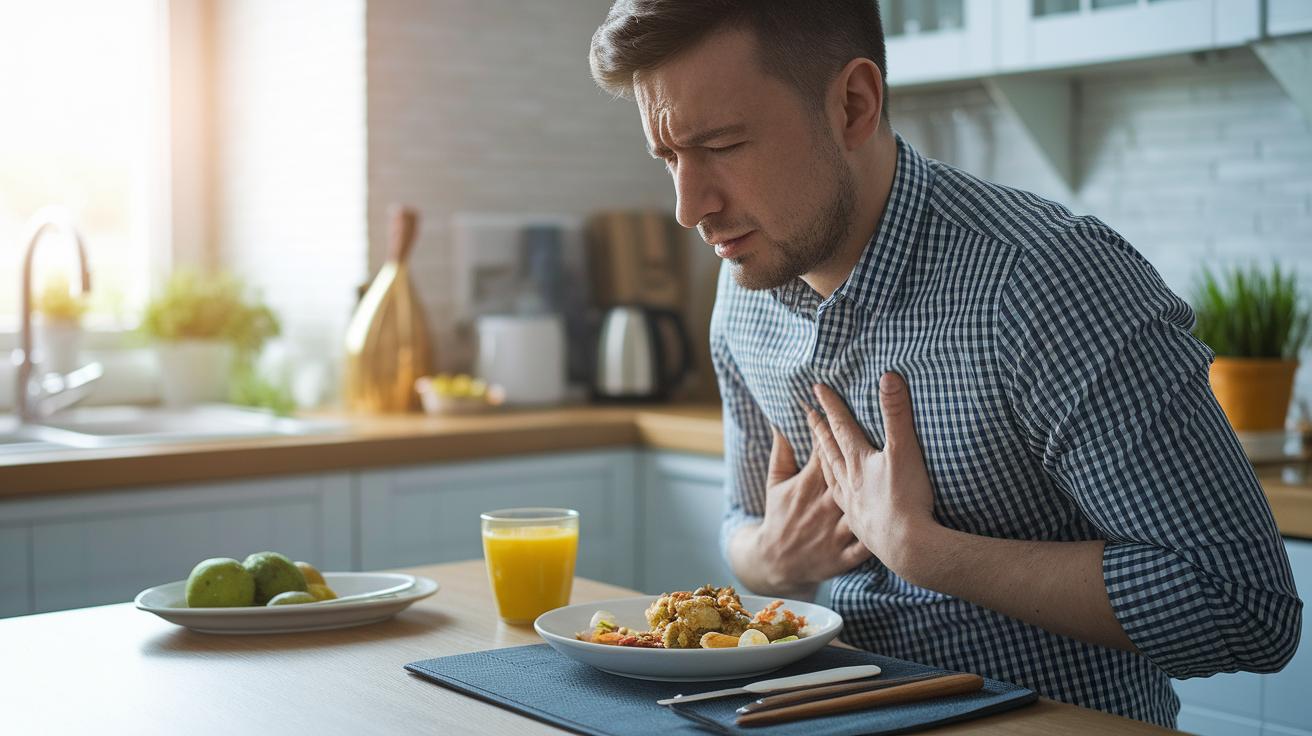

Quick Take: Chest pain after a meal is often linked to digestion. If you experience severe pain, feel faint, or have trouble breathing, act immediately.
If you have any of these emergency signs, call emergency services now:
• Severe pain that gets worse quickly
• Difficulty breathing or shortness of breath
• Feeling very dizzy or faint
Most chest pain after eating comes from irritation in your stomach or esophagus (the tube that carries food from your mouth to your stomach). Heavy or fatty meals can also put extra pressure on your heart.
In this guide, you’ll learn about common digestive causes behind chest pain after eating. We’ll also share simple tips to track your symptoms. Write down when the pain starts, how bad it is, and any other signs you notice. This can be very helpful when you talk with your doctor.
Stay safe and keep a close watch on your symptoms.
Chest Discomfort After Eating: Feel Secure and Informed
Quick take: Chest pain after eating is usually from acid reflux but can sometimes signal a heart issue.
If you notice any of these emergency warning signs, call emergency services now:
- Chest pain lasting more than a few minutes
- Shortness of breath
- Sweating or dizziness
- Pain that spreads to your arms, neck, or jaw
Most often, chest discomfort after meals is from acid reflux (when stomach acid moves up into your esophagus), which can cause a burning or sharp pain. Sometimes large or fatty meals put extra strain on your heart and may cause pressure similar to angina (a type of chest pain related to heart issues).
To help figure out the cause:
- Note when your pain starts and how long it lasts.
- Track if it feels like burning (acid reflux) or pressure (heart-related).
- Avoid heavy, fatty foods if you notice these symptoms.
Remember, if your pain worsens or you see any red flags, act now and get medical help right away.
Common Digestive Causes of Chest Discomfort After Eating
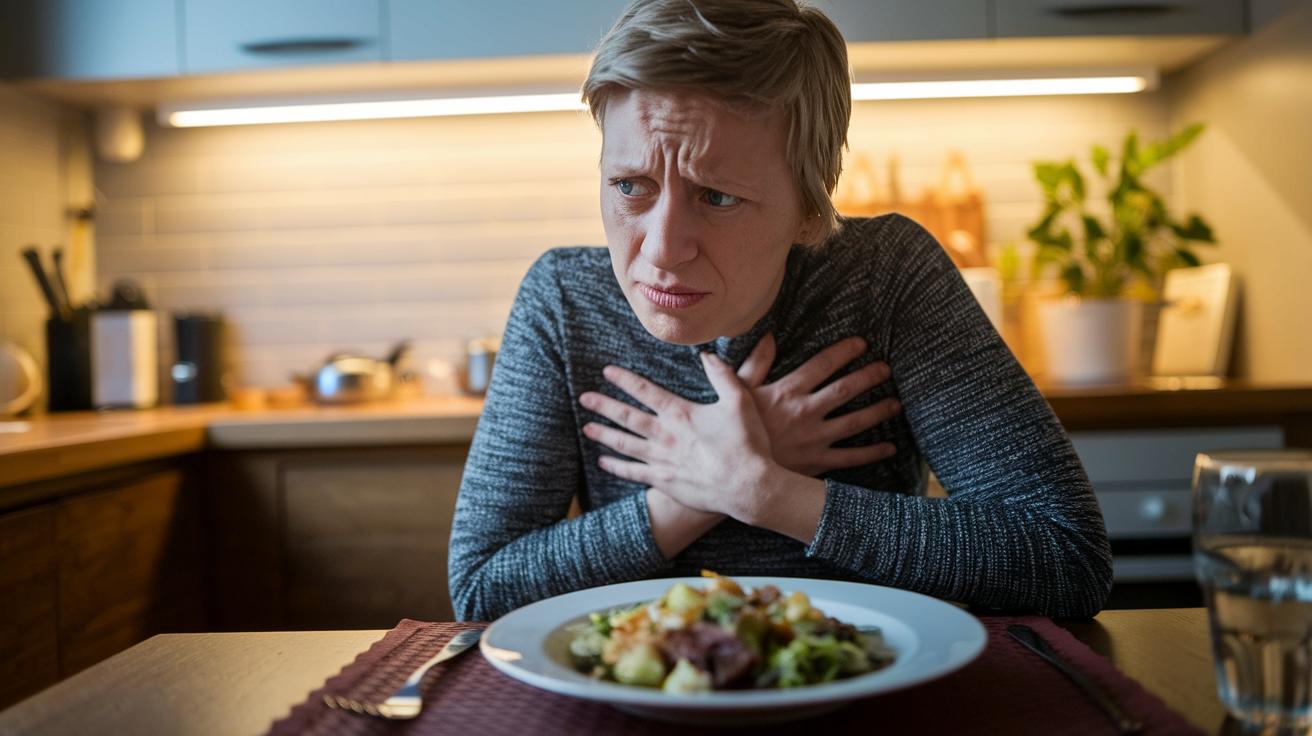
When you notice chest pain after a meal, it is often due to a common digestive problem rather than a heart issue. Your stomach and nearby organs work hard to digest food, and sometimes this can cause burning, squeezing, or even sharp pain behind your breastbone.
Here are five common digestive reasons you might feel chest discomfort after eating:
- Acid reflux or GERD (when stomach acid moves up into the tube that carries food from your mouth to your stomach), causing a burning feeling.
- Gallbladder problems (like gallstones) which can trigger pain especially after a fatty meal.
- Inflammation or spasms of the esophagus (the tube that moves food down) that cause tight, squeezing chest pain.
- Peptic ulcer disease where sores in the stomach lining or upper intestine cause pain that can spread to your chest.
- Hiatal hernia (when part of the stomach pushes through the muscle that separates your chest from your belly) leading to a burning sensation in your upper body.
How you eat can make a big difference. Heavy, fatty meals or eating too quickly may worsen these symptoms. You might feel more pain if you eat large meals or close to bedtime. Trying smaller, more frequent meals and giving your body time to digest can help ease the discomfort.
Non-Digestive (Cardiac) Chest Discomfort After Eating
Quick take: Heavy or fatty meals can strain your heart, triggering angina (chest pain from low blood flow).
Triage Box:
- Please call emergency services now if you experience severe, crushing chest pressure, pain spreading to your arm, neck, or jaw, sudden shortness of breath, or heavy sweating.
- If your symptoms worsen or last more than a few minutes, seek same-day medical care.
- If the pain is mild and brief, keep a close eye on how you feel and follow up with your clinician if it continues.
Large or fatty meals may force your heart to work harder, especially if you have heart disease or risk factors like high blood pressure or older age. This extra strain can lead to angina, a kind of chest pain caused by reduced blood flow. Heart-related chest pain often feels heavy, tight, or squeezing, typically on the left side. It is different from digestive pain, which tends to feel like a burning sensation from acid reflux. For example, you might describe it as, "My chest felt heavy and tight, and the pain wouldn’t fade quickly." You could also notice shortness of breath, sweating, or pain that spreads to your arm, neck, or jaw.
Being aware of these risk factors can help you decide when to get help. If your symptoms continue or worsen, please contact your healthcare provider.
How to Differentiate Reflux Symptoms from Cardiac Chest Pain After Eating

Quick take: If your chest pain comes with warning signs like cold sweats, dizziness, or pain spreading to your arm, neck, or jaw, call emergency services immediately.
When you feel chest discomfort after eating, it helps to know whether the pain is from reflux or your heart. Reflux pain usually feels like a burning sensation behind your breastbone and often improves with antacids. In contrast, pain linked to the heart tends to feel like pressure or a tight, crushing squeeze and may stay longer along with other warning signs.
| Feature | Reflux Pain | Cardiac Pain |
|---|---|---|
| Nature of pain | Burning behind the breastbone; usually eases with antacids | Pressure-like, tight, or crushing sensation |
| Timing relative to meals | Often starts soon after eating | May happen during or after a heavy meal |
| Duration | Usually brief or improves quickly with treatment | Tends to last several minutes |
| Associated symptoms | Typically just discomfort | Often comes with cold sweats, dizziness, or pain spreading to the arm, neck, or jaw |
These clear differences matter. If you notice pain that is long-lasting or comes with red flag signs like cold sweats or pain that spreads, seek urgent evaluation. Tracking your symptoms can help a clinician make the best decision for your care.
Effective Home Remedies for Chest Discomfort After Eating
Quick take: If you feel a burning or tight chest after eating, simple home changes may help you feel better.
If you have any of these emergency signs, call emergency services now:
• Severe chest pain that spreads to your arm, neck, or jaw
• Trouble breathing or sudden shortness of breath
• Sweating, lightheadedness, or a sense of impending doom
If your pain gets much worse or does not go away after 2 hours, seek urgent care.
For milder discomfort, try these steps at home:
• Change your diet: Eat small meals more often. This helps your stomach manage food without becoming overloaded. Avoid fatty, spicy, or sugary foods that can trigger excess acid (stomach acid causing a burning feeling). For example, choose a light salad with lean protein over a heavy lunch.
• Try non-drug remedies: Adjusting how you eat may lessen acid reflux (when stomach acid flows back into your throat) and burning sensations.
• Use over-the-counter medicines if needed: Medicines like antacids, H2 blockers, or proton pump inhibitors can help by neutralizing or reducing stomach acid. Always follow the label instructions and check with your doctor if your symptoms continue.
• Pace your meals and keep upright: Eating slowly limits extra air that can form gas, and staying upright for about 30 minutes after eating lets gravity help your digestion and keeps stomach acid in check.
When to Seek Medical Help for Chest Discomfort After Eating

If you have chest pain after eating that lasts more than a few minutes, feels like it's spreading to your arm, neck, or jaw, or comes with shortness of breath, dizziness, nausea, or cold sweats, act now and get medical help.
When you show these warning signs, a doctor may order tests. They might use an endoscopy (a small camera to look inside your esophagus), blood tests (to check for heart injury or inflammation), an ultrasound (to view your abdominal organs), or a chest X-ray (to check your lungs and heart). These tests help decide if your pain is related to your heart or your digestive system.
If you have chest discomfort accompanied by a fast heartbeat or if you feel faint, call emergency services immediately. If the pain worries you but you don’t have several red flags, schedule urgent outpatient care. Use a chest pain triage flowchart as your guide for the best next steps.
Preventing Chest Discomfort After Eating: Long-Term Strategies
Quick take: Simple changes to your meals and lifestyle can help lower chest discomfort after eating.
If you have any of these emergency signs, call emergency services now:
- Severe chest pain that feels heavy or tight
- Trouble breathing or shortness of breath
- Pain that spreads to your arms, neck, or jaw
You can ease chest discomfort by planning your meals with long-term healthy changes in mind. Cut back on foods that may trigger symptoms, such as fried, fatty, spicy, or high-sugar items. A low-acid diet (one that avoids foods that increase stomach acid) can lower episodes of acid reflux by up to 50%. For example, swapping a greasy burger for a grilled chicken salad might help reduce acid flare-ups.
Work on small lifestyle shifts that support a healthy weight and proper meal timing. Eat smaller portions and steer clear of large meals, especially before bedtime, to ease stomach pressure. Try to finish eating at least 2–3 hours before sleep. This makes digestion easier and reduces extra strain on your heart after meals.
Adjust your surroundings to help your digestion. Raising the head of your bed by 6–8 inches can help prevent acid from harming your throat at night. Incorporate simple stress-reduction techniques, such as deep breathing exercises or a short walk after dinner. These steps can keep both your mind and body relaxed and support long-term control of post-meal discomfort.
Final Words
In the action, you now have a clear view of what may cause chest discomfort after eating. The guide broke down digestive and cardiac reasons, explained how to tell them apart, and gave simple home-care tips along with key red flags.
Follow these steps to feel more in control and know when to seek help. Stay positive and remember that understanding chest discomfort after eating empowers you to act fast and safely.
FAQ
How do I stop chest tightness, burning, and GERD chest pain quickly after eating?
The methods to ease chest tightness include avoiding fatty or spicy meals, eating smaller portions, and using over-the-counter antacids when appropriate. This helps reduce acid reflux and burning sensations.
What does it mean if my chest pain after eating isn’t heartburn and sometimes occurs on the left side?
Chest pain that isn’t tied to heartburn may signal non-digestive issues like angina. Left-side pain, especially with shortness of breath or sweating, calls for prompt evaluation by a clinician.
What is the typical location and nature of GERD-related chest pain?
GERD chest pain generally feels like a burning sensation behind the breastbone. It may also feel sharp, stabbing, or heavy, particularly after consuming large or fatty meals.
What does unexplained chest pain over months indicate, and when should I worry about chest pain after eating?
Persistent chest pain for months or chest pain with symptoms such as dizziness, shortness of breath, or sweating suggests you need medical attention. It is wise to seek evaluation if these red flags arise.
Why does my chest feel heavy after eating?
A heavy chest post-meal can result from acid reflux or cardiac strain caused by large meals. Monitor the symptom closely and consult a healthcare professional if it worsens or is accompanied by other concerning signs.