
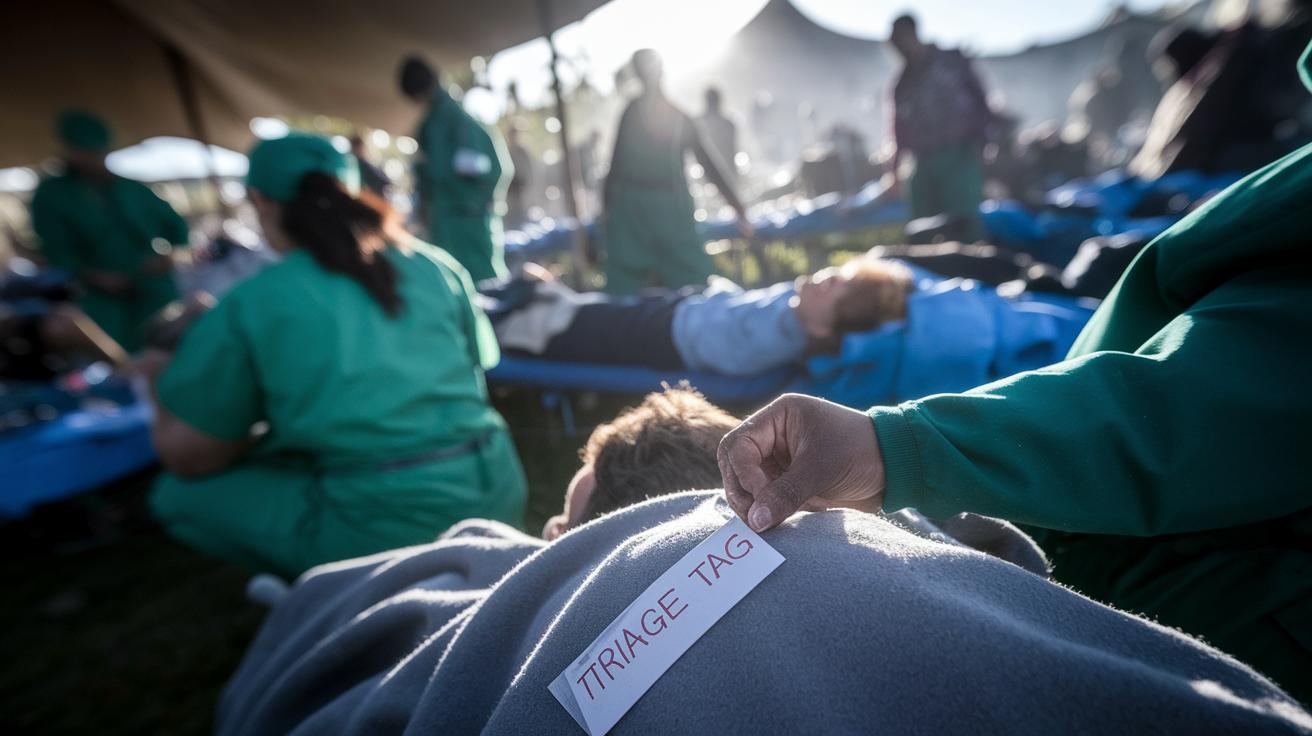

Quick take: Triage tags use simple color codes to show who needs help first.
In a crisis with many injured people, every second matters. Emergency responders use these color tags to decide who needs care right away. Red tags mean you have a life-threatening injury and need immediate help. Yellow tags mean your injury can wait a short time. Green tags are for minor injuries that need basic care. Black tags show that survival is unlikely.
Understanding these color codes helps teams work fast during overwhelming events.
How triage tags apply in mass casualty incidents
Triage tags are simple, color-coded markers that let emergency responders know quickly which patients need help first. They work with systems like START (Simple Triage and Rapid Treatment), a basic method to sort injured people by urgency. The tags are:
- BLACK: Injuries likely not survivable.
- RED: Immediate care is needed.
- YELLOW: Serious injuries that can wait a little.
- GREEN: Minor injuries.
For instance, if someone gets a RED tag with a note like "Immediate care needed for severe bleeding or blocked airway," it means they need help fast.
When there are many victims (usually more than 10), these tags are very useful. They help responders make quick decisions and group patients by the level of care needed. This lets responders send GREEN-tagged or walking patients to a safe area while focusing on those who are in critical condition.
Triage tags also act as a common language among emergency teams. They organize patients and speed up communication so that everyone knows who needs urgent treatment. In stressful moments, this system helps save lives by making it clear who must be treated immediately.
Origins of color-coded triage tags and the START system
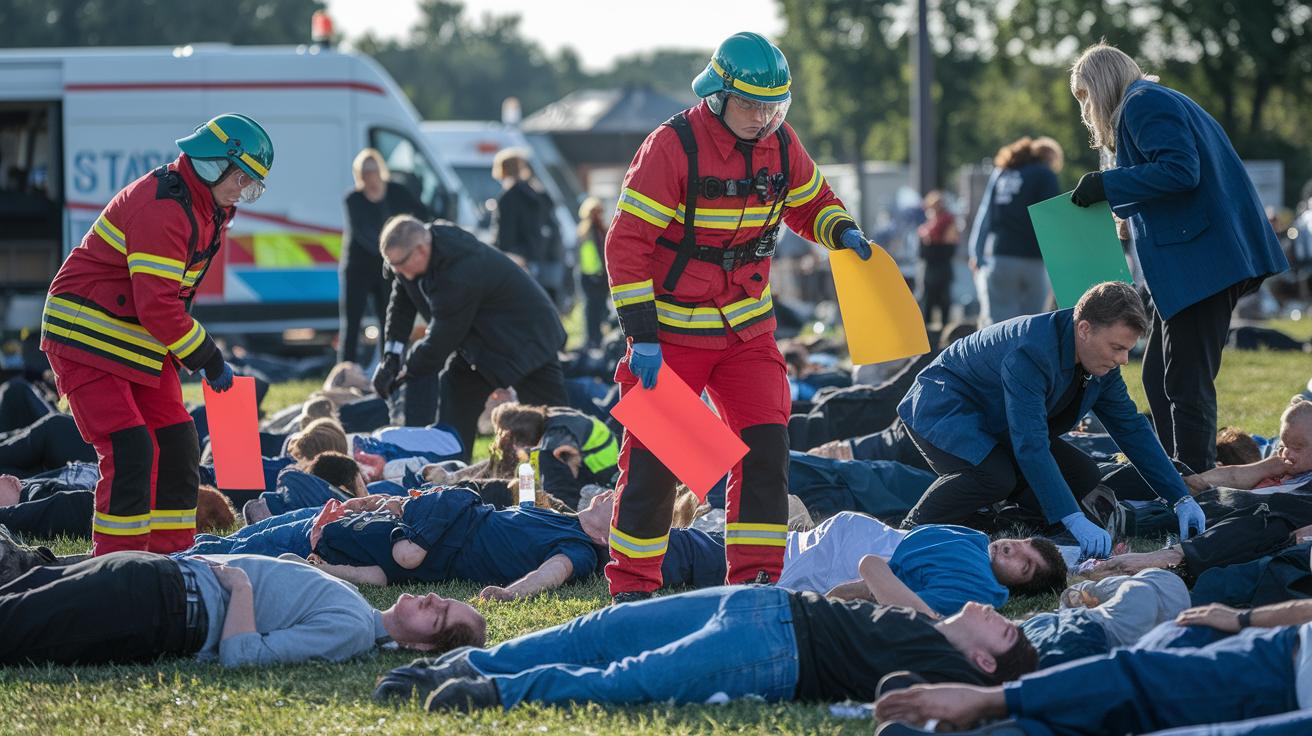
Quick take: The START system helps responders decide quickly who needs urgent care in a crisis.
In 1983, the Newport Beach Fire Department and a local hospital built a new process called START (Simple Triage and Rapid Treatment). It was designed to spot patients at risk of dying within 1 hour because of trouble breathing, head injuries, or heavy bleeding. Four colors, red, yellow, green, and black, show which patients need care first.
Imagine this during an emergency drill. A responder sees several injured people. The red tag tells them who needs immediate help. This clear color system saves time when every second matters.
Key points of the START system:
- Sort patients fast by checking their breathing, blood flow, and mental alertness.
- Use red tags for patients with serious injuries needing urgent care.
- Put patients with minor injuries (green tags) at safe collection points.
- Mark patients with injuries that will not survive (black tags) so resources go to others.
This system was made to be fast and works the same way for every emergency team. When there are many victims, the simple color code helps all responders understand priorities and use their resources well.
Detailed review of triage tag categories
BLACK tags show that the injuries cannot be saved. For example, if airway repositioning fails and the patient does not start breathing, they are marked as black. Field teams update these numbers quickly so resources can be moved away from cases that cannot be saved.
RED tags mean that the patient needs care immediately. Teams often start by tagging patients as red to be safe. They then check again and may change the tag right there. Keeping track of red-tagged patients helps guide fast treatment.
YELLOW tags are used when patients have serious injuries but are stable enough to wait. Field teams watch these patients closely and update their tag if their condition changes. This ensures that if things worsen, help can come without delay.
GREEN tags are given to patients with minor injuries who can walk on their own to the care area. This clears the scene for more urgent cases and helps keep order.
Teams re-assess patient conditions and count tags carefully to support quick decisions and clear situational reports.
| Tag Color | Patient Condition | Operational Application |
|---|---|---|
| Black | Injuries that cannot be saved | Move resources away quickly; update counts |
| Red | Life-threatening injuries | Recheck often; guide rapid treatment |
| Yellow | Serious but stable injuries | Monitor closely; prepare for worsening condition |
| Green | Minor injuries | Direct to care points; maintain scene order |
Step-by-step field triage using color-coded tags
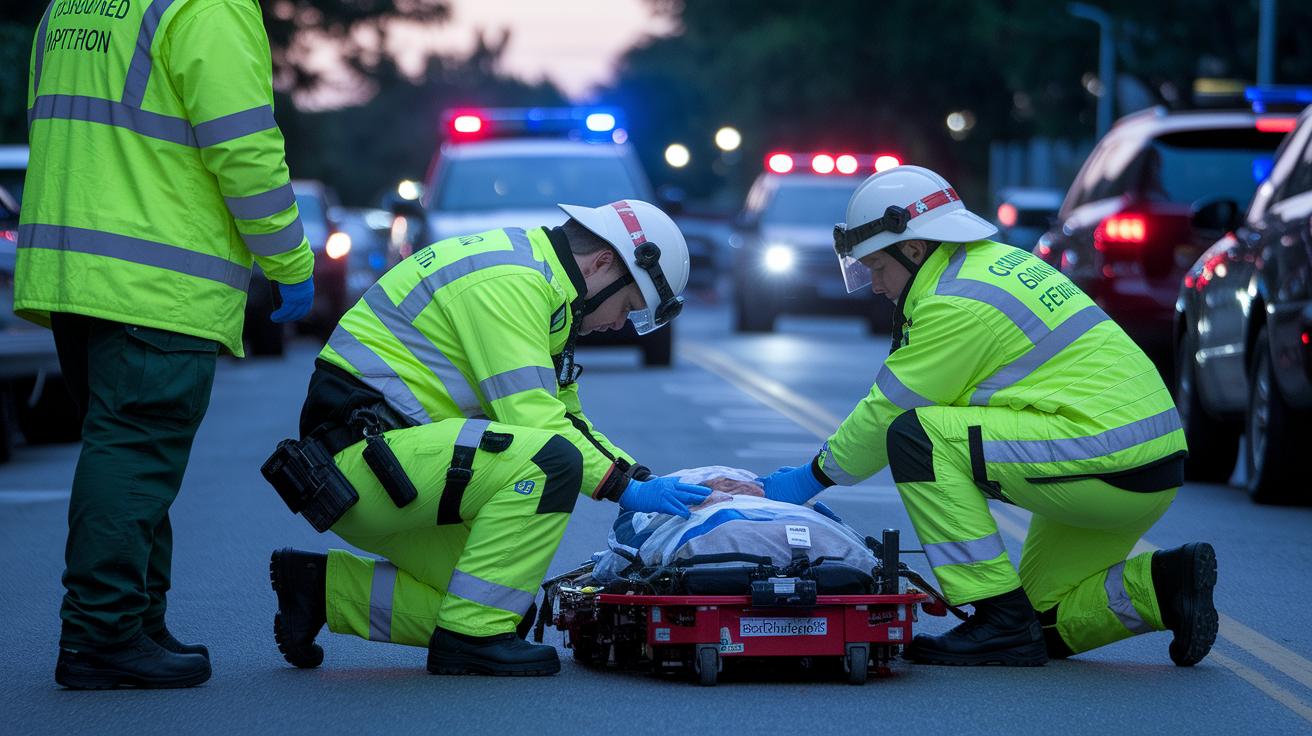
Follow these steps when assessing patients on the scene:
- If you see a patient who can walk, send them to a safe collection area (GREEN tag) to keep room available for those in urgent need.
- Check the patient’s breathing. If they are not breathing, gently reposition their head to open the airway. If they still do not breathe, tag them BLACK. If you count more than 30 breaths per minute, tag them RED.
- Feel for a pulse at the wrist (radial pulse). If you cannot feel a pulse or if the skin color return (capillary refill) takes longer than 2 seconds, tag the patient RED.
- Look at the patient’s mental status. If they seem confused or are not fully alert, give them a RED tag. If they are alert and responsive, assign a YELLOW tag.
Make sure to count and record each tag. This helps with resource planning and keeps your report clear. For instance, a patient with a small cut who is walking would be placed in the GREEN group at the collection point.
triage tags meaning (mass casualty) boosts crisis care
When emergencies occur quickly, triage tags help responders decide who needs immediate care and who can wait. These color markers give you a clear snapshot of each patient’s urgency.
The START system uses four color tags for adults. It is designed for fast checks, usually around 60 seconds per patient. If a patient is tagged red (needs immediate care), responders act without delay.
SALT adds one more tag: black for injuries that are unlikely to survive. This global system works for a wide range of patients and includes directed steps to make sure no life-saving opportunities are missed.
For children, JumpSTART adjusts the criteria of the START system. It changes checks like breathing rate and mental status to fit pediatric needs, ensuring that young patients get prompt and proper care.
| System | Tag Categories | Target Group | Average Assessment Time |
|---|---|---|---|
| START | 4 Colors | Adults | ~60 sec |
| SALT | 4 Colors + Black | Global | Varies |
| JumpSTART | 4 Colors | Pediatrics | Modified benchmarks |
These systems keep crisis care efficient and clear, guiding responders to act fast when every second counts.
triage tags meaning (mass casualty) boosts crisis care
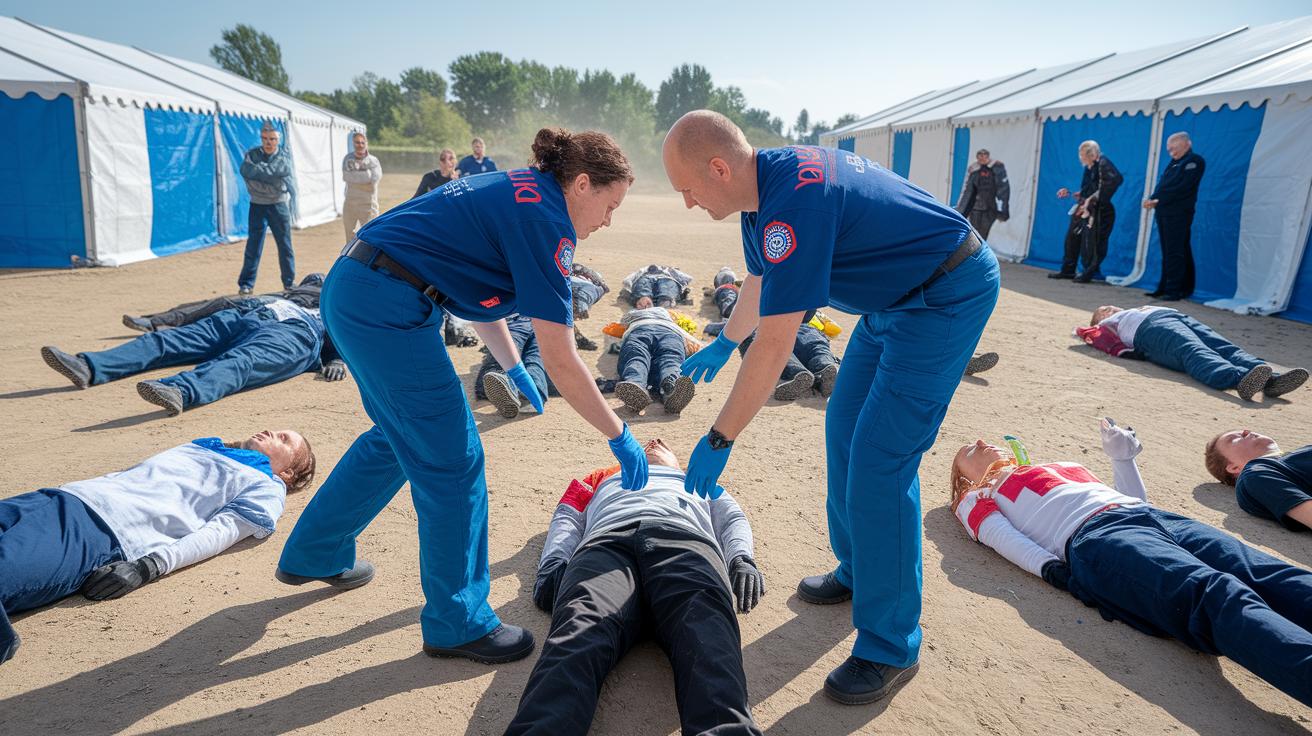
Quick take: Practice drills build your skills so you can act fast when every second counts.
Triage Box:
- If you mix up tag colors (black, red, yellow, green), review your steps immediately.
- If you delay checking a patient’s airway or pulse, pause and refresh your training.
- If you miss a sign during drills, debrief right away to improve accuracy.
Regular practice is key for responders to master triage tags in a mass casualty event. Drills with over 10 victims mimic real pressure and help your team learn to decide quickly. In a drill, you might reposition a patient’s airway or check their pulse while caring for several victims at once.
Practice sessions should include:
- Drills that simulate a high number of casualties to sharpen your speed and precision.
- Exercises for repositioning the airway, checking the radial pulse (the pulse on your wrist), and quickly assessing if a patient is alert.
- Clear communication steps where each tag color is announced at the casualty collection point.
In addition to hands-on drills, attend triage workshops that use digital flowcharts. These sessions reinforce proper protocols and help avoid over-triage by stressing correct record-keeping. Focus on counting tags accurately to support clear resource planning and smooth scene management.
Regular exercises and guided feedback help build confidence and maintain precision when every second matters.
Final Words
In the action, this post broke down how color-coded markers help manage many injured patients. It explained key tag colors and criteria, guided you through field triage steps, and compared systems like START and JumpSTART. The post also outlined practical training tips to ensure the tags work when needed. These insights into triage tags meaning (mass casualty) can boost responder confidence and improve emergency care decisions. Every step shared drives clear, calm actions that save time and may save lives. Stay prepared and keep moving forward.
FAQ
What does triage tag colors meaning indicate in mass casualty events?
The triage tag colors indicate patient urgency. Red means immediate care, yellow signals delayed treatment, green shows minor injuries, and black identifies those who are deceased or expectant.
What are common mass casualty triage colors and their purposes?
The common mass casualty triage colors are red for life-threatening conditions needing rapid treatment, yellow for serious injuries that can wait, green for minor injuries, and black for deceased or expectant cases.
What do mass casualty triage guidelines cover?
Mass casualty triage guidelines cover the rapid assessment of patients using color-coded tags, ensuring responders prioritize care quickly and manage resources by tracking tag counts and injury severity.
What are examples of mass casualty triage in practice?
Examples include on-scene sorting where responders place red tags on patients with severe bleeding or breathing issues and green tags on walking wounded, keeping the treatment area clear for critical cases.
What is a triage tag for a mass casualty event?
A triage tag for a mass casualty event is a standardized, color-coded marker placed on a patient to indicate injury severity and treatment priority, guiding first responders during large-scale emergencies.
What are the categories for mass casualty triage?
The categories typically include four groups: red (immediate), yellow (delayed), green (minor), and black (deceased/expectant), each detailing the treatment urgency for patients in critical incidents.
What are the five levels of triage and how does the tagging system work?
While some systems use five levels to further stratify patient needs, the common mass casualty tagging system employs four color-coded levels. In some settings, an additional level may be used to refine patient prioritization.