
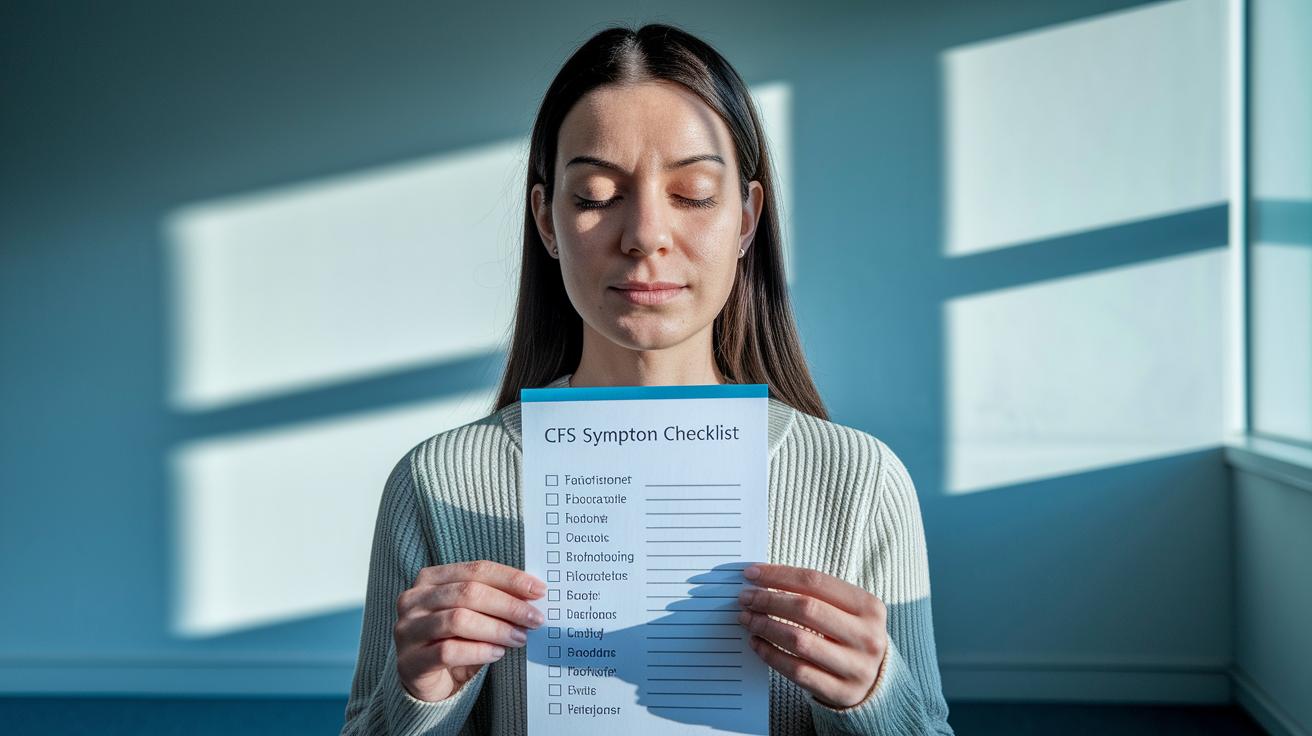

Have you ever felt confused by your body's mixed signals? A ME/CFS (Myalgic Encephalomyelitis/Chronic Fatigue Syndrome) symptom checklist can help you spot signs like deep tiredness, brain fog (trouble thinking clearly), and sore muscles. This easy tool lets you note when these symptoms hit hardest so you can explain them clearly to your doctor. ME/CFS can show up differently in each person, and tracking your own pattern can really help you manage daily challenges. Learn how this checklist gives you clear, empowering insights into your health.
cfs symptom checklist Brings Empowering Health Clarity
Quick take: ME/CFS can bring deep fatigue and a range of symptoms that make daily tasks hard. If these signs show up, talk with your doctor soon.
Triage steps:
- Call your doctor if you find these symptoms make daily life very difficult.
- Write down when your symptoms occur and how strong they are.
- Follow up with your doctor if you notice any worsening.
ME/CFS (chronic fatigue syndrome) is a condition that can be mild or very severe. It affects people of all ages, races, and income levels. Women tend to have it about 4 times more often than men. Because the signs can vary, using this checklist can help start a clear conversation with your healthcare provider.
Here are the key signs to watch for:
- Constant tiredness: A deep, ongoing exhaustion that rest does not fix.
- Energy crash after effort: Even small physical or mental tasks can leave you extremely tired.
- Unrefreshing sleep: You may sleep many hours yet still feel no rest.
- Brain fog: You might experience memory lapses and have trouble concentrating.
- Widespread pain: Aches in muscles and joints without any obvious injury.
- Dizziness: Feeling lightheaded when you stand up or change positions.
- Immune issues: Recurring sore throat, tender lymph nodes, or a low fever.
- Sensory sensitivity: Being overly affected by bright lights, loud sounds, or touch.
- Stomach discomfort: Occasional bloating or belly pain that happens with other symptoms.
This checklist is for discussion with your doctor and does not replace a professional diagnosis.
Fatigue and Energy Depletion in CFS Symptom Checklist

Quick take: Feeling extreme tired after even light activity can be a sign of ME/CFS, so tracking these changes is important.
Triage Box:
• Red Flags: If you experience a sudden, sharp drop in energy that leads to severe weakness or makes you feel confused, call emergency services now.
• Urgent: If your fatigue worsens very quickly after a small activity, seek same-day medical attention.
• Watch and Self-Manage: Keep a daily record of your symptoms and recovery times to share with your doctor.
Many people with ME/CFS feel a deep, constant exhaustion that gets worse with even a little effort. Even small tasks, even thinking hard, can lead to a heavy energy crash. This delayed crash, known as post-exertional malaise (PEM) (worsening of fatigue after activity), typically happens 12 to 48 hours after you push your body, and it can take a day or more to get better.
Here are a few key points to watch:
- How long the tiredness lasts after any activity.
- How intense the fatigue feels.
- How many hours or days it takes for you to bounce back.
- Whether you notice a loss of muscle strength after doing even light work.
- If your mind feels foggy or you have trouble concentrating.
- When even small tasks lead to a sudden drop in your energy.
Keep a simple log each day noting the time you feel tired, how strong the fatigue is, and how long it takes you to recover. This record will help your provider understand your energy swings and give you better care.
Cognitive and Neurological Indicators in CFS Symptom Checklist
Quick take: Many of these symptoms can affect your daily life. If you experience severe changes like sudden confusion, extreme headaches, or a wobbly walk, seek urgent care.
Red flag checklist:
- Severe or sudden headaches
- Sharp memory loss or confusion
- Sudden imbalance or falls
Cognitive issues are common. You might feel like your mind is moving slowly, a state often called brain fog. This can make simple thinking tasks feel cumbersome, like your head is wrapped in cotton. You might also notice lapses in memory, trouble staying focused, being overly sensitive to bright lights and loud sounds, or feeling dizzy and lightheaded.
Neurological signs add another layer. Many report ongoing headaches that vary from mild to intense. Some feel burning or tingling in their arms or legs (neuropathic pain) without a clear cause. You might also find that your walk feels unsteady or clumsy.
These symptoms can disrupt your work, social life, and self-care routines. If you notice them happening frequently, it’s a good idea to get a medical checkup so you can work out the best plan to manage them.
Sleep and Restorative Disturbances in CFS Symptom Checklist

If you find that you wake up feeling tired even after a full night’s sleep, you’re not alone. Many people with ME/CFS report sleep that leaves them feeling unrested. This poor sleep can add to your daytime fatigue and make it harder to focus or remember things. When your sleep pattern is off, your body’s natural rhythm is disrupted, which deepens the tiredness and affects your overall comfort.
- Unrefreshing sleep: You sleep enough hours, yet you never feel rested.
- Insomnia: You have trouble falling asleep or staying asleep.
- Hypersomnia: You sleep too much or feel overly sleepy during the day.
- Fragmented sleep: You wake up often during the night, breaking deep sleep.
- Circadian disruption: Your body’s regular sleep-wake cycle is thrown off.
If these sleep issues continue, talk to your doctor. Sleep studies can help find the cause and guide you to strategies that work.
Pain and Musculoskeletal Signs in CFS Symptom Checklist
Pain can make daily activities hard and affect your overall well being. It is a key part of chronic fatigue syndrome that many people struggle with. By watching and noting your pain, you can help your doctor adjust your care plan to suit your needs.
Here are common pain signals you might notice:
- Muscle aches: widespread soreness reported by many patients (around 80%).
- Joint pain: steady discomfort in your joints even when there is no swelling.
- Headaches: frequent tension headaches or migraines that may last a long time.
- Chest pain: discomfort in your chest that can add to your distress.
- Tender lymph nodes: sensitive or slightly swollen nodes in your neck or under your arms.
- Neuropathic pain: burning, tingling, or shooting pain in your arms or legs without a clear reason.
Share these details with your healthcare provider so they can help you manage your pain safely and effectively.
Autonomic and Immune Markers in CFS Symptom Checklist

Quick take: Changes in your heartbeat, blood pressure, or a recurring sore throat may signal variations in ME/CFS.
If you have trouble keeping your heart rate and blood pressure steady when you move (a sign of dysautonomia) or if you keep getting a sore throat, feel tender in your neck or underarm, or run a low fever (signs of immune issues), these clues help you track ME/CFS shifts.
Watch for these signs:
- Orthostatic intolerance: You feel faint or weak when you stand.
- Postural tachycardia: Your heart races and you feel palpitations when you rise.
- Lightheadedness or dizziness: You lose your balance or feel off when changing positions.
- Recurrent sore throat: Your throat hurts repeatedly even without an infection.
- Tender cervical or axillary lymph nodes: Your neck or underarm feels sore or slightly swollen.
- Low-grade fever or flu-like malaise: You have a mild fever or feel generally unwell.
Keep a symptom diary. Write down when each sign starts, how long it lasts, and its intensity. Check out the step-by-step guide to keeping a symptom diary (https://thequickesttips.com?p=1347) and the advice on when to update it (https://thequickesttips.com?p=1302) to share clear details with your healthcare provider.
Severity Ratings and CFS Symptom Checklist Interpretation
Your healthcare provider may ask you to rate your CFS symptoms on a scale from 0 to 10 to see how much they affect you. This score shows if your symptoms are mild, moderate, or severe. Check out the table below for a quick look at each level:
| Severity Level | Score Range | Description |
|---|---|---|
| Mild | 1–4 | Symptoms are manageable and have little impact on your daily life. |
| Moderate | 5–7 | Symptoms start to interfere with daily activities and can be uncomfortable. |
| Severe | 8–10 | Symptoms heavily disrupt your everyday tasks and routines. |
Keep track of how often you experience these symptoms and how long they last (for example, how many days per week and the hours you need to rest). Adding up these scores over time can highlight patterns in your condition. If your totals are mostly in the moderate or severe range, it could be time to get a closer evaluation or see a specialist. Recording these details in a daily log helps you and your provider create a treatment plan that fits your needs.
Red Flags in CFS Symptom Checklist: When to Seek Help

Quick take: If you notice any of the red flags below, call emergency services or visit a doctor right away.
Chronic fatigue syndrome (CFS) is not life-threatening, but it can really affect how you feel. Sometimes, new symptoms can mean something else is going on. It’s important to know when your symptoms are different from your usual CFS ups and downs.
If you see any of these signs, act immediately:
- Sudden chest pain.
- Severe shortness of breath that continues.
- A quick change in how clear your thinking is.
- Fainting or a brief blackout (syncope means a short loss of consciousness).
- Noticeable weakness or numbness on one side of your body.
- A high fever or pain that does not go away and gets worse.
These signs are not common with CFS. They could mean a more serious problem. If any of these happen, get help right away.
Final Words
In the action, this post broke down a comprehensive cfs symptom checklist that covers key areas like fatigue, brain fog, sleep problems, pain, and autonomic issues. It also outlined how to rate symptom severity, track daily fluctuations, and spot red flags for urgent care. Each section is designed to help you discuss symptoms clearly with your provider and make informed decisions. Stay proactive, track your progress, and use these insights to work safely toward better health.
FAQ
What is an ME symptoms checklist?
The ME symptoms checklist outlines key indicators like fatigue, post-exertional malaise, brain fog, sleep issues, pain, and autonomic problems to help spot ME/CFS patterns.
How did someone beat chronic fatigue syndrome?
The experience of beating chronic fatigue syndrome involves managing symptoms with lifestyle changes, pacing activities, and medical support, though individual journeys vary and require guidance from healthcare providers.
What does the new blood test for chronic fatigue syndrome involve?
The new blood test for chronic fatigue syndrome focuses on identifying immune and inflammation markers that may help support a diagnosis and guide treatment options under clinician interpretation.
Is there a free online test for chronic fatigue syndrome?
A free online test for chronic fatigue syndrome offers a preliminary symptom review and self-assessment to help you decide if a professional evaluation is needed; it is not a substitute for a complete diagnosis.
What is involved in an ME/CFS diagnosis?
An ME/CFS diagnosis involves evaluating symptoms such as deep fatigue, brain fog, sleep issues, and pain through clinical interviews, tests, and symptom checklists to rule out other conditions.
What are CFS crash symptoms?
CFS crash symptoms refer to a period of worsened exhaustion, often starting 12–48 hours after exertion, marked by muscle weakness, increased fatigue, and extended recovery times.
Which doctor diagnoses chronic fatigue syndrome?
A doctor specializing in internal medicine, neurology, or rheumatology, often with experience in ME/CFS, is best suited to diagnose chronic fatigue syndrome by evaluating your symptoms and ruling out other conditions.
What treatment options are available for chronic fatigue syndrome?
Treatment options for chronic fatigue syndrome focus on symptom management through pacing, medications for pain and sleep, cognitive therapy, and support for gradual activity increase, all determined with medical guidance.